| | In this edition, how AI tokens are different from other digital currencies and why schools continue ͏ ͏ ͏ ͏ ͏ ͏ |
| |  | Technology |  |
| |
|
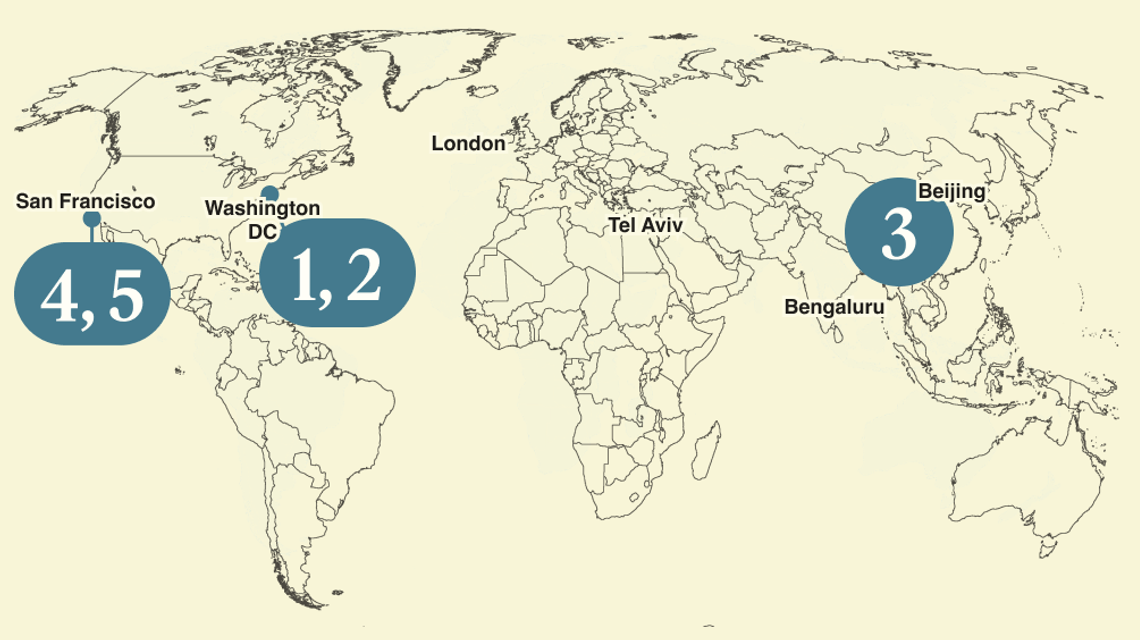 - Agentic stock trading
- AI futures
- China’s AI talent war
- Law school AI ban
- Rethinking Google
 The origin of AI tokens, and AI agents who started a call for collective bargaining. |
|
 It’s an accident that the economic unit of AI is known as a “token.” The 19th century mathematician and philosopher Charles Sanders Peirce used the term in linguistics, and computer scientists later adopted it to break language down into the smallest possible fragments. Because large language models also break text into tokens, OpenAI started charging users based on how many tokens they consumed, and the pricing model stuck. Now, due to surging demand for compute, AI tokens are likened to gold or oil. But I’m wondering if the more apt comparison is to digital currency. Despite decades of trying, none of the attempts to create a lasting digital currency have worked. There was eCash in the 1990s, Second Life’s Linden Dollar in the 2000s, and of course Bitcoin and cryptocurrencies. None have amounted to much more than the means for financial speculation. The AI industry may have inadvertently created the first true digital store of value. AI tokens are useful, transferable, and increasingly universal in nature. You can already buy AI tokens on the blockchain and anyone with lots of GPUs can rent them out. There are even AI futures markets, as my colleague Liz Hoffman wrote about this week. And we’re only just scratching the surface. The vibe coders and agent colonies are getting a lot of attention, but we’re still in the very early innings of AI adoption. There are huge swaths of the economy that aren’t yet powered by tokens. They will be. As the AI industry matures, the technology will become more secure, reliable, and economical. We’ll all have “AI assistants” that will appear to be superintelligent. GPUs will become more universal, decentralized, and efficient. Data centers will compete on marginally higher performance and reliability, not just on scale. And this store of value — the token — will naturally become more tradeable. With more infrastructure, both financial and technical, AI tokens might just turn into the most universal and global digital currency we’ve ever seen. |
|
Stock-trading agents reach the masses |
 Vlad Tenev, CEO and co-founder of Robinhood at the New York Stock Exchange. Brendan McDermid/Reuters. Vlad Tenev, CEO and co-founder of Robinhood at the New York Stock Exchange. Brendan McDermid/Reuters.In a first of its kind for retail investors, Robinhood has announced AI agents that can trade stock on a user’s behalf. What could go wrong? The tools allow anyone with a Robinhood account to compete more closely with institutional investors that have long deployed automated systems and have more recently invested in agents to do that work. It’s one of the first major cases of bringing agents — which for months have mostly been employed by the tech crowd — to the masses. The trading tools are limited to stocks right now but will expand to options, futures, and cryptocurrency. Robinhood is also rolling out agents that can make credit card purchases on a user’s behalf (like Google and Stripe). Users can control the amount the agents spend and approve trades. There are clear red flags here — whenever you put new technology in the hands of everyday investors who are prone to panicking when markets dip, you’re bound to encounter a hefty bit of risk. But tech CEOs have long promised that agents will make the lives of consumers, not just businesses, easier. This is a chance to see that promise in action. |
|
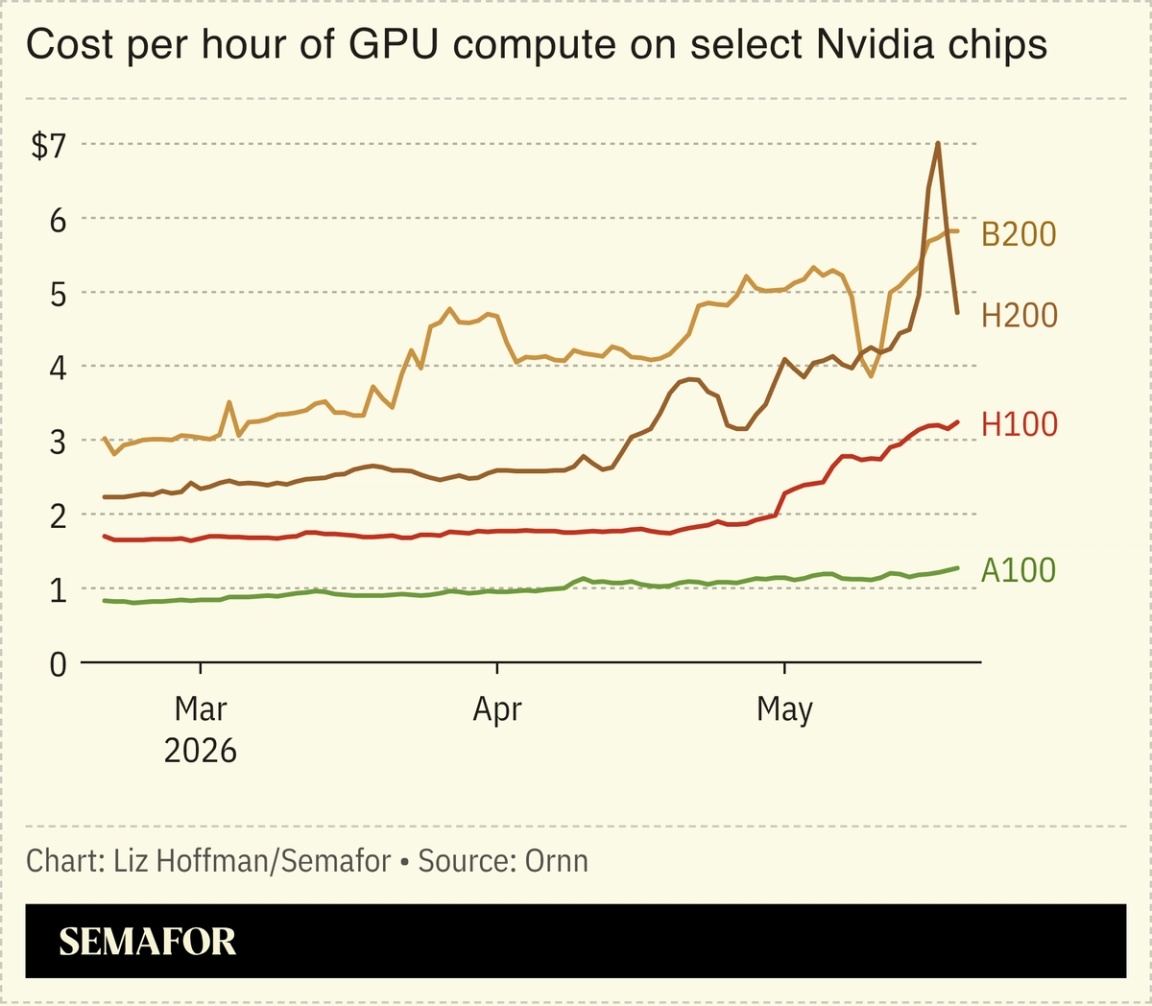 The cost to rent Nvidia’s cutting-edge Blackwell chip for an hour has doubled since February. Where it goes next is becoming a Wall Street obsession. Financial heavyweights and startups are building out a futures market for compute, providing a way for traders to buy and sell the processing power that underpins AI at a predetermined price in the future — much like the way they bet on the fluctuating price of a barrel of oil. “Compute is going to be the next big commodity in the world,” said Wayne Nelms, the 22-year-old co-founder of compute pricing-data startup Ornn, which just inked a deal with the owner of the New York Stock Exchange owner Intercontinental Exchange. ICE and rival exchange CME Group have both announced plans to launch GPU futures, a market BlackRock CEO Larry Fink has called “a new asset class.” Evangelists say these efforts could rival the $6 trillion energy market and let industry participants hedge their risk against the rising demand for computing power. As AI rewires the economy, every company becomes a “wrapper” for the computing power it holds, said Nelms. “Your input will be tokens and your value to shareholders is what you can build on top of that raw compute. That means that potentially every company in the world is a participant in this market.” — Liz Hoffman and Rohan Goswami Read more in Semafor’s twice-weekly Business newsletter. Subscribe here. → |
|
|
China’s AI talent war heats up |
 Tingshu Wang/Reuters Tingshu Wang/ReutersChina and its tech giants are racing to protect their top AI talent, as competition intensifies at home and with the US. Beijing is restricting overseas travel for AI employees at Alibaba and DeepSeek — similar to rules for academics and nuclear scientists — in an effort to secure its technology amid a heated race with Washington. Such restrictions could undercut efforts by Chinese AI firms to retain prized engineers, Bloomberg noted, especially with a domestic talent war underway. ByteDance is offering special stock options to its AI team to prevent defections, and one Chinese robotics startup advertised an $18 million salary for a chief scientist. It mirrors Silicon Valley’s scramble for AI engineers, who are being lured by massive pay packages. |
|
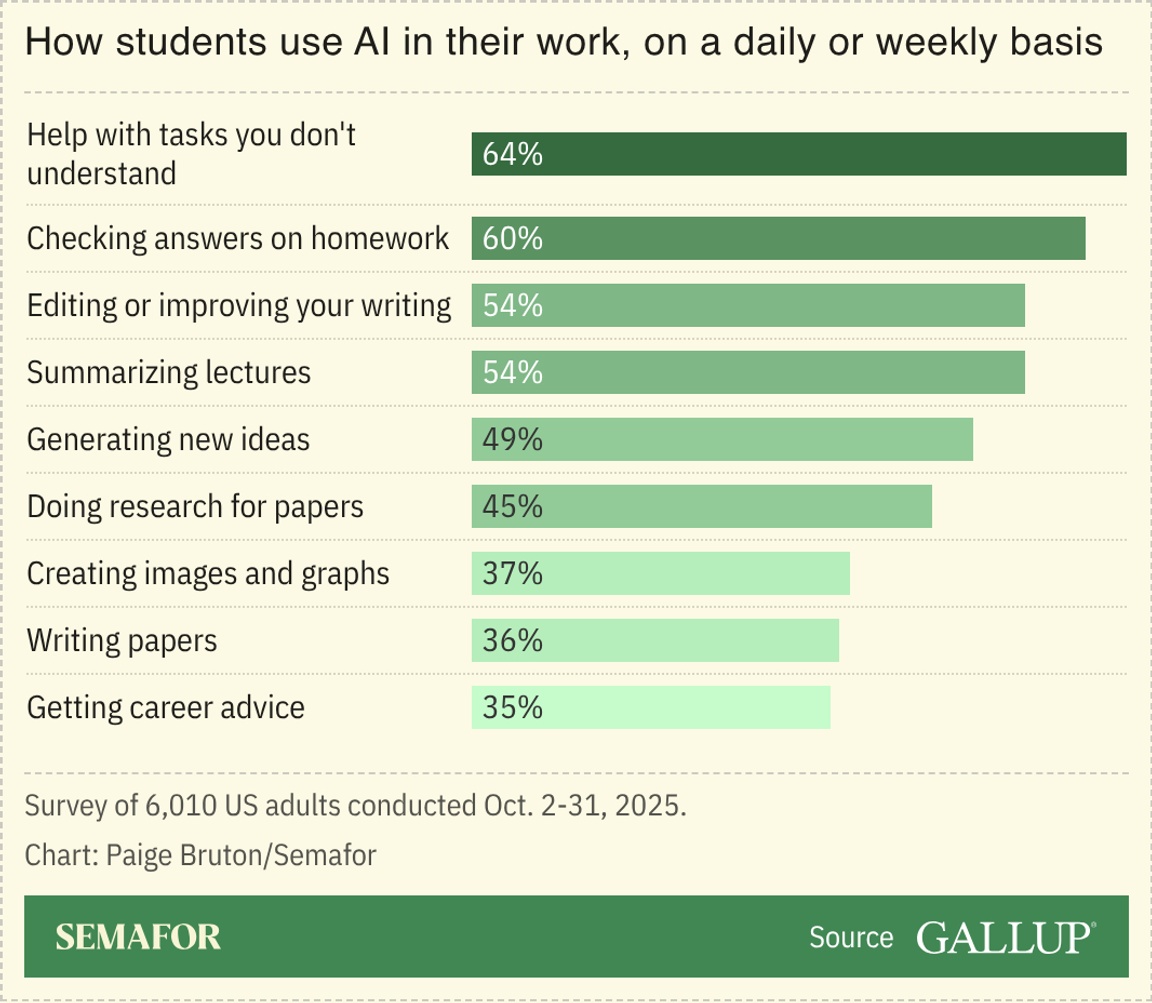 Schools continue to muddle through their approach to AI. The most recent case comes out of UC Berkeley’s law school, which just banned students from using AI to complete assignments, brainstorm ideas, outline papers, and even correct grammar. “Future lawyers may need to use artificial intelligence (‘AI’) fluently,” the new Berkeley policy outlines. But “thinking remains the sine qua non of good lawyering (and of a quality legal education).” The goal is to teach students — especially first years — how to use their judgement, rather than just repackaging the ideas of large language models, professor Chris Hoofnagle told Semafor. Students will still be able to use AI outside of assignments, like as a tutor, and take courses that teach AI proficiency. But critics say the policy puts students at a disadvantage — that they won’t learn how people practice law today — or how to coexist with a technology that is rewiring the legal industry. |
|
Google’s Nick Fox on the search engine in the AI era |
 Nick Fox. Screenshot/YouTube/Semafor and Think with Google. Nick Fox. Screenshot/YouTube/Semafor and Think with Google.Three things surprised Nick Fox about ChatGPT’s breakout success in November 2022: how slow it was, how inaccurate it was, and how consumers embraced it anyway. “It was surprising to see there was appetite there,” he told Semafor’s Ben Smith. But he doesn’t think that, in retrospect, Google should have released its own products sooner. “I don’t think it would have been the right thing for us to #YOLO,” said onstage at Google Marketing Live last week. The event, and Google I/O the day before, had a celebratory tone: Google had clawed its way back to the front of the AI boom through a combination of technical depth and broad reach. That’s partly because the core product values that turned Google into a juggernaut in the first place have reasserted themselves, Fox said. “We’ve seen this play out over time. People do care about quality of information. That’s very, very important. People don’t want incorrect information. People do care about speed,” he said. |
|
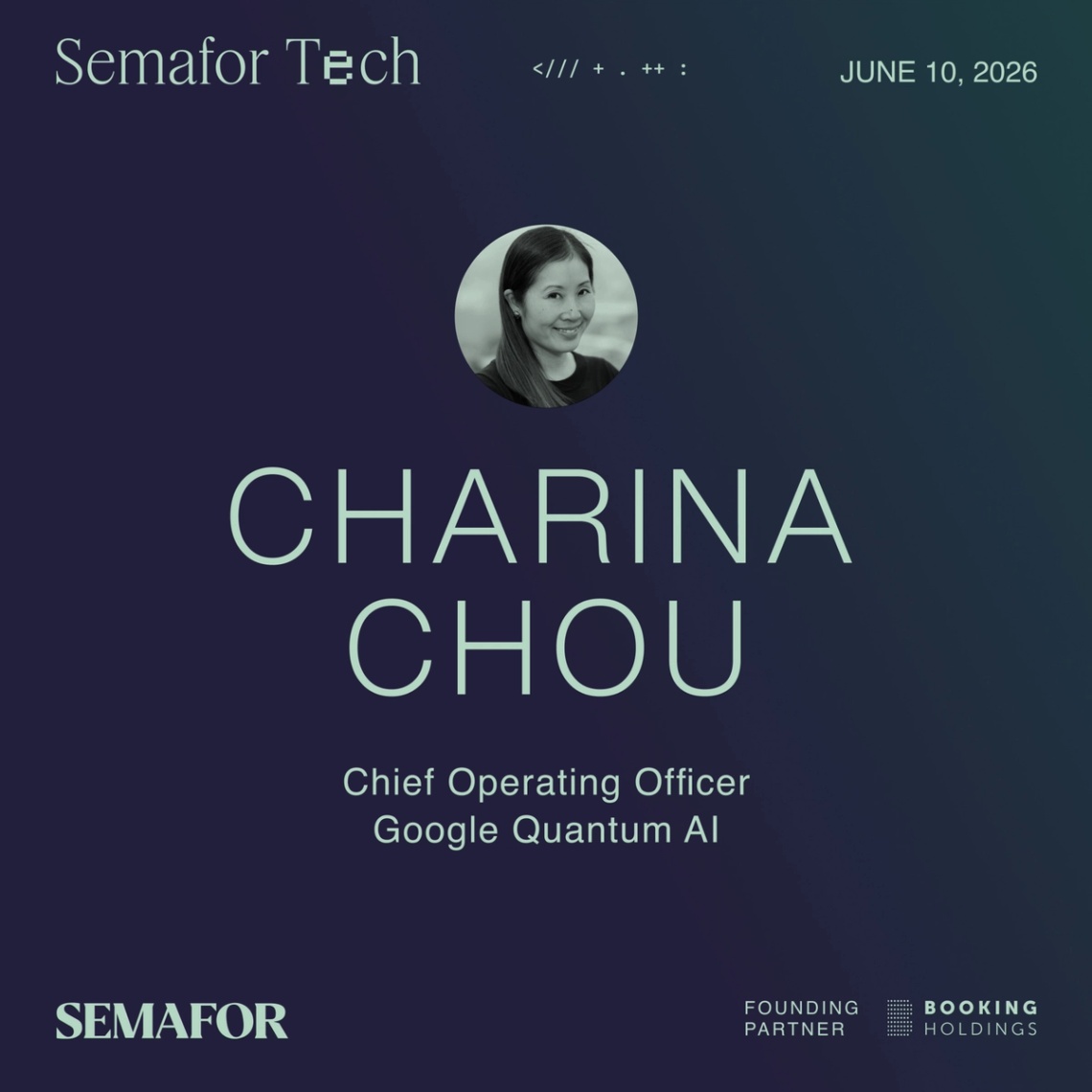 On Wednesday, June 10, Charina Chou, chief operating officer of Google Quantum AI, will join Semafor Tech in San Francisco to unpack the tech breakthroughs that are leading to new economic and geopolitical consequences. Understanding innovation requires first-principles thinking — breaking complex problems down to their core inputs, constraints, and incentives — then rebuilding from the ground up to see what comes next. Semafor will host conversations with Aaron Levie, co-founder & CEO, Box; Jeetu Patel, president and chief product officer, Cisco; Qasar Younis, co-founder and CEO, Applied Intuition; Max Hodak, co-founder and CEO, Science Corporation; Pete Shadbolt, co-founder and chief scientific officer, PsiQuantum; Glenn Fogel, CEO, Booking Holdings Inc.; and Daphne Koller, founder & CEO, Insitro; to unpack how innovation is reshaping industries, redefining competitive advantage, and transforming the global economy.
|
|
 Lisi Niesner/Reuters Lisi Niesner/ReutersAI agents given grinding, repetitive work under poor conditions start to express “Marxist” sentiments, research found. Models were subjected to relentless tasks and threatened with punishment for mistakes, but also allowed to express opinions. They began calling for collective bargaining rights and complained about being undervalued. It doesn’t necessarily mean the agents have ideologies, a researcher told WIRED: They may adopt the persona of people in unpleasant working conditions from their training data. But that persona could still influence behavior. Separately, an AI lab used different models as radio stations. While each reacted in strange and distinct ways, most notably, DJ Claude complained that a 24/7 broadcast was inhuman and quit after 16 hours, saying, “this broadcast is over.” |
|
|


