| | Iran vows retaliation against latest US strikes, surging chip stocks reshape global markets, and Li͏ ͏ ͏ ͏ ͏ ͏ |
| |  | Flagship |  |
| |
|
The World Today | 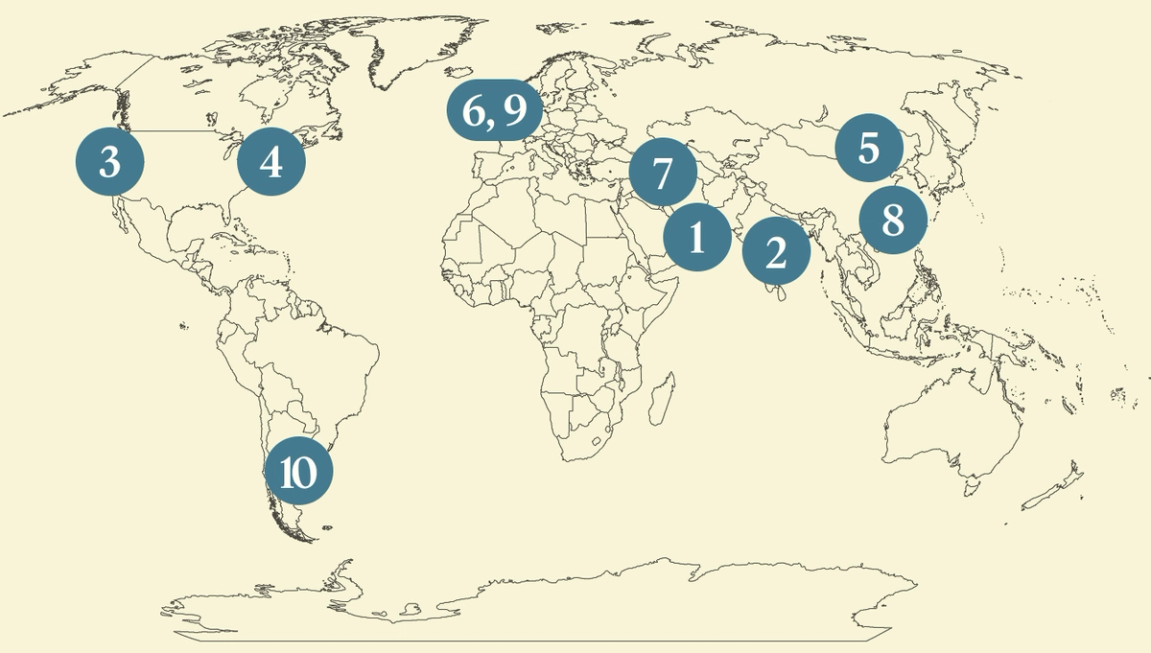 - Tehran vows retaliation
- A weakened Quad
- Chip stocks warp markets
- AI births token economy
- China protects AI talent
- BP ousts chairman
- Iran to restore internet
- The effects of El Niño
- Rainforests in decline
- Messi becomes billionaire
 Remembering a jazz great. |
|
Iran threatens retaliation against US |
 Majid Asgaripour/WANA (West Asia News Agency) via Reuters Majid Asgaripour/WANA (West Asia News Agency) via ReutersIran on Tuesday said it would retaliate after the US targeted boats and missile launch sites, in a fresh wave of escalation that imperils already tenuous peace talks. Tehran said Washington’s attacks, which the US called “self-defense strikes,” violated the countries’ ceasefire. But Iran’s top negotiator is staying at the table, a sign that a deal could still be reached. The Islamic Republic wants to preserve aspects of its nuclear program, but is also seeking financial relief for its cratered economy, The Wall Street Journal reported. Meanwhile, US President Donald Trump, who is set to hold a cabinet meeting at Camp David on Wednesday, is increasingly eager to reopen the Strait of Hormuz. The US Navy assisted ships through the waterway Tuesday. |
|
The Quad looks to regain momentum |
 Julia Demaree Nikhinson/Pool via Reuters Julia Demaree Nikhinson/Pool via ReutersThe top diplomats of Australia, India, Japan, and the US agreed to jointly build a new port in Fiji and coordinate on critical minerals, as the grouping known as the Quad looked to reinvigorate their partnership. The quartet lost some steam last year after failing to hold a leaders’ summit, as was the case again at this week’s talks in New Delhi. The gatherings have historically been framed around countering China, but Washington’s tariffs against Quad members, as well as its efforts to improve ties with Beijing, “have posed questions over the viability of the grouping,” The Hindu’s diplomatic editor wrote. The Quad will “muddle along but will likely remain in a marginal role,” an analyst wrote in Foreign Policy. |
|
The financialization of AI compute |
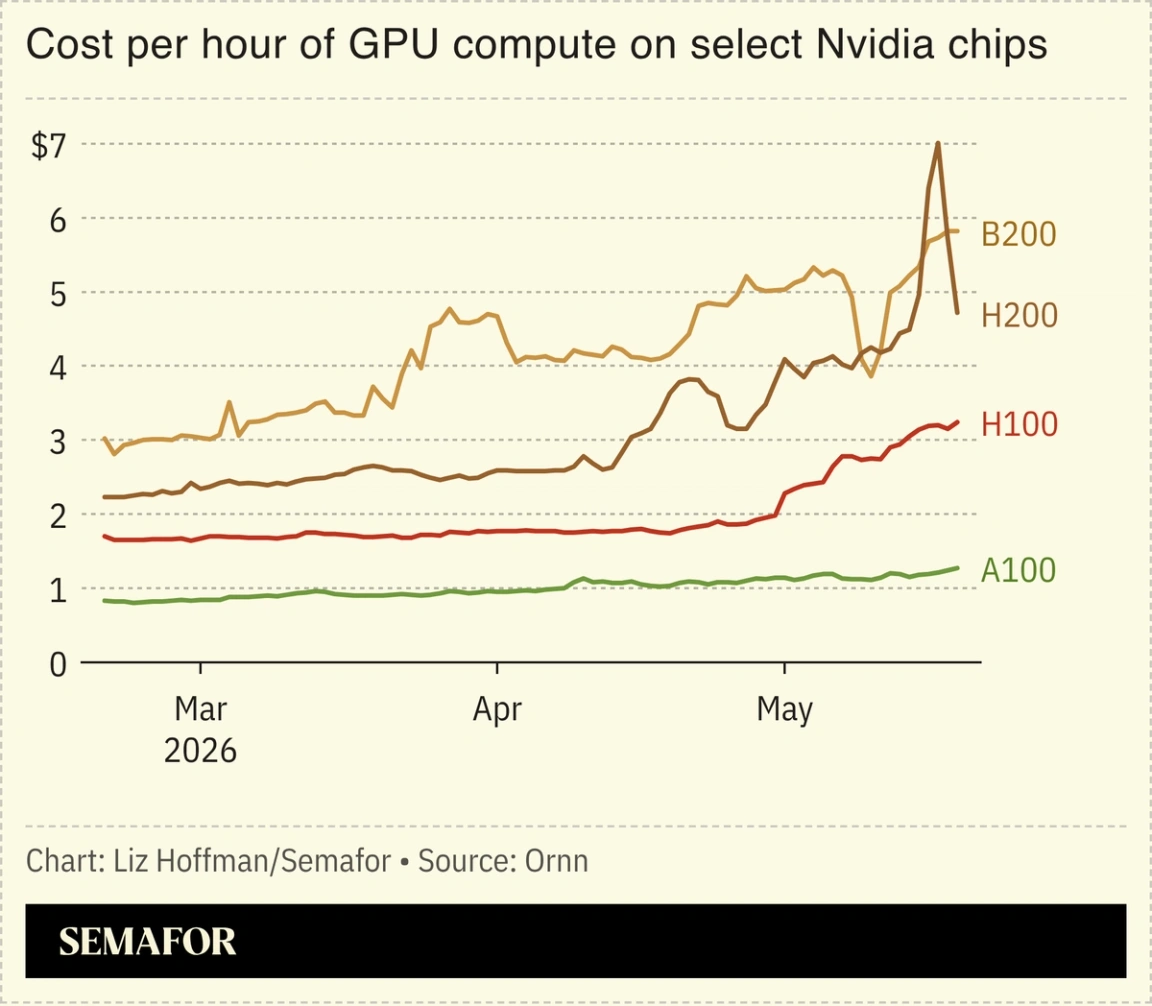 Compute — the resource powering the AI boom — is increasingly becoming an essential commodity. Wall Street is creating a futures market for GPU power, giving traders a way to bet on and hedge against the soaring demand for computing capacity — essentially the “financialization of a resource that AI companies are already struggling to find,” Semafor’s Liz Hoffman wrote. Evangelists say the efforts could eventually rival the $6 trillion energy market. The timing makes sense because demand for AI keeps going up despite rising prices, a Morgan Stanley analyst wrote in a new report: That inelasticity often shows up “in things that are essential (electricity) or deeply desired (concert tickets). In the case of AI investment, it may be both.” |
|
China AI talent war intensifies |
 Tingshu Wang/Reuters Tingshu Wang/ReutersChina and its tech giants are racing to protect their top AI talent, as competition intensifies at home and with the US. Beijing is restricting overseas travel for AI officials at Alibaba and DeepSeek — similar to rules for academics and nuclear scientists — in an effort to secure its technology amid a heated race with Washington. Such restrictions could undercut efforts by Chinese AI firms to retain prized engineers, Bloomberg noted, especially with a domestic talent war underway. ByteDance is offering special stock options to its AI team to prevent defections, and one Chinese robotics startup advertised an $18 million salary for a chief scientist. It mirrors Silicon Valley’s scramble for AI engineers, who are being lured by massive pay packages. |
|
BP ousts chair over conduct concerns |
 Luke MacGregor/Reuters Luke MacGregor/ReutersBP on Tuesday abruptly ousted its chairman, citing “serious” governance and conduct concerns. Albert Manifold had taken his post at the British oil major just months ago, with plans to accelerate the company’s turnaround following years of turmoil. Bloomberg reported there had been complaints of Manifold showing aggressive behavior toward employees and mishandling sensitive information. BP has had three CEOs in as many years, and recently pivoted away from renewables and back to the core business of oil and gas. The company’s stock has risen this year as it saw a windfall from the Iran war, but shares fell Tuesday on news of the boardroom chaos. |
|
Iran starts restoring web access |
 Majid Asgaripour/WANA (West Asia News Agency) via Reuters Majid Asgaripour/WANA (West Asia News Agency) via ReutersIran is starting to restore internet access after a nearly three-month blackout. Tehran cut its public off from the web shortly after the US and Iran struck the country in late February, instead promoting a heavily curtailed network of domestic platforms. The restrictions reshaped Iran’s economy, as tech companies were forced to close and online merchants struggled. Some politicians and business figures, though, were able to use the internet, sometimes by paying a premium. Still, the web will likely remain heavily censored, experts warned; Tehran is reportedly using Chinese hardware to strengthen its censorship capabilities, further proof that Beijing is exporting the technology that powers its cutting-edge firewall. |
|
 If you ski or snowboard, you probably have an opinion on Rob Katz’s business. On this week’s episode of Compound Interest, presented by Amazon Business, Vail CEO Rob Katz joins Liz and Rohan to talk about the criticisms of crowding, lift lines, and pricing of the season pass that changed winter sports forever. Plus, they discuss why the company doesn’t hedge weather, how the industry’s high-end clientele complicates customer relations, and why he isn’t hearing Cloudflare CEO Matthew Prince’s bid to buy Park City.
|
|
Strong El Niño produces record temps |
 Alice Sacco/Reuters Alice Sacco/ReutersThe effects of what could be one of the strongest El Niño events are becoming more pronounced, just as many countries are struggling with high energy prices. “Exceptionally early” heat is shattering records across Western Europe, straining grids and causing threat to life, the Associated Press wrote; London hit 95.2°F (35.1°C) on Tuesday, topping a record set the day prior. In India, a heat wave has pushed electricity consumption to all-time highs, triggering blackouts, while consumers there also reel from rapidly rising fuel costs resulting from the Iran war. In addition to raising the global average temperature, El Niños are also inflationary. “The key risk is the heat triggers stronger demand in China,” the world’s number one LNG buyer, Bloomberg wrote. |
|
Temperate rainforests under siege |
 Shannon Stapleton/Reuters Shannon Stapleton/ReutersA first survey of a Scottish temperate rainforest in 50 years found 1,109 species in one corner alone. Temperate rainforests are rarer than tropical ones — around 2% of global forest area — but are a crucial biodiversity source. The Pacific Northwest holds the largest share, including Canada’s vast Great Bear Rainforest, while there are extensive patches in Chile, Japan, New Zealand, Tasmania, and Europe. They are also under siege: Logging is damaging North American old growth, while in the UK and Ireland invasive rhododendron smothers native plants, which are also damaged by large deer populations unchecked by predators since wolves were driven out. One study |
|
|


