| | In today’s edition: Gulf investors await a potential windfall from the SpaceX IPO, and Qatar reports͏ ͏ ͏ ͏ ͏ ͏ |
| |  Kuwait City Kuwait City |  Starbase Starbase | Doha |
 | Gulf |  |
| |
|
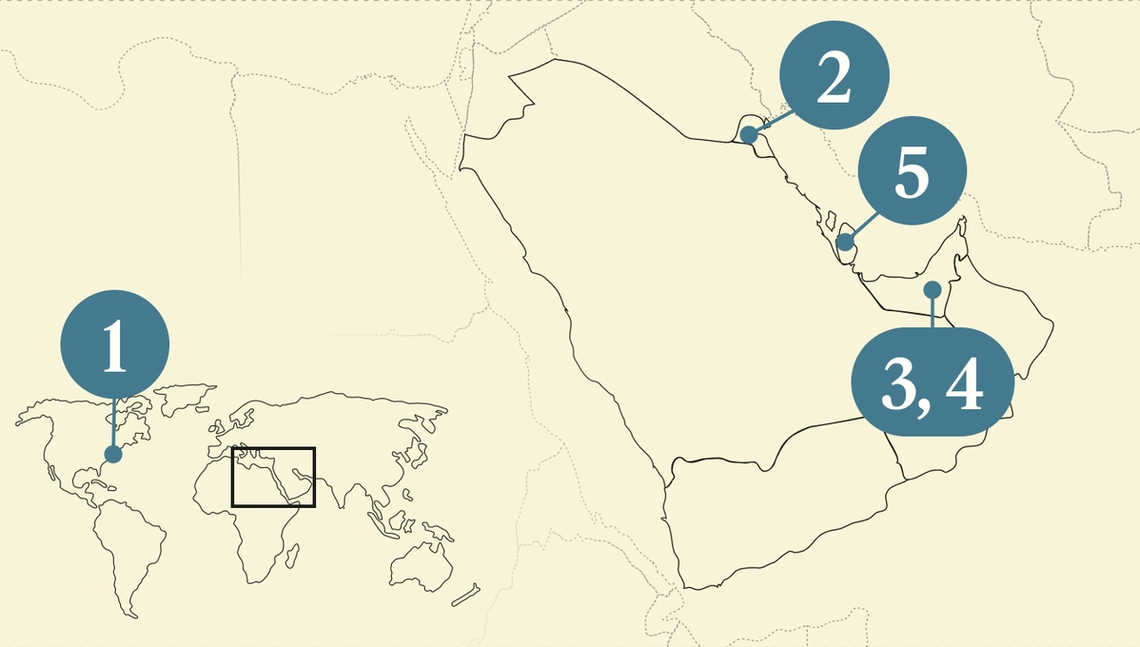 - Trump’s Middle East
- Kuwait’s slow strategy
- Gulf exposure to SpaceX
- Canada helps US in Gulf
- Qatar’s burn rate
 Hajj boils down to one moment: Arafat. |
|
Trump’s evolving Middle East agenda |
 Julia Demaree Nikhinson/Pool via Reuters Julia Demaree Nikhinson/Pool via ReutersThe US launched military strikes on Iran on Monday — the first in weeks — and President Donald Trump added an impossibly ambitious goal to regional peace efforts, all while mediation efforts continue. US Secretary of State Marco Rubio said a deal could take “a few days” to conclude, while an Iranian foreign ministry spokesperson said the two sides had “reached conclusions on many issues,” but it remains unclear what concessions either side will make. On Monday, a team of Iranian negotiators traveled to Qatar, highlighting how Doha is becoming more closely engaged in mediation; it sent a team of its own to Tehran days earlier. Iran is seeking the release of its funds frozen overseas, including $6 billion in Doha, but Qatar has denied reports it offered $12 billion to Tehran as an inducement to signing a peace deal. Trump is now pushing Qatar, Saudi Arabia, and other regional powers — even Iran — to normalize relations with Israel as part of a deal. But he’s being flexible: While saying it should be mandatory for them to sign up to the Abraham Accords, he acknowledged that “it may be possible that one or two have a reason for not doing so, and that will be accepted.” — Dominic Dudley |
|
Kuwait’s caution now looks prescient |
 Stephanie McGehee/Reuters Stephanie McGehee/ReutersThe Gulf’s race to the future has largely passed over Kuwait, as Abu Dhabi, Doha, and Riyadh pursued rapid transformation while Kuwait quietly built up its financial buffers. There have been many critics — as Kuwait’s domestic politics can attest — but amid the Iran war, its sclerotic economic approach has had unexpected benefits. Kuwait suffered some of the deepest disruptions in the Gulf, losing oil exports and being forced to rely almost entirely on overland trade via Saudi Arabia, but its $1 trillion sovereign wealth fund is cushioning the blow. S&P Global Ratings said Kuwait’s liquid assets should exceed 550% of GDP this year, helping preserve its credit standing even as its fiscal deficit is projected to widen to 15% of GDP. As The Wall Street Journal’s Stephen Kalin reports, authorities there have an “extreme aversion to risk” which is a legacy from the 1990 Iraq invasion and subsequent conflicts. Persistent opposition in parliament to modernizing efforts has also contributed to the lack of investment activity, although the chamber is currently suspended, giving the government more space to act. Unlike its Gulf neighbors, aviation is only slowly returning, schools remain partly remote, and public-sector office attendance is capped at 50% — all signs that Kuwait doesn’t conflate ceasefires with peace. — Mohammed Sergie |
|
Gulf investors set for SpaceX payday |
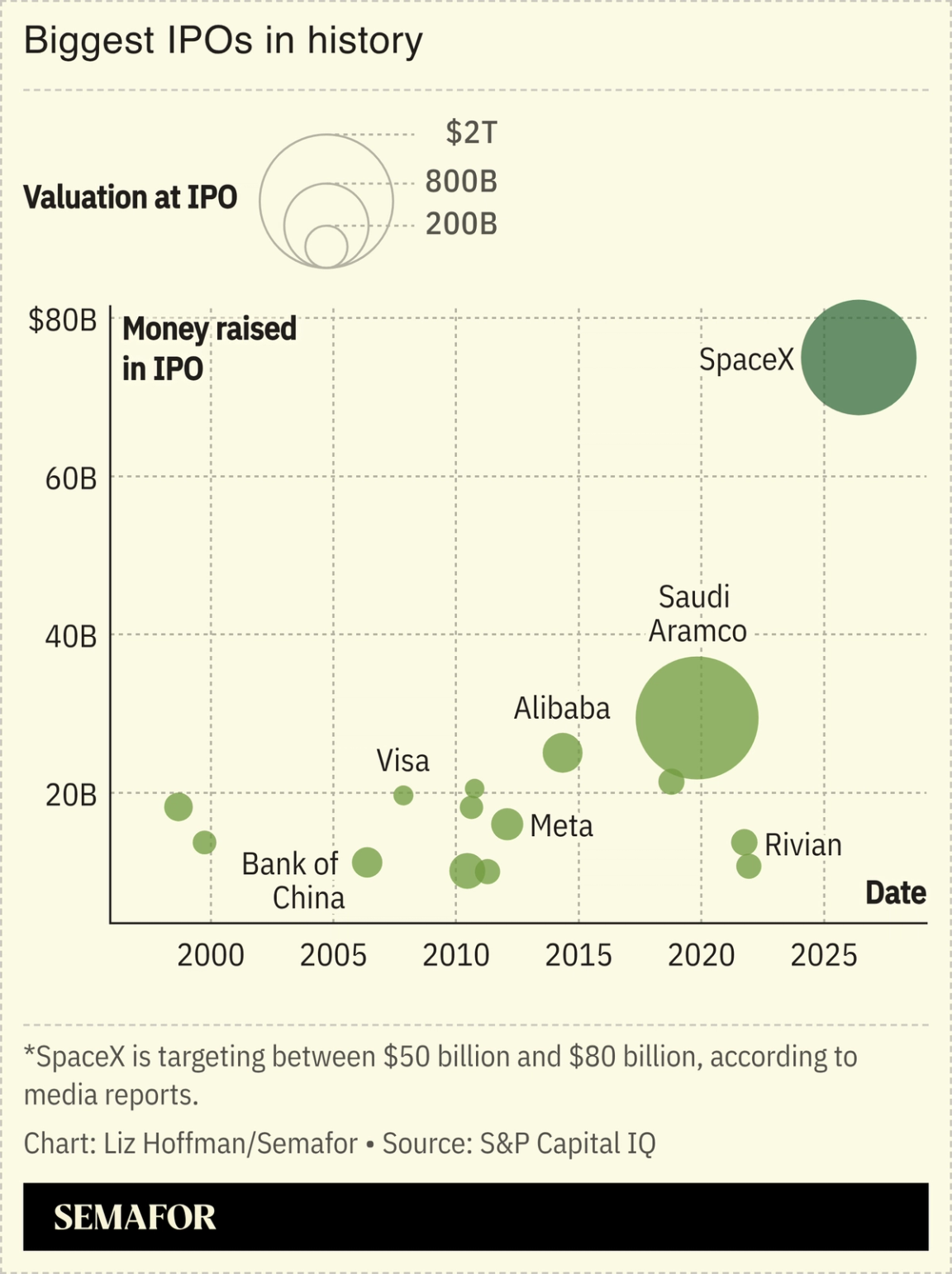 A potential wartime windfall could be coming to Gulf sovereign wealth funds and billionaires. SpaceX’s IPO filing last week — potentially the largest ever — didn’t disclose details about regional investors because their stakes fall below reporting thresholds, but even a 1% holding is set to be worth around $15 billion. For investors who have backed Elon Musk for years, the upside is clear. Saudi billionaire Prince Alwaleed bin Talal is among the most prominent. His investment traces back to a $300 million Twitter stake that ultimately converted into SpaceX shares as Musk reorganized his empire. Alwaleed’s Kingdom Holding valued its SpaceX position at $4.5 billion at the end of March. PIF’s HUMAIN poured $3 billion into xAI in February before it merged with SpaceX; Abu Dhabi’s MGX, the Oman Investment Authority, and the Qatar Investment Authority have also participated in xAI funding rounds. SpaceX estimates its total addressable market at $28.5 trillion (equivalent to almost a quarter of current global GDP) — most of that is enterprise applications, or providing software and services to corporate customers. Musk has periodically visited the Gulf, meeting senior royals and executives who share his approach of pursuing AI, commercial space opportunities, and technology-led economic transformation. If the SpaceX listing is well received, some of their other AI investments could also benefit. — Mohammed Sergie |
|
 Evelyn Hockstein/Reuters Evelyn Hockstein/ReutersIn the early days of Operation Epic Fury, as Gulf states absorbed hundreds of Iranian drones and missiles, the US faced a crisis helping its citizens evacuate from the region. Improvising, American diplomats in Abu Dhabi phoned a friend: Canada. No formal agreement exists between the two countries to cooperate on consular services, so a plan was hastily arranged for the Canadian embassy to serve as a pickup point for handing out new and renewed US passports so citizens could flee. US consular staff set up at the Canadian embassy’s check-in counter in a lobby attached to Abu Dhabi Mall. That US foreign service members turned to their Canadian counterparts is surprising, given the two countries’ strained relationship under the Trump administration. But the Canadian embassy “did not hesitate” to help, a senior State Department official told Semafor. |
|
Qatar’s wartime deficit mounts |
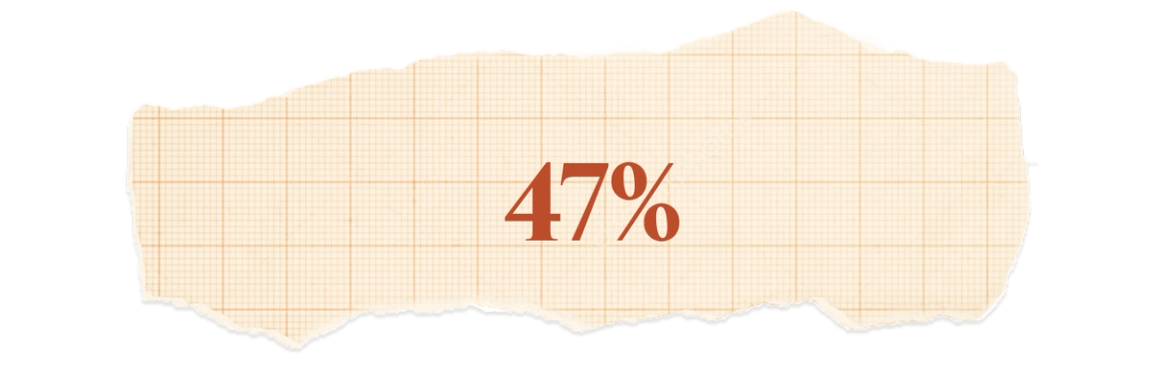 Almost half of Qatar’s projected budget deficit for this year was consumed in just one month of disrupted oil and gas exports. Doha’s 2026 budget was based on a conservative oil price of $55 a barrel and anticipated a manageable 21.8 billion riyal ($6 billion) deficit. But the effective closure of the Strait of Hormuz since late February forced production cuts and shut off the energy exports, which account for the vast majority of government revenues. First quarter revenue fell 23.5% year-on-year to 37.8 billion riyals, according to Qatar’s finance ministry, leaving the quarterly deficit at 10.2 billion riyals. While higher than expected, the country — like Kuwait and the UAE — has significant buffers that can easily plug the gap. QatarEnergy is trying to move volumes of LNG through Hormuz, with a handful of tankers crossing in recent days according to Bloomberg, but exports remain at only a fraction of prewar levels. The company extended force majeure on some European cargoes into mid-August. |
|
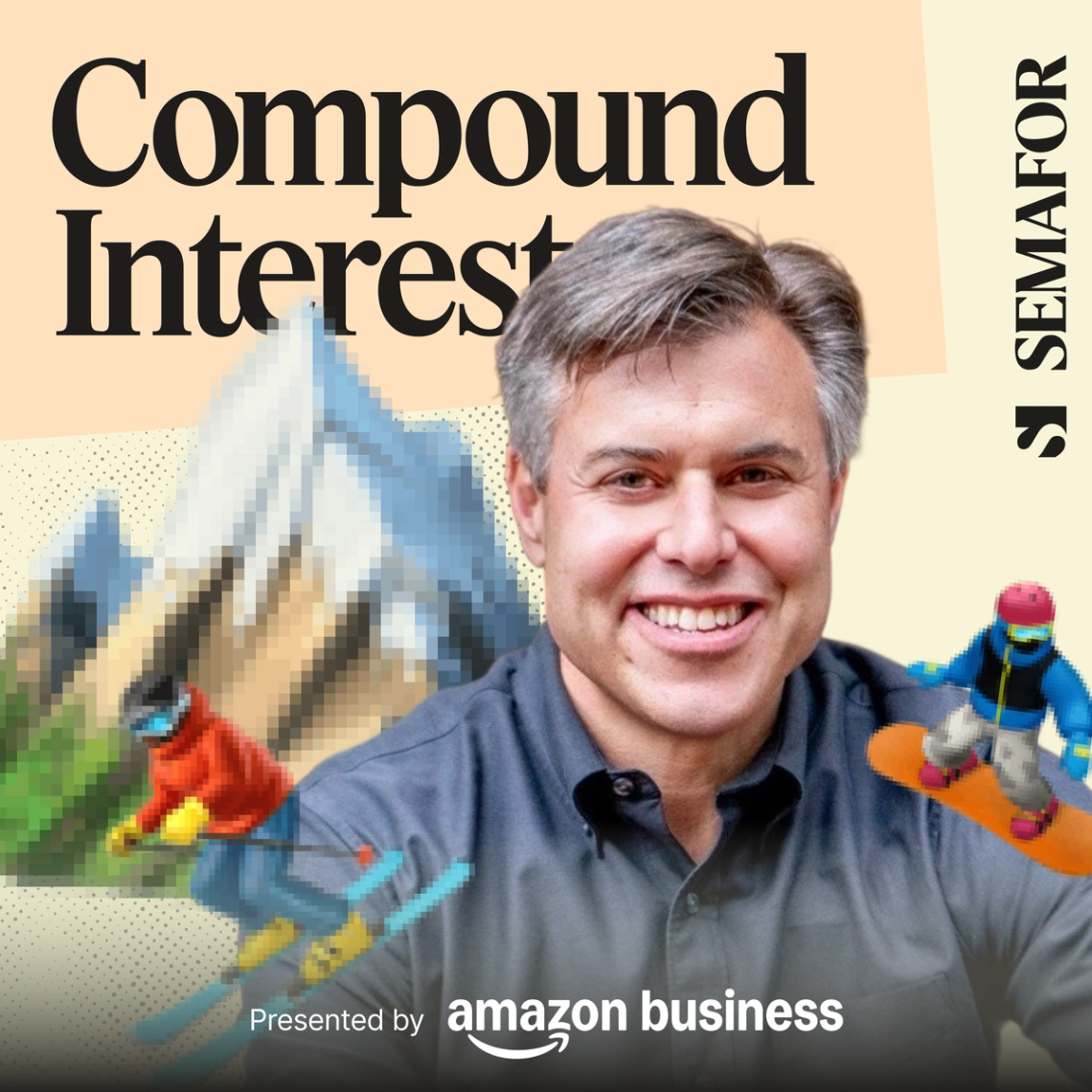 If you ski or snowboard, you probably have an opinion on Rob Katz’s business. On this week’s episode of Compound Interest, presented by Amazon Business, Vail CEO Rob Katz joins Liz and Rohan to talk about the criticisms of crowding, lift lines, and pricing of the season pass that changed winter sports forever. Plus, they discuss why the company doesn’t hedge weather, how the industry’s high-end clientele complicates customer relations, and why he isn’t hearing Cloudflare CEO Matthew Prince’s bid to buy Park City. |
|
 Khaled Abdullah/Reuters Khaled Abdullah/ReutersToday, pilgrims are at Mount Arafat, roughly 20 kilometers (12 miles) southeast of Mecca, where they will stand in prayer until sunset. The Prophet Muhammad delivered his Farewell Sermon on this plain in 632 CE. Long before that, Muslims believe the Prophet Abraham began some of the rituals that they now commemorate more than 2,000 years later. These moments on the mount are crucial, and missing it invalidates the entire pilgrimage. For Saudi authorities, the challenge of this day is usually the heat. Around 1,300 people died two years ago in temperatures exceeding 51 degrees Celsius. The kingdom has expanded cooling at the site, adding misting fans and canopies to ease conditions for the nearly two million pilgrims, who face two further days of rituals ahead. |
|
|


