| | The US and Iran close in on a deal to reopen the Strait of Hormuz, Russia strikes Ukraine with a hyp͏ ͏ ͏ ͏ ͏ ͏ |
| |  JERUSALEM JERUSALEM | NEW DELHI |  TAIYUAN TAIYUAN |
 | Flagship |  |
| |
|
The World Today | 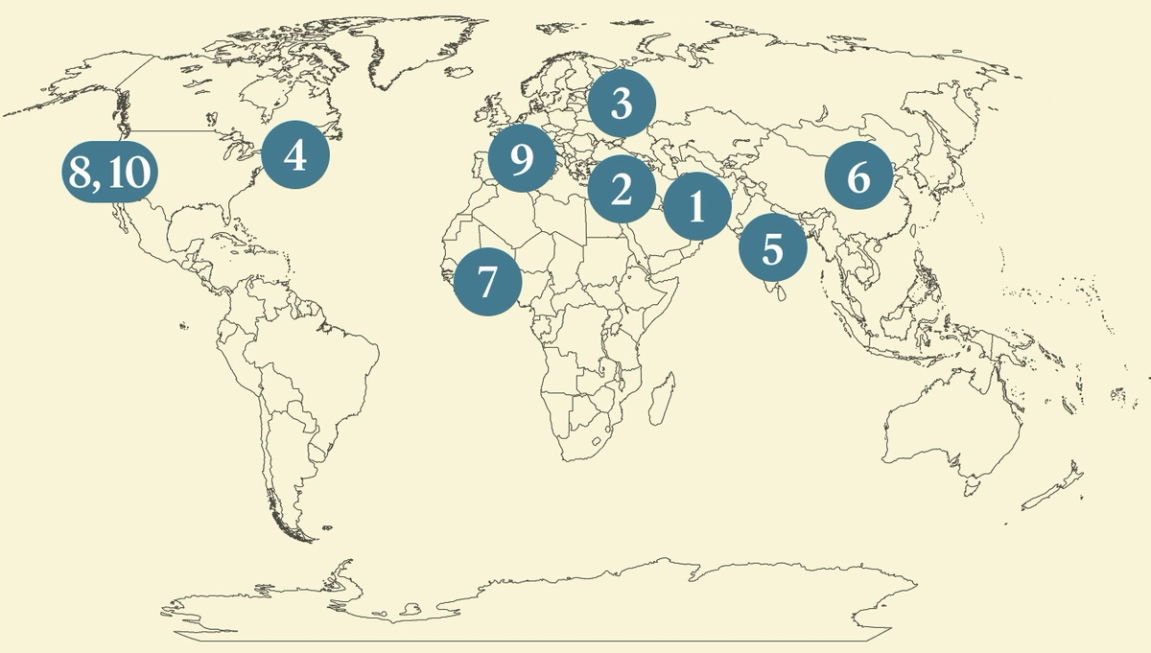 - US, Iran close in on agreement
- Mideast braces for deal
- Ukraine-Russia escalations
- US consumer confidence falls
- New US green card rules
- China coal mine explosion
- Real chocolate’s comeback
- Robots making clothes in US
- AI polarizes at Cannes
- An iPhone soccer broadcast
 A book charts a notorious chapter in Cold War espionage. |
|
US says it’s closing in on Iran deal |
 Majid Asgaripour/WANA (West Asia News Agency) via Reuters Majid Asgaripour/WANA (West Asia News Agency) via ReutersWashington and Tehran on Sunday inched closer to an agreement to reopen the Strait of Hormuz, though US President Donald Trump cautioned he didn’t want to “rush into a deal.” The countries agreed on a framework to end their stalemate, which has upended global commerce, though it could take days for their leaders to officially sign off. The agreement reportedly includes a commitment from Iran to dispose of its highly enriched uranium, but other aspects of Tehran’s nuclear program would be addressed in future negotiations. Disagreements over the deal’s final wording threaten to derail the diplomacy, analysts warned. “We are in a very good place — but there are ways in which the deal can be undermined,” a US official said. |
|
US Gulf allies wary of emboldened Iran |
 Stringer/Reuters Stringer/ReutersWashington’s allies in the Middle East braced for a US-Iran peace deal they fear could give Tehran too much leeway in the long term. The proposed agreement “prompted profound concerns in Jerusalem,” The Times of Israel reported: US President Donald Trump reportedly looked to assure Israeli Prime Minister Benjamin Netanyahu in a phone call that the deal would prevent Iran from having a nuclear weapon. Gulf states, meanwhile, have looked to avert military escalation but now worry Iran could end up with power to manage the Strait of Hormuz. “The major risk… is that this leaves Tehran feeling emboldened and thus interested in making itself more, not less, of a nuisance to regional order,” a defense expert said. |
|
New wave of Ukraine-Russia escalation |
 Viacheslav Ratynskyi/Reuters Viacheslav Ratynskyi/ReutersRussia on Sunday attacked Ukraine in one of the largest aerial assaults of the war, signaling a new wave of escalation as it used a rarely launched hypersonic ballistic missile. The use of the Oreshnik missile, which Russia has used against Ukraine only twice before, came after the Kremlin accused Kyiv of striking a college dormitory, killing 21 people, and vowed retaliation. Russia had halted attacks earlier this month as part of a brief US-brokered ceasefire, but broader peace talks are frozen as the two sides remain deadlocked on the battlefield and Ukraine uses drones to strike deeper into Russian territory. |
|
US consumer sentiment tanks |
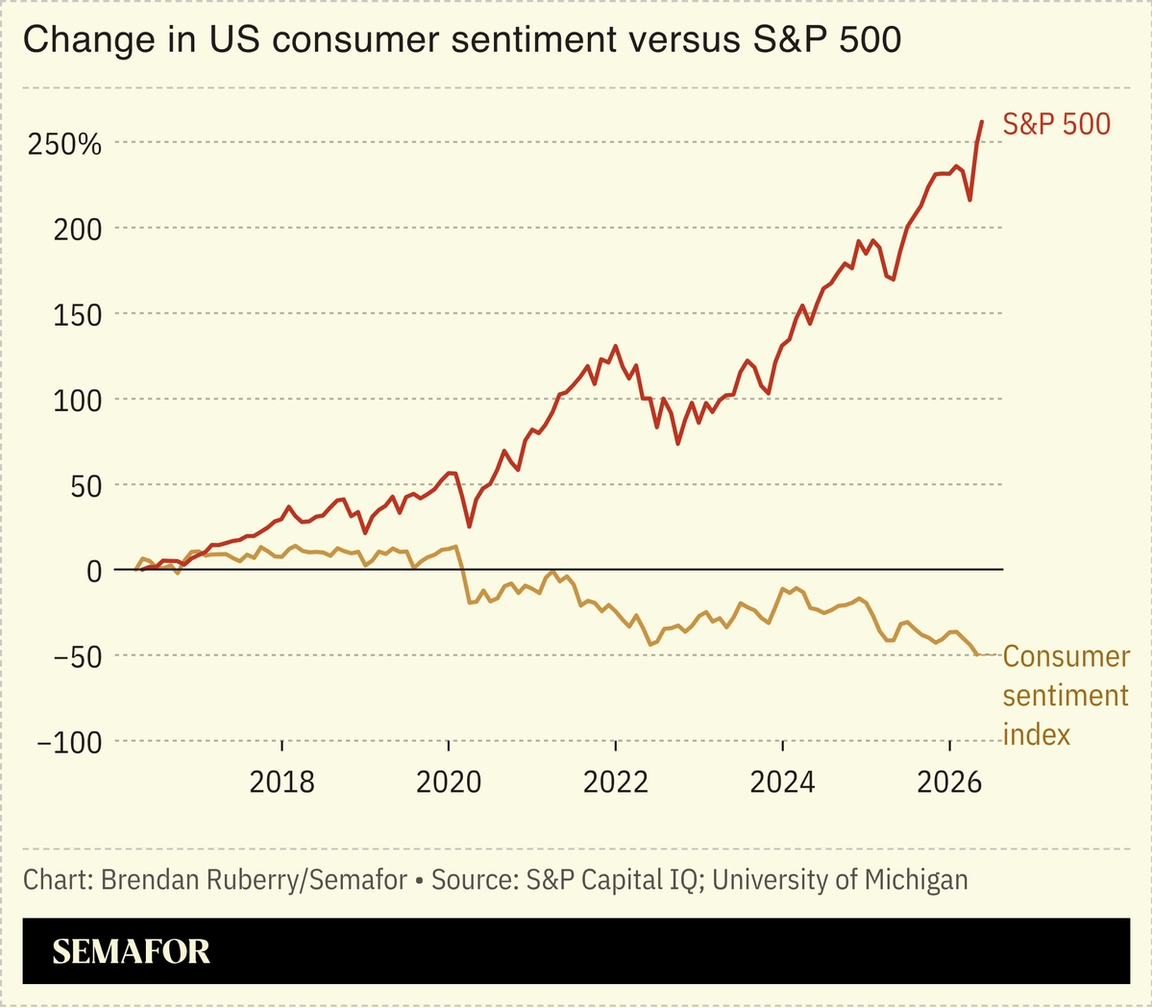 The gulf between US stocks and Americans’ spirits keeps widening. The Dow on Friday hit a record high — the same day consumer sentiment hit an all-time low. Beyond pressures from the Iran war, which stock markets have largely shrugged off, AI is a factor in the divergence. Traders are all-in on AI, but Americans are fretting over its impact on jobs. “The stock market on the moon and households in increasing gloom are reflecting on the same thing,” an economist said: Reduced labor costs may be good for stocks but mean fewer jobs. US President Donald Trump has heralded the stock gains, but the bond market could put pressure on the White House. Yields have risen, threatening to push borrowing costs higher. |
|
Rubio questioned on US green card policy |
 Adnan Abidi/Reuters Adnan Abidi/ReutersThe Trump administration’s changes to the green card application process — which require immigrants to apply for permanent residency from outside the US — drew diplomatic blowback. On a visit to New Delhi, US Secretary of State Marco Rubio said the policy, expected to be challenged in court, was “not targeted at India,” while India’s foreign minister emphasized New Delhi’s “expectation… that legal mobility would not be adversely impacted.” An Indian tech founder and billionaire called for Indian workers in the US to consider returning home, adding that “self-respect should dictate your course.” A US spokesperson told Semafor that high-skilled workers might not be affected, and that the agency “is merely restating and reasserting” its reading of congressional intent. |
|
China coal mine explosion kills dozens |
 cnsphoto via Reuters cnsphoto via ReutersAn explosion at a coal mine in China killed at least 82 people in the country’s deadliest mining accident in years. China is the world’s largest coal producer — last year it accounted for more than half of global output — even as it rapidly expands its renewable energy buildout. Coal has helped Beijing weather the energy shock brought on by the Iran war. While the government has stepped up inspections and safety oversight in recent years, reducing fatalities, the gas explosion on Friday night is “raising uncomfortable questions” about the extent of China’s efforts to promote energy security, Bloomberg wrote. Any crackdown risks threatening coal output at a precarious time. |
|
Real chocolate makes a comeback |
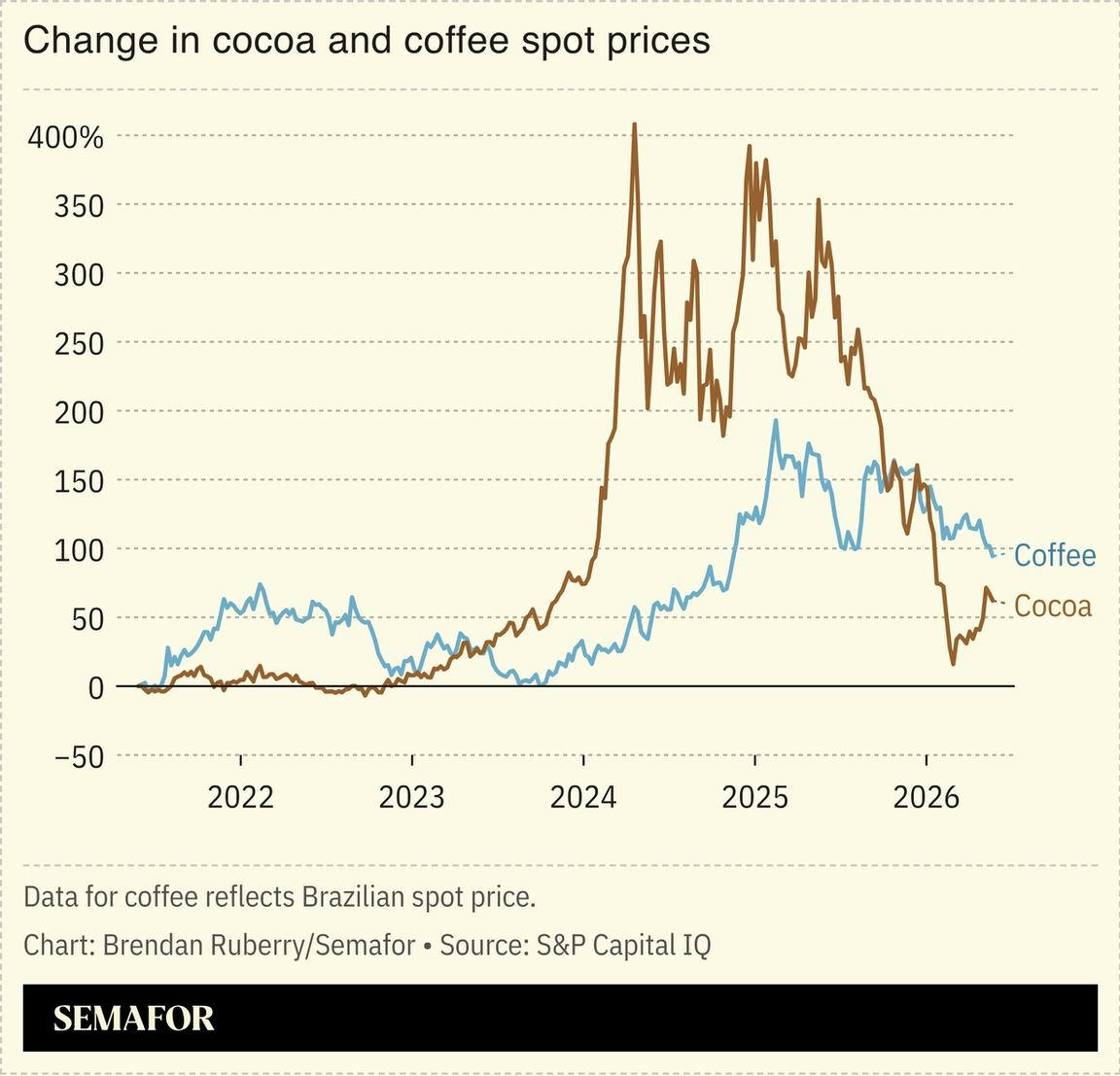 Cocoa prices have collapsed after their 2024 spike, and real chocolate is making a comeback. Adverse weather and disease pushed prices above $12,000 per metric ton, and chocolate-makers responded by shrinking bars, raising prices, and in some cases using alternatives. Some Hershey products had to be relabeled “chocolate candy” rather than chocolate. Demand cratered, and prices are down 70%. Hershey has said it will use only real chocolate in all of its products by next year, Reuters reported. That should help the 2 million poverty-stricken cocoa farmers in Ivory Coast and Ghana, though analysts expect 2.5 years for demand to recover, and Ivory Coast is sitting on unsold stocks as this season’s output is expected to rise 10.5%. |
|
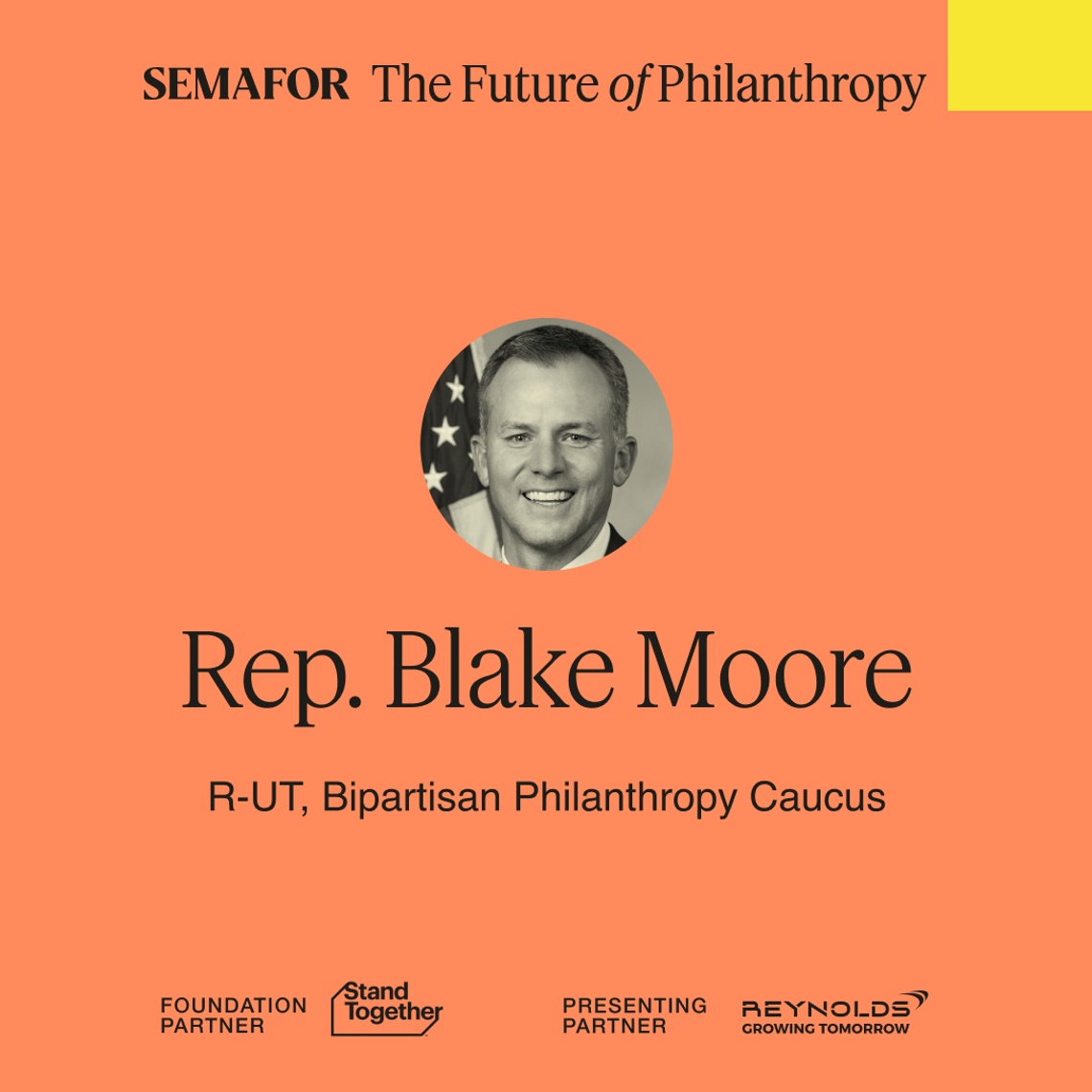 On Thursday, June 11, Rep. Blake Moore (R-UT), Bipartisan Philanthropy Caucus, will join Semafor on stage for The Future of Philanthropy. For generations, philanthropy has backed ideas ahead of their time — from early childhood education to breakthrough research that later became public goods. As the United States approaches its 250th anniversary, the sector faces a pivotal moment: under increasing political scrutiny, yet more vital than ever to expanding opportunity and driving innovation. Semafor editors will host on-the-record conversations on how philanthropy can scale solutions for workforce mobility and community resilience. Featuring: Tim Shriver, Chairman of Special Olympics and CEO & Co-Founder, UNITE; Emma Bloomberg, Founder & CEO, Murmuration; Marla Blow, President & Chief Operating Officer, Skoll Foundation; Richard Buery, Jr., CEO, Robin Hood Foundation; Asha Curran, CEO, Giving Tuesday; Rep. Blake Moore (R-UT), Bipartisan Philanthropy Caucus; Steve Preston, President & CEO, Goodwill Industries International; and Stacey D. Stewart, CEO, MADD and former CEO, March of Dimes. |
|
Robots to make clothes in US |
 CreateMe CreateMeA company will start using robots to make clothes in the US. Textile manufacturing has been surprisingly resistant to automation: Keeping two moving pieces of fabric aligned for stitching is complex. CreateMe is using adhesive rather than stitching, the BBC reported; others are attempting to automate stitching. Potential reshoring using physical AI could have profound impacts on the developing world, much of which relies on its cheap, abundant labor to bring in overseas investment. Countries such as South Korea and China began their journey toward modernization via low-skilled manufacturing, and others such as Bangladesh are doing so now. If robotics makes manufacturing in the West cheap, it could affect the development ladder, albeit while making cheaper goods. |
|
AI divide emerges at Cannes |
 Marko Djurica/Reuters Marko Djurica/ReutersA multilingual Norwegian drama about political polarization claimed the Palme d’Or, the Cannes Film Festival’s top prize. Following a devout Christian couple who face child abuse allegations, Fjord is a statement “against any type of fundamentalism,” the film’s director said from the stage; he also decried today’s “divided” and “radicalized” society. The win marked the seventh straight Palme for distributor Neon, “one of the movies’ most extraordinary streaks,” The Associated Press wrote. It capped an otherwise subdued festival: Short on political fireworks, the starkest divide emerged around the use of AI: “We actually need creatives more now than ever,” one producer told Vanity Fair, to differentiate between “generic AI slop” and “a good piece of work.” Another filmmaker, though, called AI “purely additive.” |
|
|


