| | In this edition: Ebola outbreak prompts scrutiny of Trump’s aid cuts, the $668B potential of health ͏ ͏ ͏ ͏ ͏ ͏ |
| |  Addis Ababa Addis Ababa | Kinshasa | Windhoek |
 | Africa |  |
| |
|
 - Questions over Ebola grow
- Potential of health investment
- Africa’s digital growth
- Chinese solar exports rise
- Anti-migrant violence grows
- Weekend Reads
 An unexpected connection between Pompeii and sub-Saharan Africa. |
|
 Buried within the 277-page prospectus for SpaceX’s $1.75 trillion valuation IPO, the aerospace giant points out that lowering the cost of access to space enabled it to pursue its goal of “bridging the digital divide.” That lofty ambition to connect over 3 billion people to the internet sits at the heart of Starlink, the company’s satellite internet business. For Africa, the implications are profound. The continent’s digital divide is less about whether networks exist and more about whether people and businesses can afford to use them, as a recent report by the Africa CEO Forum and Askya Partners argued. That helps explain why satellite internet has generated such excitement. By bypassing the costly buildout of fiber-optic cables and mobile towers in remote or low-density areas, satellite providers can lower deployment costs and intensify competition. Starlink’s centralized model — owning the satellites, infrastructure, customer relationships, and data flows — helps improve affordability at the network level, particularly in underserved areas. But prices still depend on local market structures, regulation, incomes and broader infrastructure investment. And while Africa’s mobile ecosystem generated some $220 billion in economic value in 2024 and supports millions of jobs, the fear is that unchecked satellite expansion could hollow out local telecom industries while shifting revenues, data, and strategic control offshore. That tension is already visible in South Africa, where bitter regulatory disputes have delayed Starlink’s entry. Yet even a recalcitrant Pretoria is mulling changes to telecom laws that could eventually clear a path for the company. The debate ultimately comes down to whether African countries can expand internet access without surrendering control over the infrastructure and economic value underpinning their digital economies. It’s not about exclusion but balance, a hybrid model in which fiber, mobile, and satellite networks work together, while governments ensure a level regulatory playing field and stronger local value creation. SpaceX may be betting that satellite internet becomes the infrastructure backbone of the next digital era, but African governments have the harder task of ensuring that such a backbone also supports local economic growth and innovation. |
|
Ebola outbreak prompts US scrutiny |
| | Adrian Elimian and Lauren Morganbesser |
| |
 Gradel Muyisa Mumbere/File Photo/Reuters Gradel Muyisa Mumbere/File Photo/ReutersThe Trump administration’s dismantling of US global health infrastructure is coming under intense scrutiny as an Ebola outbreak spreads across DR Congo. At least 139 people are thought to have died from the latest outbreak out of 600 suspected cases, with some also detected in neighboring Uganda, according to the World Health Organization. Deep cuts to USAID funding last year likely slowed the response and delayed detection of the virus, according to health experts and congressional Democrats. Elizabeth Hoffman, of the ONE Campaign advocacy body, noted that US support to DR Congo plummeted from $1.4 billion in 2024 to $451 million in 2025, and that the American presence in the central African country had “dramatically diminished.” Washington has announced plans to fund 50 clinics in regions hit by the Ebola outbreak, although Uganda’s health ministry said as of Wednesday it had “not been engaged” by the US on treatment centers. A global health alliance said that the outbreak was spreading much faster than reported, warning that an effective vaccine may be months away. |
|
Health investment could unlock $668B |
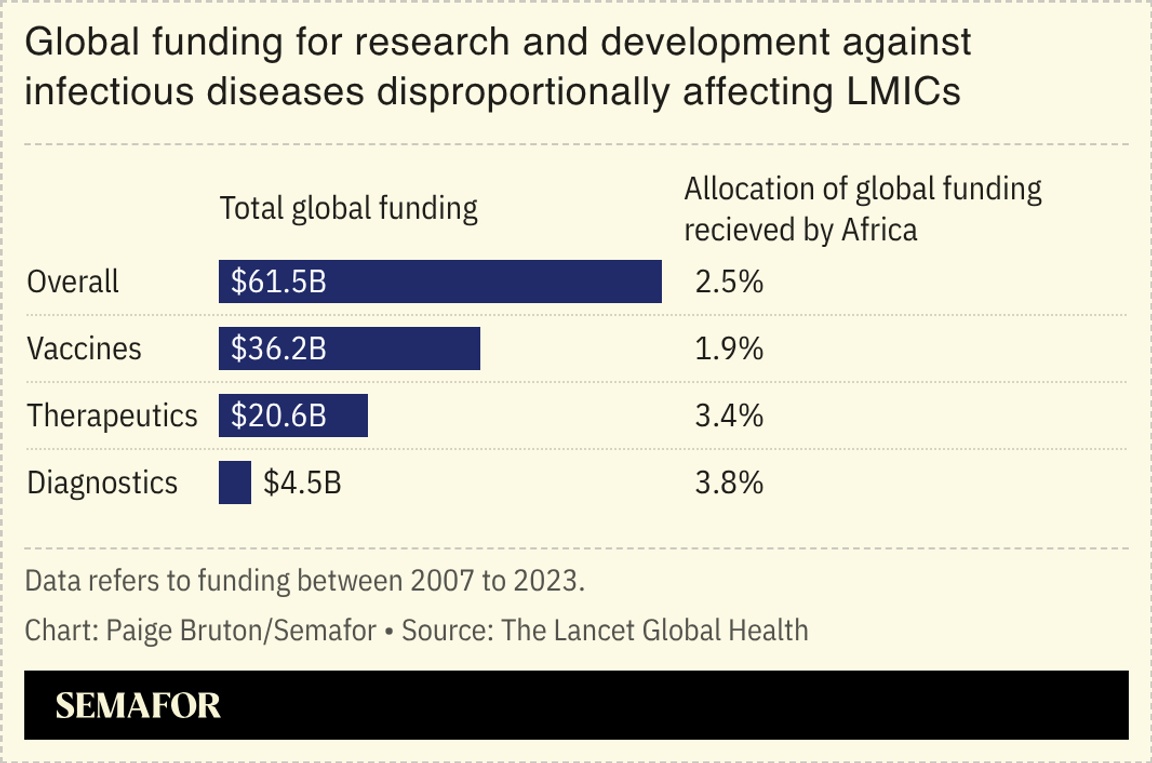 Increased domestic investment in health research and development across Africa could generate $668 billion in returns for the continent’s economies over 20 years, a new report found. The goal could be achieved if African governments meet the African Union’s call to invest 1% of their GDPs in health — which would amount to about $28 billion — said the Africa Centres for Disease Control and Prevention and Team Europe, which together issued the research. Africa carries 25% of the global disease burden — a measure of the total impact of illness on people worldwide. Yet only 1.1% of clinical trials globally are carried out on the continent. The result is that the diseases most prevalent in Africa are not prioritized; meanwhile, African nations rely heavily on imported medicines, and health workers often relocate overseas. However, a new head-of-state-led initiative aimed at giving African governments more control over their health systems — dubbed the Accra Reset — was announced last year. — Paige Bruton
|
|
AFC commits $100M to digital growth |
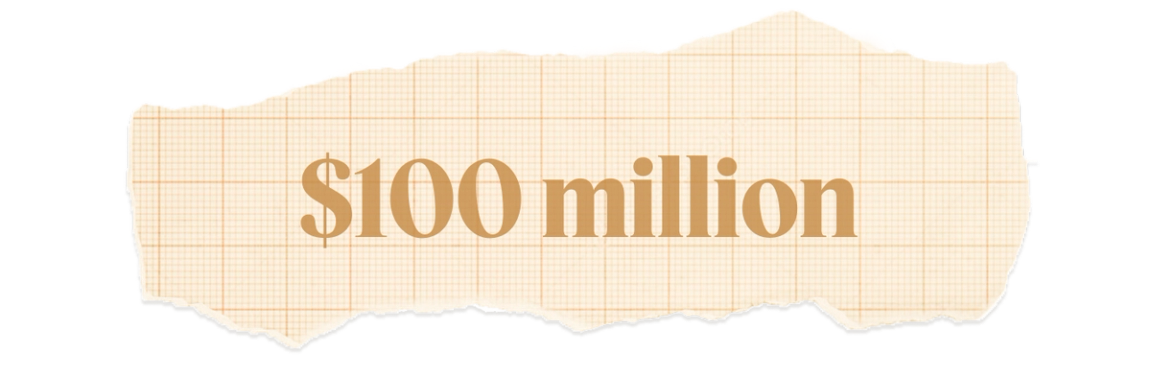 The Africa Finance Corporation — which mainly deploys capital for infrastructure projects — will invest $100 million in venture capital firms that back technology companies on the continent. African startups raised about $3.2 billion in 2025, a 40% increase from the year before. But while overseas investors drove a wave of multimillion-dollar funding rounds in the continent’s tech scene over the last decade, a pullback in recent years following interest rate rises in the US has prompted calls for increased African investment. |
|
Chinese solar exports to Africa climb |
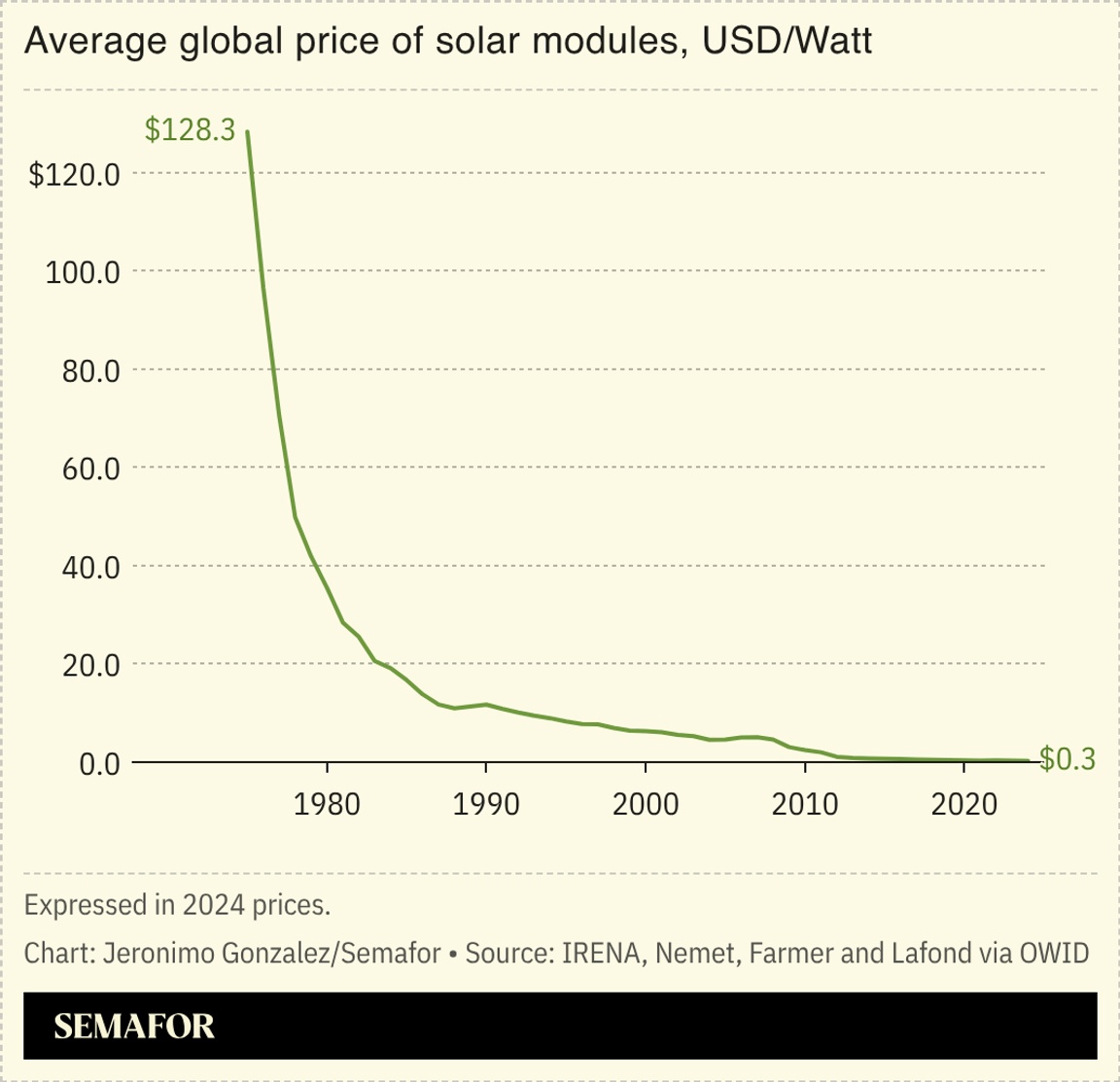 Chinese solar exports to Africa in April surged 83% year-on-year, as the energy crisis sparked by the Iran war fuels a surge in global demand for renewable energy. A glut in production in China has led to a collapse in prices for solar panels and parts in recent years, and Beijing is increasingly betting on the African market, where 600 million people still lack access to electricity: South Africa, the biggest purchaser of solar cells and panels, saw an 81% increase last month compared to the year prior, Reuters reported. With its abundant sunshine, Africa holds roughly 60% of the world’s solar energy potential, but generates only about 1% of global solar power. The ongoing Strait of Hormuz blockade has, meanwhile, driven oil price rises and exposed the continent’s dependence on fossil fuel imports. |
|
South Africa police clash with migrants |
 Members of “March and March” migrant protest are confronted by members of the South African police. Rajesh Jantilal/AFP via Getty Images. Members of “March and March” migrant protest are confronted by members of the South African police. Rajesh Jantilal/AFP via Getty Images.South African police used rubber bullets, tear gas, and stun grenades to disperse hundreds of migrants seeking emergency refuge following a wave of vigilante assaults — violence that has escalated diplomatic tensions with Ghana and Nigeria. The spate of attacks on migrants coincides with a highly contested local government election campaign. Independent researchers warn that political parties and self-appointed community leaders are weaponizing anti-immigrant sentiment to capture votes from a frustrated electorate: Rising unemployment, currently slightly above 40%, has made non-nationals an easy target for political figures in Africa’s biggest economy. The violence has also seen Accra and Abuja petition the African Union to force an emergency debate on the subject at next month’s AU summit. Pretoria has labeled Ghana’s move as “regrettable” and said it has a right to secure its borders. The violence comes weeks after the South African cabinet approved a plan to institutionalize a “First Safe Country” principle, which automatically disqualifies asylum seekers who pass through other safe nations before reaching South Africa. — Tiisetso Motsoeneng |
|
 - Africa is being treated as a “PR playground” for foreign firms to fulfill their ESG requirements, New African magazine argues. It says memoranda of understanding and other non-binding business agreements that can easily be abandoned are holding back genuine progress on the continent. The problem is that unfulfilled promises lock up thousands of hectares of prime land and exhaust the limited administrative bandwidth of host governments, who end up tailoring policy to a megaproject that was never going to exist, according to New African.
- The luxury apartment boom in Lagos can be seen as a success story in one of Africa’s first megacities. However, while apartment complexes like Eko Atlantic City appear to demonstrate great development success, the homes are heavily policed, secluded, and sit half-empty after communities that had long lived on Lagos’ waterfront were pushed out. More than 70% of the city’s residents live in informal slums, and yet, instead of addressing this, urban development policies “increasingly cater to high-income individuals, fuelling a luxury real estate boom that fails to address the housing needs of the majority,” The Republic argues.
- Trump’s accusation of “record” killings of Christians in Nigeria could have led to both a geopolitical and security crisis: Already, violence perpetrated by jihadists in the country’s so-called Middle Belt was becoming uncontrollable, and then Abuja faced threats of military intervention by Washington if it did not clamp down on the attacks. However, just as the pressure from the US reached a peak, a long and complex diplomatic campaign, outlined by security expert Ahmad Salkida for HumAngle, changed the trajectory, instead leading to a reframing of the violence as a “shared problem,” and joint strikes have brought some relief against terrorism.
- As Africa faces a major fertilizer shortage, sparked by the war in Iran, governments should look to more sustainable ways to produce food that is less reliant on foreign agricultural imports, two researchers argue in Al Jazeera. High fertilizer prices have long plagued farmers on the continent, despite the fact that many local foods, such as cassava and sorghum, do not require fertilizer. The economic cycle that keeps farmers tied to export markets at the expense of feeding their own communities “must be broken,” they argue.
|
|
 Business & Macro |
|
|


