| | In today’s edition: Gulf signs long-awaited UK trade deal, Saudi freezes out consultants, and Irania͏ ͏ ͏ ͏ ͏ ͏ |
| |  | Gulf |  |
| |
|
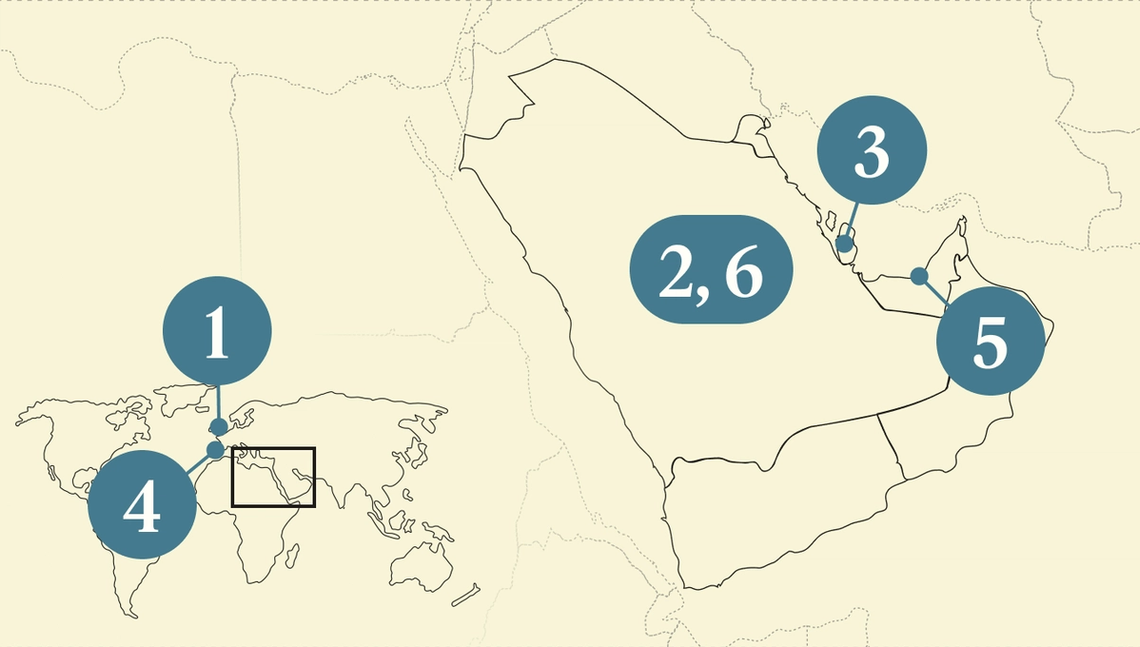 - UK-Gulf trade deal
- Saudi consultancy freeze
- Qatar Airways’ deep hole
- QIA backs Spanish fund
- UAE’s AI healthcare push
- US still needs the Gulf
 Why Iran has the “vulture advantage,” and other weekend reads. |
|
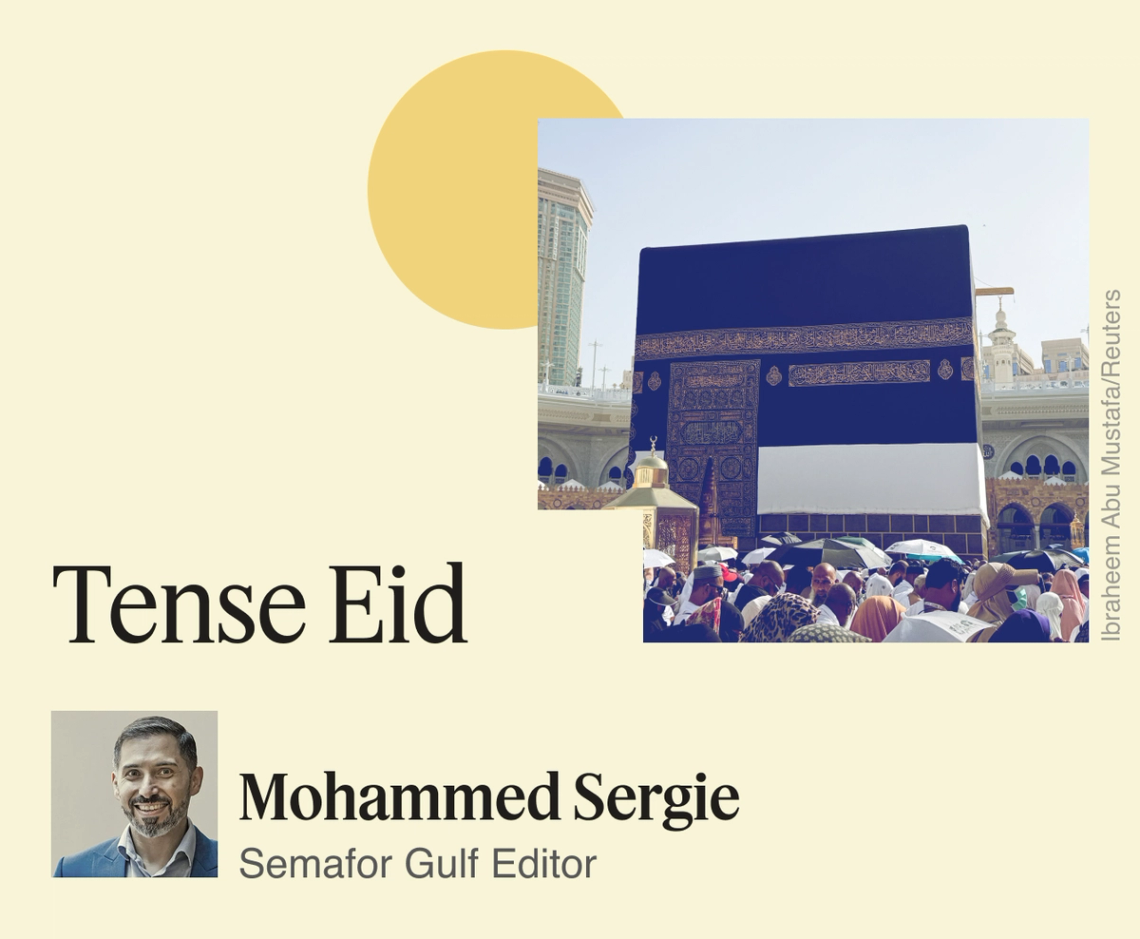 Another Eid is arriving under the shadow of war. Millions of Muslims are gathering in Mecca for Hajj as Washington and Tehran negotiate a framework that could end the fighting. The rhetoric is ominous. US President Donald Trump said there’s no urgency to make a deal or resume strikes: “I’d like to see few people killed, as opposed to a lot.” Iran, for its part, is threatening a broader retaliation if attacked again, vowing its “devastating blows will crush you.” Gulf countries have spent years warning against this war, and Trump said this week that the leaders of Qatar, Saudi Arabia, and the UAE had persuaded him to give Pakistan-brokered talks more time. For Riyadh, stability during Hajj is a national security concern. Around 1.7 million pilgrims are expected in Mecca, where Saudi Arabia has expanded cooling systems, surveillance technology, crowd monitoring, and transport infrastructure to manage the world’s largest annual religious gathering. Most Gulf countries will slow down for Eid next week. But for many, it will not feel like a normal holiday. Governments and militaries remain on alert for another escalation, while everyone else waits to see whether diplomacy prevails. Semafor Gulf will publish as usual next week — hopefully with a lighter news flow, and no shooting war. |
|
Gulf strikes trade deal with UK |
 UK Minister of State for Trade Chris Bryant and GCC Secretary General Jasem Mohamed Albudaiwi. Adrian Dennis/Pool via Reuters. UK Minister of State for Trade Chris Bryant and GCC Secretary General Jasem Mohamed Albudaiwi. Adrian Dennis/Pool via Reuters.Gulf countries finalized a free trade agreement with the UK — the first such deal between the six-member Gulf Cooperation Council and a G7 economy. At a time of conflict, it offers a timely boost for the region, although the war also means any benefits could be slow to materialize. The deal took almost four years to negotiate and covers trade in goods and services, including digital services. Also in the deal are provisions allowing UK companies to store and process data outside the Gulf, meaning they can avoid having to set up costly (and vulnerable) data centers in the region. Trade between the two sides was worth £52.9 billion ($71 billion) last year, according to official UK figures, making the bloc London’s fourth biggest trading partner after the EU, US, and China. Tariffs will be removed on 93% of UK exports to the Gulf over a 10-year period; the UK in turn hopes for greater investment flows from Gulf sovereign wealth funds. |
|
Saudi halts consultants’ payments |
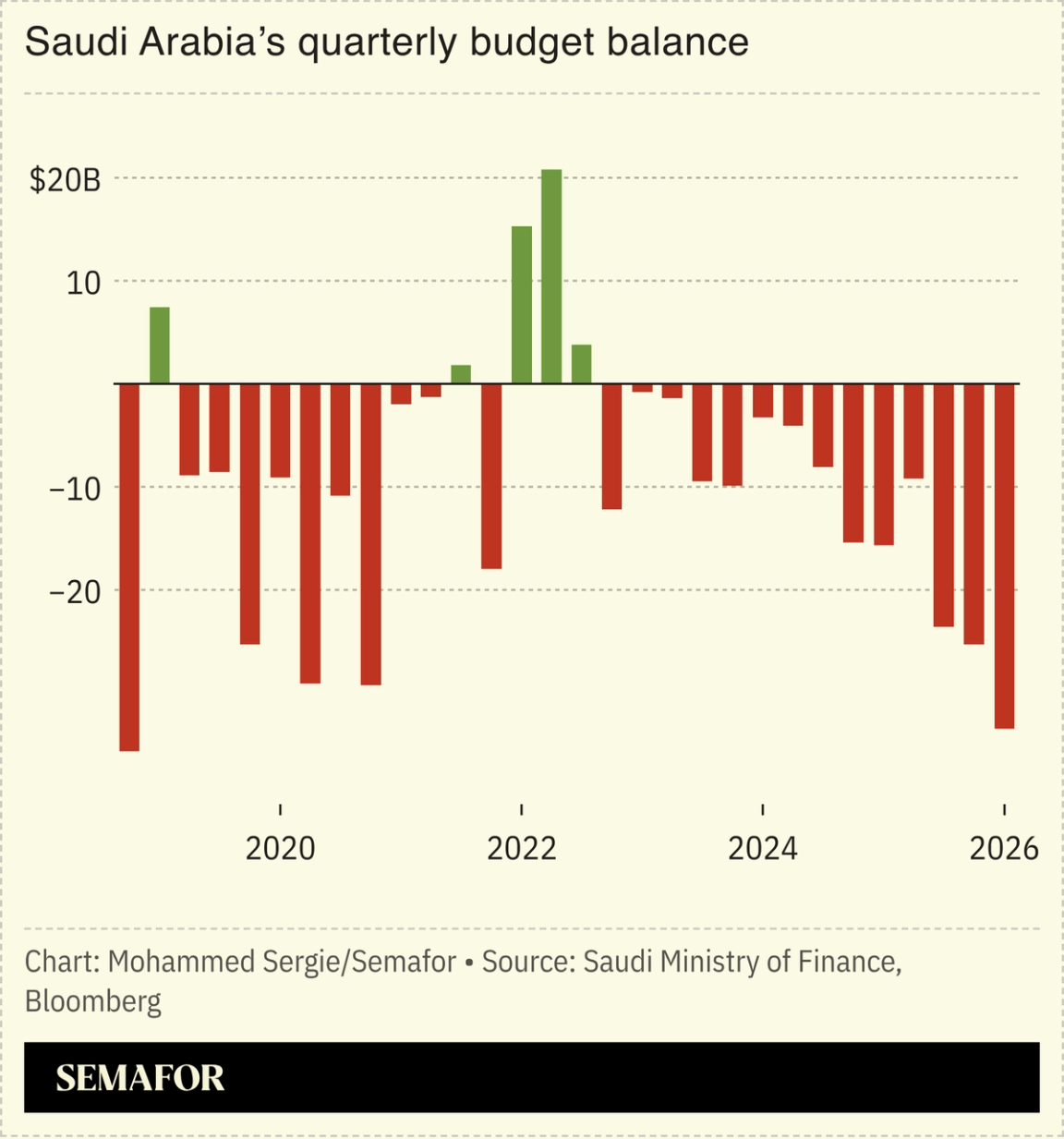 Saudi Arabia has ordered government entities to freeze payments to strategy advisers, management consultants, and law firms, as it weighs the economic impact of the Iran war, according to people familiar with the matter. The instruction revives memories of previous periods of economic upheaval in the country, when the government delayed payments to contractors as a way to preserve cash. The current order applies to ministries and government-controlled entities including Public Investment Fund, the kingdom’s nearly $1 trillion sovereign wealth fund, and many of its subsidiaries, the people said, and covers the period to the end of June. The Financial Times reported Thursday that Saudi Arabia had stopped awarding new work to Western consultants. A finance ministry spokesperson disputed there were any delays to payments and said the government “always looked to ensure all investments, including consultancy services, provide clear returns in line with the strategic objectives of Vision 2030.” — Matthew Martin |
|
Iran war shrinks Qatar Airways capacity |
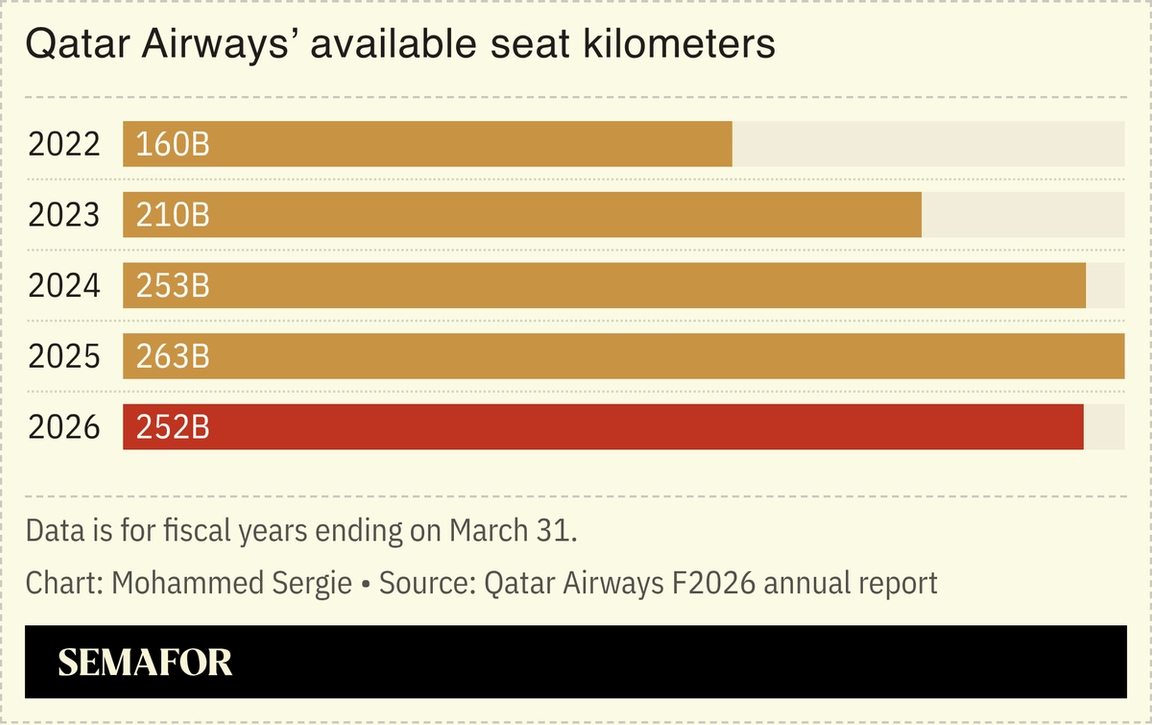 Qatar Airways reported a decline of more than 7% in annual net profit, in a sign of how Gulf airlines are struggling to cope with the biggest disruption to their operations since the pandemic. The state-owned carrier posted a $1.9 billion profit for the year to the end of March, with revenue and passenger traffic hit by repeated airspace closures. Thousands of cancelled flights led to a drop in available seat kilometers — an industry measure of airline capacity — indicating the depth of the hole Gulf airlines now have to dig themselves out of. Emirates earlier this month posted record profits, benefiting from a quicker restoration of capacity at its Dubai base during the conflict. Qatar Airways is still rebuilding its schedule and remains in expansion mode, with a large Boeing widebody order still on the books. One bright note amid the gloom: The airline’s private jet unit benefited from having much of its fleet positioned outside Qatar during the war. — Mohammed Sergie |
|
QIA backs Spanish tech fund |
 Qatar Investment Authority and Spain’s state-backed investor COFIDES will establish a €300 million ($349 million) joint fund to back Spanish companies involved in the green transition and digital transformation. The new vehicle will be managed by Madrid-based private equity firm Portobello Capital, which oversees about €4.5 billion in assets and focuses on Spanish technology, education, and IT businesses. The deal is the latest to reinforce the message from the Gulf’s biggest funds that they remain active investors even as the closure of the Strait of Hormuz pressures state revenues. QIA this month also committed $500 million alongside General Atlantic. |
|
UAE pushes AI into operating rooms |
 Courtesy of Cleveland Clinic Abu Dhabi Courtesy of Cleveland Clinic Abu DhabiAbu Dhabi is rolling out new artificial intelligence tools across roughly 100 operating rooms, as the emirate’s healthcare regulator looks to improve surgical outcomes and use predictive technologies to shape policy. The Department of Health Abu Dhabi is connecting operating rooms across the emirate’s hospitals using Johnson & Johnson’s Polyphonic surgical technology platform — part of a years-long push to build what the regulator described as an AI-native healthcare system. Initially designed as a learning tool, surgeons can pull up recordings of their own procedures, share clips with colleagues, and analyze their performance over time. The aim is for the insights gathered to shape policy, DOH undersecretary Dr. Noura Al Ghaithi told Semafor. “We will start understanding why this patient recovered faster, and why the other patient didn’t,” adding that such lessons will inform new clinical guidance. The UAE’s healthcare spending is among the highest in the Middle East, at around 5% of GDP and growing, according to the World Bank — though still far lower than what is spent in the US or the EU. Gulf states are beset by public health issues stemming from a high rate of obesity, which is contributing to the UAE’s focus on personalization and prevention. — Kelsey Warner |
|
View: Why the US needs Gulf allies |
  Tom Brenner/Reuters Tom Brenner/ReutersGulf countries’ interests are closely aligned with those of Washington when it comes to containing Iran and building a viable security architecture that can last into the future, writes Arab News Editor-in-Chief Faisal J. Abbas in a column for Semafor. “We are all trapped by geography. Iran is a neighbor and we are going to have to coexist, cooperate, and concentrate on building a better future for both Arabs and Iranians,” he says. That explains Saudi Arabia’s support for the Pakistan-led negotiations, along with a firm stance against a resumption of military action, an insistence on reopening the Strait of Hormuz, and a willingness to discuss Iranian threats and concerns thereafter. It is also in contrast to the position of Israel, but “perhaps one day, Washington will learn that the best advice comes from the steady Gulf monarchies, not from an Israeli prime minister facing prosecution,” Abbas adds. |
|
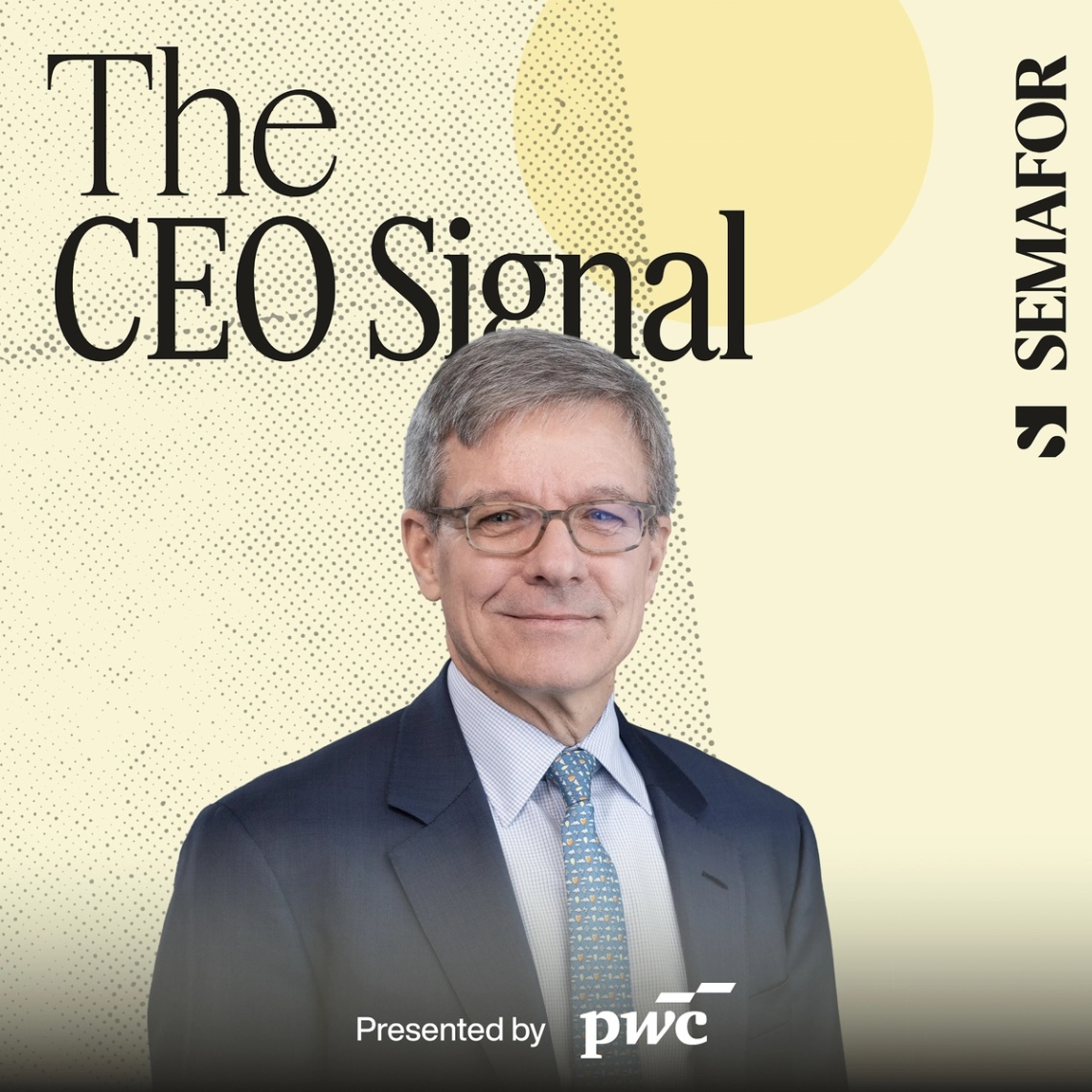 Tom Wilson runs an insurance company in a low-trust America. That makes trust a core business issue for Allstate. “We sell trust,” he says. On this week’s episode of The CEO Signal, presented by PwC, Penny Pritzker and Andrew Edgecliffe-Johnson ask Wilson how that premise shapes the way he leads one of America’s biggest insurers. Wilson, who has led Allstate for nearly two decades, is disappointed that more CEOs are not speaking up on societal issues — but he is not calling for corporate commentary on everything. He explains the framework Allstate uses to decide when it has standing to engage, how the company connects corporate purpose to employees’ personal purpose, and why AI should force leaders to ask a harder question than how much cost they can cut: What kinds of good jobs can they create? |
|
Razan Al Mubarak is president of the Switzerland-based International Union for Conservation of Nature. 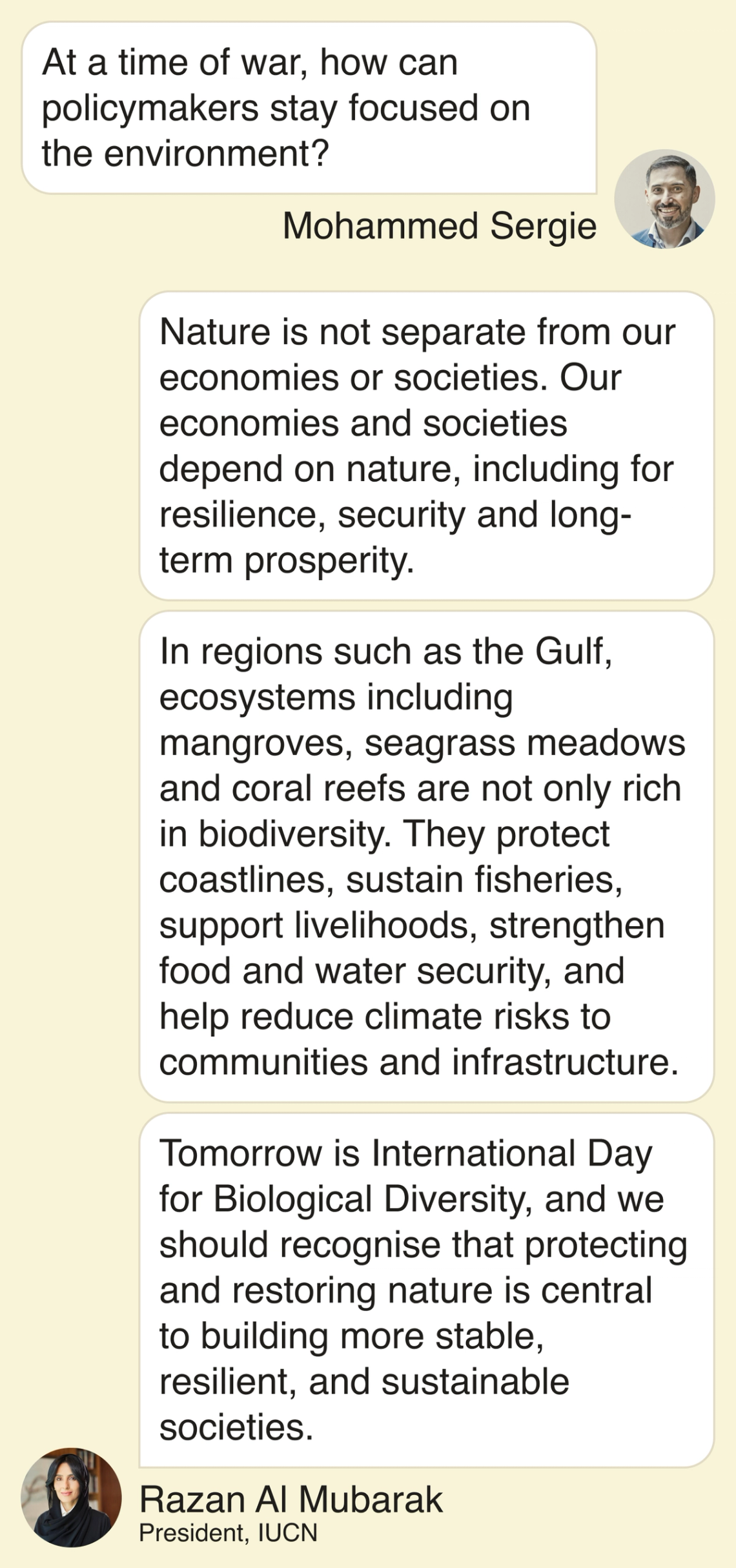 |
|
|


