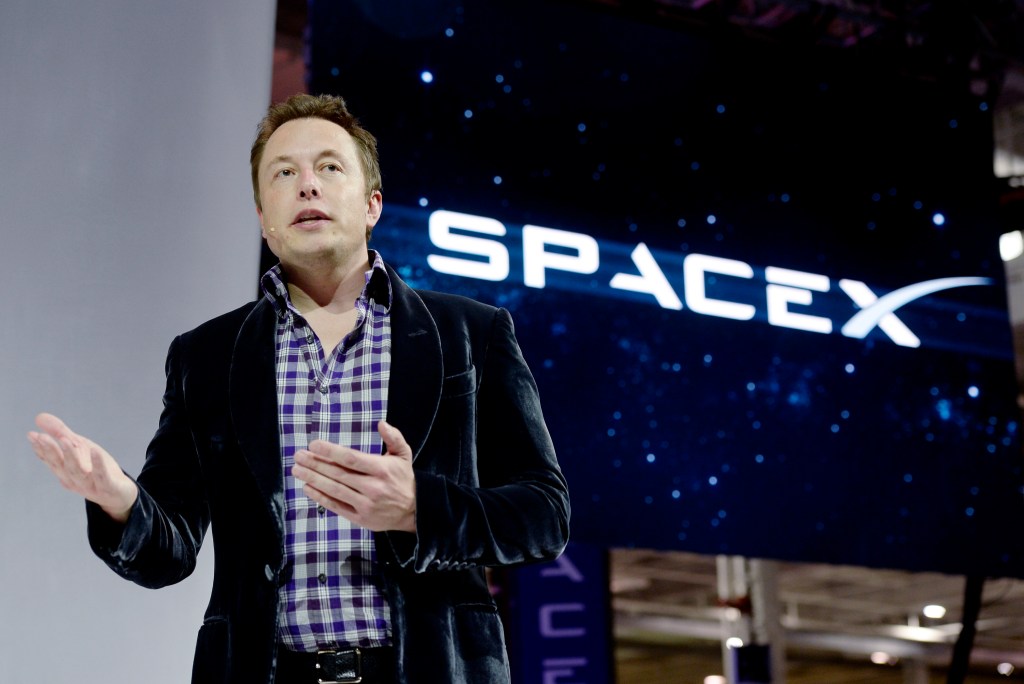
 SpaceX CEO Elon Musk unveiling the company's new manned spacecraft in Hawthorne, Calif. on May 29, 2014.Kevork Djansezian/Getty Images
Elon Musk’s SpaceX has, at long last,
filed its prospectus for what’s expected to be the largest initial public stock offering ever.
In an S-1 filing brimming with glossy color photos of rockets and space, the company disclosed plans Wednesday to list its shares on the Nasdaq under the ticker “SPCX.”
The IPO prospectus provided the first official look at the financials behind the much-hyped rocket maker that’s been around since 2002, as well as at several other businesses that Musk has folded into the company including xAI, the social media platform X, and the Starlink satellite communications business.
Starlink appears to be SpaceX’s primary financial engine, accounting for more than two-thirds of the revenue and earning $1.2 billion in profit in the most recent quarter. SpaceX’s space and AI divisions both lost money during the quarter.
Overall, SpaceX is growing at a steady clip—full year revenue of $18.7 billion in 2025 increased roughly 33% from $14.1 billion in 2024—but its losses are also accelerating. As of March 31, SpaceX has racked up an “accumulated deficit” of $41.3 billion, with a $4.27 billion net loss in Q1 of this year, compared to $528 million in the year ago quarter.
The filing also made clear that Musk—founder, CEO, chief technical officer, and board chair—has complete control of the company, with 85% of the voting power thanks to special Class B shares. He controls the election of all SpaceX directors and is free to engage in businesses that compete directly with rocketmaker.
According to
the Wall Street Journal, SpaceX is seeking to raise $80 billion in the IPO, valuing the company at $1.7 trillion. That would be well above the previous IPO record holder, oil giant Saudi Aramco, which raised $26 billion in 2019.
—Allie Garfinkle and Alexei Oreskovic