| | Meta begins massive AI-related layoffs, Nvidia reports record sales, and Samsung averts a strike.͏ ͏ ͏ ͏ ͏ ͏ |
| |  | Flagship |  |
| |
|
The World Today | 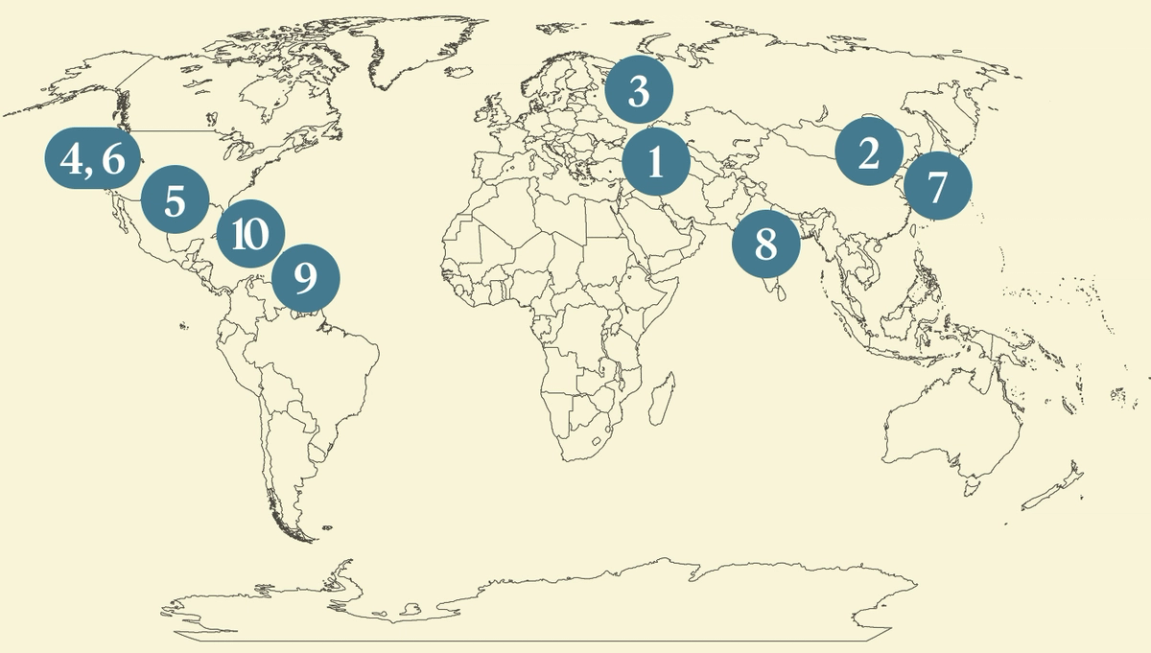 - Trump touts Iran progress
- No pipeline deal for Putin
- US, UK ease Russia sanctions
- AI test for Nvidia earnings
- Two foes, two big IPOs
- Meta starts AI-related layoffs
- Samsung strike averted
- Workers train robots
- ‘Benches become men’
- The diaspora World Cup
 A dynamic on-screen duo. |
|
Trump suggests final stages in Iran talks |
 Stringer/Reuters Stringer/ReutersThe US believes it is making progress with Iran in peace talks, but disagreements between Washington and Israel threaten to derail the diplomacy. US President Donald Trump reportedly held a tense call on Tuesday with Israeli Prime Minister Benjamin Netanyahu, who railed against a pact under consideration. Markets rebounded Wednesday after Trump said Washington is in the “final stages” with Tehran. But he has warned of US strikes if talks fail, prompting Iran to threaten to spread the war beyond the Middle East if attacks resume. “The central question now is not whether escalation may return, but how the next phase of the conflict could unfold,” an Iran scholar wrote, “and whether another round of war would fundamentally alter the strategic deadlock.” |
|
Putin leaves China without pipeline deal |
 Sputnik/Alexander Kazakov/Pool via Reuters Sputnik/Alexander Kazakov/Pool via ReutersThe Russian president’s trip to China this week reflected the countries’ shared opposition to a US-led world order, but Vladimir Putin left without an agreement on a long-stalled gas pipeline he urgently sought. The lack of a deal shows that “there are limits to the love” between the two partners, the BBC’s Russia editor wrote, even as Chinese leader Xi Jinping welcomed Putin with nearly identical ceremonies to those that greeted US President Donald Trump last week. Putin’s visit underscored a “growing imbalance” between China and Russia, while the back-to-back visits from Trump and Putin showed Xi is “now the power player to be reckoned with and courted,” The Washington Post wrote. Xi is reportedly heading to North Korea next week. |
|
US, UK ease Russia oil sanctions |
|
Jittery markets digest Nvidia earnings |
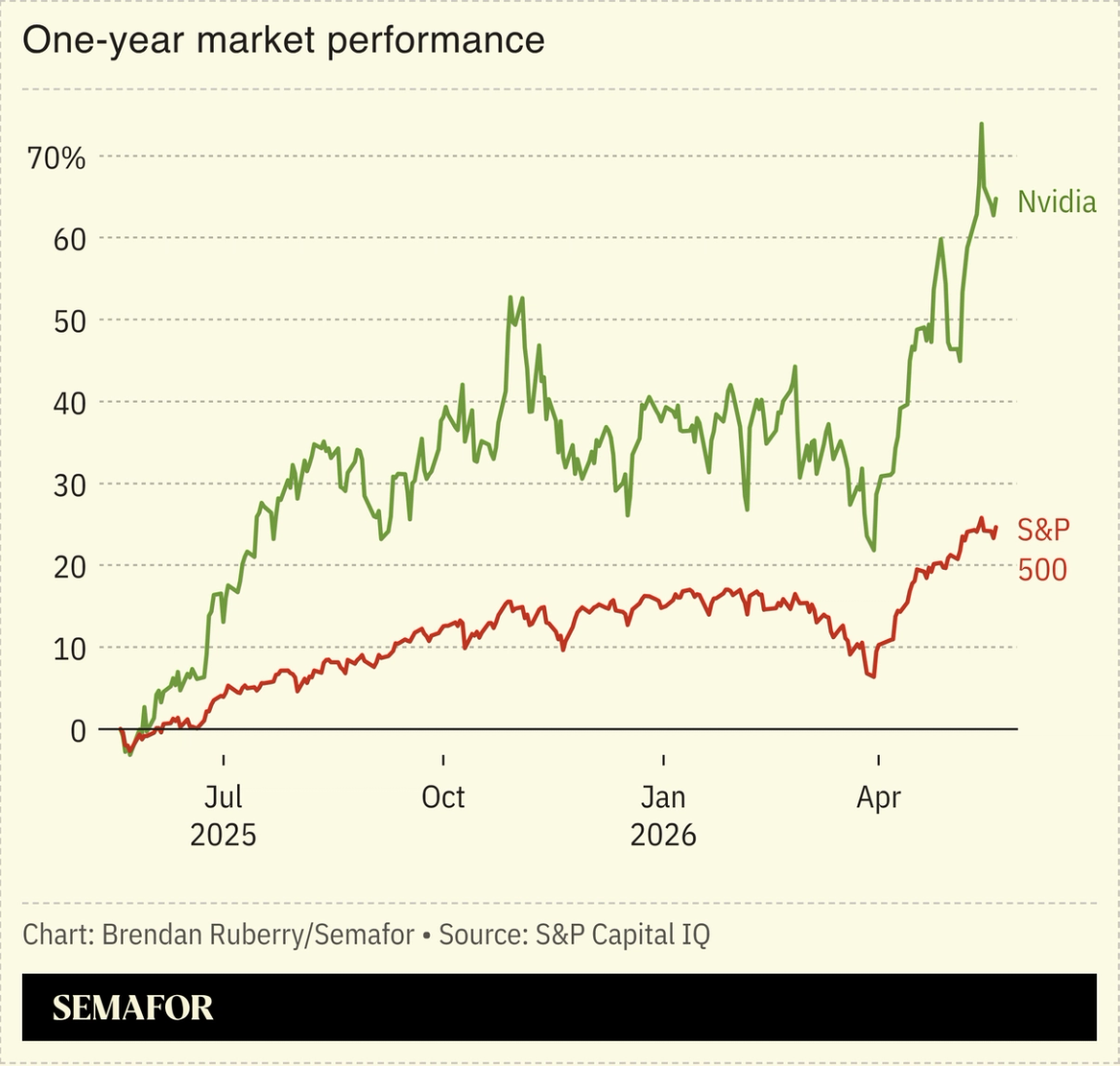 Nvidia’s revenue topped estimates for the latest quarter, the chip giant reported Wednesday, but it faces challenges ranging from macroeconomic headwinds and its China business to sky-high market expectations. Despite its blockbuster earnings streak, Nvidia shares have tumbled following the past three quarterly reports. “Analyst expectations may have hit unattainable highs” for the world’s most valuable company, CNBC wrote. Beijing reportedly banned a Nvidia gaming chip during the US-China summit, and much will depend on what the company says about its China sales. US bond market jitters stemming from the Iran war also threaten the AI boom, which Nvidia is central to, Bloomberg reported. |
|
OpenAI, SpaceX IPOs on deck |
 Carlos Barria/Gonzalo Fuentes/Reuters Carlos Barria/Gonzalo Fuentes/ReutersThe market is bracing for two massive initial public offerings from two tech rivals. Elon Musk’s SpaceX on Wednesday officially disclosed plans to list on the Nasdaq. But OpenAI, led by Sam Altman, who this week fended off a lawsuit from Musk — threatens to steal the thunder from SpaceX, with a confidential filing potentially coming this week, The Wall Street Journal reported. The listings would make 2026 the largest year ever for IPOs: AI startup Anthropic is also exploring a debut. OpenAI will likely face considerable challenges, however, including questions from investors over whether it can generate enough revenue to support its data center spending, amid fierce competition with Anthropic for customers. |
|
Meta begins layoffs amid rising AI angst |
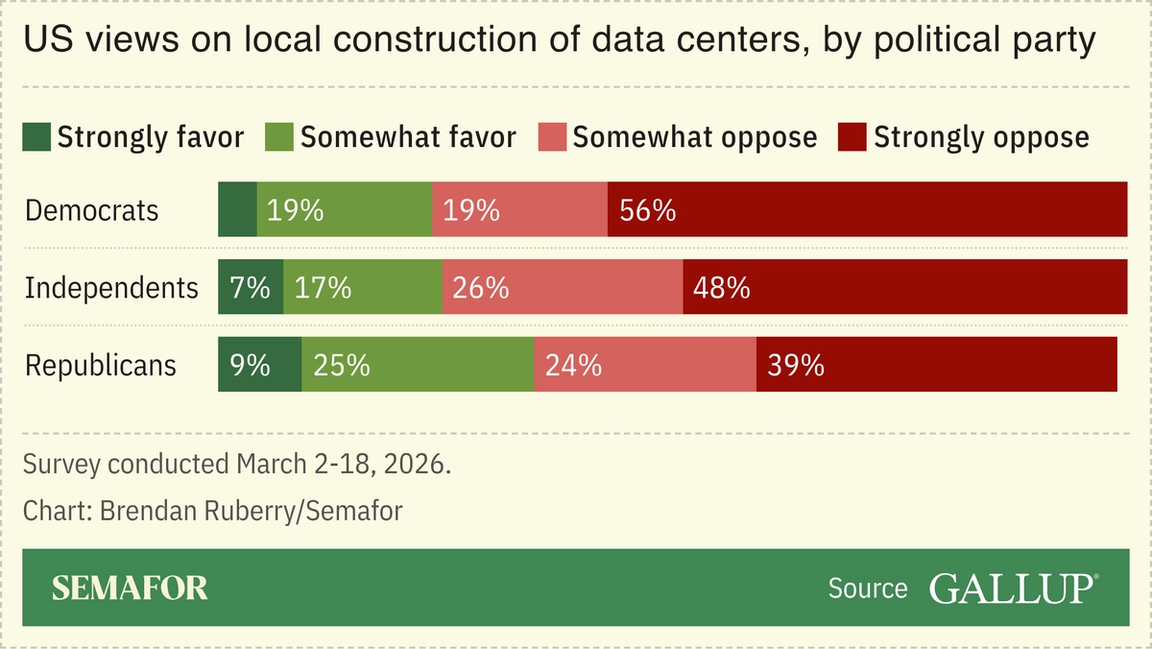 Meta began laying off thousands of workers on Wednesday, with plans to axe 10% of its staff to offset AI costs, and move another 7,000 into AI-focused roles. The market may respond positively when tech companies cite AI for layoffs — Meta’s shares went up Wednesday — but the industry-wide AI pivot is stoking angst among the public, particularly young people entering a tough job market: Speakers have been booed for mentioning AI in US graduation speeches. AI is rapidly advancing, and the growing backlash against it is also “all but unprecedented in its speed,” The Wall Street Journal wrote. One reason is that Americans “know our government is too sclerotic to handle [AI],” a New York Times columnist argued. |
|
Samsung, union reach deal to avoid strike |
 Kim Hong-Ji/Reuters Kim Hong-Ji/ReutersSamsung struck a last-minute deal with its union to avoid a strike that threatened to do serious damage to South Korea’s economy. Nearly 50,000 workers were set to walk off the job; Seoul had warned it would invoke emergency mediation powers to stop the strike. The government is broadly seen as union-friendly — President Lee Jae Myung is a former youth laborer — but he put pressure on both sides to reach an agreement. Samsung accounts for a quarter of South Korea’s exports, and its stock has soared in the last year amid the AI boom and voracious demand for its memory chips. Central to the union dispute was the issue of performance bonuses resulting from the “semiconductor supercycle.” |
|
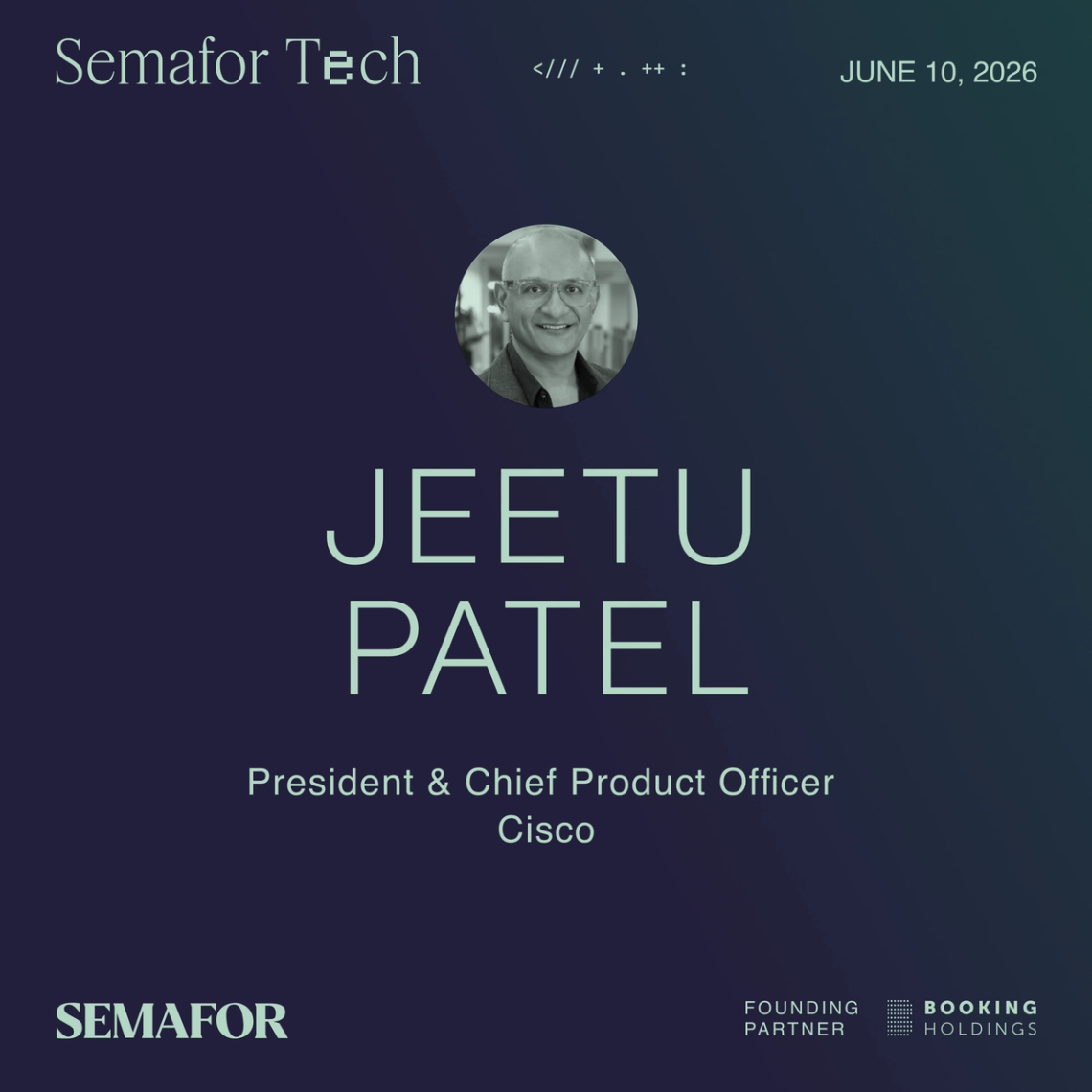 On Wednesday, June 10, Semafor Tech will convene in San Francisco to explore the breakthroughs pushing technology into a new phase of economic and geopolitical consequence, from quantum computing and fusion energy to humanoid robotics. The challenge extends beyond tracking innovation to understanding its downstream effects across industries, institutions, and power structures. Semafor Tech Editor Reed Albergotti will host on-the-record conversations with Jeetu Patel, President & Chief Product Officer, Cisco; Aaron Levie, Co-Founder & CEO, Box; Charina Chou, Chief Operating Officer, Google Quantum AI; Max Hodak, Co-Founder & CEO, Science Corporation; and Pete Shadbolt, Co-Founder & Chief Scientific Officer, PsiQuantum, as they explore how breakthrough technologies are reshaping industries, redefining competitive advantage, and transforming the global economy. |
|
Tech firms seek first-person worker data |
 Bhawika Chhabra/Reuters Bhawika Chhabra/ReutersIndian factory workers are helping train the technology that aims to eventually replace them. Laborers in some facilities are made to wear headsets provided by an Indian startup that collects video footage, with the intention to “profit from the growing demand for data to train robots,” Indian outlet Scroll reported. One worker said the camera device “felt like it was sucking our blood.” The tactic speaks to Big Tech’s fierce quest for data to prepare robots for real-world tasks, especially first-person “egocentric data.” The trend isn’t limited to India: DoorDash rolled out an app for its US gig workers allowing them to earn extra cash by recording themselves doing everyday tasks, in an effort to train AI-powered robots. |
|
‘A major milestone’ for AI |
 Commonwealth Foundation Creatives/Facebook Commonwealth Foundation Creatives/FacebookAn apparently AI-written short story won a literary prize, in what one observer archly called “a major milestone.” A judge described Jamir Nazir’s The Serpent in the Grove as “evocative.” But its style, replete with lists of three and unusual imagery such as, “She had the kind of walking that made benches become men,” raised suspicions, and AI-detection software agreed. It is “damning” for Granta, which published the story on its site, argued Literary Hub, but also a sign that “AI writing is getting harder to detect,” at least by awards judges. Still, it could be worse. A recent book about truth in the age of AI was revealed to contain apparently hallucinated AI quotes. It’s not just embarrassing — it’s ironic. |
|
|


