From the Greenberg Center for Geoeconomics |
|
|
|
 |
By Edward Fishman
Senior Fellow and Director of the Maurice R. Greenberg Center for Geoeconomics
|
|
Dear readers,
Eleven weeks into the Iran war, the geoeconomic consequences are becoming clearer. As I discussed with Susan Glasser, Jane Mayer, and Evan Osnos on the New Yorker’s Political Scene podcast, Iran has begun entrenching its control over the Strait of Hormuz, the world’s most vital energy chokepoint, and a coherent plan for reopening the waterway remains elusive.
But the fallout extends far beyond energy, and our team at the Geoeconomics Center has been tracking how the conflict is beginning to reshape global finance, trade, and industrial competition. Benn Steil and Yuma Schuster show how the war has increased usage of China’s renminbi and its Cross-Border Interbank Payment System (CIPS), which it created to circumvent the dollar-based financial system. Rebecca Patterson highlights another emerging vulnerability: U.S. investment funds and technology companies have become increasingly dependent on Gulf capital, which could recede as governments in the region turn inward to focus on reconstruction and defense spending. Depending on the scale of the pullback, the consequences could reverberate through U.S. financial markets and the buildout of AI infrastructure.
The crisis at the Strait of Hormuz has also accelerated adoption of clean-energy technologies, fueling demand for Chinese solar panels, batteries, and electric vehicles. That trend could deepen a challenge underscored in a new policy brief by Brad Setser and Sander Tordoir: Germany, Europe’s traditional industrial powerhouse, faces a growing threat of deindustrialization as Chinese manufacturing output surges. Setser and Tordoir argue that Europe’s current defenses are woefully insufficient.
Meanwhile, the United States continues experimenting with novel trade and industrial policies. In a new essay for Foreign Affairs, Inu Manak and Allison Smith warn that although President Donald Trump’s tariffs and pressure tactics may yield short-term concessions, they are also encouraging allies to deepen economic ties with one another and reduce dependence on the United States. At home, the Trump administration is also accumulating a growing portfolio of equity stakes in U.S. companies, from Intel to MP Materials to Vulcan Elements. Jonathan Hillman has built a tracker that brings those investments together in one place.
Below you’ll find those contributions and more from our team over the past month. Thank you for reading, and please send us any feedback or ideas.
All best,
Eddie |
|
|
|
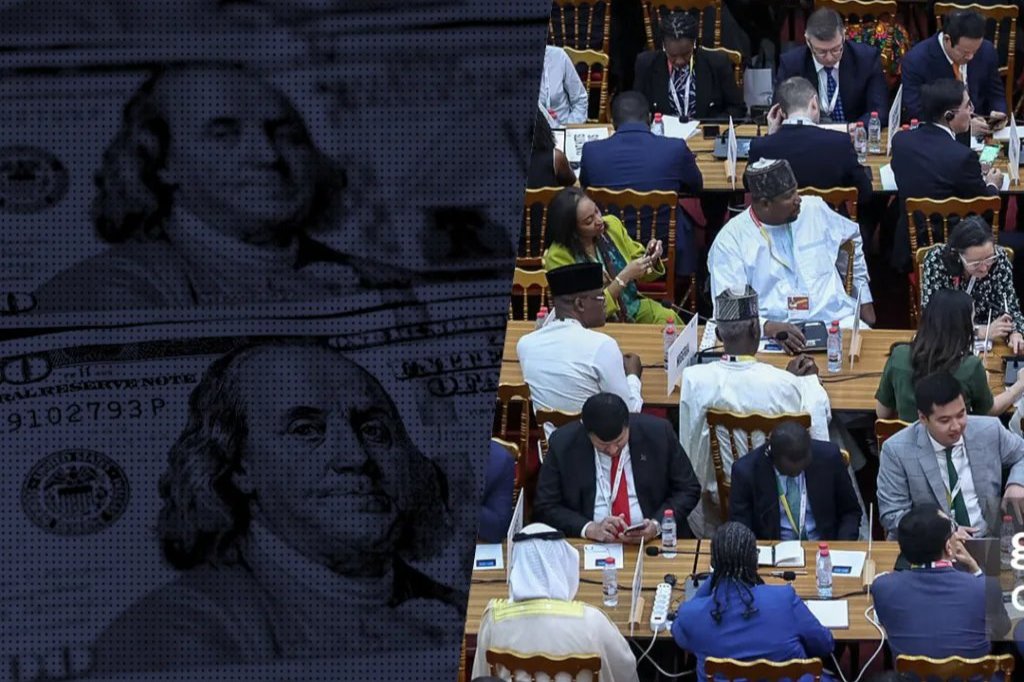
Barry Eichengreen of the University of California, Berkeley and Algorand Foundation CEO Staci Warden join CFR Fellows Zongyuan Zoe Liu and Fishman to examine the future of the U.S. dollar amid rising geopolitical competition and the growing influence of digital currencies, and what those shifts mean for the global monetary order. Watch the event
|
|
|
|
The UAE wants a swap line—but debtors don't usually bail out their creditors, write CFR Fellow Setser and Oxford economist Stephen Paduano in the Financial Times. The tool for this moment already exists: the Foreign and International Monetary Authorities Repo Facility was made for it. Read the article
|
|
|
|
China did not truly de-dollarize—it just stopped adding to its formal reserves, shifting all incremental growth into less transparent state entities. China, Inc. could now hold more dollars off the State Administration of Foreign Exchange’s balance sheet than on it, highlights Setser. Learn more
|
|
|
|
CFR Fellow Steil and Greenberg Center analyst Schuster find that CIPS volumes and Chinese financial stocks spiked after U.S. attacks on Iran—and fell just as sharply after the ceasefire—suggesting markets still prefer dollars but increasingly view China’s alternative as cost-effective and reliable. Check out the data
|
|
|
|
What share of global exports are invoiced in U.S. dollars? |
|
|
|
Trade and the Global Economic Order |
|
|
|
The Trump administration’s approach is not reciprocity but coercive unilateralism—one trading partners are already moving to route around, write CFR Fellow Inu Manak and Associate Director for geoeconomics Smith. Read the Foreign Affairs piece
|
|
|
|
Trump’s affection for the United States-Mexico-Canada Agreement—which he once called “the best and most important trade deal ever made”—has since waned, and with the mandatory joint review arriving this summer, the stage is set for a fraught renegotiation, writes CFR President Michael Froman. Read more
|
|
|
|
This spring’s International Monetary Fund and World Bank meetings highlighted how the Iran war, rising geopolitical uncertainty, and shifting supply chains are shaping a more fragile economic outlook that leaders must plan for, explains CFR Fellow Patterson. Read how
|
|
|
|
Iran’s closure of the Strait of Hormuz has pushed inflation above 3 percent and consumer confidence to an all-time low—and the supply shocks have only begun to trickle through, explain CFR Fellow Roger W. Ferguson Jr. and Research Associate Maximilian Hippold. Get their takes
|
|
|
|
Technology and Strategic Industries |
|
|
|
Germany’s manufacturers are being squeezed out in China, in foreign markets, and at home. Berlin and Brussels must bolster trade defenses or prepare to offset the costs of deindustrialization at Beijing’s hand, write Setser and Centre for European Reform Chief Economist Sander Tordoir. Read their policy brief
|
|
|
|
|