| | In this edition: Kenya cuts fuel prices, two senior Africa aides depart the Hill, and the African fi͏ ͏ ͏ ͏ ͏ ͏ |
| |  Nairobi Nairobi | Dar es Salaam | Khartoum |
 | Africa |  |
| |
|
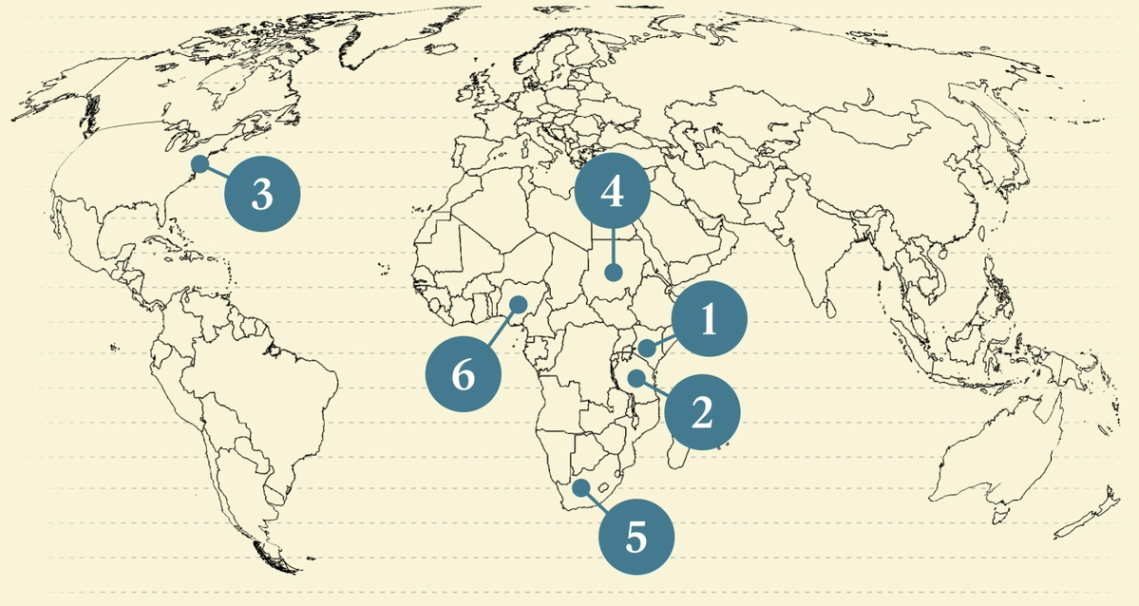 - Kenya cuts fuel prices
- Scrutiny of US-Tanzania ties
- US Africa aides depart
- Qatar Airways expands
- Retail giant sells stake
- The potential of minigrids
 The African films making waves at Cannes. |
|
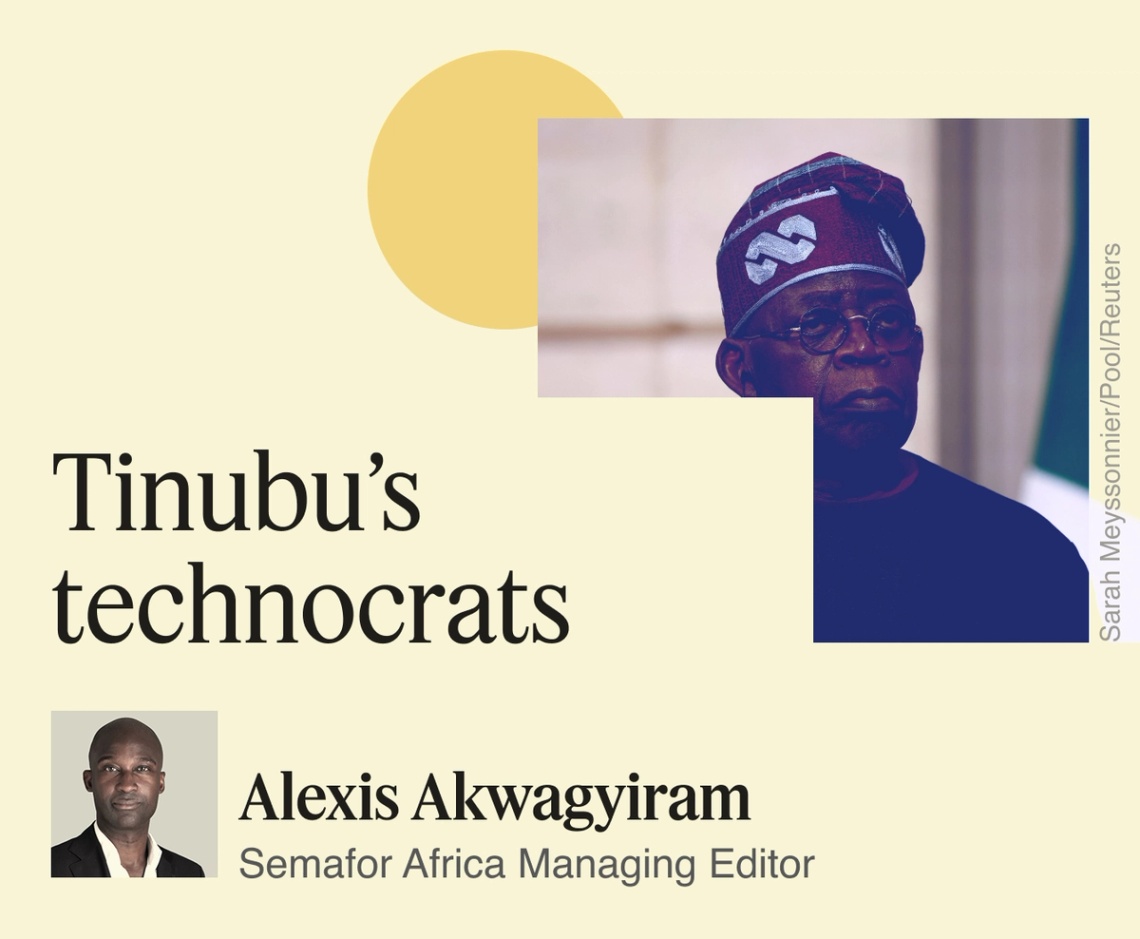 The age contrast in African politics is striking — the youngest continent is led by some of the world’s oldest leaders. They often cling on to longstanding elderly allies, holding back fresh political talent. But Nigeria’s septuagenarian President Bola Tinubu seems to be bucking that trend. Last month, 70-year-old Wale Edun was replaced as finance minister by Taiwo Oyedele, 20 years his junior. It was emblematic of a broader generational shift: Edun was Lagos State’s finance commissioner a quarter of a century ago when Tinubu was governor, and his ministerial appointment reflected the established order in which a top job follows several years — sometimes even decades — of fealty. Oyedele’s recent elevation is part of a pattern: Zacch Adedeji, a technocrat in his 40s, was appointed head of the country’s tax agency shortly after Tinubu took office in 2023. The president’s picks for customs chief and accountant general are both in their 50s. Sure, Nigeria’s median age is 18, but these are young pups by African political standards. Tinubu appears to be upending the patronage system, instead rewarding effective policymaking. The new finance minister, for example, oversaw a tax system revamp that was among the factors cited by S&P in its recent upgrade of Nigeria’s sovereign rating. But the Nigerian president’s detractors point to another thread that connects these appointees: They’re all from Tinubu’s Yoruba ethnic group, concentrated in southwest Nigeria. So too is the central bank governor he appointed early in his presidency. Tinubu’s critics say he’s concentrating control of key economic levers in his political base. With the presidential election set for January, Tinubu’s approach could yet backfire. Nigeria’s regional balance of power is maintained through an unofficial system in which two terms of a northern president are followed by two for a southerner. So while Tinubu ostensibly has more runway, opposition candidate Peter Obi — who came third in Nigeria’s last election by canvassing support from his southeast base — has made an unusual vow: Obi says he’d only serve one term, even if coerced to stay longer at gunpoint. But there’s no escaping the age issue: Obi’s path to the presidency rests heavily on his ability to mobilize young voters, just as he did in the last vote. Age is much more than a number in Nigerian politics. |
|
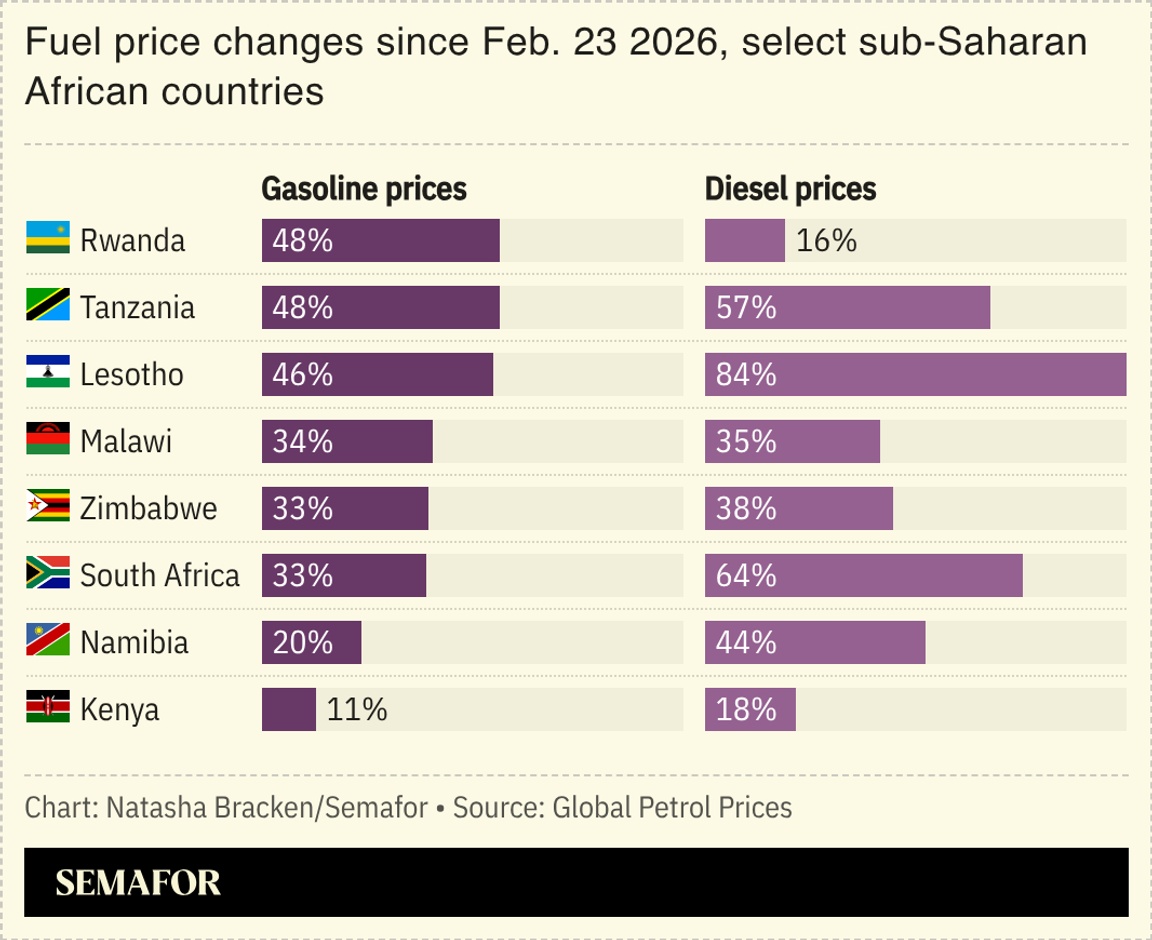 Kenya’s government cut diesel prices after deadly protests against hikes triggered by the Iran war. It follows a similar move by Comoros, which suspended fuel price rises over the weekend following demonstrations. Across Africa, countries reliant on fuel imports from the Middle East are scrambling to replenish energy resources. Nairobi has been rocked by demonstrations, with four people killed and dozens injured. The transport union called off another planned strike after the government pledged to reduce diesel’s per-liter price, a cut that is set to cost the government nearly $21 million in lost revenues and which undermined a push by President William Ruto to plug the fiscal deficit ahead of next year’s elections. Higher fuel prices also drove a sharp acceleration in South Africa’s consumer inflation; Goldman Sachs, in a note to clients, said it expects the country’s central bank to raise its main interest rate by 25 basis points next week. |
|
US senators question Tanzania ties |
| |  | Adrian Elimian |
| |
 Tanzania’s President Samia Suluhu Hassan. Michael JamsonI/AFP via Getty Images. Tanzania’s President Samia Suluhu Hassan. Michael JamsonI/AFP via Getty Images.US senators want the Trump administration to overhaul Washington’s relationship with Tanzania in response to the East African nation’s violent crackdown following last year’s disputed presidential election. The new bill from Democratic Sen. Jeanne Shaheen and Republican Sen. Ted Cruz would authorize sanctions on Tanzanian officials and freeze security assistance to the country amid the political crisis. Cruz emphasized reports of Christians being targeted, and accused the Tanzanian government of carrying out “a campaign of political repression and religious persecution.” The State Department said the administration “does not seek to lecture other countries but encourages sovereign states to respect the human rights and fundamental freedoms of their citizens.” In a statement to Semafor, Tanzania’s government said that it “is committed to strengthen[ing] its bilateral relations with the US.” |
|
Two GOP Africa staffers leave Hill |
 Kent Nishimura/Reuters Kent Nishimura/ReutersTwo top Republican congressional staffers on US-Africa policy are leaving their roles this month. John “JT” Tomaszewski, senior staffer to Senate Foreign Relations Committee Chairman Jim Risch, is joining the National Endowment for Democracy as senior Africa director and Joe Foltz, staff director of the House Foreign Affairs Committee’s Africa subcommittee, is headed to logistics company Zipline to be director of global partnerships and federal affairs. Both men helped shape US-Africa policy on Capitol Hill across multiple administrations, and each was considered for the White House’s Africa director role during Trump’s second term. Their unrelated, simultaneous exits come at a fraught moment for US-Africa relations, and leave the State Department’s incoming top Africa official, Frank Garcia — confirmed by the Senate Monday evening — with one less bridge to Congress. — Yinka Adegoke This item first appeared in Semafor’s twice-daily DC briefing. Subscribe here. → |
|
|
Qatar Airways grows Africa network |
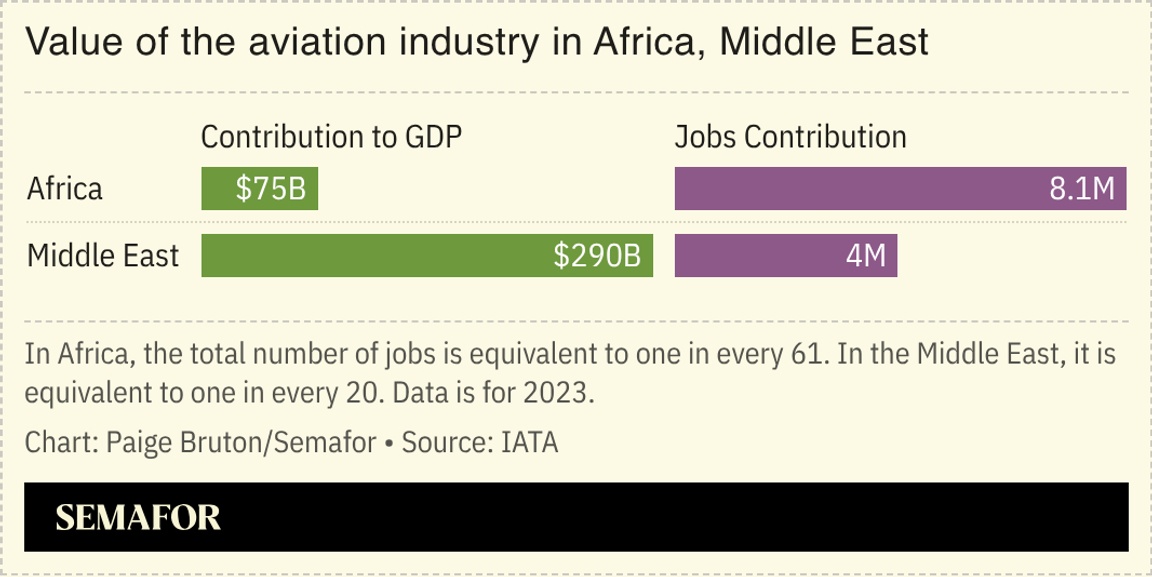 Qatar Airways is expanding its African network with new routes and more flights from June, as Gulf companies push deeper into the continent. The Doha-based carrier will resume flights to the Seychelles and Kigali, add a daily service to Marrakesh, and launch a new route to Port Sudan as it kickstarts a network hampered by the Iran war. UAE state-backed firms have so far led Gulf investments into Africa — which span agriculture, mining, renewable energy, and ports — to overtake China as the largest foreign investor. But other players such as Qatar are also pouring into the continent. Power International Holding, owned by Qatari billionaire siblings Moutaz and Ramez Al-Khayyat, is bidding for a contract to build a $12.5 billion airport near Ethiopia’s capital Addis Ababa — set to be the continent’s largest — and a 400-kilometer (250-mile) highway project in DR Congo, Bloomberg reported. Meanwhile, Dubai-based ride-hailing platform Yango Group plans to invest at least $150 million in Africa this year, entering 10 new markets as it bets on smaller cities its larger rivals have overlooked. — Kelsey Warner |
|
Pick n Pay raises nearly $300M |
 Siphiwe Sibeko/Reuters Siphiwe Sibeko/ReutersSouth African supermarket giant Pick n Pay raised almost $300 million by selling shares in its fast-growing discount unit to shore up its money-losing operations. Pick n Pay sold a 12.5% stake in Boxer, which has seen its valuation surge since its IPO in 2024. The sale — which trimmed Pick n Pay’s stake to about 53% — gives the Cape Town-based retailer a much needed cash injection as CEO Sean Summers cuts costs, closes underperforming stores, and renegotiates staff contracts to save the company. Pick n Pay, which competes with Shoprite, Africa’s biggest grocer, and Walmart’s South African unit, Massmart, has underperformed in the stock market for years. The board brought back Summers, who left the company in 2007 and was credited with making Pick n Pay the market leader during his eight-year tenure, to turn its fortunes around. — Tiisetso Motsoeneng |
|
The potential of solar minigrids |
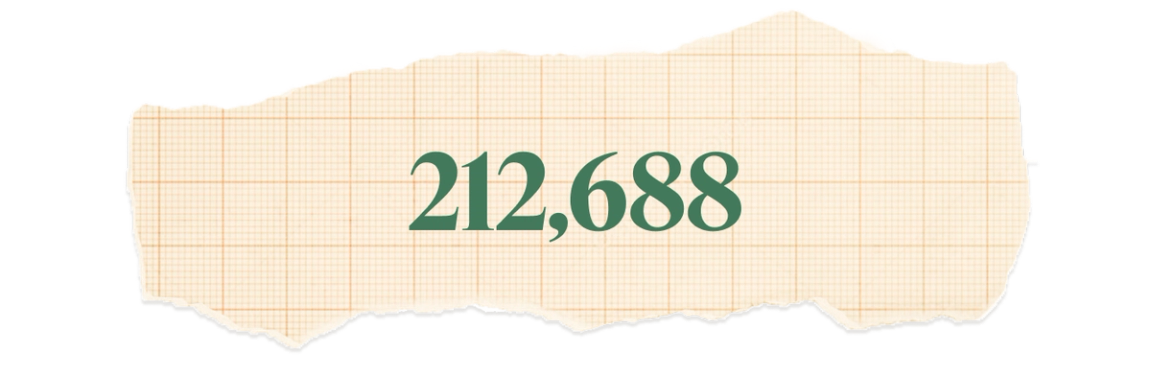 Deploying more than 10,000 solar minigrids in Nigeria could create nearly 213,000 jobs, according to a new report. Off-grid solar electricity is among the solutions the African Development Bank and World Bank are backing under their Mission 300 program to halve the continent’s energy gap: Around 600 million Africans lack access to reliable electricity. Nigeria was chosen for the study by the Africa Policy Research Institute, a Berlin-based think tank, as it has the fastest-growing market for private minigrids in sub-Saharan Africa. Earlier this month, Renewvia Energy Corp., a US solar minigrids firm that operates in Kenya and Nigeria, said it was expanding into DR Congo, Ethiopia, Rwanda, and Uganda. — Preeti Jha |
|
 The Africa Debate 2026 returns to Guildhall, London, on 3 June. Hosted by Invest Africa, this year’s theme — Redefining Partnership: Navigating a World in Transition — brings together African heads of state, including H.E. John Dramani Mahama, President of Ghana, as well as ministers and business leaders to debate the forces shaping the continent’s economic future. See the full speaker list, and secure your place. |
|
 Business & Macro |
|
|


