| | Foreign governments dump US Treasury bonds, Russia aims to get China’s approval on a long-delayed pi͏ ͏ ͏ ͏ ͏ ͏ |
| |  | Flagship |  |
| |
|
The World Today | 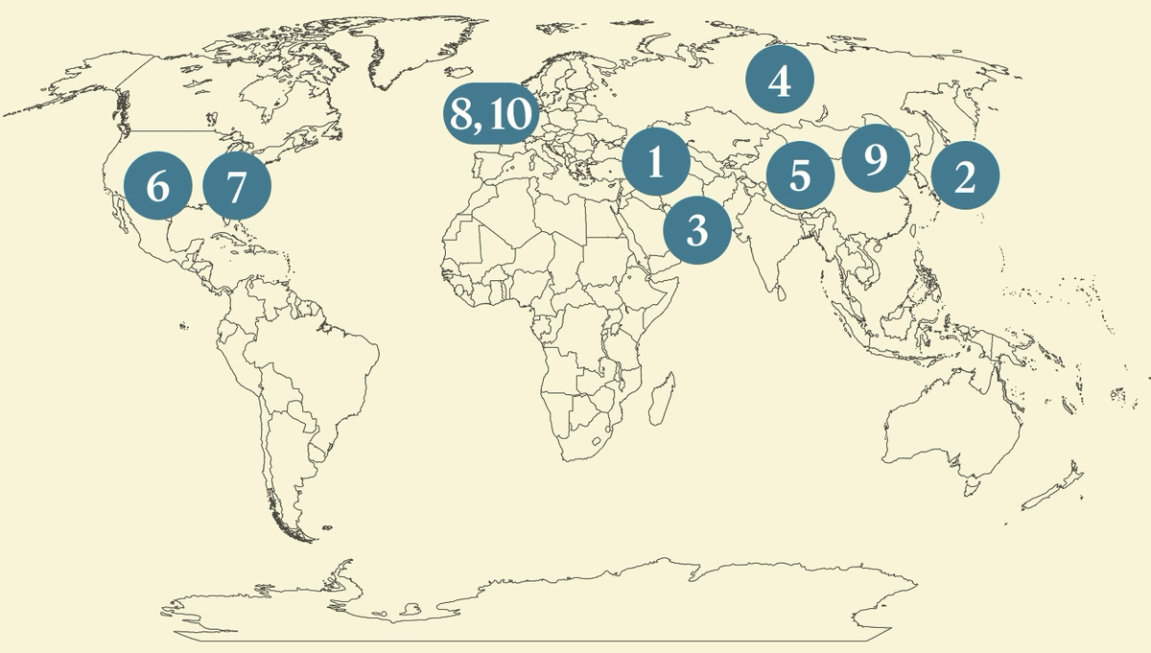 - Trump threatens Iran again
- Shedding US Treasurys
- Deals to bypass Hormuz
- Xi, Putin to talk pipeline
- Push away from fossil fuels
- SpaceX’s big IPO test
- Inflation hits Big Booze
- UK rewrites hacking law
- China’s new clout chasers
- Birds of prey bounce back
 A new book in defense of the classics. |
|
Little progress in US-Iran talks |
 Kevin Lamarque/Reuters Kevin Lamarque/ReutersThe US and Iran remain far apart on the terms of a potential peace deal, raising doubts about finding an off-ramp to the conflict during a strained ceasefire. US President Donald Trump delayed strikes against Iran in light of ongoing negotiations, but on Tuesday threatened “another big hit” if talks failed, leaving the Middle East on edge, with mediators seeing little progress. The unpredictability poses a growing risk to energy markets and is muddying analysts’ crystal balls, Semafor’s Tim McDonnell wrote: One expert put the odds of renewed military escalation at 70%, while another predicted the Strait of Hormuz would reopen in June. Some NATO members have pushed for the alliance to help ships through the waterway if it hasn’t reopened by July. |
|
Foreign govts. dump US Treasurys |
 Jeenah Moon/Reuters Jeenah Moon/ReutersForeign governments are dumping US Treasury bonds to stabilize their currencies amid the energy shock and financial volatility triggered by the Iran war. Data showed seven of the top 10 foreign holders of US government debt trimmed their holdings of US Treasurys in March: Japan, to protect its currency, and China in response to short-term volatility, though Beijing has been steadily reducing its exposure to US dollar assets for years. Saudi Arabia and the UAE also shed their holdings as the war has stopped the oil-for-dollars trade. “US Treasury yields are flirting with levels last seen in 2007,” Semafor’s Liz Hoffman wrote, owing to a global bond selloff driven by fears of inflation and sustained high oil prices. |
|
New projects seek to bypass Hormuz |
|
China, Russia to discuss pipeline |
 Alexander Manzyuk/Reuters Alexander Manzyuk/ReutersRussian President Vladimir Putin’s visit to Beijing this week could clear a logjam for the construction of a long-delayed oil pipeline to China. Putin said earlier this month that a deal to increase overland flows eastward was “very close,” as the Kremlin’s battlefield strategy stalls out and its economic woes mount: Nearly one-third of Russian small businesses are considering closure or sale amid crushing inflation. The PS2 pipeline presents Moscow’s “only real chance” of offsetting the loss of its European markets, the Financial Times wrote. While Russia needs PS2 more than China, Beijing may approve it on the grounds that its seaborne supplies could be further disrupted by a resumption of hostilities in Iran, a Carnegie expert told The Economist. |
|
A move away from fossil fuel imports |
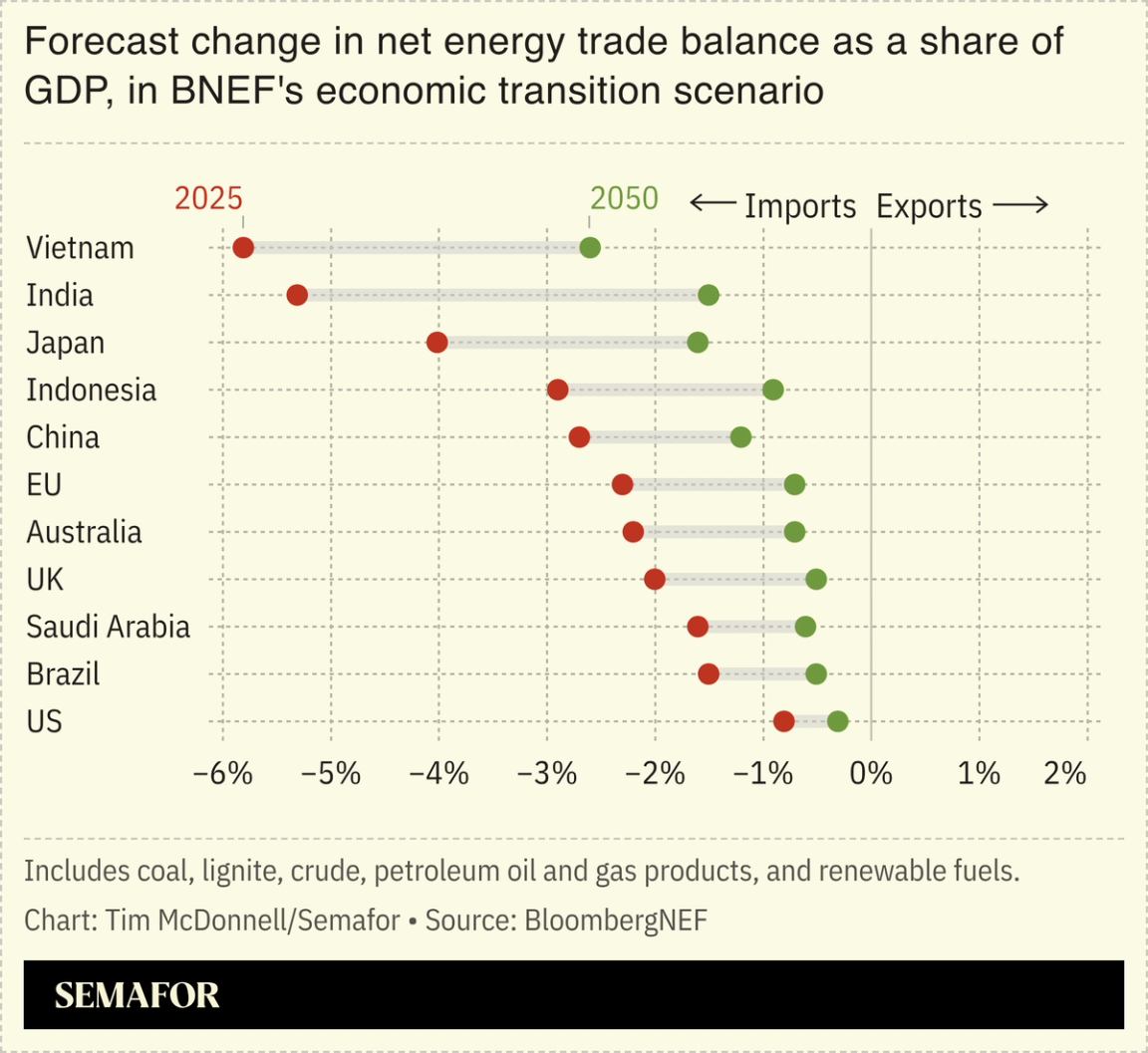 Global oil demand will plateau in the early 2030s, a new report forecast, as the Iran war’s energy shock drives countries to break their dependence on fossil fuel imports. A record $2.3 trillion was invested globally in clean energy companies, projects, and technologies in 2025, BloombergNEF reported. Clean energy adoption — accelerated by the Middle East crisis — is already seeing countries spend a smaller share of their GDP on fossil fuel purchases, BNEF’s chief economist told Semafor. China is benefiting from the worldwide push to renewables: Its clean tech exports hit a record high in March, and HSBC is lending $4 billion to help Chinese clean tech companies scale globally. |
|
SpaceX’s high-stakes Starship launch |
 Steve Nesius/Reuters Steve Nesius/ReutersSpaceX is set to debut its Starship V3 rocket on Thursday in a key test of both its technology and investor confidence ahead of next month’s IPO. The first launch of the fully reusable V3 rocket, which the Elon Musk-owned rocket maker hopes will carry humans to the Moon in 2028, poses the “single most important pre-IPO catalyst remaining on SpaceX’s calendar” before its anticipated $1.75 trillion debut, the largest ever, a PitchBook analyst told Reuters. The launch comes as SpaceX is locked in a race with rival Jeff Bezos’ Blue Origin to design a lunar lander for NASA’s 2028 mission. |
|
Inflation hits US alcohol industry |
 Bryan Woolston/Reuters Bryan Woolston/ReutersThe US alcohol industry, already struggling with falling demand, is being further hit by inflation. The Jim Beam bourbon distillery in Kentucky has closed its still until at least 2027, and many other brands have done likewise: The state is sitting on 16.1 million unsold barrels, 10 years’ supply, having boosted production during the pandemic when people were drinking more at home. Americans are increasingly health-conscious, while trade wars have dented exports, The Wall Street Journal reported. The rising cost of alcohol is pushing even those who want to drink to do so less; $20 cocktails are too rich for most consumers’ wallets, Bloomberg noted, leading to the rise of more affordable versions using less expensive ingredients. |
|
 What happens when every interaction on the internet becomes monetized? Joe Weisenthal, co-host of Bloomberg’s Odd Lots podcast, thinks we’re already finding out. After more than two decades reporting on business, he has witnessed the transformation of financial media firsthand, from the early “golden” era of Twitter, when amateurs would engage in what he calls “unmonetized transactions,” to now, when everyone with expertise is selling something. In this week’s episode of Compound Interest, presented by Amazon Business, Liz and Semafor Editor-in-Chief Ben Smith ask Weisenthal about the future of financial journalism in the age of AI, the creator economy, and what gets lost when every interaction becomes monetized. |
|
UK rewrites pre-web hacking law |
 Toby Melville/Reuters Toby Melville/ReutersThe UK is rewriting a hacking law written before the World Wide Web was even publicly launched, another example of how legislatures struggle to keep pace with fast-changing technology. The 1990 Computer Misuse Act defined “unauthorized access” so vaguely that cybersecurity professionals told Computer Weekly it criminalizes their legitimate work and stifles the industry. Laws are slow to change while technology is not, hence regulations for self-driving cars, cryptocurrency, and social media lag the things they are regulating. The problem is unlikely to ease as AI advancements accelerate: The EU just pushed its AI Act’s high-risk rules back 16 months because the technical standards that firms need to comply with them still did not exist as the original deadline loomed. |
|
China’s car CEOs become influencers |
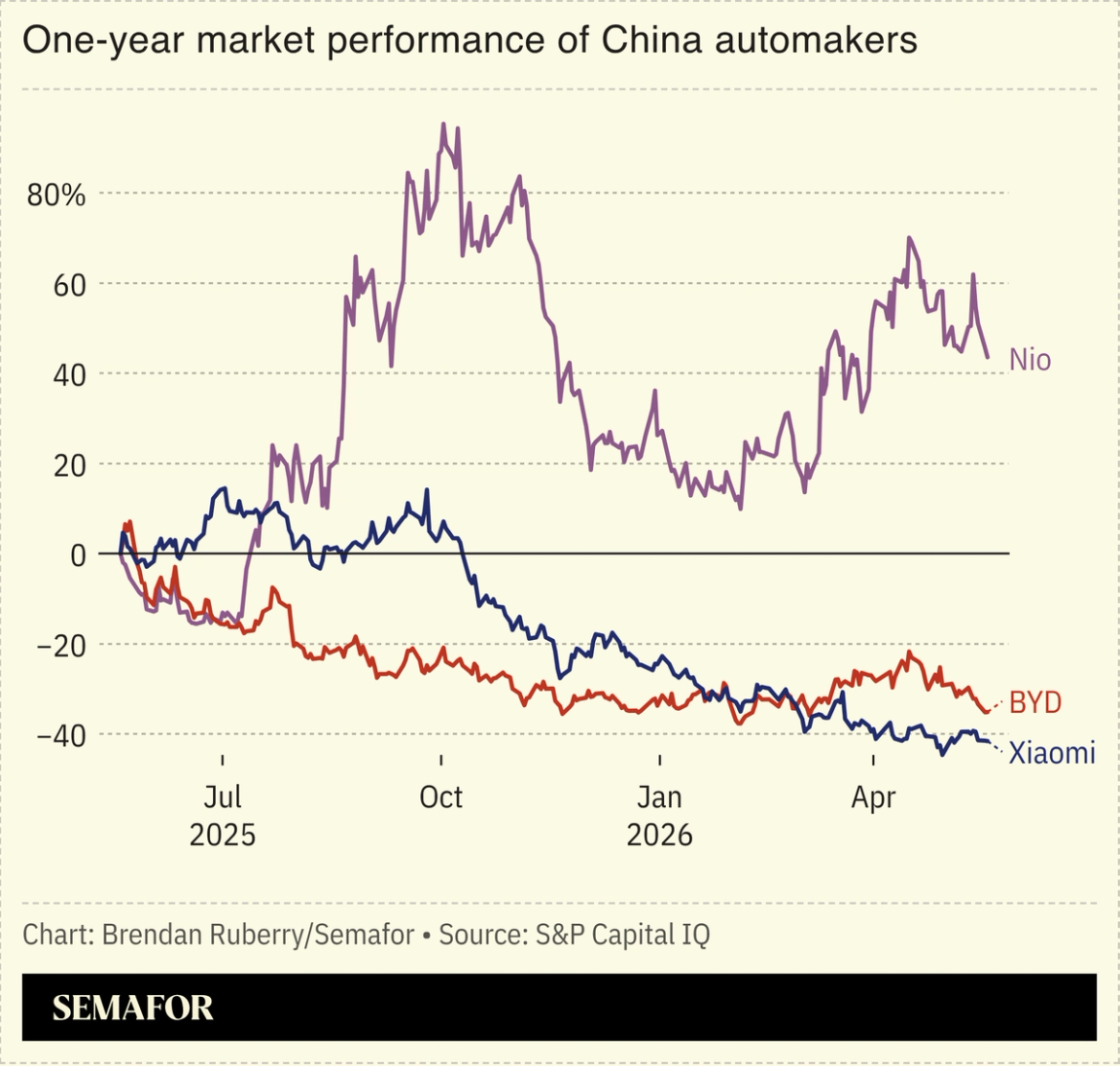 China’s electric vehicle price wars have spilled into the attention economy. As profits plunge, Chinese auto executives are reinventing themselves as influencers, Nikkei reported: Xiaomi’s Lei Jun livestreamed a 15-hour nonstop road trip |
|
|


