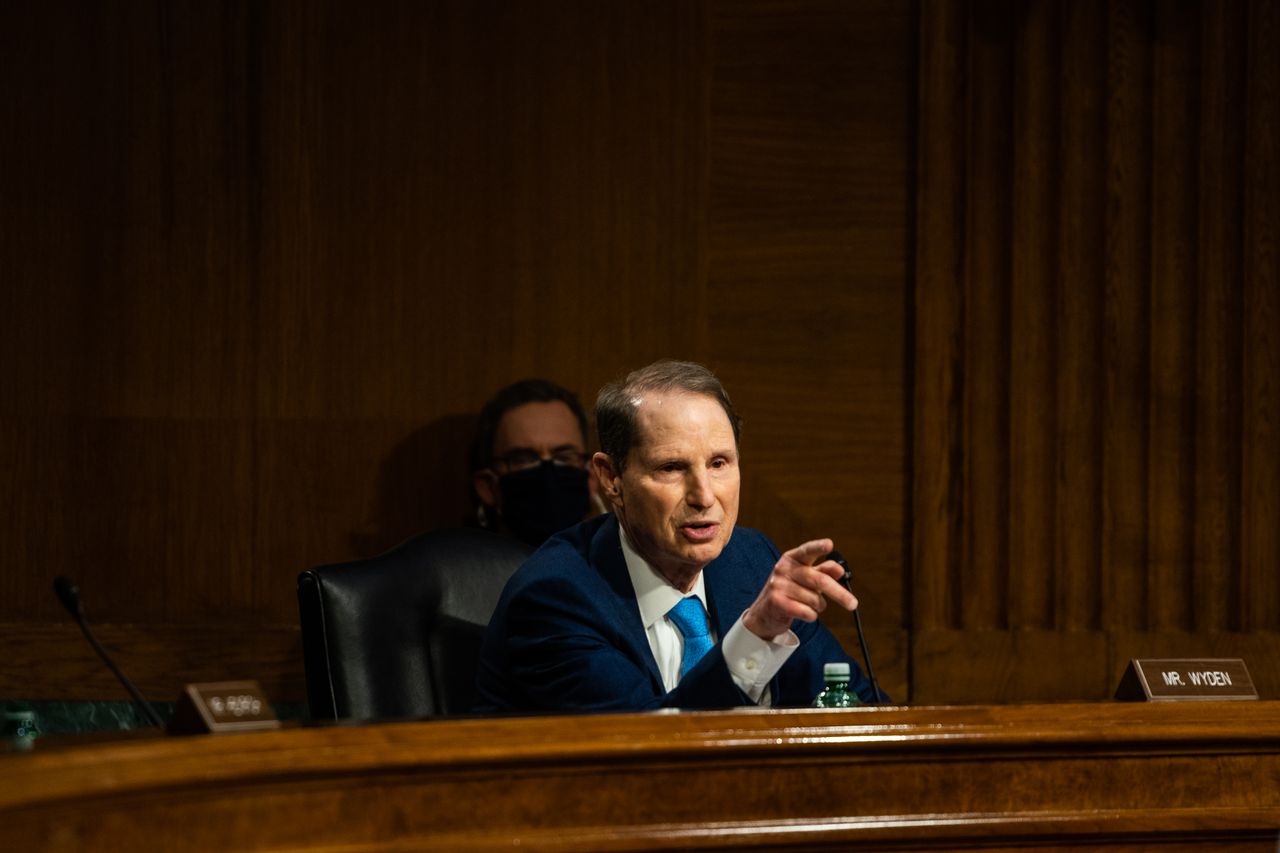
| |  | The Lead Brief | Sen. Ron Wyden (Oregon), the top Democrat on the Senate Finance Committee, is launching an effort to overturn a Trump administration pilot project that’s testing the use of AI-driven prior authorization in traditional Medicare. The pilot, called the Wasteful and Inappropriate Service Reduction, or WISeR, uses contracts with artificial intelligence companies to process requests — which some providers and Democratic lawmakers argue is leading to unnecessary delays in care. Wyden is planning to invoke the congressional Review Act, an arcane legislative tool that allows Congress to roll back recently finalized federal rules with a simple majority vote, according to details shared first with me. The Centers for Medicare and Medicaid Services (CMS), which is overseeing the pilot program, has defended the experiment as a way to save taxpayer dollars and prevent services that aren’t needed. It’s happening as the agency is working with health insurers to curtail and streamline their use of prior authorization in other areas. Why it matters: The effort faces steep odds in a Republican-controlled Congress, but it gives Senate Democrats a vehicle to force GOP lawmakers into an election-year vote on the policy that revolves around prior authorization, a practice that’s unpopular with voters. “Americans are sick and tired of abusive prior authorization tactics putting needed health care out of reach,” Wyden said about the effort to overturn the model. “The last thing seniors need is even more AI denying the care they need.” The move comes about a week after the Government Accountability Office issued a report that determined the WISeR model qualified for review under the law, opening the door for lawmakers to challenge it. Wyden is partnering with four other Democratic senators on the effort: Patty Murray (Washington), Maria Cantwell (Washington), Richard Blumenthal (Connecticut) and Kirsten Gillibrand (New York). The effort has gained 20 initial co-sponsors in the Senate, and needs 10 more to bypass the committee process and force a vote on the Senate floor. There are 47 Democrats in the Senate, including the two independent senators who caucus with them, which bolsters the chances of reaching the threshold. → Democratic Reps. Greg Landsman (Ohio) and Suzan DelBene (Washington) are leading the House version. There is no fast-track mechanism to force a vote in the House, however, so it will languish unless Republican leadership makes the unlikely decision to bring it up. The six-year pilot is operating in six states: Arizona, New Jersey, Ohio, Oklahoma, Texas and Washington. In March, WP Intelligence Lead Health Care Analyst Rebecca Adams reported that the model was already causing headaches for providers. Cantwell has argued the model has unnecessarily delayed treatment for patients, releasing a report last month with data from the Washington State Hospital Association showing that authorization wait times for certain procedures under the model had increased from weeks to up to two months. In a statement Tuesday, a CMS spokesperson said the WISeR model “includes safeguards intended to protect beneficiaries and provider access,” including protecting appeal rights and excluding emergency and inpatient-only services from triggering prior authorizations under the model. The agency “anticipates releasing preliminary data on participant performance later this year,” the spokesperson added. “Participants have self-reported preliminary positive results including real-world examples of harmful and wasteful care being averted demonstrating the program’s role in protecting patient safety.” What to watch: Although some Republican lawmakers — including Rep. Robert B. Aderholt (Alabama) — have expressed skepticism of the model, it’s not clear whether any will sign on to the Democratic-led effort to halt it. They may not want to risk appearing to rebuke the administration ahead of the November elections. Last year, a House Appropriations panel that oversees CMS funding approved an amendment by voice vote to block funding to implement the WISeR model. The provision did not make it into the final government spending package. Aderholt, who leads the appropriations subcommittee, said he appreciated the amendment, Politico reported at the time. His office didn’t respond to an inquiry about whether he still supports halting the WISeR model. | 

_tstmp_1756933376-1920-1080.png)