| | In today’s edition: Abu Dhabi plans to build the Sphere, lay a new Hormuz-bypassing pipeline, and in͏ ͏ ͏ ͏ ͏ ͏ |
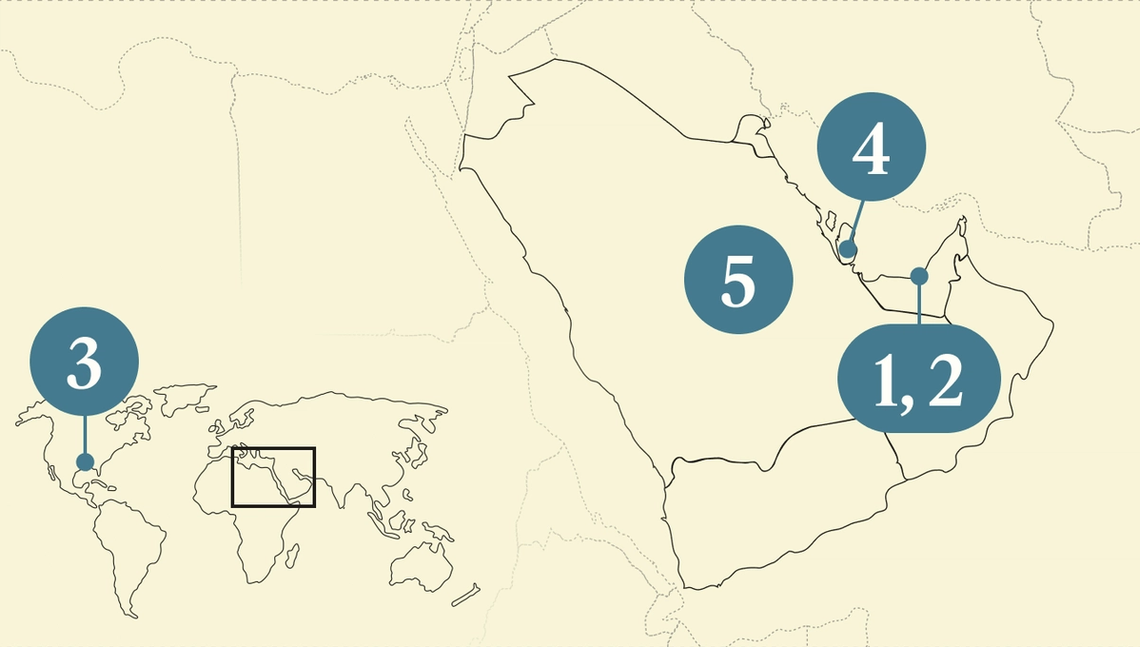
| |  Abu Dhabi Abu Dhabi |  Cameron Parish Cameron Parish | Riyadh |
 | Gulf |  |
| |
|
 - Still getting that Sphere
- UAE to expand pipeline…
- … and invest in US LNG
- Qatar’s new tech VC fund
- Saudi bets on itself
 The response to ‘no photo, no visit’: Modi in Abu Dhabi. |
|
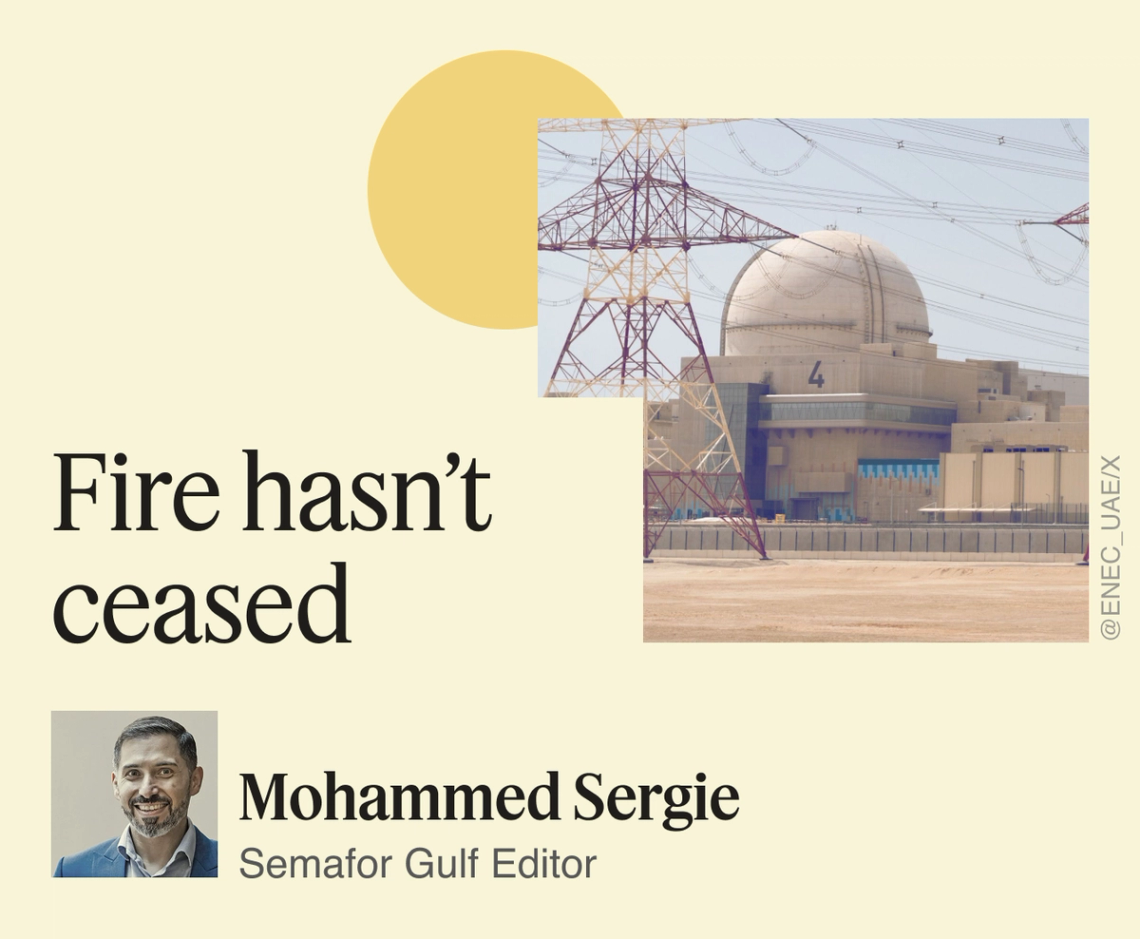 From tomorrow, if the ceasefire holds, it will have lasted longer than the shooting phase of the war. That doesn’t mean the Gulf is calm, or that diplomacy is gaining momentum. If anything, there are more escalation signals. Over the weekend, the UAE’s Barakah nuclear power plant was struck by a drone that entered from the country’s western border, setting off a fire that was thankfully some distance from the reactors. Saudi Arabia, meanwhile, said it intercepted three drones launched from Iraq, where Iran-backed militias operate freely. Further afield, a commander from one of those Iraqi militia, Kataib Hezbollah, was extradited from Türkiye to the US on charges tied to an alleged Iranian-directed plot targeting synagogues and other civilian sites in Europe and the US. In the Gulf of Oman, an Indian commercial vessel carrying livestock was struck and sunk. At the same time, the narrative around the Gulf’s response to Iranian attacks is shifting. The early characterization of purely defensive operations has been complicated by reports that the UAE and Saudi Arabia carried out retaliatory strikes to restore deterrence. Judging by the Barakah strike — launched from a new western vector — that deterrence is incomplete. Diplomacy also looks fragile. Last week’s China-US summit produced no breakthroughs, while Tehran and Washington continue exchanging maximalist demands in public. US President Donald Trump warned Sunday that “the clock is ticking” for Iran, while Iranian Foreign Minister Abbas Araghchi said Tehran “cannot trust the Americans at all” and was only maintaining the “shaky” ceasefire to “give diplomacy a chance.” |
|
Sphere on track in Abu Dhabi |
 A rendering of Sphere Abu Dhabi. Courtesy of the Department of Culture and Tourism – Abu Dhabi. A rendering of Sphere Abu Dhabi. Courtesy of the Department of Culture and Tourism – Abu Dhabi.Abu Dhabi is preparing for the post-war return of tourists, forging ahead with new attractions in an effort to show that its hospitality industry remains unbowed. Sphere Abu Dhabi has broken ground at a site on Yas Island, slotted between a mega-mall and an indoor SeaWorld theme park, with a price tag of $1.7 billion and a deadline of 2029. Like its sister site in Las Vegas, the venue will seat up to 20,000. Moving ahead with work on the Sphere is “a clear signal,” Mohamed Khalifa Al Mubarak, chairman of the Department of Culture and Tourism in Abu Dhabi, said in a statement. “Abu Dhabi is open, ambitious, and unwavering in its direction.” Meanwhile, plans are still on track for the nearby future site of Disneyland Abu Dhabi, which is expected to open by 2033. “The strategic logic of our Abu Dhabi plans is unchanged,” The Walt Disney Company said in its May earnings report. Hotel occupancy plunged to around 40% after the Iran conflict began in late February, down from 85% in 2025. Any signs of rebound have so far come from staycationers, not foreign tourists, who had been arriving in the tens of millions in recent years but are now steering clear: Abu Dhabi attracted 26.6 million visitors last year, and is still targeting 39.3 million by 2030. — Kelsey Warner |
|
UAE plans new West-East pipeline |
 The length of a proposed pipeline from Abu Dhabi to Fujairah that would bypass the Strait of Hormuz and allow the UAE to double its export capacity outside the Gulf’s waters. Abu Dhabi’s crown prince has approved plans to accelerate the expansion work, with the new 406-kilometer (252-mile) link expected to come online in 2027 — the existing line carries 1.5 million barrels a day of crude to the Gulf of Oman. The additional capacity comes as the UAE, no longer subject to OPEC quotas after leaving the cartel at the start of May, plans to boost its output to 5 million barrels a day next year. The project is part of a broader revamping of Gulf logistics and energy routes. Saudi Arabia has expanded trade corridors, while Iraq and Syria are reviving pipeline plans that could allow more Gulf oil and gas to flow to the Mediterranean — projects that were politically unfeasible just two years ago. For ADNOC, the extra capacity from its new pipeline will also allow it to export grades such as Upper Zakum, which are in high demand because of their quality, Bloomberg reported. |
|
Mubadala bets on US LNG boom |
 Enea Lebrun/Reuters Enea Lebrun/ReutersMubadala Energy backed a $13 billion liquefied natural gas export project on the US Gulf Coast, the latest sign of growing Arab Gulf interest in America’s energy industry. The LNG project in Cameron Parish, Louisiana, is expected to produce 9.5 million tons of LNG a year when it starts commercial operations in 2030. Global energy demand is projected to rise more than 50% by 2040, driven by economic growth in Asia and power-hungry AI infrastructure — and LNG, which is a cleaner fuel than coal or oil, is seen as a critical source to help meet that demand. Gas exports from Qatar and the UAE have largely halted since the war began, although a few tankers have made it out in recent weeks. QatarEnergy had planned to almost double its domestic LNG output before Iranian strikes took out 17% of its capacity and stalled the expansion work, leaving the US unchallenged as the world’s largest producer. Qatar’s problems have been mitigated slightly by its majority stake in the Golden Pass LNG plant in Texas, which started exporting in April. Abu Dhabi’s ADNOC has a stake in another Texas project, Rio Grande LNG, via its XRG investment arm, and Saudi Aramco is both a producer and buyer of US LNG. — Mohammed Sergie |
|
Qatar pushes on with impact investing |
 Courtesy of Qatar Science & Technology Park Courtesy of Qatar Science & Technology ParkDoha has launched a new technology fund and signed up a slate of five partners from Asia, the Gulf, and the US — part of a long-running strategy of pursuing an impact investment niche alongside the Qatar Investment Authority’s large deals. The $30 million Tech Venture Fund is being run by Qatar Science and Technology Park, part of the Qatar Foundation’s science and education hub in Doha. It will invest in deep tech startups that aim to address global social or climate challenges. There is a harder economic edge too: The technology will need to have strong commercial potential and the companies and their leadership teams will have to be based in Qatar. The first set of partners includes two Dubai firms — Global Ventures and VentureSouq — as well as San Francisco’s Builders VC, US/UK-based White Star Capital, and Singapore-headquartered Golden Gate Ventures. QSTP says other names will join soon. |
|
View: Saudi’s calculated spending |
 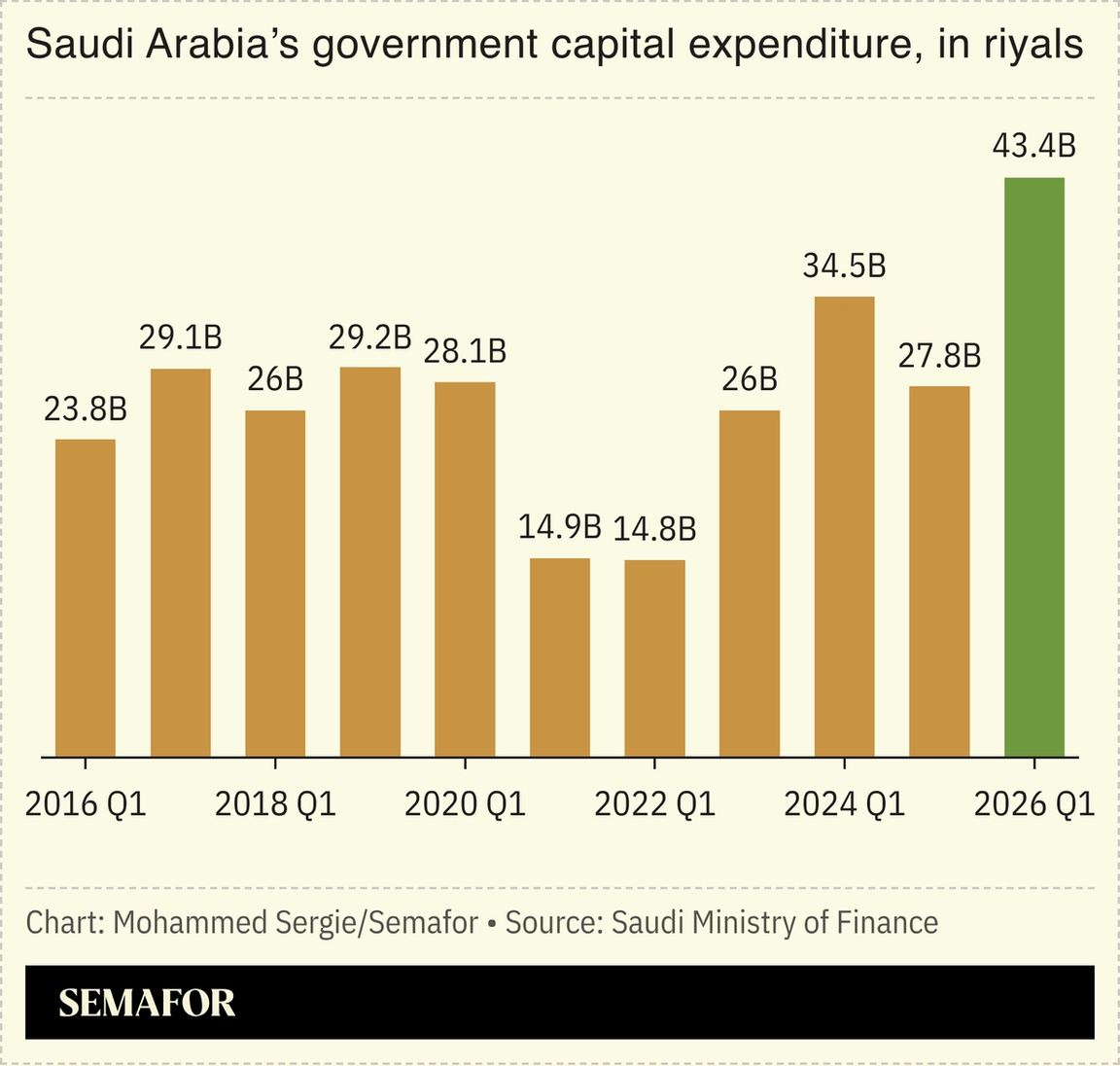 Faced with a choice between acting now or waiting for perfect information, Saudi Arabia decided to take action and deepen its deficit by accelerating investment in its economy in response to the Iran war, Alaa Shahine Salha, a senior executive at Saudi Research & Media Group, writes in a column for Semafor. “The somewhat risky approach is seen by many investors as encouraging. During a recent trip to Riyadh, a key concern that bankers and economists shared with me was whether the non-oil economy could absorb the war-driven uncertainty, which was emerging just as the kingdom’s sovereign wealth fund recalibrated its priorities and scaled back spending on certain projects,” Shahine Salha wrote. “At a time when private businesses would be understandably reluctant to invest, the state should pick up the slack.” |
|
 Defense- The NATO Summit in Ankara on July 7-8 may include Gulf countries impacted by the US-Israel-Iran war. NATO invited members of its Istanbul Cooperation Initiative — a partnership that includes Bahrain, Kuwait, Qatar, and the UAE — while host country Türkiye plans to invite leaders from Egypt, Jordan, Saudi Arabia, and Syria. — Türkiye Today, Al Arabiya
- The UK has sent a low-cost anti-drone missile system to the Gulf to help defend against Iranian attacks. The new Advanced Precision Kill Weapon System will be fitted to RAF Typhoon jets, after moving from trials to operations in less than two months.
Finance- No tie, no problem at Omla Community Bank, which is billing itself as a modern digital bank with a laid-back corporate culture. Headquartered in the UAE’s least populous emirate, Umm Al-Quwain, the new bank formed by Abu Dhabi Capital Group will emphasize AI adoption and supporting SMEs.
- US-based investment firm Vista Equity Partners opened its first regional office in Abu Dhabi. Vista, which specializes in enterprise software deals and manages $107 billion, has approval to advise and arrange deals in the region. It’s the latest in a raft of firms to set up in the UAE capital since the Iran war began.
Trade- The UK and Gulf countries are reportedly close to finalizing a free trade agreement. The two sides have been negotiating since 2022, but people familiar with the talks caution that sticking points may still emerge and delay a deal. — Financial Times
|
|
India’s Prime Minister Narendra Modi met UAE President Sheikh Mohamed bin Zayed on Friday. The UAE agreed to invest $5 billion in Indian defense, energy, shipping, and infrastructure projects, aiming to deepen the energy and security partnership between the countries.  @narendramodi/X @narendramodi/X |
|
|


