| | Trump’s latest Iran threats squeeze bond markets, a backlash against AI gathers pace, and the NBA’s ͏ ͏ ͏ ͏ ͏ ͏ |
| |  | Flagship |  |
| |
|
The World Today | 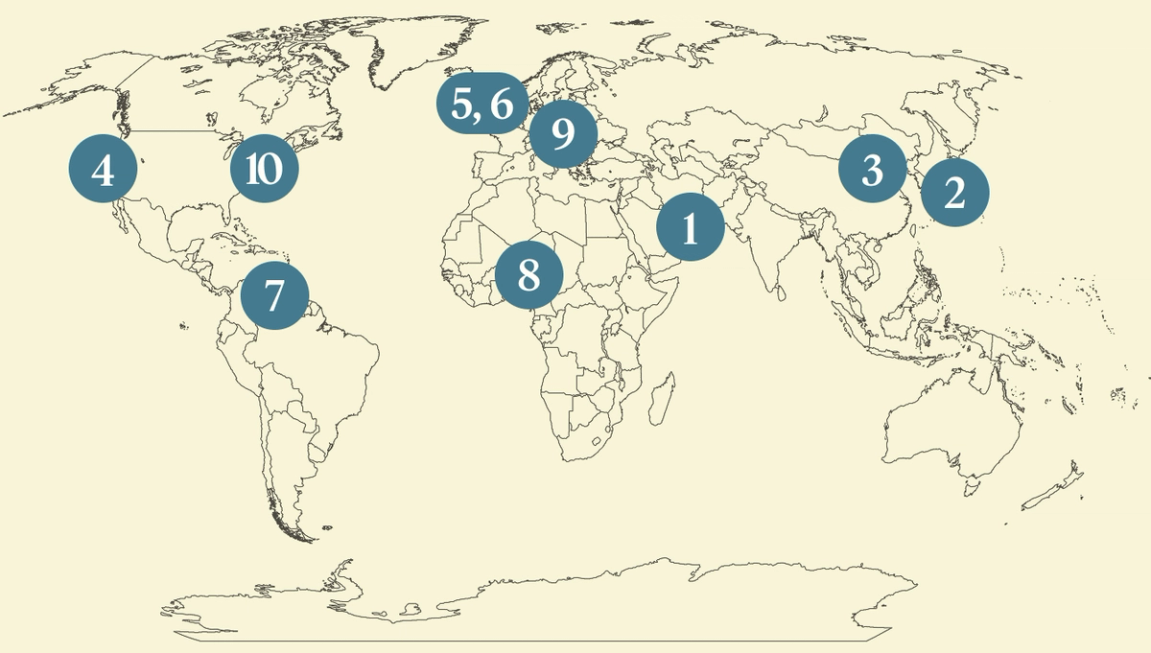 - Gulf truce under strain
- War sparks bond sell-off…
- …and bites China economy
- AI backlash gathers pace
- The college degree debate
- Britain in political turmoil
- Maduro loyalist extradited
- Nigeria, US strike IS
- Protests at Eurovision
- The ever more global NBA
 The London Review of Substacks, and an ‘erudite and panoramic survey’ of works about Africa. |
|
Bond sell-off drives borrowing costs |
|
Iran war bites China’s economy |
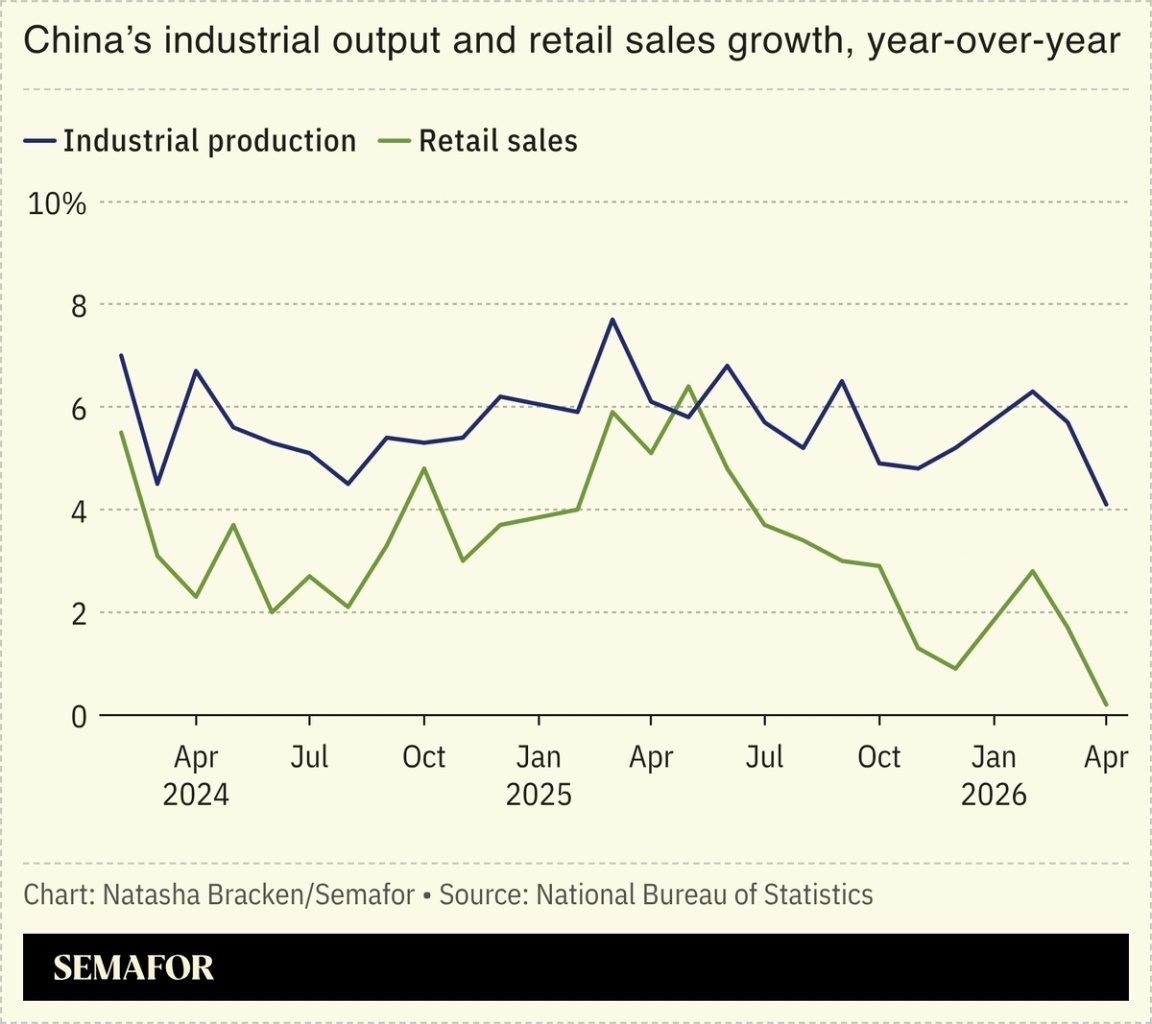 New data suggested China was struggling to contain the fallout from the Iran war. Growth in industrial output and retail sales slowed as producers and buyers grappled with higher energy prices stemming from the closure of the Strait of Hormuz. Investment contracted too, prompting analysts at several banks to urge Beijing to take bolder measures to kickstart growth. The poor economic figures come just days after a US-China summit, where the countries’ leaders failed to agree to any major economic breakthroughs. China has limited capacity to support its economy, with national debt as a share of GDP jumping in recent years. “Beijing has no room for complacency,” analysts at Japanese bank Nomura said. |
|
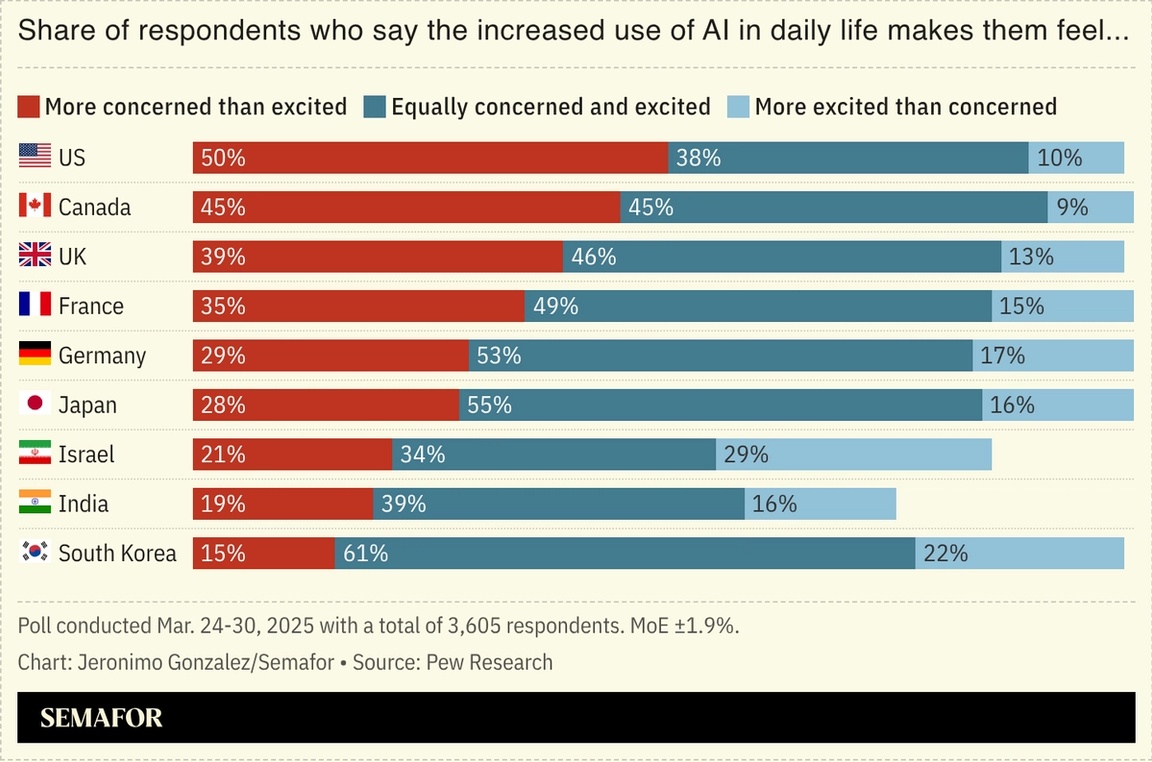 AI backlash is growing in the US, especially among young people. Former Google CEO Eric Schmidt was booed as he gave a university commencement speech in Arizona, as was a real estate executive in Florida, after both mentioned AI. Polls show that 70% of Americans think AI is moving too fast, over 50% have negative views of it, and just 18% of young people say they feel hopeful about it. Partly, they are turned off by AI’s upending of the job market. “Every other day, a new AI agent is being released in the market,” said Vaishali Hireraddi, 23, a University of California, Davis, graduate student who’s applied to 500 jobs so far. “What am I doing with my life?” |
|
 On Wednesday, June 10, Semafor Tech will convene in San Francisco to explore the most significant technological breakthroughs on the horizon, from quantum computing and fusion energy to humanoid robotics, and their effects across industries, institutions, and power structures. Semafor Tech Editor Reed Albergotti will host on-the-record conversations with Jeetu Patel, President and Chief Product Officer, Cisco; Aaron Levie, co-founder and CEO, Box; Charina Chou, Chief Operating Officer, Google Quantum AI; Max Hodak, co-founder and CEO, Science Corporation; and Pete Shadbolt, co-founder and Chief Scientific Officer, PsiQuantum, as they explore how breakthrough technologies are reshaping industries, redefining competitive advantage, and transforming the global economy. June 10 | San Francisco | Request Invite |
|
The college degree debate |
|
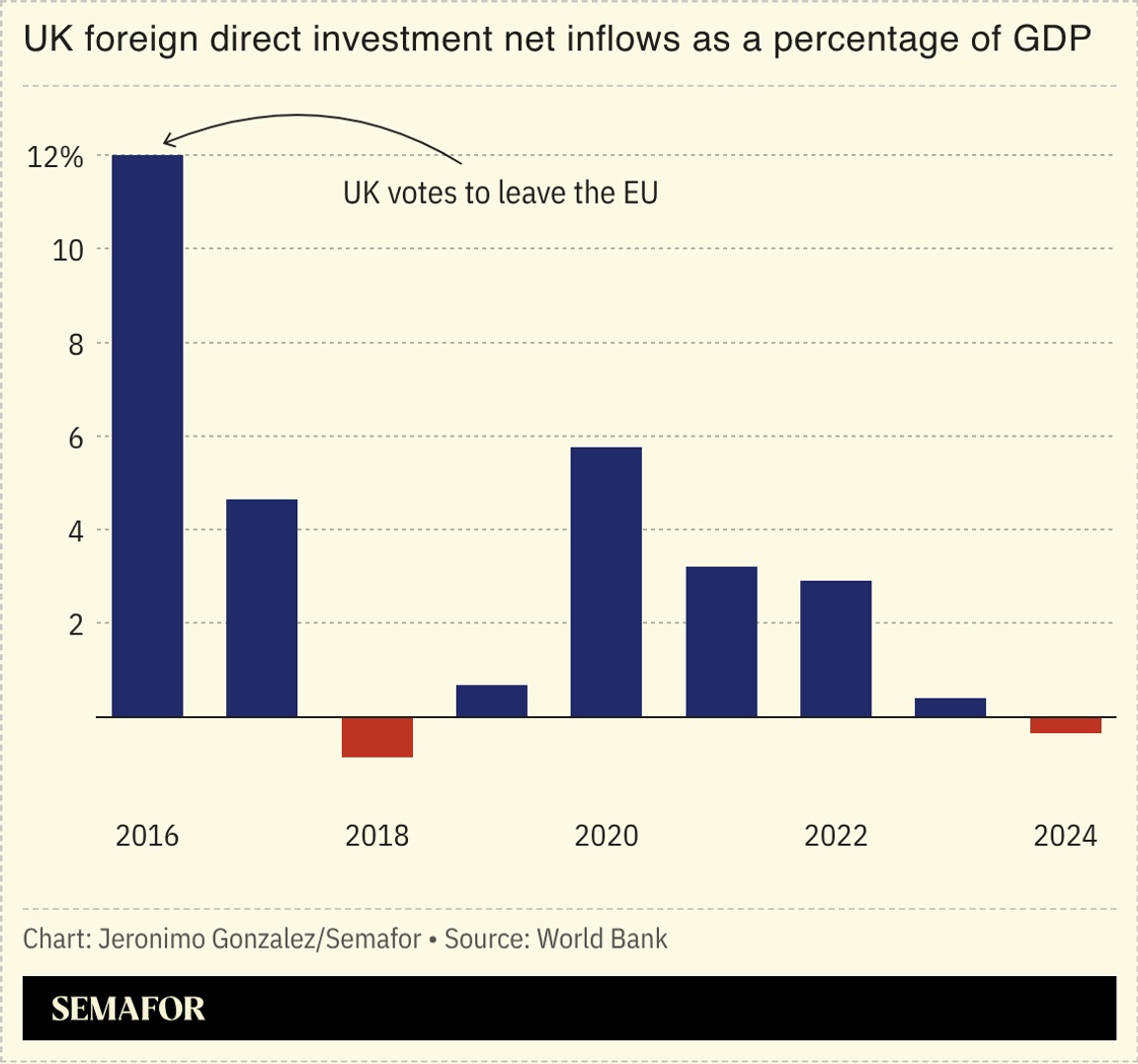 A leading candidate to be Britain’s next prime minister called for the country to rejoin the EU. Wes Streeting, who resigned as health secretary last week to challenge Keir Starmer after disastrous election results this month, said Brexit had been a “catastrophic mistake.” The UK is facing systemic challenges; inflation and taxes are high and growth is low. The public is angry: Protests roiled the capital at the weekend. “Britain used to be the international gold standard of good governance: now it risks being the laughing stock,” a leading historian warned. But the country is not ungovernable, the Financial Times’ chief UK political commentator wrote: Instead, it is simply very badly governed, and in need of clear leadership. |
|
Maduro loyalist extradited to US |
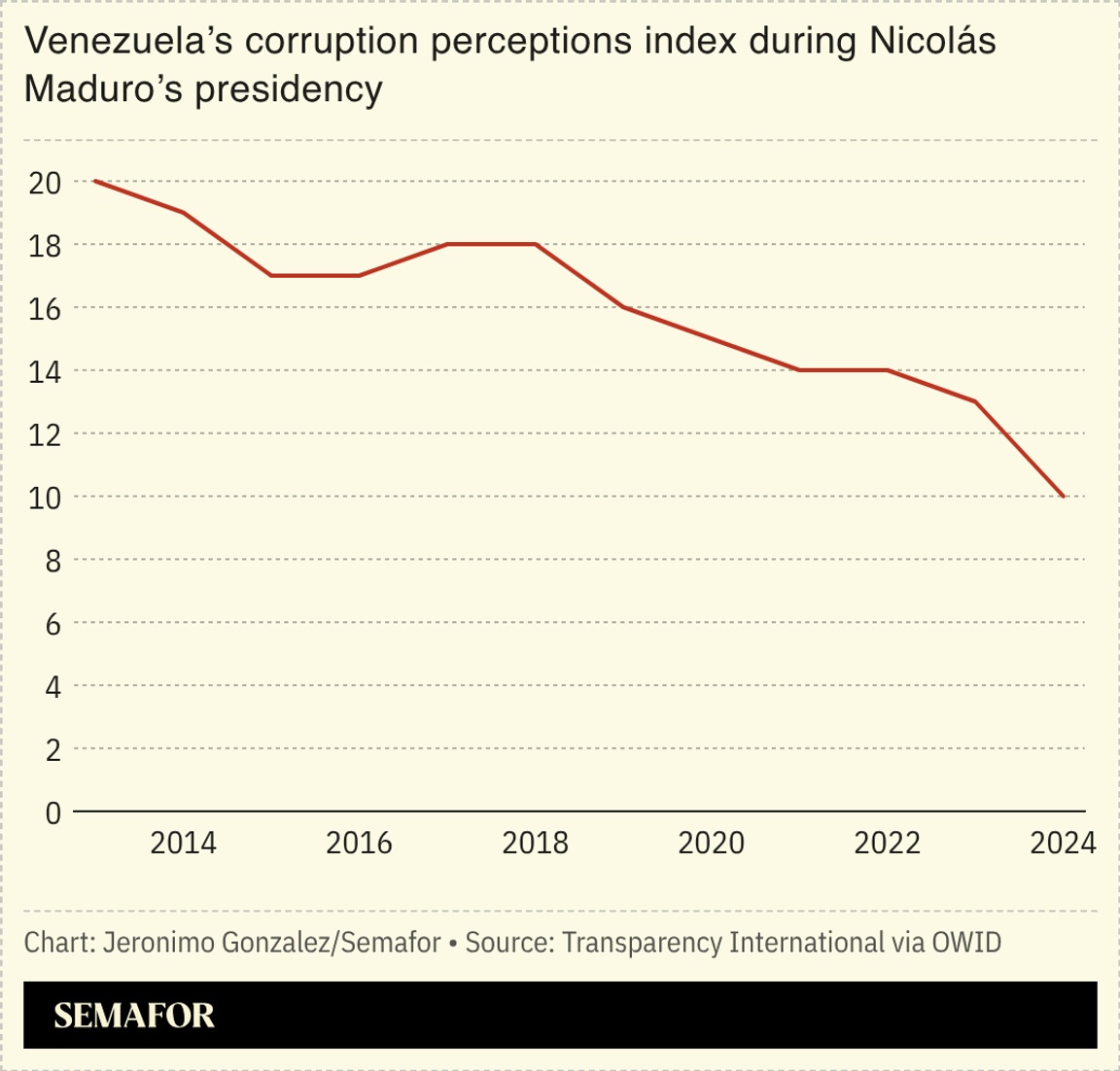 Venezuela extradited a financial adviser of former President Nicolás Maduro to the US, a major escalation in Caracas’ purge of Maduro loyalists. Colombia-born Alex Saab is accused of overseeing efforts to pilfer and launder billions of dollars on behalf of Maduro, whom the US arrested in a January military operation, replacing him with an interim leader who is more amenable to Washington’s demands. US prosecutors hope Saab’s deportation will strengthen the criminal case against the former president, who Washington alleges led a cartel responsible for trafficking drugs into the US. Saab’s detention also points to the White House’s expanding custodianship of Venezuela, which US President Donald Trump has in recent weeks touted as his country’s 51st state. |
|
Nigeria, US strike IS militants |
 Sodiq Adelakun/Reuters Sodiq Adelakun/ReutersUS and Nigerian forces carried out strikes against Islamic State fighters a day after saying they had killed the group’s second-in-command. The US deployed troops to Africa’s most populous nation following President Donald Trump’s allegations that Nigeria was doing little to stop violence against Christians in the country, accusations rejected by Abuja. Islamist violence has spread across much of West Africa in recent years, aided in part, experts say, by countries in the region cutting defense ties with Western nations and replacing them with partnerships with Russia. The pivot has turned West Africa into the world’s terrorism hotspot; thousands of people have been killed there so far this year. |
|
Controversy hits Eurovision, Biennale |
 Lisa Leutner/Reuters Lisa Leutner/ReutersCultural events across Europe were roiled by political protests, with global conflict taking center stage over artistic performances. Bulgarian pop star Dara won the Eurovision song contest, narrowly edging the entry from Israel, whose presence critics said was an attempt to whitewash the country’s war in Gaza. Five European countries boycotted the event over Israel’s participation. Meanwhile, protestors at the Venice Biennale hit out at the competition over the presence of Russian artists, who were allowed to participate for the first time since Moscow launched its full-scale invasion of Ukraine in 2022. Despite organizers’ best efforts at both contests, “war is a participant no one can exclude,” Haaretz reported. |
|
|


