| | In today’s edition: A new culture magazine with a twist debuts tomorrow. ͏ ͏ ͏ ͏ ͏ ͏ |
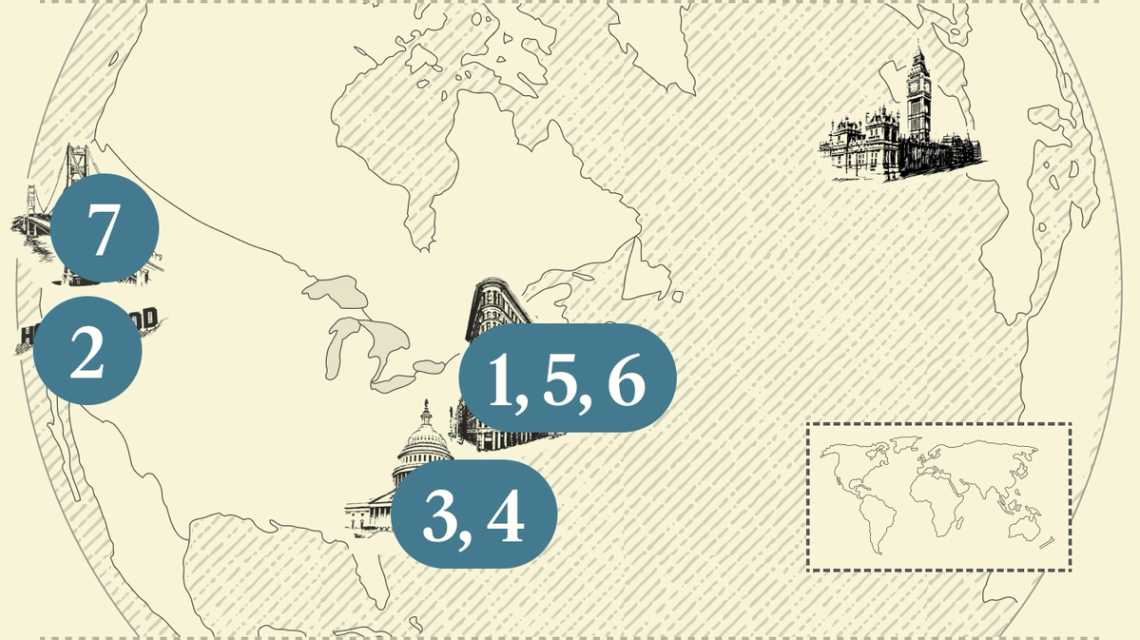
| |  New York New York | Washington | Hollywood |
 | Media |  |
| |
|
 - Totei recall
- Paramount’s pushback
- NYT vs. EEOC
- Writer-influencers
- Fortune sitdown
- Mixed Signals
- RIP news feed
|
|
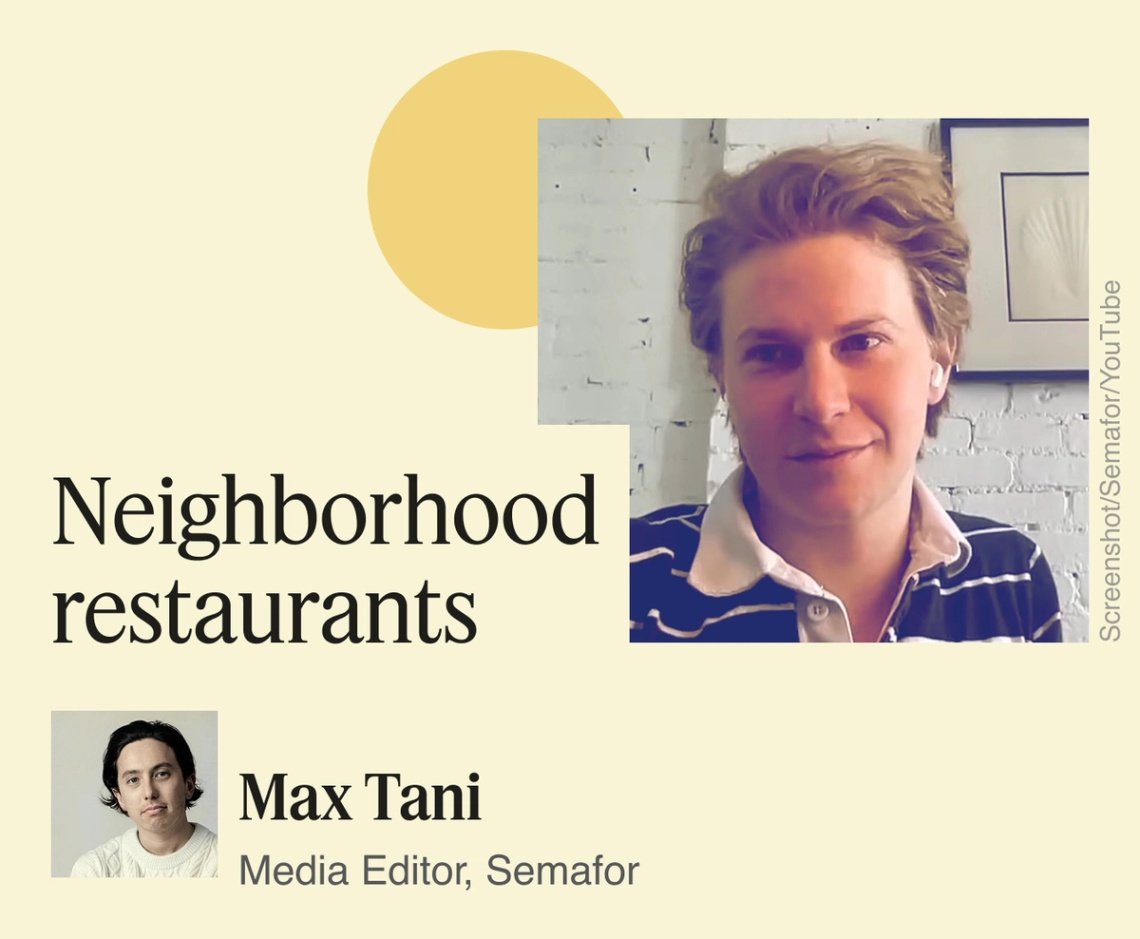 “New media” is easy to see as old media with looser packaging. Megyn Kelly and Piers Morgan are doing on YouTube what they used to do on cable. Amazon Prime’s stream of the NBA playoffs is just a standard television broadcast, but harder to find. But the changes in how information and culture spread are transforming media, and everything around it, in deep and subtle ways. This came out unexpectedly last week in a conversation we had with one of the best young chefs in America, Flynn McGarry, the chef and owner of buzzy new Hudson Square restaurant Cove. The collapse of the gatekeepers — food critics — has made it challenging for big highbrow restaurants to sustain the buzz needed to stay in business, he told us on Mixed Signals. So restaurateurs in New York are opening up more accessible, less ambitious spots. In the old days, a New York Times critic could “make or break you,” he said. “What we’ve kind of landed on right now is that we just all need to be neighborhood restaurants.” The platforms, too, have changed in a way that makes it more difficult to connect with audiences, McGarry observed. He noted that he used to post available tables on Instagram, and they’d immediately get snatched up. Now, McGarry said, his followers complain the Instagram algorithm is serving them his posts too late. It’s a familiar story to anyone in media: Novelty can still go viral, but the accelerated hype cycle means you can no longer shoot for scale, or expect one good article to sustain interest in you for more than a small window of time. Instead, you need to find your community. Virtually every media company is a neighborhood restaurant now. McGarry told us that to better connect directly with his audience, he’s taking the logical next step for any neighborhood restaurant, or small media outlet: He’s launched a Substack. Also today: A new culture magazine with a twist debuts tomorrow, and inside a white male staffer’s discrimination complaint against The New York Times. |
|
New arts magazine Totei goes live |
 Courtesy of Totei Courtesy of ToteiA group of media veterans is launching Totei, a digital culture magazine dedicated to “the creative process,” as editor-in-chief Puja Patel described it. Totei’s weekly offerings will include profiles of artists and musicians, photo essays, reported features, and interviews. But the publication also aims to spotlight rarely seen materials showing how art is created, such as archival notes from artists, behind-the-scenes imagery, sketchbooks, drafts, and reference documents. The magazine will focus on the “journey between an idea and the thing that we all see at the end,” Patel, formerly editor-in-chief of Spin and Pitchfork, told Semafor in an interview on Saturday. Totei is the vision of founder Gaurav Kapadia, a prominent New York philanthropist who wanted to create a high-quality art publication that was also accessible to the public. (Totei will be free to access online, and won’t launch with ads.) In a statement to Semafor, Kapadia said he had “always been inspired by those with a deep devotion to their craft — across every discipline.” The magazine goes live on Monday, with a profile of acclaimed Kabawa chef Paul Carmichael by Jazmine Hughes, Max Read’s interview about AI with artists Trevor Paglen and Holly Herndon, a profile of Sudan Archives by Patel, and Delia Cai’s interview with writer Susan Orlean. |
|
Paramount tries to calm California AG |
 Mike Blake/File Photo/Reuters Mike Blake/File Photo/ReutersParamount is racing to reassure California regulators that its purchase of Warner Bros. Discovery — and HBO’s streaming platform along with it — won’t destroy theatrical releases, Semafor’s Rohan Goswami scooped. “Theaters will continue to be an essential part of the moviemaking business and social fabric,” Paramount legal chief Makan Delrahim, a former Justice Department antitrust regulator, wrote to California Attorney General Rob Bonta in a letter sent earlier this month, viewed by Semafor. “Paramount and WBD have every intention, and, importantly, incentive to keep filling California theaters (and theaters across the world) with a wide range of titles as we look to raise the standard for content production and distribution.” Bonta has continued to telegraph his intention to kill the deal in court. “There are red flags everywhere for us,” Bonta said in a press conference last week, after the letter was sent. “We’re looking at things like higher prices, lower wages, fewer jobs, less quality, less choice, less competition — the things that you look at when you’re looking at an antitrust case and a proposed merger.” |
|
Inside the EEOC complaint against NYT |
 Kylie Cooper/Reuters Kylie Cooper/ReutersThe New York Times editor who filed a complaint with the Equal Employment Opportunity Commission alleging he was discriminated against for being a white man filed a new complaint on Friday. The new filing names complainant Bryant Rousseau, a senior staff editor, and describes what he saw as unfair hiring practices by the paper when it refused to take him seriously as a candidate for deputy editor of the real estate section. EEOC lawyers, writing on Rousseau’s behalf, said despite performance reviews in recent years calling Rousseau “superb” and “a linchpin of our desk,” he did not make it past the first round of interviews for the job. The editor who eventually got the job was described in the complaint as a “significantly less qualified multiracial black woman,” who was “among the two lowest rated candidates out of the four finalists.” One interviewer said she was unlikely to contribute to the growth of the section’s coverage and that she was “a bit green.” Under the Trump administration, the employment agency has focused on rooting out diversity and equity practices and has fast-tracked cases of alleged discrimination against white and male workers for investigation, as the Times and others have reported. The Times is standing by its hiring decision. In a statement, a spokesperson told Semafor: “Our employment practices are merit-based and focus on recruiting and promoting the best talent in the world. We will defend ourselves vigorously.” |
|
The return of the writer/influencer |
 Courtesy of Isaac Fitzgerald Courtesy of Isaac FitzgeraldI was surprised when my old friend, the author Isaac Fitzgerald, turned up to his book event at Politics and Prose at Washington, DC’s Union Market wearing duck-hunting pants and a camo L.L.Bean hat. Fitzgerald was there to talk to me about his book, American Rambler, a journey through the US on the trail of Johnny Appleseed, which (delightfully) goes deep into American society while never touching directly on American politics. But I had to ask Fitzgerald, a literary world figure who was books editor at BuzzFeed News, about the outfit. It was, he said, the product of an innovation in the book publishing business: His tour is doubling as influencer marketing, sponsored by L.L.Bean and its #BeanOutsider campaign. The novelist Madeline Cash is selling Gap. Patrick Radden Keefe talked to us on Mixed Signals about modeling for J.Crew. It’s a revival of the good old days, when writers were celebrities who endorsed products. — Ben Smith  Ernest Hemingway sits for an ad for Ballantine Ale in 1951. Ernest Hemingway sits for an ad for Ballantine Ale in 1951. |
|
Fortune chairman joined Trump interview |
 Alyson Shontell. Amal Alhasan/Getty Images for Fortune Media Alyson Shontell. Amal Alhasan/Getty Images for Fortune MediaFortune’s Hong Kong-based chairman, Victor Pang, joined editor-in-chief Alyson Shontell during her interview with President Donald Trump last week, Semafor scooped. Pang “was there as a mere observer to the hour-long interview conducted solely and entirely by” Shontell, the company said. But Pang’s presence at the editorial interview, a high-profile get for a magazine attempting to recapture its relevance, surprised and concerned some staffers, who wondered if he had attended solely to support Fortune’s journalism. (Pang, a lawyer who has been acting as the company’s de facto chief executive, has “worked on large-scale listings of various state-owned enterprises and private companies,” according to his firm.) Shontell’s interview had been expected to run last week, but apparently isn’t public as of Sunday night. |
|
McGarry on ‘Mixed Signals’ |
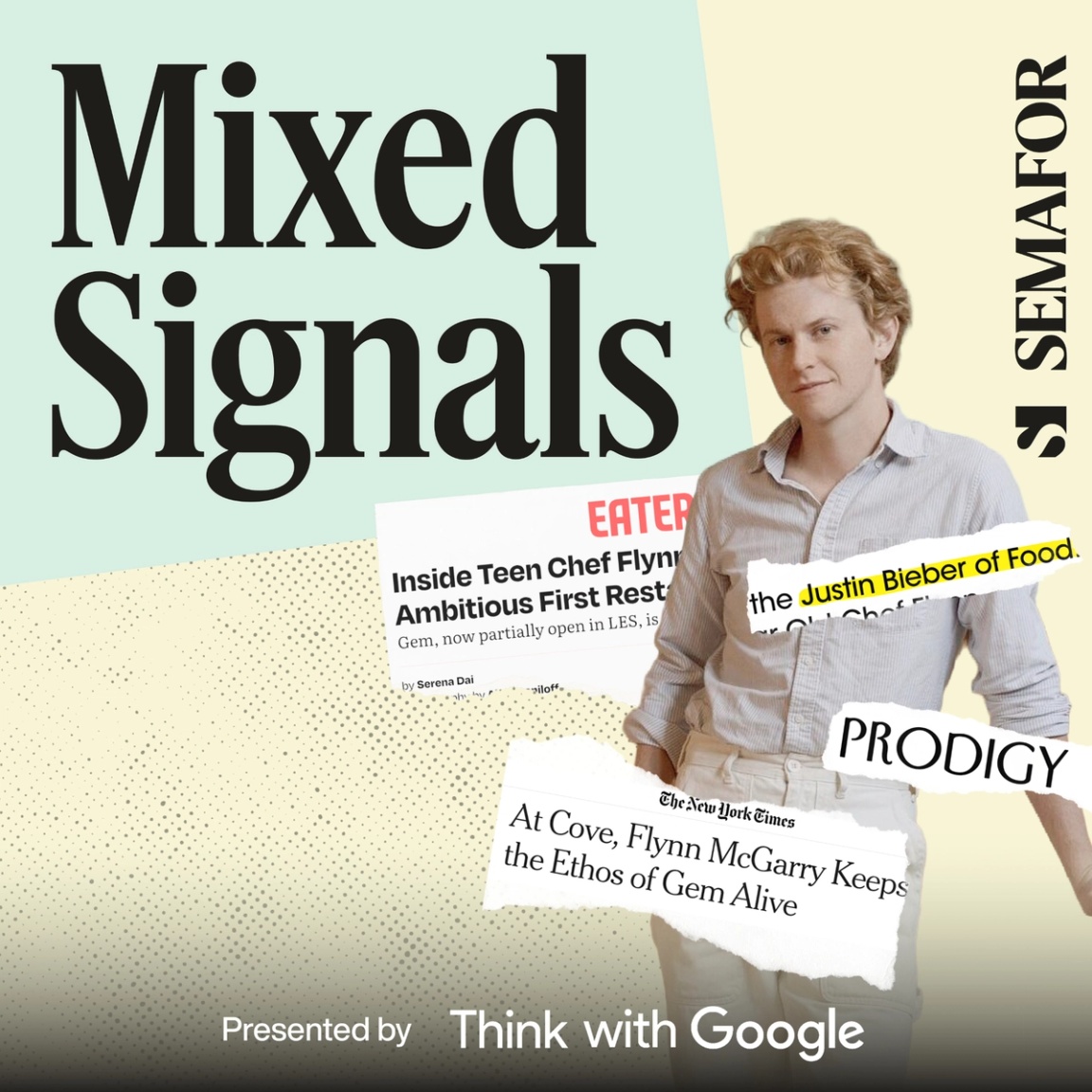 He was first labeled a teenage chef prodigy. Fast forward to today, Flynn McGarry is trying to answer the question: What actually gets people to show up to a restaurant? On this week’s episode of Mixed Signals, Max and Ben ask the Chef and Cove owner how early media attention shaped his identity and what he’s learned about the social media content that actually drives traffic to his restaurants. Plus, how he missed years of TV development deals — including one with White Lotus creator Mike White. |
|
The death of the news feed |
 The social media news feed is headed for extinction, as the internet grows saturated with bots and people come to rely on their own personal AI agents — but what will replace it is anyone’s guess. The research group New_ Public, led by Eli Pariser (who coined the term “filter bubble”), has some provocative ideas. “When engagement metrics become meaningless, attention alone cannot produce the same returns,” reads the group’s most recent report, out this month. “As the open internet fills with synthetic engagement, people are migrating their real social lives to smaller, more private spaces.” That could look like “high-trust micro-communities” — think Web 1.0 forums, or an app you vibe-code for your neighborhood running club — or something as grand as a “hybrid public square,” an open internet premised on regulated bot-human interaction that discards the notion of traffic as a proxy for truth. It’s dense food for thought for anyone in media still tempted to think in terms of clicks and retweets. — Graph Massara |
|
Axios: Paramount is considering distribution deals for a number of podcasters, including the Paragon Collective and Katie Miller (wife of White House adviser Stephen Miller), Sara Fischer and Mike Allen scoop. The Atlantic: Miller’s “pitch to guests — who have included Cabinet secretaries and corporate leaders with interests before the White House — is inextricably tied to her marriage to Stephen,” Michael Scherer and Ashley Parker write. The New Yorker: Kyle Chayka highlights the resurgence of anti-algorithmic, hyperlocal urban public service reporting in the form of one-man email newsletters. FT: |
|
|


