|
 |



Happy Saturday! Overtime is for everyone. If you’re a Bulwark+ member: thank you. If you’re not, there’s no better time to subscribe to Bulwark+ than today. If you like today’s issue, you can share this newsletter with someone you think would value it, especially since this issue features a poignant essay from Mark Hertling.
 |
Respect at USS Arizona
By Mark Hertling
The American Battle Monuments Commission is one of the smallest but most sacred institutions in the U.S. government. Most Americans have never heard of it. Yet this agency silently supports hundreds of thousands in its care who are laid to rest among the rows of white marble crosses and Stars of David above the cliffs of the Normandy beaches, near the sands of the Sicily-Rome landing sites, in a grand and expansive park in the city of Manila, beneath the memorial walls at Tunisia and Cambridge, and at dozens of other sites.
I know this organization well, because several years ago I was appointed by the president to serve alongside other commissioners as members of the governing board of the ABMC. It was one of the greatest honors of my life.
Congress created the commission in 1923 after General John J. Pershing recognized that America needed more than temporary wooden battlefield markers to honor those who died overseas in World War I. He understood that the nation owed its fallen who had fought in battles overseas something dignified and enduring. The ABMC stewards that promise, maintaining twenty-six cemeteries and thirty-one large memorials around the globe honoring Americans who died far from home.
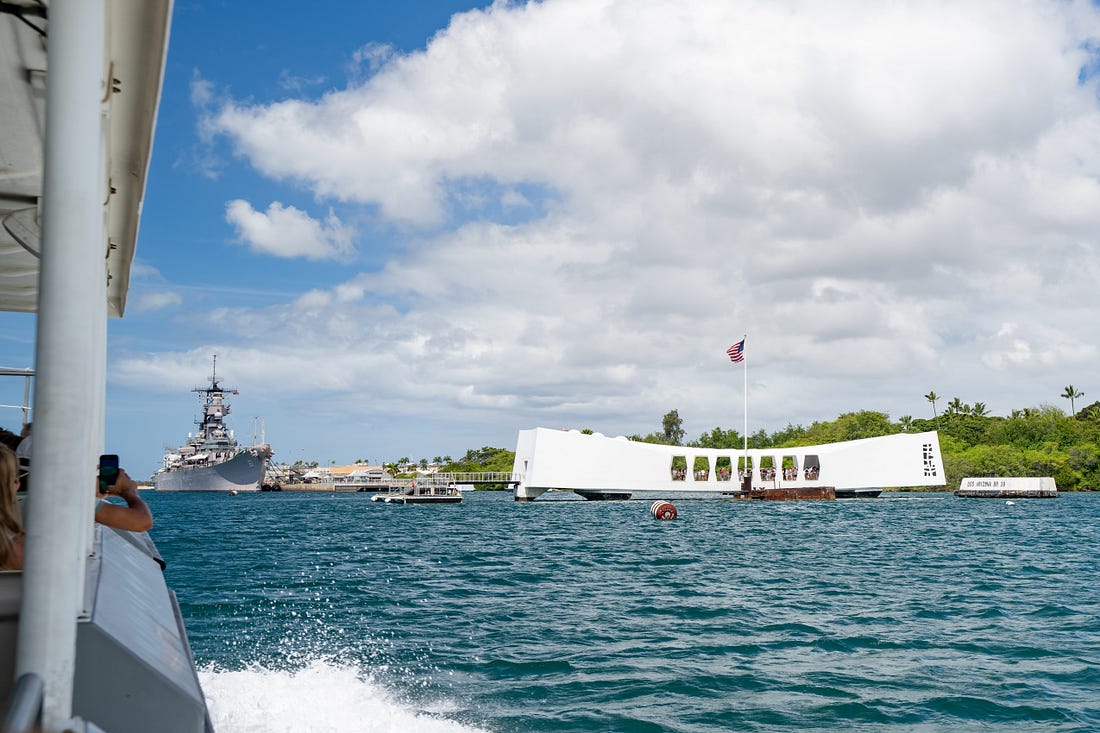
The USS Arizona Memorial at Pearl Harbor is not technically an ABMC site (it’s administered by the National Park Service), but it is an equal to the other sites because of those who rest below the surface. The memorial platform spanning the sunken battleship is not merely a historical attraction; it is the viewing platform of a sarcophagus. Below that white deck lie 1,102 sailors and Marines, entombed inside the ship where they died during the attack on December 7, 1941. Oil seeps slowly from the wreckage beneath the water’s surface. The sight of these “black tears” becomes an emotional memory for those who visit the site.
Which is why the recent reports of FBI Director Kash Patel conducting a “VIP snorkeling excursion” near the wreck has struck so many veterans, military families, and citizens of our nation as deeply inappropriate.
Military memorials and cemeteries are not ordinary public spaces. They carry unwritten rules of conduct grounded in humility and respect for our nation’s fallen. At ABMC cemeteries overseas, visitors are constantly reminded that these places exist first for the dead and for families who mourn them—but they are also for the living who visit to pay their quiet respect.
When anyone, but especially officials, visit these sites, the focus is usually a solemn act of remembrance. Wreath laying is quiet and somber, ceremonies are restrained, and senior VIPs avoid turning such visits into performative moments centered on themselves rather than on the dead.
Perhaps Patel intended no disrespect during his adventure. Intention matters at such places, but so does judgment. Rank, celebrity, or office does not exempt anyone from that understanding. If anything, senior officials should model greater awareness of the symbolism attached to these places. Because memorials are not about the living: They are about those who sacrificed for their country.
During my time with the ABMC, I often became emotional watching visitors pay their respect at the graves of the fallen. Family members would kneel beside a marble cross; veterans would stare at the names and ponder the loss. At Normandy, some would bring sand from the beach and rub it into the carved name on the cross or the Star of David on the tombstone, turning the memorial gold. Most would stand silently for minutes, sometimes hours, unable to speak. The ABMC staff at these sites understood their role was to preserve not only the grounds, but the dignity of those moments.
That same sense of reverence should apply at Pearl Harbor.
The USS Arizona Memorial, like the sites overseen by the AMBC, is sacred ground. It reminds us that freedom was purchased by young Americans who never came home. And it deserves a level of humility and respect from visitors—especially public officials—that befits the sacrifice commemorated there.
General Pershing once said of America’s fallen, “Time will not dim the glory of their deeds.”
It is our responsibility to ensure that spectacle—or officials using the roles they have been entrusted with to gratify themselves—is not allowed to diminish it, either.