|
|
|
|
|
|
|
|
|
The home of the week is a cabin in the woods that feels like a private summer camp. Next Door Photos
|
|
|
|
|
This week: A canary in the coal mine for homeowners, and three cities where home prices are changing fast. Plus, why more couples are choosing to pay more to live apart, and one property worth a look. |
|
|
|
|
|
|
|
|
|
|
More homeowners are filing for insolvency - and fast |
|
|
|
|
|
|
|
|
Worried about how you’re going to pay your mortgage, or rent, food and transport? You’re far from alone. The number of Canadians filing for insolvency jumped 8.5 per cent in the first quarter of 2026 compared to last year, according to the latest data from the Office of the Superintendent of Bankruptcy. It’s the highest quarterly volume since 2009 and though the per-capita rate is still lower, the pace is the concerning part, Zarif Sinha and Mariya Postelnyak report. “Despite the scary 2009 figure, things are not quite as grim as the crisis then, but there are signs of trouble,” Zarif told me. |
|
|
|
|
|
|
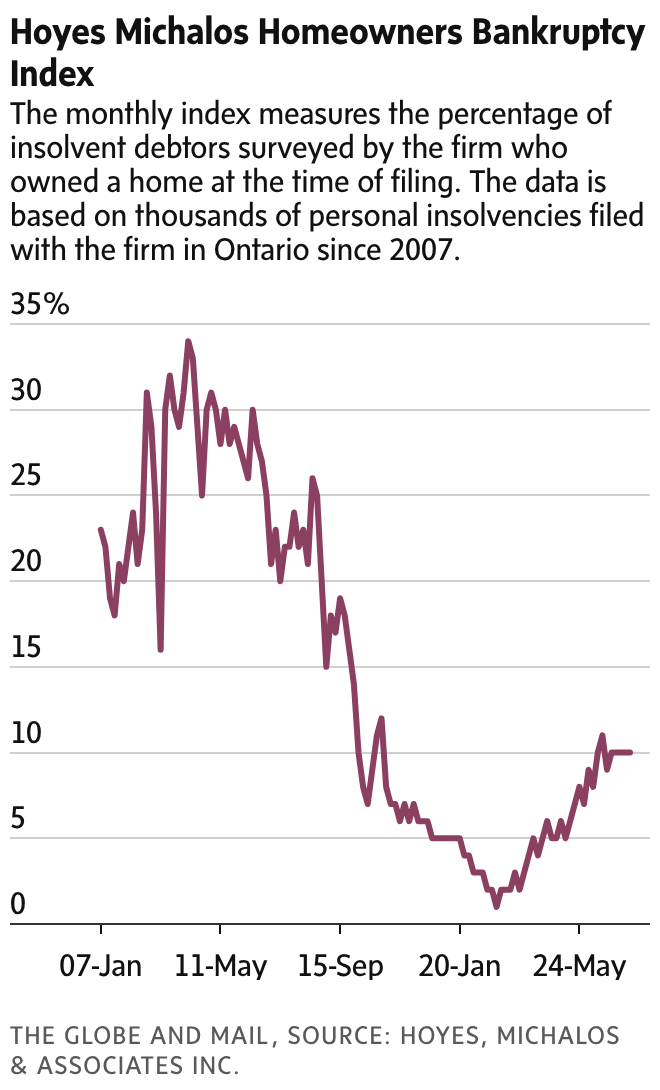
One signal is the growing proportion of insolvencies filed by homeowners, according to data from Hoyes Michalos & Associates. Renters account for the bulk of insolvencies and homeowners’ share “had been steadily declining since 2014, as rising property values meant mortgage-holders likely had other refinancing options renters did not,” Zarif told me. Since the pandemic, however, insolvency filings by homeowners have been on the uptick thanks to mortgages coming up for renewal at much higher rates, job losses and economic uncertainty from the U.S. trade dispute. |
|
|
|
|
Falling home prices are also a double-whammy for insolvent mortgage-holders. Doug Hoyes, a licensed insolvency trustee, says more of his clients are finding themselves liable for the shortfall between the purchase price and newly appraised price when they file. And with warnings of potential higher interest rates ahead, he “can’t imagine how insolvency numbers are going to fall anytime soon.” Read the full story here. |
|
|
|
|
|
|
|
|
|
|
Living apart can bring couples even closer together - if they can afford it |
|
|
|
|
|
|
|
|
|
Living apart can be great for some couples, but it's not cheap. Illustration by Sam Island
|
|
|
|
|
It turns out home may not always be where the heart is. More couples are shirking societal pressures and opting not to live together,
keeping up their commitment to romance without being roommates. Roughly one in 10 couples in Canada are in some sort of “living apart together” (LAT) arrangement, according to a 2024 report from the Vanier Institute of the Family, reflecting broader changes in how we define family, intimacy and independence. |
|
|
|
|
But money is also a big part of the equation, especially when high housing prices mean many couples can’t afford not to live together. As Sadaf Ahsan heard from LAT couples, their arrangements take financial sacrifices. “In order to afford living solo, they’d spent a number of years saving up (also, hello, rent control!), live relatively frugally, and stick to a budget,” Sadaf told me. “It makes me think more people would live on their own if it were more affordable.” |
|
|
|
|
Living separately from a long-time partner is a prospect that appeals to Sadaf herself, despite skepticism from her friends and family. Reporting the story, she was encouraged by LAT couples telling her the benefits were worth the cost. “After all, money is the one reason I sometimes do find myself wondering - briefly! - if it might just be worth sharing my space” Sadaf told me. “But at the end of the day, having my own little utopia is priceless and, therefore, a financial priority.” Read the full piece here. |
|
|
|
|
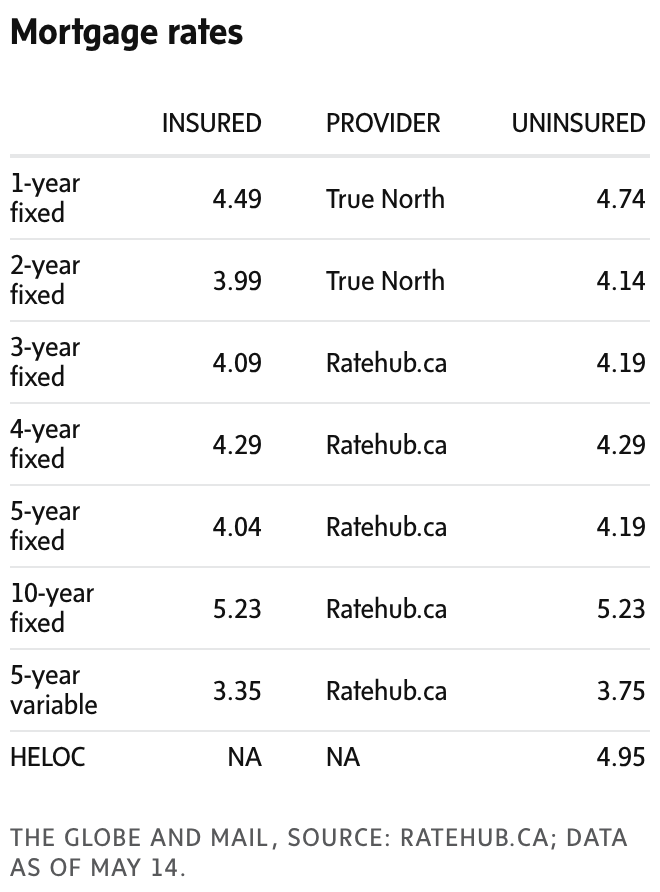
This week’s lowest fixed and variable mortgage rates in Canada |
|
|
|
|
|
|
|
|
|
|
|
|
|
|
|
|
|
|
Three cities where home prices are changing fast |
|
|
|
|
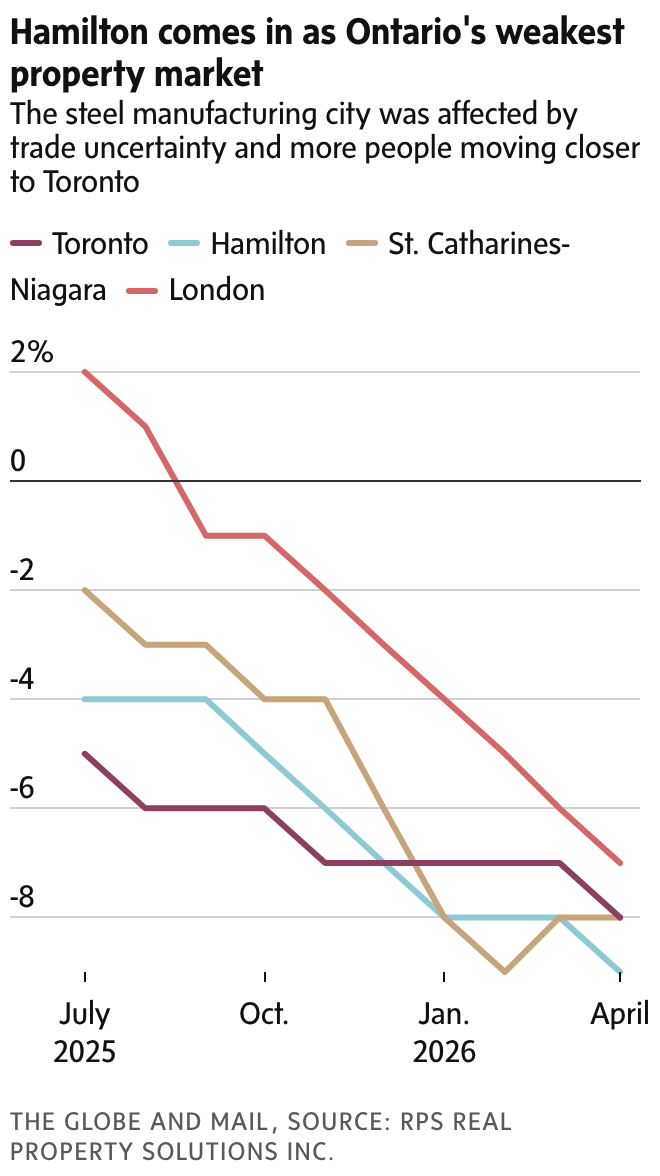
Here’s some good news if you’re thinking of buying your first home: home values are cooling off despite the usual spring thaw. Canada’s average home price dropped by 4 per cent year-over-year in April, according to data from from Wahi, a digital real estate platform, and Real Property Solutions, a property valuation service. No city has it worse than Hamilton, where average home prices dropped by 9 per cent, and Toronto isn’t far behind at 8 per cent. |
|
|
|
|
|
|
But it’s not just a tale of two cities. Salmaan Farooqui took a closer look at the notable changes in three places – Calgary, Hamilton and Winnipeg – and the Manitoba capital’s modest 2 per cent increase might surprise you. “If Toronto and Vancouver get sick, we just catch a cough,” realtor Michael Froese told Salmaan. |
|
|
|
|
It’s a sign of significant resilience, especially as other markets in the Prairies haven’t been so lucky. So if you’re thinking of dipping your toes into the market anywhere in the country this season, read the city-by-city analysis to take a pulse first. |
|
|
|
|
|
|
|
|
|
|
The seven best homes and interiors to inspire your next project |
|
|
|
|
|
|
|
|
|
An artist's lofty atelier is just one of Canada's best spaces that's bound to inspire. doublespace photography/Supplied
|
|
|
|
|
How do you craft a space that both reflects and supports your passion? The artists and creatives in Style Magazine’s annual round-up of Canada’s best architecture and design have figured it out – and they have advice to share. |
|
|
|
|
From a minimalist writing cabin in the woods to a light-filled studio and a Toronto hobby house that turns the traditional floor plan on its head, |