| | In today’s edition: Accounts differ over whether Israeli PM Netanyahu visited Abu Dhabi, and China’s͏ ͏ ͏ ͏ ͏ ͏ |
| |  | Gulf |  |
| |
|
 - Abrahamic discord
- L’IMAD adds infra fund
- Crypto miner in AI pivot
- Shifting fertilizer logistics
- Oil crisis boosts EVs
- China’s Iran calculus
 Washington’s failure in Iran, and other weekend reads. |
|
UAE denies Israeli PM’s visit claim |
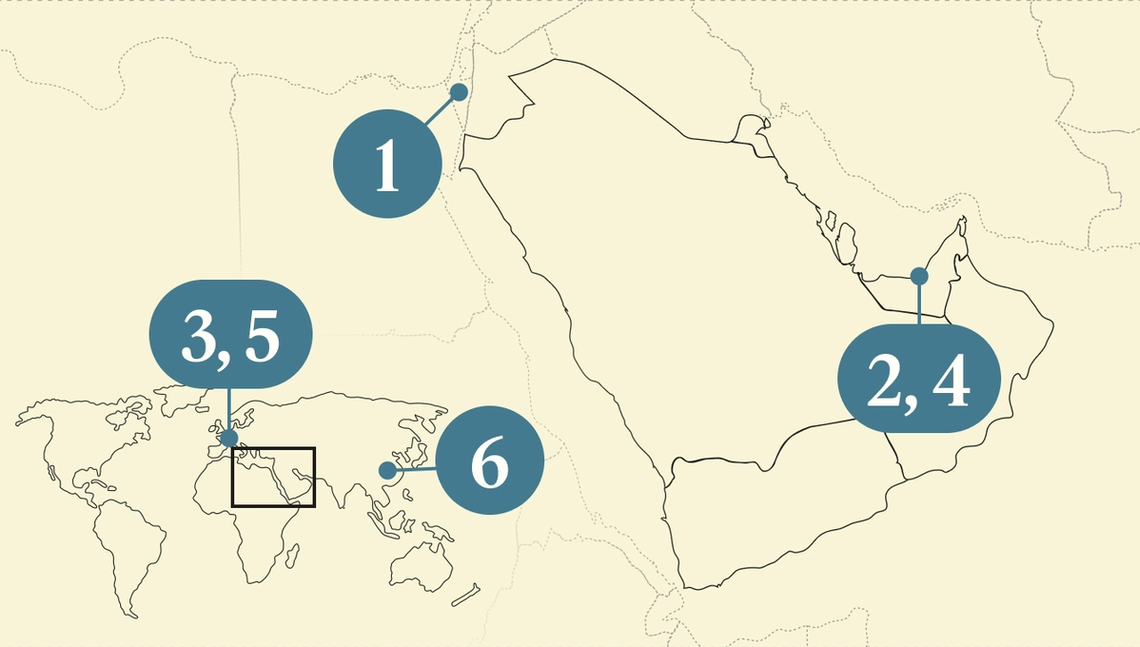
 Ronen Zvulun/Pool/Reuters Ronen Zvulun/Pool/ReutersThe UAE denied Israeli Prime Minister Benjamin Netanyahu’s surprise claim that he had made a secret visit to Abu Dhabi during the war and secured a “historic breakthrough” with President Sheikh Mohamed bin Zayed. Netanyahu’s office said the visit had deepened cooperation, but the UAE foreign ministry pushed back, insisting reports of the “alleged visit” were false and that ties with Israel were conducted transparently through the Abraham Accords framework. Netanyahu’s former Chief of Staff Ziv Agmon — who resigned in March — posted that he had joined Netanyahu on the trip and that the prime minister had been received with “the honor of kings.” The discord underscores a delicate balancing act, in which Abu Dhabi has doubled down on defense coordination with the US and Israel during the Iran conflict. Israel rushed over air defense systems used in its Iron Dome to the UAE during the war, according to the Financial Times. But Abu Dhabi still wants to maintain distance from Netanyahu’s far-right government and his policies that have mired the region in an expanding war. — Mohammed Sergie |
|
Abu Dhabi backs $30B infra fund |
 Hamad I Mohammed/Reuters Hamad I Mohammed/ReutersAbu Dhabi’s newest sovereign wealth fund L’IMAD is partnering with national oil company ADNOC, BlackRock’s Global Infrastructure Partners, and Singapore’s Temasek on a $30 billion infrastructure fund. The agreement is the latest sign of Abu Dhabi pushing ahead with investment activities despite the Iran war, even as the closure of the Strait of Hormuz hits government revenues; it also shows that global investors still see opportunities in partnering with the emirate’s biggest firms. The group will focus on investing in a wide range of sectors, including digital infrastructure, energy, logistics, transport, waste management, and water. They will target deals across the Gulf, as well as in Central Asia, and the broader Middle East. L’IMAD, which is chaired by Abu Dhabi Crown Prince Sheikh Khaled Bin Mohamed, is quickly rising in prominence after its creation last year. It has absorbed ADQ, another Abu Dhabi government fund that controlled $263 billion in assets, and is also backing Paramount’s acquisition of Warner Bros. Discovery, along with Saudi and Qatari sovereign funds. — Matthew Martin |
|
Phoenix makes AI pivot into Europe |
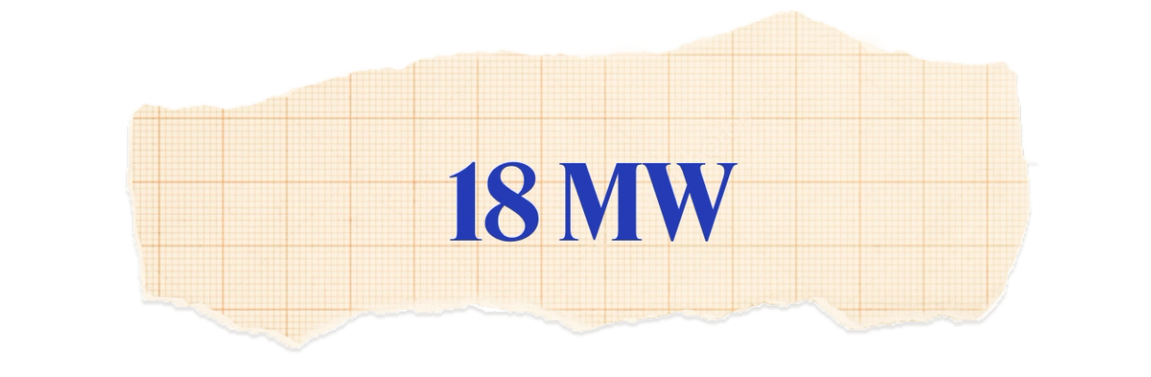 The size of a planned data center in Lyon, France being developed by Phoenix Group, an Abu Dhabi-based Bitcoin miner that told Semafor last year it was pivoting to small-scale AI infrastructure. The push into Europe comes as demand for AI computing capacity outpaces supply. The unit of International Holding Company — which is led by UAE National Security Advisor Sheikh Tahnoon bin Zayed — is partnering with French firm DC Max on the project. The group has acquired land, permits, and power, and expects to start construction in July. The deal is part of a broader aim to develop more than 1 gigawatt of capacity in Europe and the Gulf, at a cost of some $8 billion, according to Phoenix. It already operates 550 megawatts of capacity across East Africa, North America, Oman, and the UAE. |
|
War’s long-term impact on food prices |
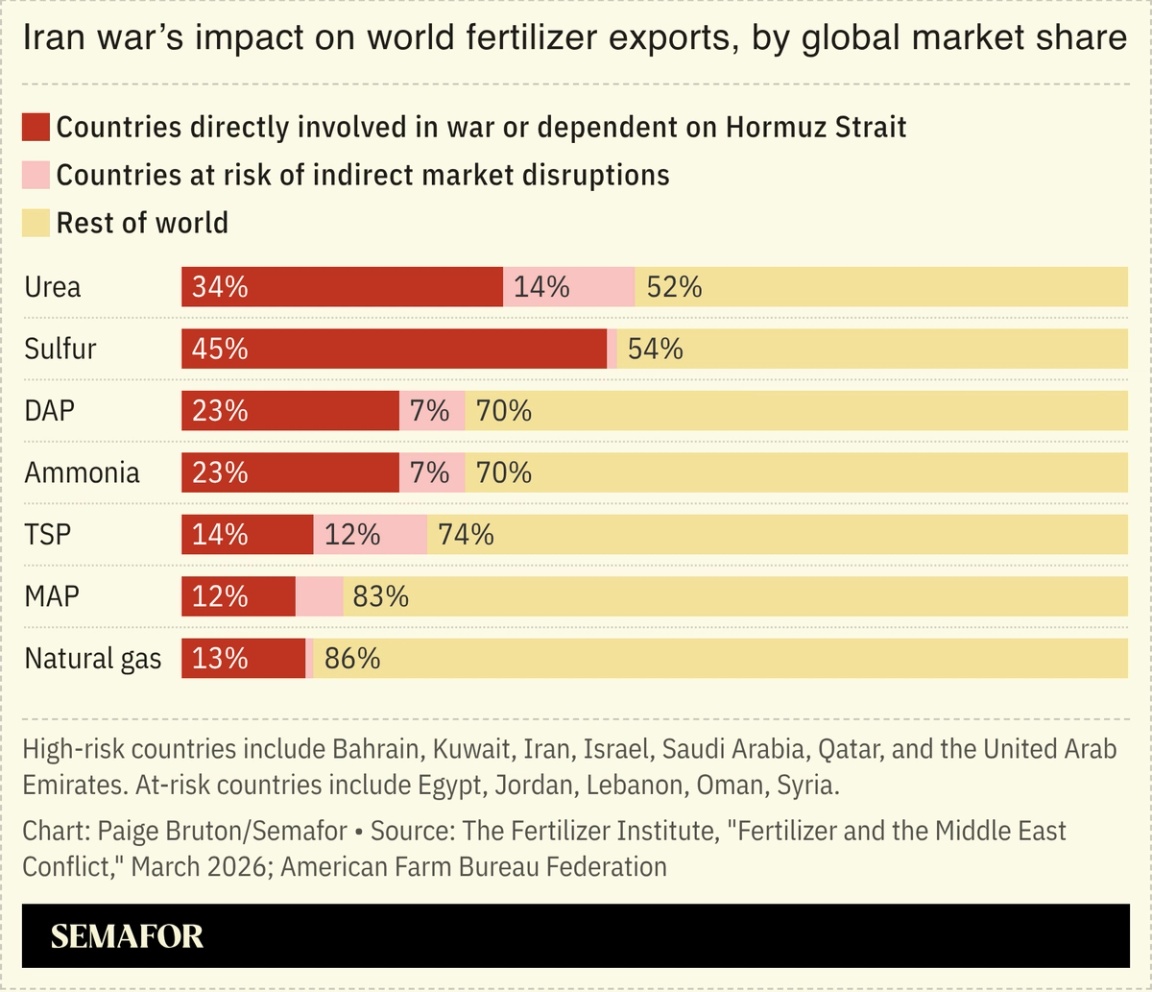 Fertilizer and food prices could remain elevated even after the Strait of Hormuz reopens, according to the chief executive of Abu Dhabi-based Fertiglobe, as supply disruptions upend global agriculture markets. Ahmed El-Hoshy, CEO of one of the world’s largest exporters of urea and ammonia, said many farmers are trying to delay fertilizer purchases “until the last possible moment” in the hope that normal Gulf supplies will be restored. While fertilizer prices have spiked, crop prices have risen only modestly so far, leaving growers exposed, El-Hoshy said. Fertiglobe exports fertilizer from facilities in Algeria and Egypt, as well as the UAE, giving it an advantage over some Gulf peers and means it is able to reap some benefit from higher prices. Urea is relatively easy to store compared to other commodities, and the company has resorted to trucking its output to ports beyond the Strait of Hormuz. But going by road is much less efficient: A single ship can move 50,000 tons of product, compared with 25 tons per truck, meaning thousands of journeys are needed. “The market is telling us to get it out this way,” El-Hoshy said, adding that higher transport costs are being recouped thanks to the higher prices. — Mohammed Sergie |
|
High fuel prices drive EV demand |
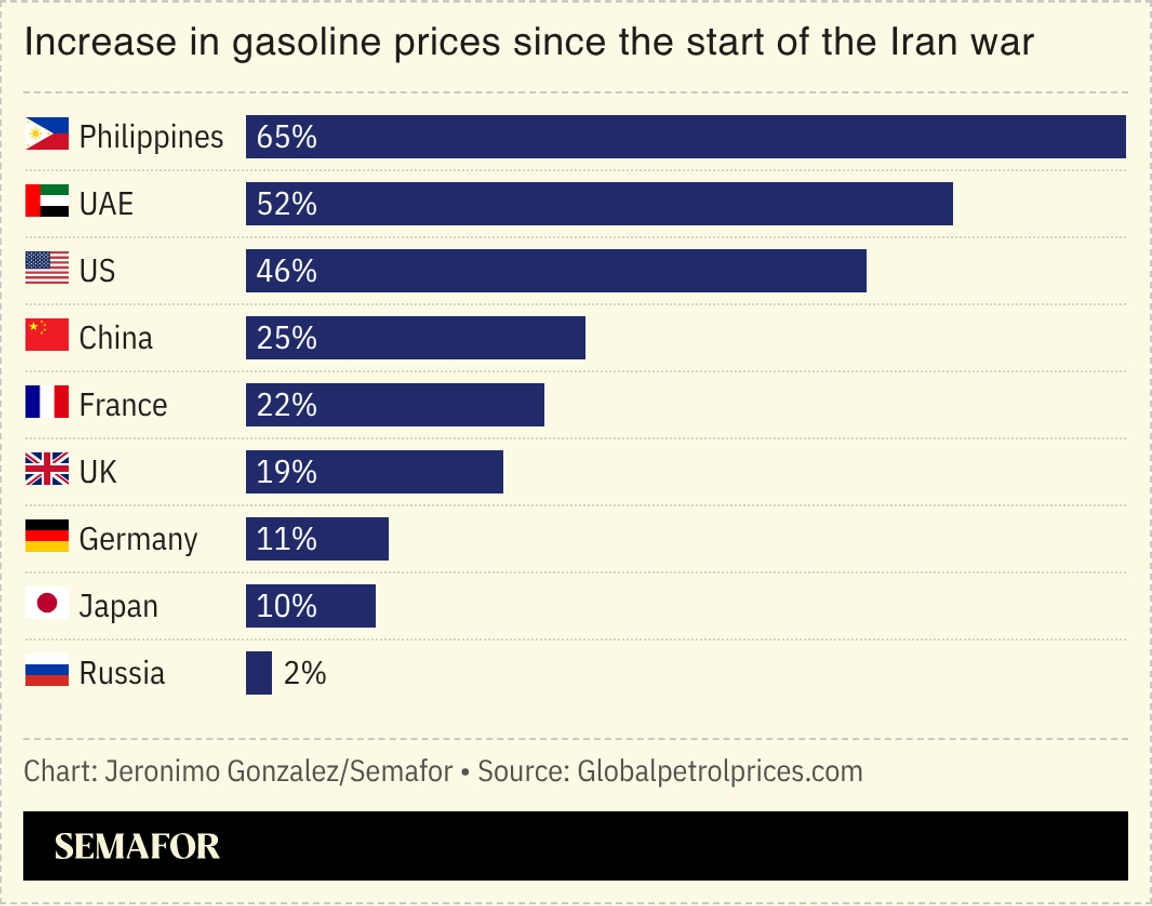 EV sales are surging worldwide amid soaring gasoline prices, with some analysts forecasting global fossil fuel demand could be permanently lower after the Iran war. EV sales in Europe jumped by 27% year-on-year in April; sales in Italy almost doubled thanks to government incentives. Purchases worldwide have also been lifted by a surge in Chinese exports, and the country’s EV shipments surpassed those of fossil fuel-powered cars for the first time ever last month. Though EV sales have fallen in the US, where gasoline prices are at their highest level in years, the Iran war could nonetheless lead to a considerable destruction of global oil demand, both OPEC and the IEA said. |
|
View: China’s strategy for Iran war |
   Evan Vucci/Reuters. Banner credit: Andrew Caballero-Reynolds/AFP via Getty Images. Evan Vucci/Reuters. Banner credit: Andrew Caballero-Reynolds/AFP via Getty Images.A key part of the agenda during US President Donald Trump’s visit to China is the status of the Strait of Hormuz and how it might be reopened. For China, however, the strategic calculation may be very different to that of the US, writes Amena Bakr, head of Middle East Energy & OPEC+ research at global commodities data firm Kpler, in a column for Semafor. Beijing has looked on as Washington has become mired in a costly, open-ended confrontation with Iran. Around 40% of Beijing’s oil needs flowed through Hormuz before the war, but it has built up large stockpiles. It does not want to see a repeat of what happened in Venezuela, where the oil sector has come under greater US control. Such an outcome “would represent another major strategic loss for Beijing that it is determined to avoid,” Bakr writes. However, she adds: “For China, time remains a strategic asset.” |
|
 Deals- Andreessen Horowitz led the Series A round for Saudi fintech Stitch, marking the venture capital fund’s first direct investment into the Gulf. The “software is eating the world” firm was enticed by the rapid expansion of new financial services in the region, and the lack of legacy systems, partners said in a blog post.
- Chipmaker Cerebras Systems raised $5.55 billion in the biggest IPO in the US so far this year, valuing the company at $56.4 billion. Abu Dhabi’s AI conglomerate G42 acquired a 1% stake in Cerebras for $40 million in 2021. — The Circuit
Transport- Dubai-listed Parkin is introducing more than 700 license-plate-reading cameras across the emirate to automatically charge drivers for parking. The first phase targets high-traffic areas, for example near the Burj Khalifa, with a separate rollout at Emaar malls to enforce disability parking. — The National
- Dubai Taxi Co. plans to acquire its local rival National Taxi for about $395 million. The deal will give Dubai Taxi entry into Abu Dhabi with a 12% market share, and boost its presence in Dubai to 59% of licensed operators.
Energy- QatarEnergy signed an agreement with TotalEnergies, ConocoPhillips, and the Syrian Petroleum Company to evaluate the potential of Block 3 in Syria’s Mediterranean waters. Qatar’s UCC Holding has partnered with Chevron and the SPC on a separate deepwater exploration project. — Reuters
Logistics Trucks enter the port of Fujairah in the UAE. Amr Alfiky/Reuters. Trucks enter the port of Fujairah in the UAE. Amr Alfiky/Reuters.- Trucks are taking over from ships as Gulf countries adjust to the closure of Hormuz. Saudi miner Maaden now has 3,500 trucks moving phosphate to the Red Sea, traffic at a UAE port on the Gulf of Oman is 70-times the pre-war level, and supermarket chain Spinneys drove snacks and baby food overland from the UK to the UAE. — The Wall Street Journal
- Abu Dhabi’s AD Ports Group reported a 41% year-on-year rise in first quarter net profits, despite a 23% drop in UAE cargo volumes due to the Iran war. In response to the conflict, the company has rerouted traffic through ports at Fujairah and Khorfakkan, launched feeder services to other regional ports, and developed land and air bridges.
|
|
 - Washington’s failure in Iran, and Tehran’s control of the Strait of Hormuz and its rise as a key player in the region, will strengthen China and Russia and accelerate the shift to a “post-American world,”
|
|
|


