| | Donald Trump arrives in China with trade, AI, and Taiwan on the agenda for his talks with Xi Jinping͏ ͏ ͏ ͏ ͏ ͏ |
| |  | Flagship |  |
| |
|
The World Today |  - Trump arrives in Beijing
- Taiwan arms on the agenda
- Questions on China chip deal
- AI factors in US elections
- EU shores up cyber defense
- Oil inventories falling fast
- War imperils cheap flights
- Undersea cables in danger
- PCOS is renamed PMOS
- Earliest English poem copy
 A Cannes winner that “will tear your guts out.” |
|
Trump faces high-stakes Xi meeting |
  Story photo: Evan Vucci/Reuters. Header photo: Andrew Caballero-Reynolds/AFP via Getty Images Story photo: Evan Vucci/Reuters. Header photo: Andrew Caballero-Reynolds/AFP via Getty ImagesUS President Donald Trump arrived in Beijing on Wednesday along with senior American officials and top CEOs, against the backdrop of the Iran war and pressing questions about the future of the US-China economic relationship. Ahead of Trump’s Thursday meeting with Chinese leader Xi Jinping, the White House left the door open for a deal on Chinese direct investment in the US, Semafor reported. But any offer from Xi of investment in US manufacturing would be a Trojan horse, a former Trump national security official argued, and one that Washington shouldn’t fall for. American automakers are especially nervous about the potential of Chinese EV investments in the US, an idea that Trump’s Commerce secretary shut down last month. |
|
Xi to push Trump on Taiwan |
 Story photo: Ann Wang/Reuters. Header photo: Andrew Caballero-Reynolds/AFP via Getty Images Story photo: Ann Wang/Reuters. Header photo: Andrew Caballero-Reynolds/AFP via Getty ImagesBeijing is poised to press Donald Trump on US arms sales to Taiwan, amid rising concerns that the president could alter his stance toward the island. Trump on Monday said he would discuss the weapon sales with Chinese leader Xi Jinping, alarming the island’s supporters; some US lawmakers warned against “unilateral changes” to Washington’s Taiwan policy, Semafor reported. In his eagerness for trade deals, The Washington Post wrote, Trump may soften his tone on US defense of Taiwan, which Beijing sees as a renegade province. Taiwan’s legislature recently approved a defense budget to buy US weapons; an opposition leader who was instrumental in paring it down warned Taiwan “must not become a bargaining chip in the games of great powers.” |
|
Huang a ‘bargaining chip’ in China |
 Story photo: Mike Blake/Reuters. Header photo: Andrew Caballero-Reynolds/AFP via Getty Images Story photo: Mike Blake/Reuters. Header photo: Andrew Caballero-Reynolds/AFP via Getty ImagesThe Nvidia CEO’s last-minute inclusion on US President Donald Trump’s trip to Beijing raised the possibility of a deal to break an impasse over AI chip sales to China. Trump in January greenlit shipments of Nvidia’s high-powered H200 chips to China, but not a single one has been sold. Jensen Huang’s presence shows that Trump wants him at “the table to be [a] bargaining chip,” a former Taiwan legislator said. But the White House’s support for Nvidia will be a tougher sell to American voters, who are souring on AI, Semafor’s tech editor noted. Chinese tech firms, meanwhile, are increasingly using homegrown semiconductors, demonstrating confidence to Washington that curbs haven’t derailed China’s AI development, The New York Times wrote. |
|
AI’s role in US elections expands |
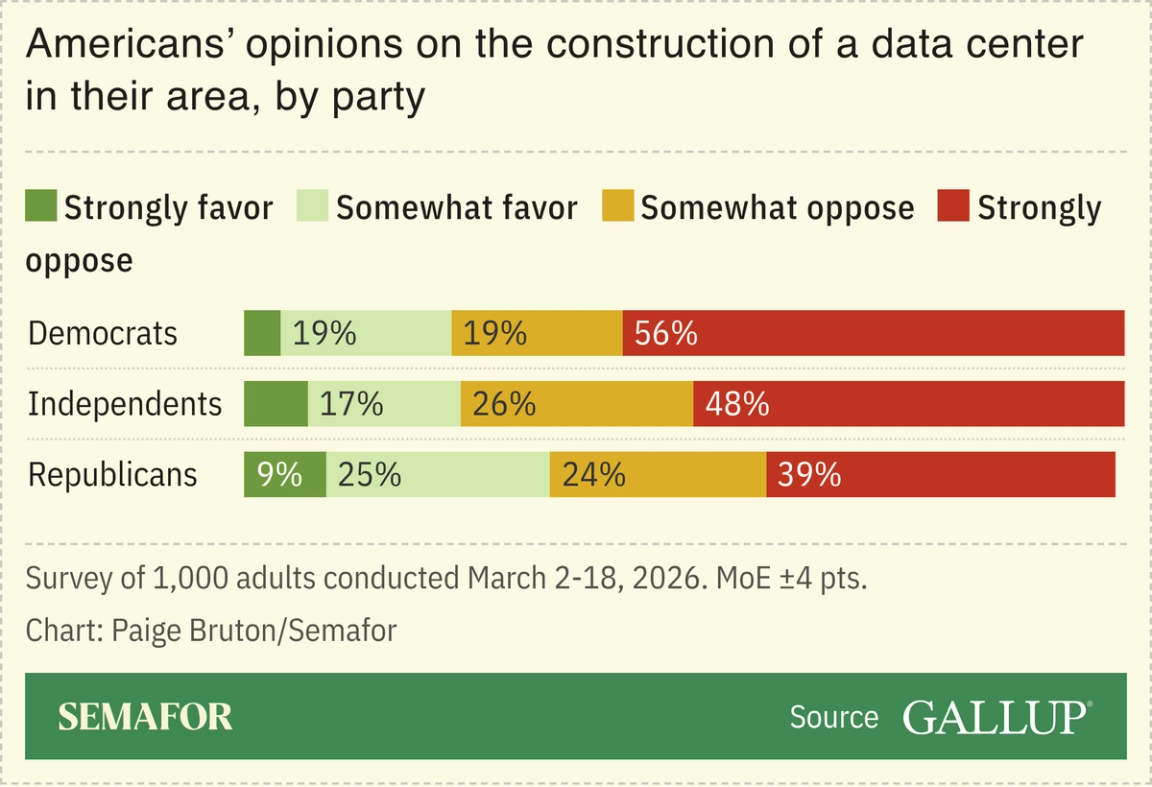 AI is playing an increasingly prominent role in US elections. The largest donor in this year’s midterm elections so far is venture capital firm Andreessen Horowitz, which has expanded its interests beyond crypto to also boost pro-AI candidates, The New York Times reported. Some politicians, by contrast, are campaigning on their opposition to data centers, which are central to the AI boom: A new Gallup survey showed 70% of Americans oppose the facilities in their area. A high-profile Democratic congressional primary in New York City has become a proxy battle over AI regulation, with interests on both sides of the issue pouring money into the race to either back or oppose one candidate who supports curbs on the technology. |
|
Japan, EU seek out cyber AI models |
 Mistral CEO Arthur Mensch. Denis Balibouse/Reuters Mistral CEO Arthur Mensch. Denis Balibouse/ReutersEuropean institutions are seeking access to high-powered AI models to protect them from cyberattacks after Anthropic denied EU regulators access to its powerful Mythos model. French AI startup Mistral is reportedly in talks with European banks to provide a cybersecurity-focused model, similar to Mythos, while Anthropic rival OpenAI said it would grant the EU access to its latest model. Governments and businesses are racing to detect and fix software vulnerabilities before AI systems get to them first, with access to the tech intertwining with US foreign policy: AI safety is on the agenda at the Trump-Xi summit, while three Japanese banks were reportedly given access to Mythos following the US Treasury secretary’s meeting with Japan’s prime minister. |
|
Oil inventories fall at record pace |
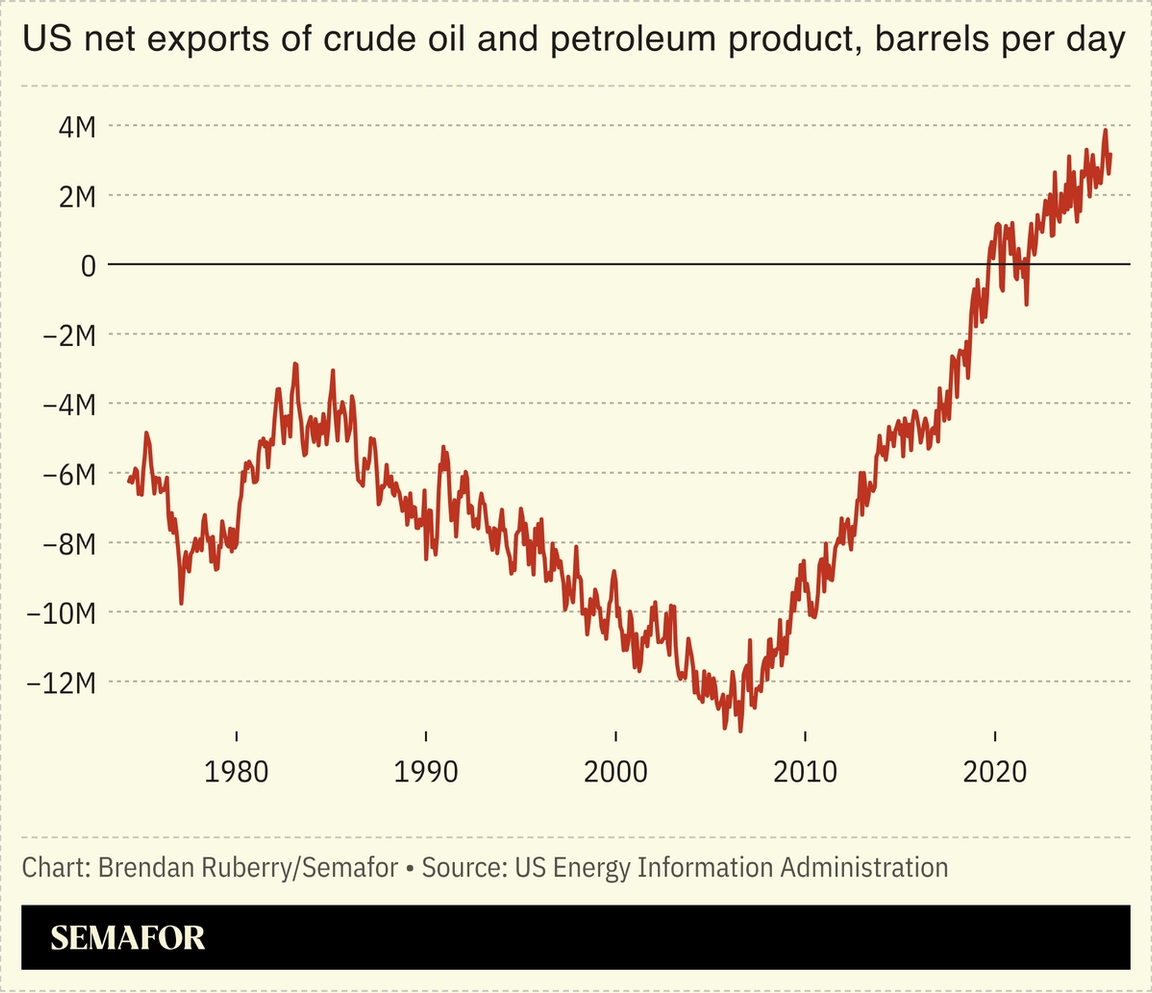 Global oil inventories are declining at an alarming rate, the International Energy Agency warned Wednesday, as the Strait of Hormuz shutdown continues to strain the energy sector. “Oil is in a race against time,” one analyst said. Even if the mounting pressure on oil stockpiles forces the reopening of the strait in June — as JPMorgan analysts recently predicted — the market will be “severely undersupplied” until October, the IEA warned. Import-dependent countries are turning to the US, which has become the world’s “supplier of last resort,” with exports hitting a record high, a Bloomberg energy columnist wrote. But it can only play that part for so long; the US’ crude oil and gas inventories are consistently falling. |
|
Iran war threat to low-cost air travel |
 Ricardo Arduengo/Reuters Ricardo Arduengo/ReutersA consolidation of the airline industry in the wake of the Iran war energy crunch could end the era of cheap flights. A jet fuel price spike has led airlines to cancel thousands of flights, and analysts expect several carriers to go out of business alongside the US low-cost airline Spirit: There are concerns over its competitors, JetBlue and Frontier, and investors have taken short positions on Hungary’s Wizz Air. The industry is “notorious for its low margins,” the Financial Times reported, and crises regularly wipe out weaker airlines. If that happens again, it might diminish competition in the market, and remove much of the downward pressure on fares even after the immediate crisis is over. |
|
 Get the world in your inbox with The World This Week. Every Friday, Council on Foreign Relations President Mike Froman analyzes an important foreign policy story from the past week and shares the best news coverage that has crossed his desk. For more than a century, CFR has guided leaders and citizens alike through moments of profound change. Subscribe today. |
|
The geopolitics of undersea cables |
 Rogan Ward/Reuters Rogan Ward/ReutersUndersea cables are becoming a potent geopolitical pressure point. The US’ war on Iran has “exposed the fragility of the internet’s multibillion-dollar physical backbone,” Bloomberg wrote, as unexploded missiles and mines litter the seabed, halting cable projects in the Gulf. Japan is investing hundreds of millions into the infrastructure, a move that could counter the rise of an ascendant Chinese competitor and deepen ties with Western allies. Some defense experts are warning that cables’ critical value to the global information ecosystem could make them prime targets in future conflicts. One tech executive said US adversaries like China and Russia could “inflict devastating economic chaos almost at will.” |
|
|


