| | In this edition, why AI is a no-win topic for most politicians, and a new survey finds most American͏ ͏ ͏ ͏ ͏ ͏ |
| |  | Technology |  |
| |
|
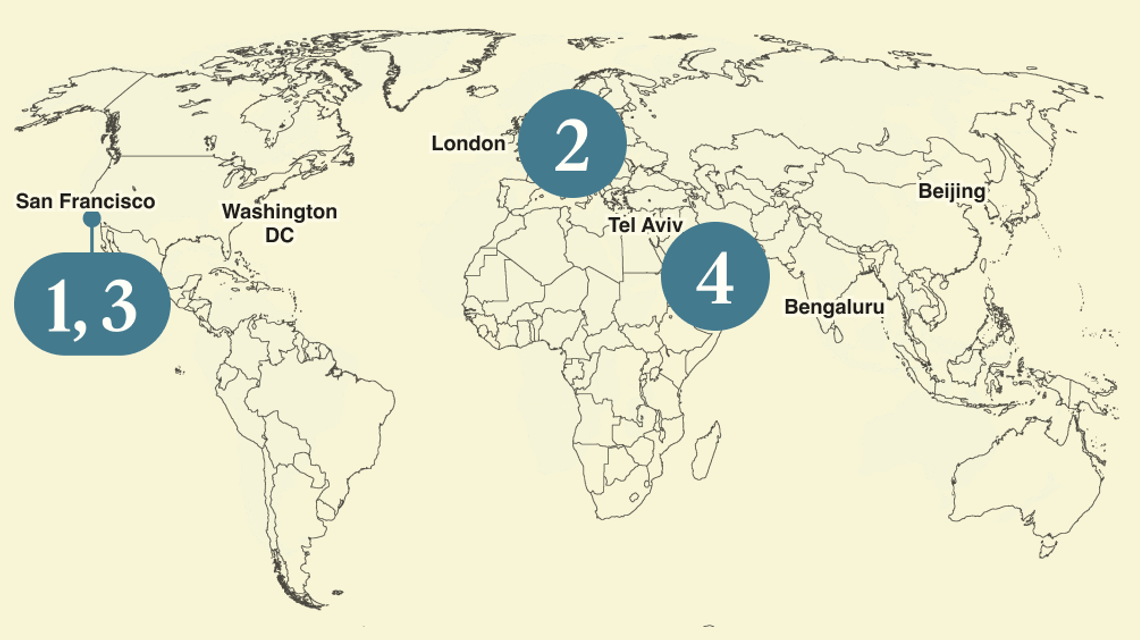 - Interrupting AI
- EU clamps down on addiction
- Data center backlash
- Abu Dhabi pitches genomics
 Why Jensen Huang joined Trump’s China trip, and a UK recycling center adopts a robot to help sort waste. |
|
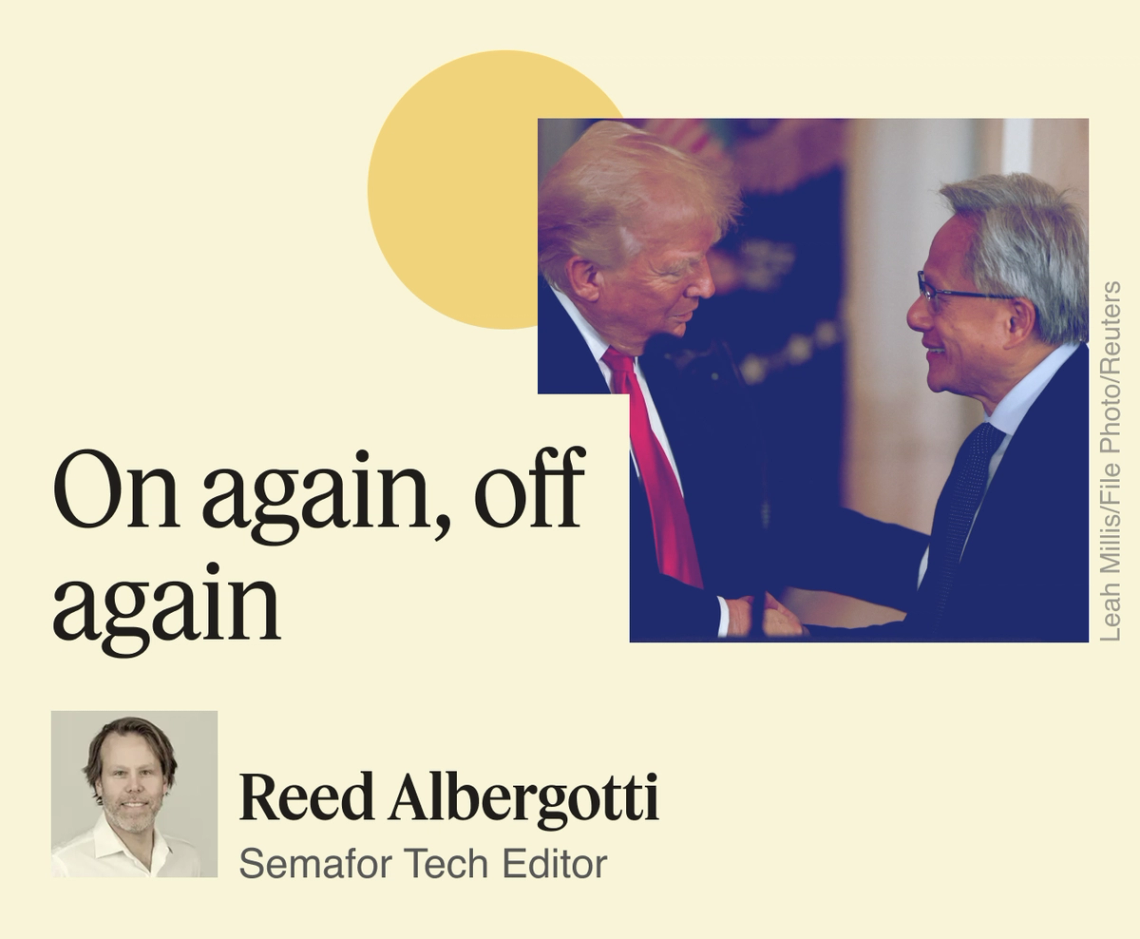 Out here in Silicon Valley, we have a very simple litmus test for success. Did your product lead to a geopolitical clash between world superpowers? If the answer is yes, you’ve really made it. China has thrown its economic weight — and espionage skills — at trying to copy Jensen Huang’s inventions for years. The ability to buy and sell Nvidia chips in China is a key bargaining point for Beijing — and a point of contention in Washington. By most measures, it makes sense to have Huang come along on President Donald Trump’s trip to China to hash these issues out. But there’s one measure in which it doesn’t: politics. While China understands the benefits of technological superiority, in both a military context and an economic one, American voters are not so sure. Computers used to be something only a select few math nerds could really harness, and software developed by this tiny cohort “ate the world.” But Huang’s graphics processors now let anyone write computer applications. And people are asking: Will software eat my white-collar job? And hey, by the way, don’t those chips require a lot of energy? The truth is that AI is a no-win topic for most politicians. For the vast majority of people in the US outside of the high-income tax brackets, the economy feels bleak. AI is the perfect scapegoat for worries of stubbornly high consumer prices and high-paying jobs feeling more out of reach. So when Huang was initially left off the manifest for Trump’s big trip to Beijing, my sources told me it was to avoid the “awkward” conversations that would have come along with his presence. But after the omission itself turned into a news cycle, Huang strapped on a black backpack and hopped on board at a stopover in Alaska. Trump will do what Trump wants to do. But in the US, the political base of the right and left are united on one issue: If AI remains as politically unpopular as it’s become, they’re not so sure they want to keep throwing the Trump administration’s support of Nvidia in their face. |
|
Are Thinking Machines’ ‘interaction models’ enough? |
 Carlos Barria/File Photo/Reuters Carlos Barria/File Photo/ReutersIf you ever thought, “I wish my AI interrupted me more,” Mira Murati has got a product for you. The new models from Thinking Machines Lab, called “interaction models,” launched in research preview Monday, giving us a window into what she’s been up to since she left OpenAI in 2024 and founded the startup. Her pitch: While other voice models tend to wait for users to finish speaking before offering answers, her models would fit seamlessly into conversations by interrupting and adding context as a human might. Backed by $2 billion in venture funding, Murati’s challenge with Thinking Machines is in making something differentiated enough to attract users from OpenAI and Anthropic. Improving voice models is a priority for the industry, and top labs can just follow with a similar offering. — Rachyl Jones |
|
EU seeks social media laws |
 Ritzau Scanpix/Ida Marie Odgaard via Reuters Ritzau Scanpix/Ida Marie Odgaard via ReutersThe European Commission is preparing new regulations on social media companies, in a bid to curtail endless scrolling, push notifications, and other features it terms “addictive design.” Also under consideration is a delay on when children are allowed to make accounts, the latest in a decade-long attempt to rein in social media companies’ access to children. From a policy perspective, I expect anything short of Australia’s all-out teen social media ban to be fruitless. It’s a no-brainer for kids to bypass age verification — from lying about their birthdays to donning fake mustaches — and more regulations kids can get around won’t change that. While we don’t yet have enough data to show the ban has markedly improved children’s mental health, it has much more teeth than Europe’s efforts. Either way, regulations alone aren’t enough. One of my takeaways from Jonathan Haidt’s The Anxious Generation, which tried to make sense of how social media ruined me and my peers, is that we need societal changes, too. Schools that ban phones during the day, investments in parks, and better ways for children to get to them are some ideas he throws out in the book. But the problem is bigger than any one politician alone or country can solve by adding more laws. — Rachyl Jones |
|
Data centers wildly unpopular |
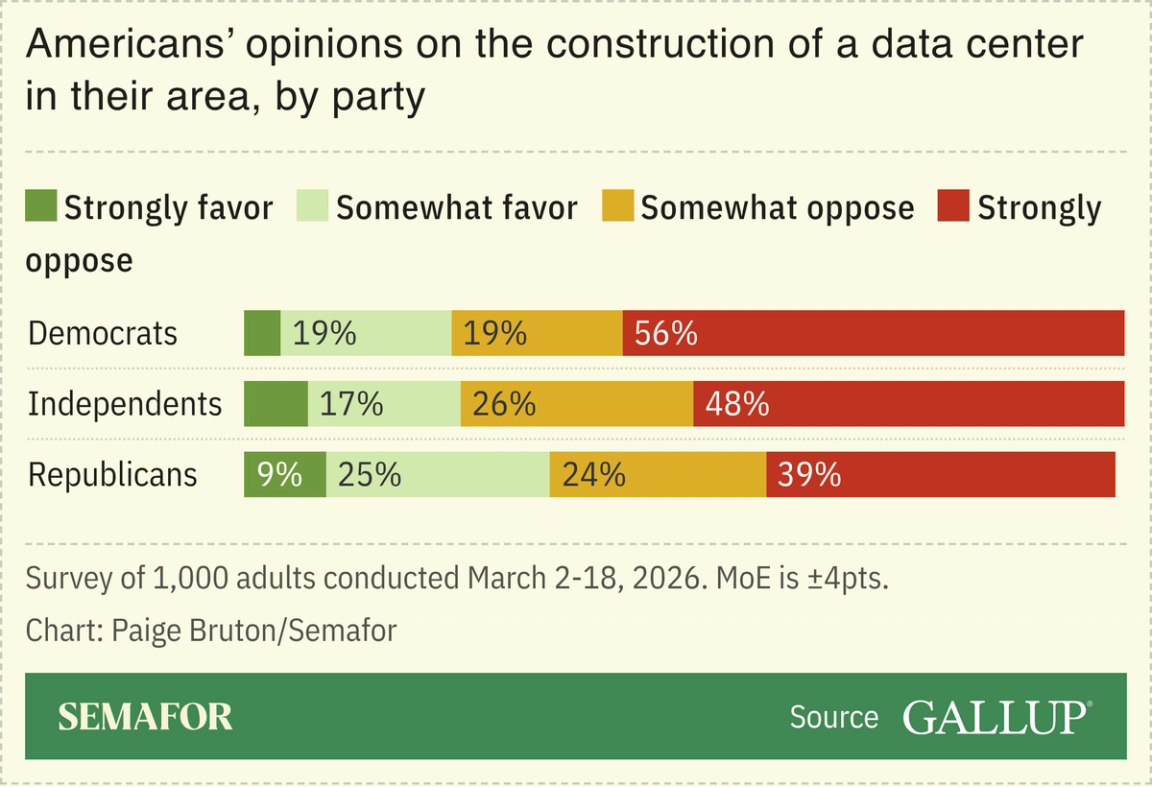 Seven in 10 Americans say they oppose building data centers where they live, according to Gallup, underscoring how politically toxic the projects have become. Data centers are disliked across the ideological spectrum and acutely unpopular among Democrats, 56% of whom say they strongly oppose the projects. Half of those opponents cite the facilities’ drain on resources — including water and energy usage and environmental impacts — as a reason for opposing them, while 22% raise quality-of-life concerns and one in five point to higher costs. Most of those who favor building data centers cite economic benefits like job creation as a reason. The numbers help explain why the projects have become a scapegoat for members of both parties, as energy prices continue to rise — and why tech companies are searching for ways to make them more attractive. — Morgan Chalfant |
|
Abu Dhabi’s M42 pitches genomics capabilities |
 Al Lucca/Semafor Al Lucca/SemaforAbu Dhabi healthcare company M42 has begun pitching its genomic sequencing capabilities to governments and pharma companies around the world, and is rolling out AI chatbots tailored to patients with chronic diseases, its CEO told Semafor’s Kelsey Warner. The firm is also launching an AI chatbot for kidney patients in the UAE and parts of Europe this week. “Countries, for years, were focusing on building the hospital, the next patient clinic. Now they understand that the future of health goes through the availability of data,” group CEO Dimitris Moulavasilis said. M42 has gathered and sequenced nearly 1 million genetic samples — including from some 100,000 non-Emiratis — under a population-level effort in collaboration with the Abu Dhabi government. That data is being used to match patients to the right medication based on their genetic profile, screen newborns for treatable conditions, and reduce the incidence of hereditary diseases. Now, the company would like to replicate the model and partner with other countries. “We’re actively pitching it,” Moulavasilis said, adding that countries including Uzbekistan and Jordan had shown interest. |
|
 Join the 1% who won’t sleep on the future. Mindstream is the human-first AI newsletter that prioritizes clarity over complexity and progress over perfection — so you can make smarter moves, lead calmer conversations, and keep your team a step ahead, today. Subscribe for free today. |
|
 Courtesy of TeknTrash Courtesy of TeknTrashA British recycling center deployed a humanoid robot to speed waste sorting. Processing garbage is boring, unpleasant, and dangerous, and the facility struggles to retain staff, the BBC reported. The robotic assistant can slot into the existing workflow, without needing bespoke plants or retrofitted systems, and can work 24/7, not worrying about grabbing used diapers or hypodermic needles. Recycling is unglamorous but an ideal use case for physical AI: Robots can sort 20 times faster than humans with fewer mistakes, and reducing recycling costs makes it economical to reuse more waste. One US company now has 50 dedicated facilities, and AI can pick out valuable materials such as e-waste and reduce reliance on critical mineral supply chains. |
|
| |



