| | | | | | Did someone forward this newsletter to you? Sign up here to get it in your inbox. In today’s issue: - Makary is out at the FDA, the latest shake-up of top Trump administration health officials.
- The departure comes following clashes with industries and advocacy groups, including those representing vapes, pharmaceuticals and antiabortion interests.
- More on the security gaps in patients’ electronic health records that health IT officials and executives, including within the Trump administration, are now urgently trying to close.
… and more. Hello, everyone! Welcome to the Health Brief newsletter. Did you see the “Saturday Night Live” sketch featuring Martin’s Tavern, the historic Georgetown bar? Well, so did its owner, and WaPo’s Tim Carman gauged his thoughts. I’m always looking for the next big storyline. Please send any tips, documents or intel to megan.wilson@washpost.com, or message me on Signal at megan.434. | 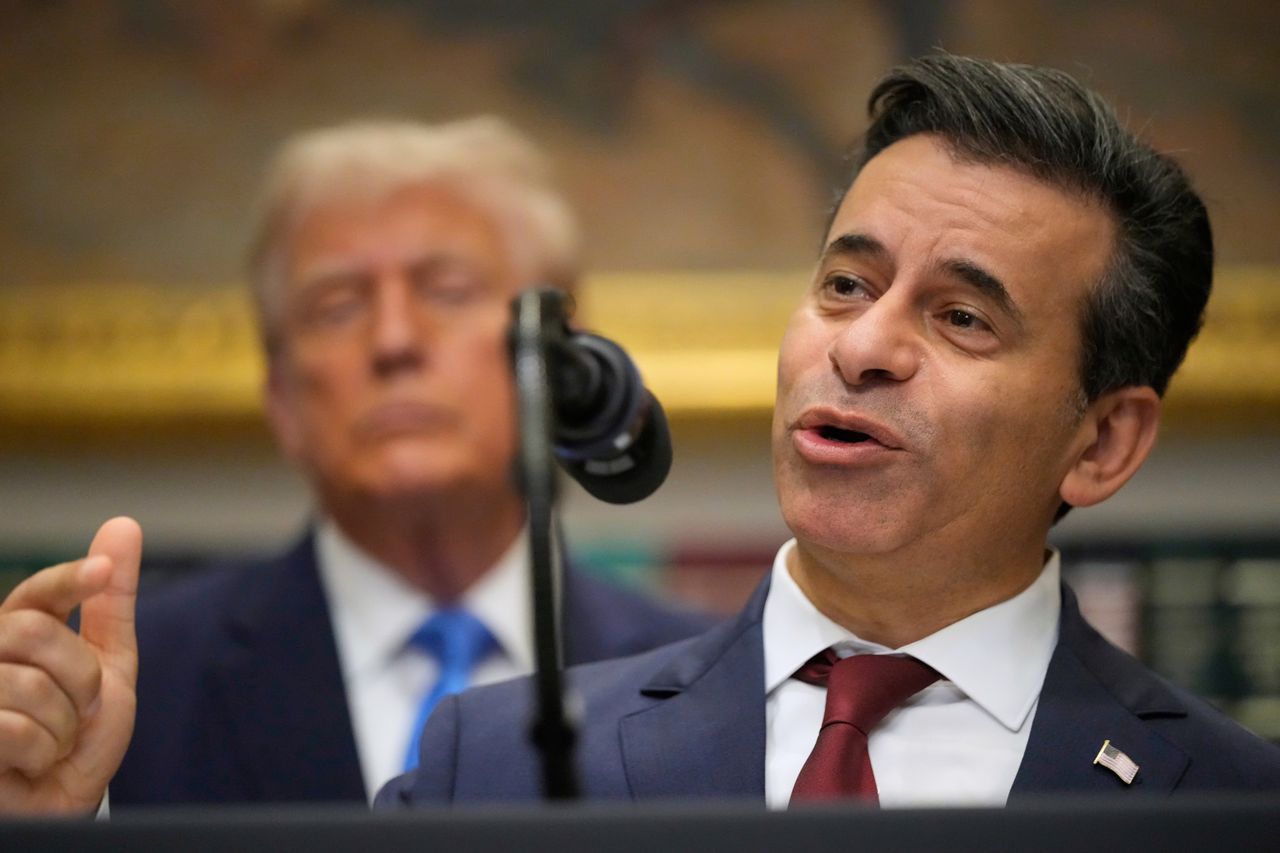 | | FDA Commissioner Marty Makary plans to step down following a White House sign-off on the plan to replace him. (Mark Schiefelbein/AP) | | | |  | The Lead Brief | It’s official: Marty Makary is out at the Food and Drug Administration. The agency’s commissioner is resigning after roughly a year on the job, capping one of the most turbulent periods in the regulator’s recent history. Kyle Diamantas, who oversees the FDA’s food program, is being tapped to lead the agency on an acting basis, report WaPo’s Rachel Roubein and Dan Diamond in the big story about Makary stepping down amid turmoil at the agency. Sources tell my colleagues that the FDA’s leadership team is likely to experience a broader overhaul in the near term, though it’s not clear which senior officials could be departing or reassigned. → Diamantas was recently elevated to be one of Health Secretary Robert F. Kennedy Jr.’s senior counselors amid the Trump administration’s broader restructuring of the health department and its priorities ahead of the November midterms. Meanwhile, Makary’s departure comes days after the White House signed off on a plan to replace him, as reported by Dan and Rachel last week. On Tuesday, President Donald Trump posted a text message from Makary on social media in which he offered his resignation. “So much was accomplished under [Makary’s] leadership,” Trump wrote in another post that also announced Diamantas would be serving as acting commissioner. “Everybody wants that job. It’s a very important job,” Trump told reporters Tuesday afternoon. “Marty’s a terrific guy, but he’s going to go on, and he’s going to lead a good life.” The president declined to say whether Makary had resigned or been fired, my colleagues noted. Makary — a Johns Hopkins University School of Medicine surgeon, author and former Fox News medical commentator — rose to prominence during the coronavirus pandemic as a critic of vaccine mandates and other public health restrictions. At the helm of the FDA, his tenure became defined by controversy. Makary pushed to overhaul the FDA’s traditional approach to drug and vaccine regulation, including greater use of AI tools. He championed more expedient drug reviews, in some cases, and stricter scrutiny of covid vaccine recommendations. While supporters cast him as a leader willing to challenge scientific orthodoxy, the FDA came under fire from critics inside and outside the agency, who accused Makary of politicizing decisions and sidelining career staff. Why it matters: It’s the latest shake-up among the Trump administration’s health regulators. At present, there is not a permanent head of the Centers for Disease Control and Prevention or a U.S. surgeon general, though Trump has nominated Erica Schwartz and Nicole Saphier for those posts, respectively. Schwartz, Saphier and whoever Trump picks to lead the FDA must all go through the Senate confirmation process. The FDA, which is responsible for overseeing food safety and drug approvals, has seen a wave of senior staff departures since the beginning of Trump’s second term — including turnover in the offices in charge of approving drugs, biologics and vaccines. The FDA has said that it is in the process of hiring roughly 1,000 new reviewers, inspectors and investigators across the agency. Last month, a spokesperson told me they’d filled 300 of those positions and had more than 600 people in the “final stages of the hiring process.” | | | | | | Industry Rx | Makary clashed with various industries and advocacy organizations. The pressure surrounding the FDA chief intensified in recent weeks following reports that Trump was furious over delays in approving flavored vaping products, an issue that prompted lobbying by industry executives. Makary also faced attacks from antiabortion advocates who were frustrated by the agency’s approval of a generic version of a medication used in abortions — and the pace of a regulatory review of the drug’s safety. Last week, Susan B. Anthony Pro-Life America again called for Makary to be fired. The influential group had said in December that “Makary must go” following reports that the FDA was “slow-walking” the mifepristone safety study. The agency has emphasized that it “is taking care to do this study properly and in the right way.” While Makary sought to streamline and speed up approvals of some drugs, smaller biotech companies complained that the FDA’s review process had become increasingly unpredictable. Several drugmakers complained the agency had moved the goal posts in terms of what it required for approval. Last week, Makary called the criticism of FDA’s rejections of certain drugs “corporate spin.” “If your drug works, it’s going to get approved,” Makary said during an interview with CNBC last Tuesday. He added: “Do you throw science out the window and do whatever the media tells you to do, and whatever the lobbyists and corporate interests tell you to do — or do you do what’s right?” John F. Crowley, the leader of the industry group Biotechnology Innovation Organization, said in a statement Tuesday that the “FDA must be strengthened immediately.” Crowley decried how Makary had “inherited an FDA in crisis” following mass firings led by the DOGE cost-cutting effort. “These staffing and morale challenges were compounded by constant leadership changes over the past year and questions around shifting FDA standards for drug approvals,” Crowley said. Following the departure of longtime FDA regulator Richard Pazdur less than a month into a new role at the agency, Crowley expressed concern about the FDA’s overall direction. “This constant turmoil is undermining America’s leadership in biotechnology,” Crowley said in December. The administration has also faced scrutiny for cutting research on mRNA products amid skepticism among top officials about the technology. Following the reports about Makary’s looming departure, the Alliance for mRNA Medicines released a statement that called for a “regulatory environment grounded in predictability, transparency, and rigorous evidence-based review” — all without naming names. “The promise of RNA technology to help fight cancer, rare diseases, infectious diseases and other serious conditions depends on an FDA that evaluates all research — including mRNA research — on its scientific merits,” said Clay Alspach, the group’s leader. “We look forward to working with the FDA’s future leadership team, and hope they will reaffirm the agency’s long-standing commitment to scientific integrity and timely decision-making across all therapeutic platforms.” | | | |  | From our notebook | | “What these bad actors are saying is, ‘Oh, cool, there’s an open door, and I will claim, for some nefarious purpose, that this is for care and treatment.’” Aaron Miri, chief technology officer at Baptist Health in Jacksonville, Florida, who has served in national leadership roles for health information exchanges. | | | | The quote comes from the latest story by The Post’s Christopher Rowland about allegations that some companies — which have denied any wrongdoing — have purchased sensitive medical records under false pretenses. While the fight is playing out in a federal court in California, Christopher examines the security gaps that health IT officials and executives, including within the Trump administration, are now urgently trying to close. “We are actively exploring options to layer in more network oversight and network participant audits,” according to a spokesman for the Office of the National Coordinator for Health IT. | | | | | | Document Drop | Democrats on the powerful House Ways and Means Committee have written to top Trump administration officials, demanding answers about a data breach tied to a new Medicare provider directory. → It comes after The Washington Post reported earlier this month that the Trump administration inadvertently exposed Social Security numbers for dozens of health care providers in a publicly accessible database. | “This is the exact type of data that bad actors have used to defraud the Medicare program, and while the agency is working to remedy the problem, the harm has already been done.” Ways and Means Democrats wrote in the letter dated May 11. | | | | The letter requests a briefing and answers to several questions, including about how and when officials at the Department of Health and Human Services or Centers for Medicare and Medicaid became aware of the breach — including whether officials knew prior to being contacted by The Post — and what precautions CMS is taking to ensure the information can’t be used to commit fraud. The directory tied to the breach is part of a broader initiative that includes plans for a new national directory of health care providers led by Amy Gleason, the acting administrator of the U.S. DOGE Service and a senior CMS official. Democrats want to know whether DOGE staff is involved and, if so, the nature of their involvement. HHS and CMS did not respond to a request for comment on the letter. | | | | | | Jobs Report | A prominent health care lobbying and consulting firm, Jeffrey J. Kimbell & Associates, is launching a communications practice. To helm the initiative, the firm is bringing on Cameron Coursen to serve as its vice president of communications and public affairs. “Organizations need a coordinated approach that aligns policy strategy with narrative, executive visibility, and stakeholder engagement,” Coursen said in a statement. He comes from Syneos Health Communications, and his résumé also includes work at global communications agencies Burson and Ogilvy, in addition to boutique firm Story Partners. The lobbying client list for Jeffrey J. Kimbell & Associates includes Gilead Sciences, U.S. Renal Care, Astellas Pharma and the Institute for Gene Therapies. | | | | | | What We’re Reading | “Hantavirus outbreak tests Trump officials who criticized covid response,” The Post’s Lena H. Sun writes. “One in Five HealthCare.gov Enrollees Dropped Insurance Coverage This Year,” Paige Winfield Cunningham reports at NOTUS. “Bristol Myers, Hengrui join forces in drugmaking alliance worth up to $15.2 billion,” Ben Fidler reports at BioPharma Dive. “Uncertainty Over Hantavirus Spread Complicates Global Response to Cruise Ship Outbreak,” Bloomberg’s Jason Gale writes. “Nurse AI adoption lags behind doctors: survey,” writes Maya Goldman at Axios. “Kennedy Is Driving a Vast Inquiry Into Vaccines, Despite His Public Silence,” Christina Jewett and Sheryl Gay Stolberg report at the New York Times. This newsletter is published by WP Intelligence, The Washington Post’s subscription service for professionals that provides business, policy and thought leaders with actionable insights. WP Intelligence operates independently from the Washington Post newsroom. Learn more about WP Intelligence. | | |


_tstmp_1756933376-1920-1080.png)