| | The vast scale of China’s oil buying power will help Beijing undermine one of Trump’s favorite trade͏ ͏ ͏ ͏ ͏ ͏ |
| |  | Energy |  |
| |
|
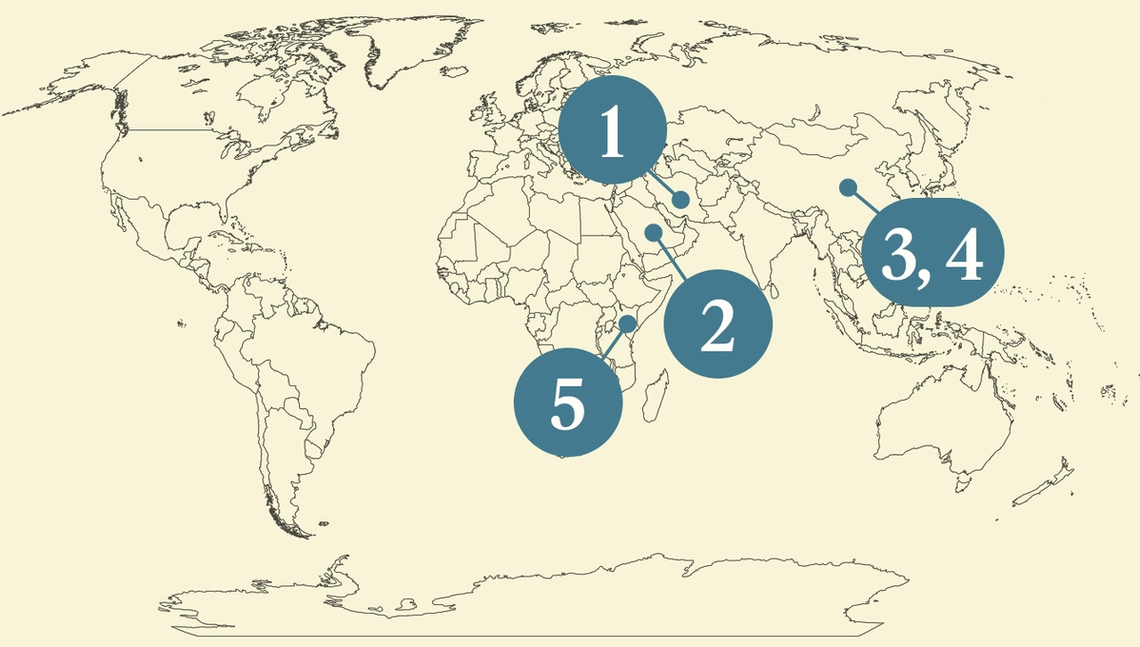 - ‘Massive life support’
- Jet fuel crack widens
- Clean tech cash and risks
- EV export boom
- Africa’s newest refinery
 The biggest bargain on Wall Street, and the cash crunch facing climate startups. |
|
 China’s oil market is sending alarm signals, but signs of resilience should concern US officials ahead of President Donald Trump’s summit with Chinese leader Xi Jinping in Beijing this week. After rising to record highs last year, China’s crude oil imports suddenly took a U-turn in April and fell to their lowest level since 2022. That’s no big surprise, given the heights oil prices are reaching these days. And it’s exactly the pain point Trump will aim to leverage in his meeting with Xi: China, as the world’s top oil importer and Iran’s biggest crude customer, arguably has both the motivation and the influence to push Tehran to a more favorable negotiating position. But beneath the hood of the topline import figures, domestic oil demand has remained strong, with only a “modest” dip in March and April, the International Energy Agency reported. An initial ban on fuel exports from Chinese refineries was quickly loosened, an indication that state planners don’t foresee critical shortages. Thanks to the proliferation of EVs, China’s transport sector is far less oil-intensive than others in Asia. Just before the war, China’s domestic oil production reached a record high. In sum, having planned for a moment like this, China’s sensitivity to global oil disruptions isn’t great enough to merit turning against a key ally. “China is doing just fine,” Melanie Hart, senior director of the Atlantic Council’s Global China Hub, told reporters Monday. The war “is not putting the screws on China from an energy perspective.” Indeed, the vast scale of China’s buying power may actually help Xi undermine one of Trump’s usual trade maneuvers: Badgering countries to buy more US oil and gas in exchange for better tariff terms. If China does agree to buy more US energy, that could backfire by accelerating the drawdown of US reserves and driving up prices at home. As Bloomberg’s Javier Blas observed, the most helpful thing China could do at this point for global oil prices would be to continue to buy less. In other words, China’s enormous influence as a buyer of oil affords it nearly the same level of “dominance” over global prices that Trump is fixated on achieving as a producer. So while Xi would surely like to see the Strait of Hormuz reopened, he seems to be in a relatively advantageous position for the short term. And the more the war drags on, the more other countries will look to Chinese electrification tech as a long-term security buffer. |
|
Ceasefire ‘on massive life support’ |
 Vessels in the Strait of Hormuz. Stringer/Reuters. Vessels in the Strait of Hormuz. Stringer/Reuters.Oil prices ticked up Tuesday after US President Donald Trump called Tehran’s latest negotiating offer “garbage” and said the ceasefire was “on massive life support.” Despite a disruption of almost 1 billion barrels of oil so far, crude prices have remained below their 2022 peak, thanks to large reserves, US exports, and expectations that the strait would reopen. But Morgan Stanley said if no agreement was reached by late June, oil could exceed $130 a barrel. The two sides remain far apart on core issues like rules for ship transit through the Strait of Hormuz and conditions for withdrawing the US blockade. And US leaders and lawmakers are increasingly desperate for a solution to high gasoline prices, with Trump, Energy Secretary Chris Wright, and a few Republican members of Congress joining Democrats in support of a gas tax suspension, even though that step would likely offer little relief for drivers and would strain the Highway Trust Fund. In the meantime, a handful of oil and gas tankers have managed to slip through the strait unharmed, including the first LNG cargo from Qatar to make it out since the war started. |
|
Jet fuel spike just beginning |
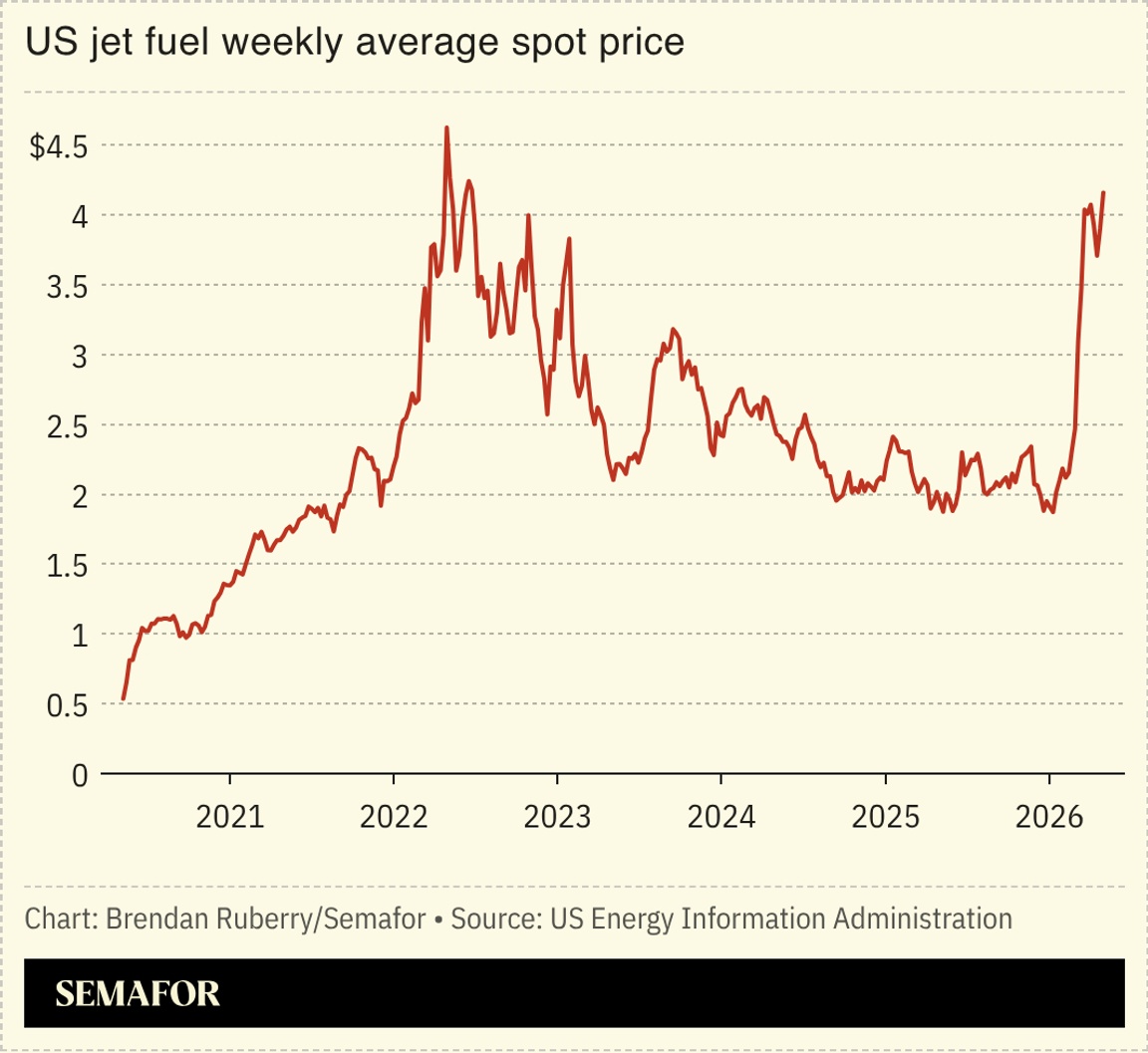 Energy executives and analysts are bracing for a severe, prolonged spike in prices for gasoline, jet fuel, and other refined fuels. The depletion of fuel inventories is “rapidly accelerating” and could reach “critically low levels” ahead of summer, Amin Nasser, CEO of Saudi Aramco, said on Monday. Even if the Strait of Hormuz reopened immediately and crude oil prices stabilize, it will take “months” for refineries to catch up, S&P Global Energy analysts wrote in a note, with demand destruction — i.e. prices high enough to force consumers to stop buying — as the only way for the market to reach balance in the meantime. Already, global demand for fuels in the second quarter will likely decline twice as much as it did during the 2008 recession and stay lower well into the third quarter, they said. Jet fuel is particularly vulnerable, JPMorgan’s head of global commodities strategy Natasha Kaneva said in a note to clients, and currently commands an “extraordinary” premium of up to $100 above the price of crude. That signal will encourage refineries to churn out more jet fuel, she wrote — but in exchange, result in less diesel and gasoline, meaning that global road transportation costs will rise and an average of $5 per gallon gasoline in the US “can no longer be dismissed.” |
|
China’s clean tech dominance |
 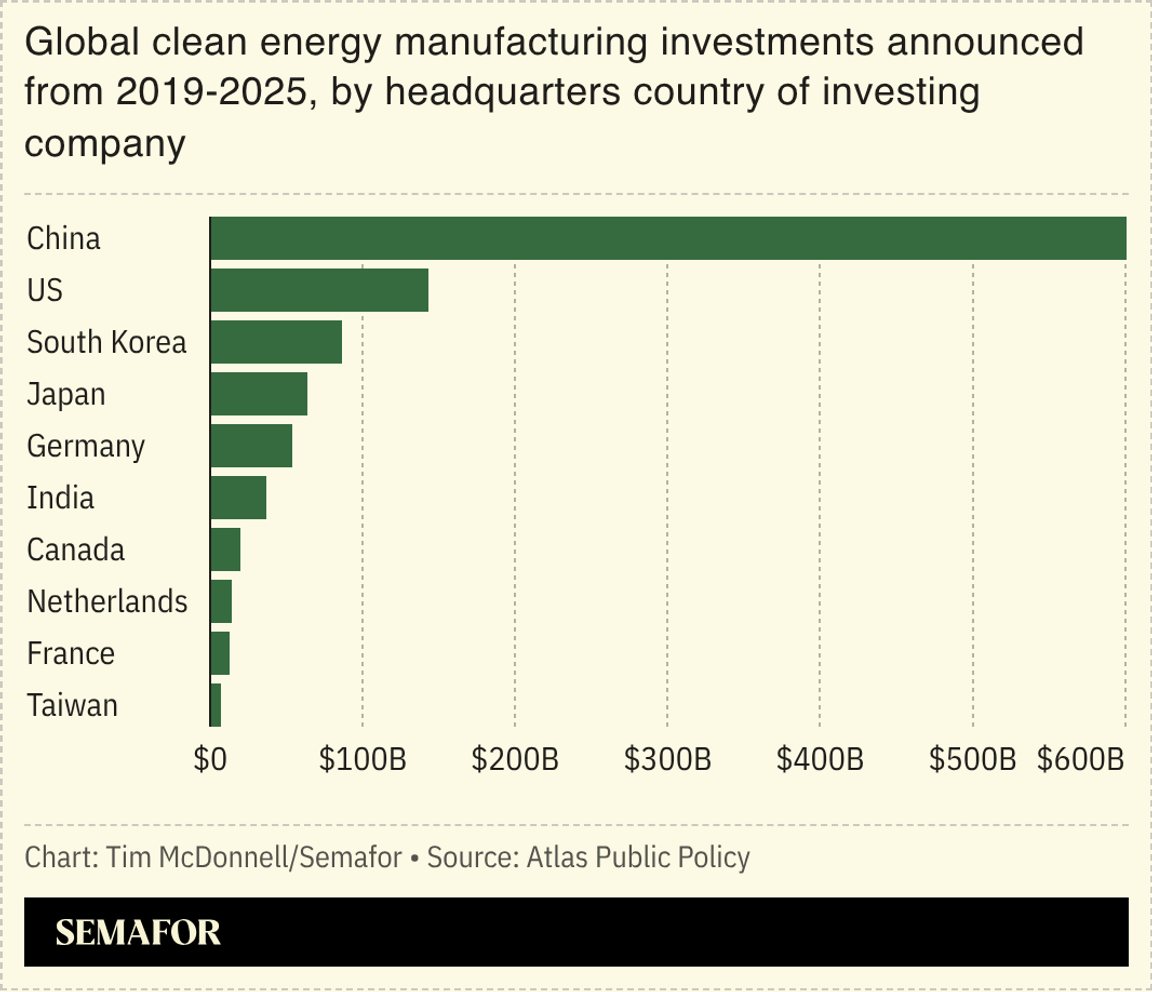 China is widening its lead in global clean tech, raising new security concerns. An analysis of $1.1 trillion in global clean energy manufacturing investments between 2019 and 2025 by the research firm Atlas Public Policy found that more than half were made by Chinese companies. Out of China’s more than $500 billion in total investment, about $136 billion went into clean tech factories outside its borders, an indication of its strategy to enter new markets and dodge trade barriers. The US, by contrast, saw about $236 billion in total announced investments, of which only 40% came from US companies, “showing the US dependence on foreign direct investment for its manufacturing sector,” the analysts wrote. But while China’s global clean energy push is a boon to its economy and could help other countries weather increasing fossil fuel price volatility, it comes with risks: A separate report this week co-authored by a former UK security official warned that “over the long term, Europe’s trade deficit with China will widen and Chinese leverage will strengthen,” and that “perhaps the most overlooked national security risk arising from Europe’s use of Chinese low-carbon technology comes not from the technology itself, but from the US’s likely hostile response to those who embrace it.” |
|
 Stay ahead with ESG Dive’s free newsletter. Get the latest news and insights on sustainability, governance, corporate responsibility, and more—delivered to your inbox every day. Stay informed on what matters most to ESG leaders and subscribe for free today. |
|
China hits EV export record |
 The share of cars exported from China in April that were electric or hybrids, the first time for that category to beat out combined gasoline and diesel car exports. The number of EVs and hybrids exported in April — 406,000 — is more than double that month last year and 16% above March, as drivers around the world look to electrification as a solution to soaring oil prices, and benefit from brutal price-cutting competition amongst China’s more than 100 EV manufacturers. China’s domestic EV market, however, is slowing, with April sales down 10% from the previous year, due in part to the expiration of retail tax credits. |
|
Africa’s newest oil refinery |
 Tasos Katopodis/Getty Images for Semafor World Economy Tasos Katopodis/Getty Images for Semafor World EconomyAfrica’s richest man said he would build a new refinery in Kenya, the latest move aimed at boosting the continent’s self-sufficiency after the Iran war exposed its risky reliance on fuel imports. Aliko Dangote said the new facility would have the capacity to refine as many as 650,000 barrels of crude a day, significantly expanding his group’s operations, which include a mega-refinery in Nigeria. Though African oil production has risen in recent decades, refining capacity remains paltry: The continent exports around three-quarters of its crude and imports 70% of its fuel needs, leaving it badly exposed to foreign shocks such as the one caused by the closure of the Strait of Hormuz. |
|
 New EnergyFossil FuelsFinanceTech- There’s still plenty of investment capital available for mature climate tech startups ready to scale up, but for new companies just getting started, the VC well is running dry.
Politics & PolicyFood & Agriculture |
|
|


