| | In today’s edition: The Iran crisis looms over Trump’s visit to China, Qatar-UAE improving ties, and͏ ͏ ͏ ͏ ͏ ͏ |
| |  | Gulf |  |
| |
|
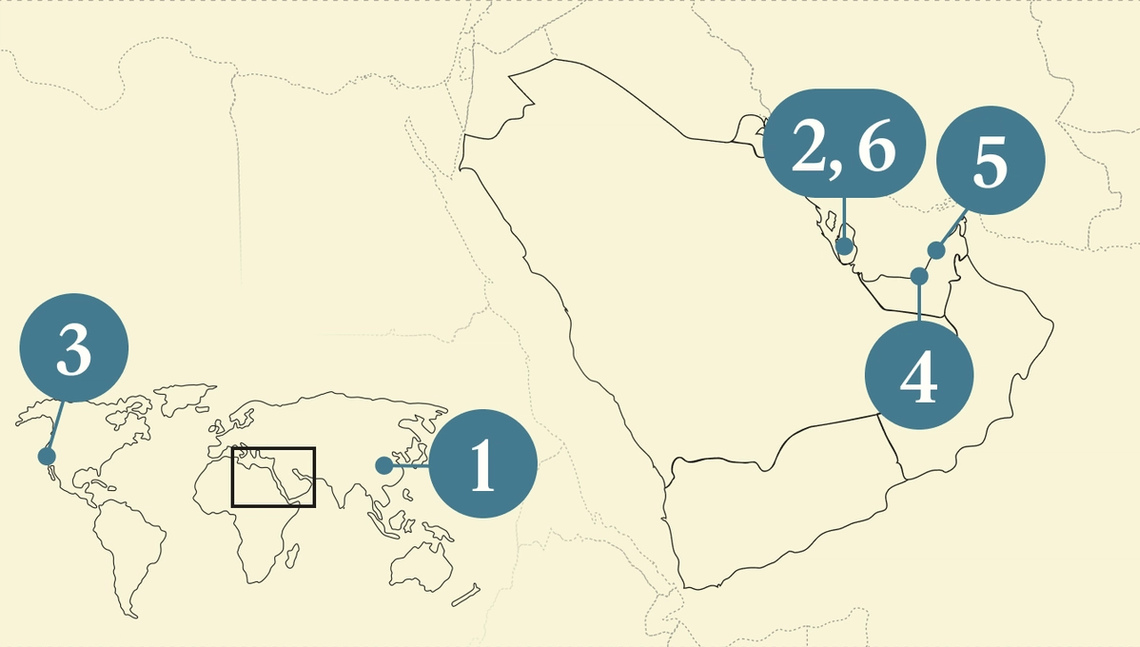 - China’s role in the Gulf
- QIA-General Atlantic deal
- Gulf outflows to moderate
- Pressures on UAE AI
- Emaar’s strong earnings
- UAE and Qatar bolster ties
 Japanese snacks are in grayscale thanks to Hormuz. |
|
War elevates China’s role in the Gulf |
  Banner credit: Andrew Caballero-Reynolds/AFP via Getty Banner credit: Andrew Caballero-Reynolds/AFP via GettyUS President Donald Trump heads to China this week seeking deals and a reset in ties between the world’s two biggest powers. Looming over the visit is the Iran war and the blockade of the Strait of Hormuz — but the interests of Gulf Arab states are barely registering, even though the region is becoming a testing ground for the rivalry between Washington and Beijing. Gulf officials have been at pains to state that the conflict won’t create any distance with their most important economic and security partner, the US. The reality is more nuanced: Washington remains the dominant player in the Gulf, but the conflict is providing an opening for China. For years, the US has pushed Gulf allies to limit their use of Chinese technology and defense equipment, in an effort to contain Beijing’s rise and enable Washington to retain its preeminent position. But as the region’s biggest trading partner, China is growing as a source of foreign direct investment, infrastructure financing, and industrial partnerships. And as a key ally of Iran — the Gulf states’ top strategic adversary — Beijing is seen by many in the region as having useful leverage. It was China, after all, that reportedly pressed Tehran to enter the ceasefire with the US, and it arguably has more to lose economically than the US if the conflict persists. — Matthew Martin |
|
QIA’s $500M investment pledge |
 Molly Darlington/Reuters Molly Darlington/ReutersQatar’s sovereign wealth fund is investing $500 million with General Atlantic as part of a deal to deepen their partnership, in the latest sign that the Gulf’s biggest funds are still actively seeking deals even as the closure of the Strait of Hormuz hits state revenues. The Qatar Investment Authority will also work with the US private equity firm to identify new investments and market themes, and help portfolio companies expand in the Middle East. QIA has become one of the world’s most significant technology investors, backing a host of Silicon Valley firms, and it plans to pour $500 billion into the US over the next 10 years. General Atlantic Chief Executive Bill Ford told Semafor in March that pulling back on Gulf investments due to the Iran war would be the “biggest mistake” and that the firm had not stopped looking for deals in the region throughout the conflict. |
|
More Gulf cash may stay home |
 State Street CEO Ron O’Hanley. Mike Blake/Reuters. State Street CEO Ron O’Hanley. Mike Blake/Reuters.The Gulf’s role as a major exporter of capital could diminish as the region’s governments redirect more money into domestic projects, State Street CEO Ron O’Hanley told Semafor on the sidelines of the Milken Institute Global Conference in Los Angeles last week. Investments from Gulf sovereign wealth funds have driven down the cost of capital globally, and any shift in these flows will have an impact on the private equity firms, real estate, and technology companies that have been recipients of the money. “Will some of it still come out of there? Of course, but on the margin, it’ll be less,” he said. O’Hanley also warned that the Iran war could slow US growth. While he said a recession is not the most likely outcome, weaker growth could still feel “as bad as a recession” as the US economy needs to expand by around 3% a year to manage its national debt. — Andrew Edgecliffe-Johnson |
|
 Al Lucca/Semafor Al Lucca/SemaforAccess to chips is not the only bottleneck in the UAE’s AI ambitions, according to executives involved in Abu Dhabi’s multibillion-dollar push into advanced technology. While GPUs have been a focus for Gulf states, other factors are also delaying progress, Paul Bloch, co-founder of data storage provider DDN, told Semafor. “Access to the right data centers, enough power, the right knowledge and expertise to actually deploy, and then GPUs. It’s all of it at once,” he said. Separately, an executive from Abu Dhabi AI conglomerate G42 said the Iran conflict is deterring skilled workers from coming to the UAE. California-based DDN sells to G42 and partners with Aleria — a unit of Sheikh Tahnoon bin Zayed’s International Holding Company — and Nvidia to deploy AI in the UAE. That work is visible practically everywhere: Irrigation lines are outfitted with AI sensors to keep the grass in public areas unexpectedly green, according to Bloch. Such deployments are set to become more expensive, though. Global competition for resources is pushing costs in the “opposite direction” to what analysts predicted at the onset of the latest tech boom, when many expected wider uptake to bring prices down. For large data center builds, Bloch said “what used to cost $100 million five months ago probably costs $200 to $250 million today.” — Kelsey Warner |
|
Dubai’s biggest developer going strong |
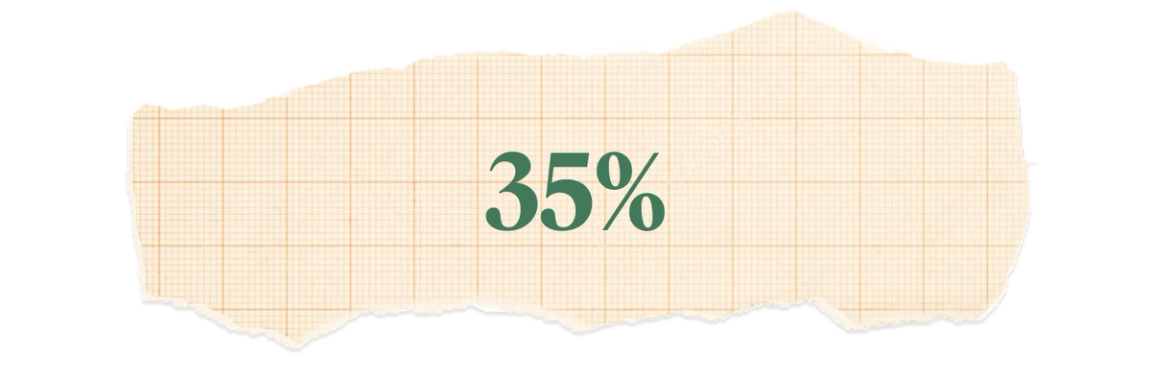 The year-on-year rise in Emaar Properties’ first quarter profits to 5 billion dirhams ($1.36 billion), as the Dubai real estate developer reported record sales despite the Iran war. Founder Mohamed Alabbar said the results reflected the resilience of the UAE economy and that geopolitical developments had reinforced the value of operating in markets defined by a “long-term vision.” While Emaar’s numbers tell one story, there are other, more cautionary market trends, too. One in 10 Dubai property sellers have cut their asking price since the war began, with some offering discounts of up to 50%, according to data tracked by LuxuryPriceDrops.com, cited by AGBI. That has wiped $463 million off the price of more than 2,800 properties, with the steepest cuts concentrated in off-plan properties and emerging neighborhoods. Emaar continues to be strongly backed by the authorities. Dubai Holding — the investment fund owned by Dubai Ruler Sheikh Mohammed bin Rashid — has acquired a 22% stake in Emaar from the Investment Corporation of Dubai. The deal takes Dubai Holding’s stake to almost 30% and makes it the largest shareholder in the developer. |
|
Qatar and UAE edge closer together |
 “Submarine Cable Map,” via TeleGeography, licensed under CC BY-SA 4.0. “Submarine Cable Map,” via TeleGeography, licensed under CC BY-SA 4.0.Qatari telco Ooredoo Group and Dubai-based du plan to land the Fibre in the Gulf (FIG) subsea cable in the emirates — one of several signs of improving ties between the two countries. The deal was announced a day after UAE and Qatari officials met in Abu Dhabi to discuss greater cooperation, issuing a statement which referred to an “alignment of visions, and integration of interests.” The Qatar Investment Authority and Abu Dhabi’s Mubadala Investment Company are also considering potential collaboration. This stands in contrast with the deepening rift between Abu Dhabi and Riyadh. The 720-terabit-a-second FIG network adds a physical dimension to improving economic ties (alongside the Dolphin natural gas pipeline). It will be the region’s largest subsea cable system and will also link to Bahrain, Iraq, Kuwait, Oman, and Saudi Arabia. It is part of a drive by Gulf countries to expand their data connectivity with the aim of becoming an essential node in global networks — an ambition not yet dented by the Iran war, despite warnings from Tehran that it might target cables through the Strait of Hormuz. — Dominic Dudley |
|
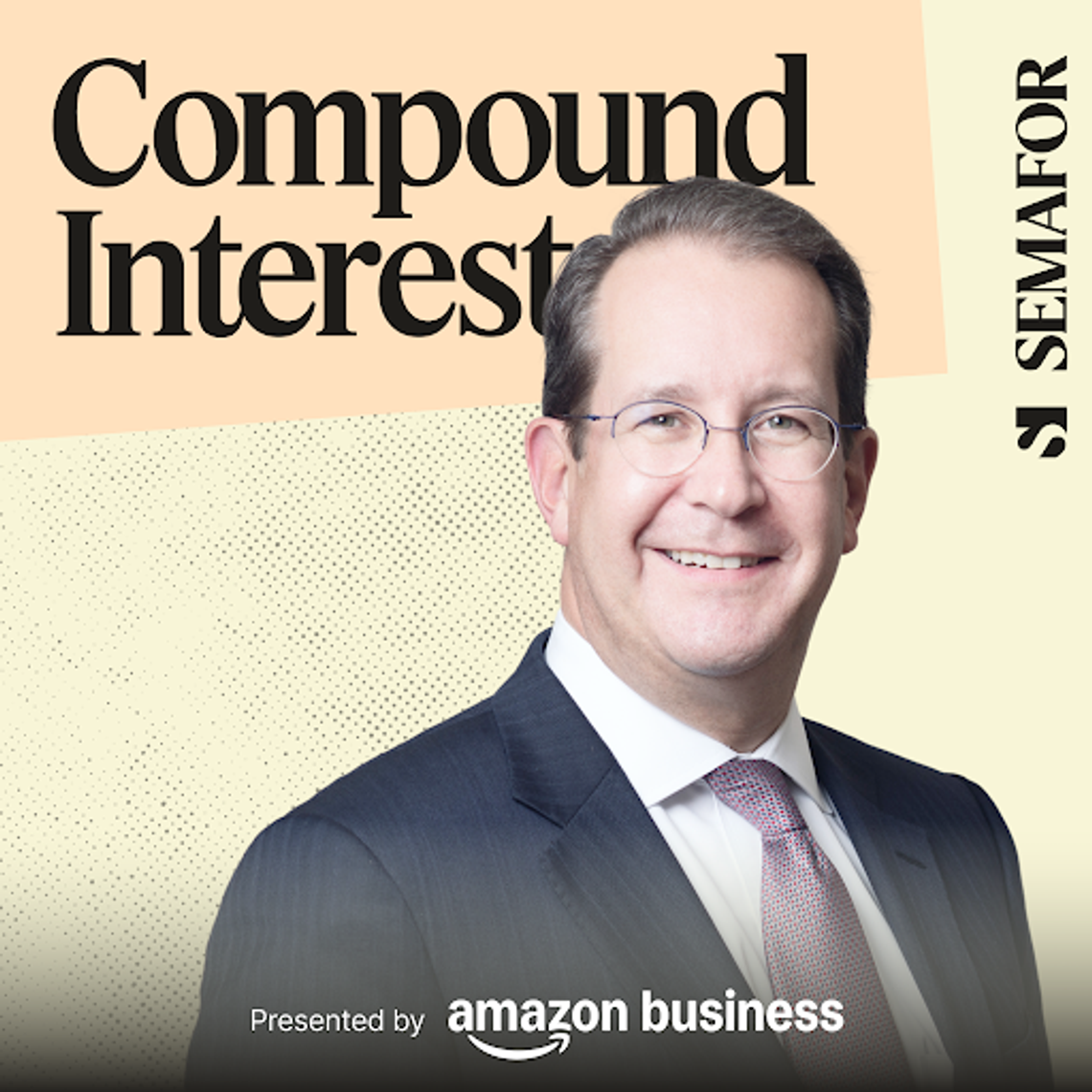 For decades, litigation was a cost of doing business. Now, it’s becoming Wall Street’s newest asset class. Chris Bogart spent years at Cravath before founding Burford Capital, now the world’s largest litigation finance firm, turning corporate legal disputes into investable opportunities with billions at stake. In this episode of Compound Interest, Liz and Rohan explore the financialization of corporate fights, Burford’s $16 billion dispute with Argentina, and what it would take to finally let private equity buy a piece of Big Law. |
|
 Defense- The UAE allegedly carried out military strikes on Iran in early April, at around the time of the ceasefire being announced between the US and Iran. The UAE’s Ministry of Foreign Affairs declined to comment but reiterated its previous statements in which it asserted its right to respond to hostile acts. — The Wall Street Journal
Energy- Abu Dhabi’s Mubadala Investment Company invested $325 million in what will be the world’s largest offshore wind farm. The 2.9-gigawatt Hornsea 3 project off the UK coast is also being backed by funds managed by Apollo and others.
- Habshan, one of the world’s largest gas processing sites, is expected to be fully operational by next year after being badly damaged by Iranian strikes, ADNOC Gas said in a statement.
Media- PIF-backed TV network MBC Group said its first quarter revenues declined by 23%, dragged by weaker demand for advertising during the war. The company — which operates the fast-growing streaming services SHAHID — cautioned that “operational complexity across markets” may persist.
- Saudi Arabia, like its Gulf peers, is cracking down on social media posts about the war, with legal action launched against 49 people for allegedly undermining “public order, national security, or the broader public interest.” — Okaz
|
|
|


