| |  | | | | | | Did someone forward this newsletter to you? Sign up here to get it in your inbox. In today’s issue: - Optum Rx unveils its latest PBM pricing model overhaul as the industry faces growing pressure from federal regulators, Congress and state legislatures
- The “Big Three” PBMs are racing toward more transparent pricing models as some employers increasingly look to industry rivals
- What to watch as the Trump administration finalizes a rule that aims to scale back the criteria used to certify companies involved in electronic health records
Hello, everyone! Welcome to the Health Brief newsletter. I’m your host, Megan Wilson, back in your inboxes after a week on the beach. Many thanks to Rebecca Adams for taking over the newsletter in my absence! → Rebecca had a busy week last week, including discussing how artificial intelligence is changing health care at the Special Competitive Studies Project’s AI+ Expo. More on that — including a video to watch, in case you missed it — below. Some of the biggest news that popped at the end of last week centered around Marty Makary, leader of the Food and Drug Administration, who’s reportedly on the verge of being ousted. → My colleagues Dan Diamond and Rachel Roubein in The Washington Post newsroom have a story about Makary’s precarious situation if you need to catch up. But here’s what to watch: Makary is still slated to testify Wednesday before the Senate appropriations panel overseeing the FDA, a committee aide tells me. The hearing is part of the congressional budget process. I’m always looking for the next big storyline. Please send any tips, documents or intel to megan.wilson@washpost.com, or message me on Signal at megan. 434. | 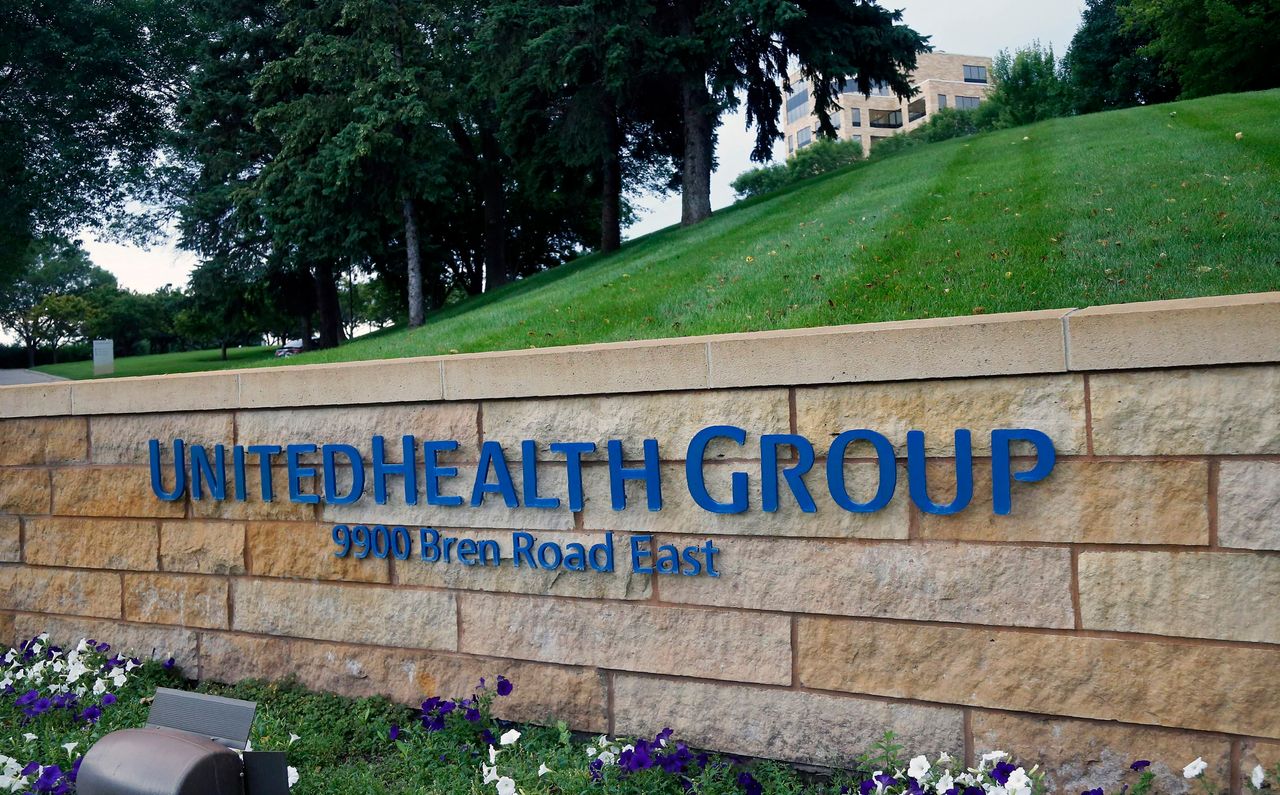 | | Optum Rx, a PBM owned by UnitedHealth Group, announced an overhaul to its business model. (Jim Mone/AP) | | | |  | The Lead Brief | Optum Rx, a pharmacy benefit manager owned by UnitedHealth Group, is implementing changes to further overhaul the way pharmacy middlemen are paid amid intensifying political scrutiny of the industry’s business practices. Under the new approach, employers and health plans would pay fixed monthly fees that are not tied to the price of drugs or the number of prescriptions filled. It’s a shift away from the traditional pharmacy benefit manager (PBM) business model, which has long relied on discounts provided by pharmaceutical manufacturers and other payments linked to drug spending. “Every client will have transparency into Optum Rx fees — including those associated with its group purchasing organization (GPO), with clear disclosure of payments received from pharmaceutical manufacturers,” the company said in a release Monday. “By the end of 2027, group purchasing will fully transition to flat service fees.” The company expects the overhaul to decrease costs for patients at the pharmacy counter because drugmakers will now be incentivized to offer lower list prices. Optum is also launching a digital tool that allows patients to compare the price of their medications across different pharmacies before it’s filled. Why it matters: Optum Rx is the third-largest PBM in the country, representing nearly a quarter of the pharmacy benefits market. Alongside Cigna-owned Express Scripts and CVS Health’s Caremark, the trio processes 80 percent of America’s prescription claims. The move is also a direct response to critics who argue that PBMs — which negotiate discounts with drugmakers and choose which medications an insurance plan will cover — profit from opaque pricing arrangements and steer patients toward higher-cost drugs that generate larger rebates from drugmakers. The industry has broadly defended its business practices, with companies arguing they bring prescription drug costs down. At the same time, industry players have begun to make reforms. Patrick Conway, the CEO of Optum, tells me the new model is merely a continuation of what the company has been moving toward: more transparency and flexibility at the behest of its employer clients. “Success for us, honestly, is the experience and growth with our clients,” Conway told me on a call Monday. “We’ve had record growth with clients three years in a row [and] record retention. That means new clients and almost all current clients retaining [and] renewing — and it’s because it resonates with them. So that’s the marker.” “I hope, later this year, we can make an announcement of record sales for this year because of this great work,” Conway added. → Optum Rx gained 800 new customers for 2026, he told investors in an earnings call earlier this year. | | | | | | Industry Rx | The overhaul represents a move from some of the largest PBMs toward more transparent pricing models following years of increased scrutiny from policymakers and regulators. This includes Optum Rx, which has previously committed to passing along 100 percent of all drugmaker rebates to plans and moving toward cost-based reimbursements to pharmacies. But it also mirrors some of the bipartisan PBM reforms enacted by Congress earlier this year, which targeted a practice called spread pricing in Medicaid — in which PBMs charge an insurance company more for a drug than it reimburses a pharmacy to dispense it — and efforts to sever PBM compensation from pharmaceutical prices and rebates in Medicare. → Last year, Cigna announced it would begin offering up front discounts directly to patients at the time of their purchase starting in 2027 — and it would expand the rebate-free model to its PBM, Express Scripts, in 2028. Normally, a drugmaker will pay PBMs a rebate long after a drug has been purchased, some of which can then be passed on to plans or employers. The company estimated the change will reduce brand-name prescription costs by an average of 30 percent for people with high-deductible plans who pay full price for their medications. I wrote about this in Health Brief in October. → In 2023, CVS Caremark announced reforms, dubbed TrueCost and CostVantage, that the company said would make drug pricing more transparent. TrueCost changes how the PBM prices drugs for employers and insurers to reflect actual net cost of a medication, as well as added transparency regarding administrative fees. CostVantage changes how CVS pharmacies are reimbursed, using a “cost-plus” model based on a drug’s acquisition cost, a markup and dispensing fee. “The PBM industry is a dynamic market and profit pools not only have evolved over time, but we certainly expect they will evolve in the future,” said Ed Devaney, executive vice president and president of CVS Caremark, in a February earnings call. “We’re excited about the shift to greater transparency and believe this recent legislation will accelerate adoption of TrueCost,” Devaney said of the federal spending bill enacted earlier this year. → Meanwhile, employers have been shifting their pharmacy benefits business to alternative PBMs with more transparent models, according to a report from law firm Mintz. While reliance on the “Big Three” declined by 11 percent in 2025 over 2024, use of other PBMs increased by roughly 19 percent over the same period. | | | | | | WP Intel File | WP Intelligence Lead Health Care Analyst Rebecca Adams led live conversations Friday with some of the health industry’s senior executives at the AI+ Expo in Washington regarding the role of artificial intelligence in health care. This included speaking with former FDA acting commissioner Janet Woodcock and Alan Rosa, senior vice president and chief information security officer at CVS Health. → I asked Rebecca for one main takeaway, and she pointed to her discussion with Tom Keane, who leads an under-the-radar agency called the Office of the National Coordinator for Health Information Technology. Here are some notes from Rebecca: The office, often referred to as the ONC, is requiring electronic health record vendors to include drug costs so that patients can tell their physicians if a prescription is too expensive and consider alternatives. The change technically does not take effect until next year, but many companies are already offering the service. - What’s next on the ONC agenda: A deregulatory rule could be finalized as soon as the next month or two, based on the typical regulatory timeline. The Trump administration’s proposal would remove more than half of the 60 criteria used to certify companies involved in electronic health records.
- Provider pushback: Groups including the American Hospital Association and the American Medical Association expressed concerns about the removal of required privacy and security protections for patient data. They feared they could lose some certainty about privacy and security — or be charged new add-on fees to keep routine functions.
- The administration’s view: The criteria proposed for removal were considered outdated or covered in different ways by other rules or market expectations. The goals behind the rule were to make it easier and cheaper for new companies to enter the market and promote innovation. The plan aims to reduce the burden on health IT developers by streamlining requirements that were seen as unnecessary.
Bottom line: Keane signaled at the briefing that ONC takes feedback seriously and will consider comments from stakeholders as it finalizes the rule. | | | | | | Document Drop | - The FDA is seeking input on which drugs already on the market could be repurposed to help treat conditions where there’s an unmet medical need.
“Too many patients lack effective treatment options, even when promising science exists,” FDA Commissioner Marty Makary said in a statement. “Drug repurposing can make better use of available scientific data to deliver effective treatment options for patients in need.” - The Medicaid and CHIP Payment and Access Commission, better known as MACPAC, is making recommendations to Congress to boost transparency regarding the use of artificial intelligence in prior authorization prompts and requirements for human oversight. It comes as the Trump administration is resisting calls to implement rules on AI systems.
| | | | | | | | | | |
| |


_tstmp_1756933376-1920-1080.png)