| | In this edition: An Africa-France summit in Nairobi, election upheaval in Nigeria, and the trouble w͏ ͏ ͏ ͏ ͏ ͏ |
| |  | Africa |  |
| |
|
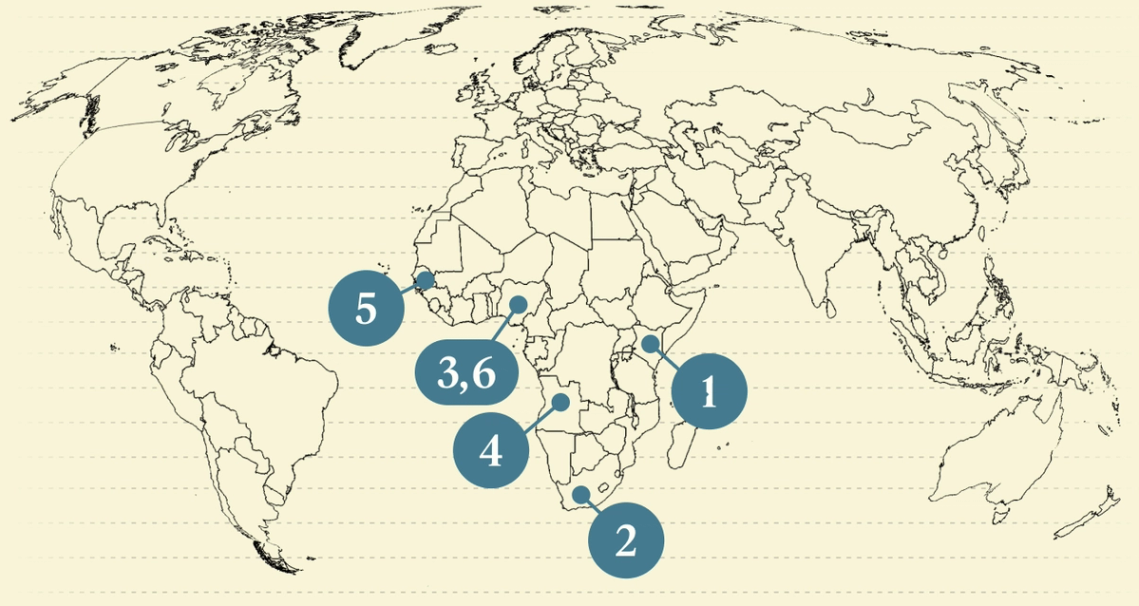 - Calls to reprice risk
- Sango Capital scoops assets
- Nigeria election upheaval
- Angola leader’s party bid
- Clinical trials deficit
- Lessons on super apps
 Somalia debuts at the Venice Biennale. |
|
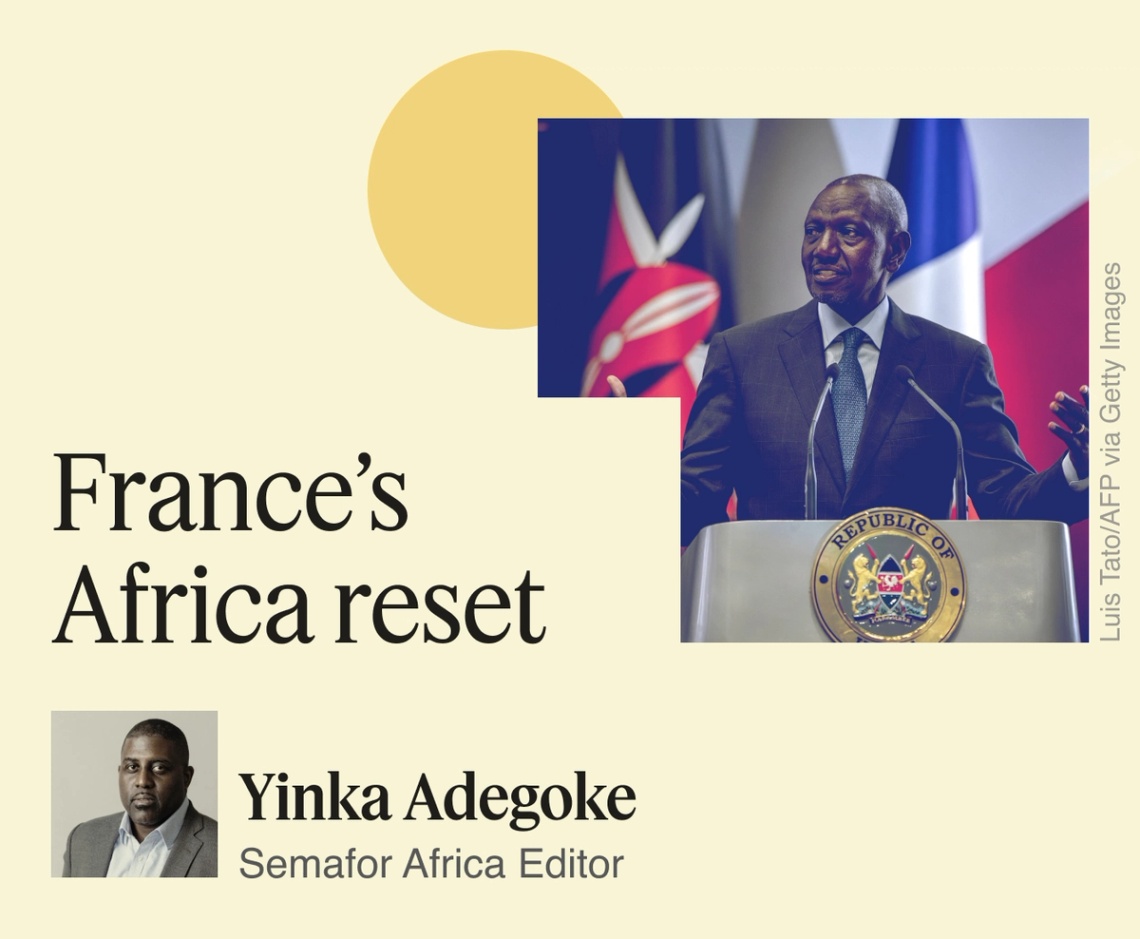 I’m in Nairobi for the highly anticipated Africa Forward Summit, cohosted by France and Kenya. I’m already finding the conversation is less about the French reclaiming influence in Africa, like many headlines have insisted, than about African countries widening their options. The summit has brought together some 30 African heads of state and hundreds of business leaders, including Nigerian industrialist Aliko Dangote and TotalEnergies CEO Patrick Pouyanné. The talks are focused on AI, renewable energy, infrastructure, and investment rather than the security partnerships and patronage that long defined France’s post-colonial engagement on the continent. For many African governments, France under President Emmanuel Macron has become a more pragmatic partner than it was a decade ago. Since taking office in 2017, Macron has deliberately expanded France’s focus beyond its traditional Francophone sphere toward larger Anglophone economies. Nigeria is a notable example. President Bola Tinubu has built unusually warm ties with Paris, visiting France multiple times in a private and official capacity since taking office in 2023, as both governments deepen cooperation in energy and finance. Kenya’s President William Ruto has also worked more closely with France’s leadership than any of his predecessors. For African heads-of-state, the attraction is not necessarily France itself, but the ability to diversify partnerships at a moment when global powers are competing more aggressively for influence across the continent. Still, Africans know the limits of what France can offer. China remains embedded across the continent through infrastructure projects, mining developments, and state-backed financing. Gulf states can deploy capital quickly and at enormous scale. France’s comparative advantage is narrower: business networks, technical expertise, education, culture, and access to European markets. Part of the backdrop to all this is that France’s influence has sharply declined in West Africa, particularly in the Sahel, where military governments have pushed out French troops and pivoted toward Russia, for better or worse. But from the African perspective, that retrenchment may matter less than whether France can adapt to a continent that increasingly approaches global powers transactionally — weighing partners less by history or ideology than by who can deliver investment, technology, commerce, and developmental partnerships. |
|
Kenya FM calls to reprice risk |
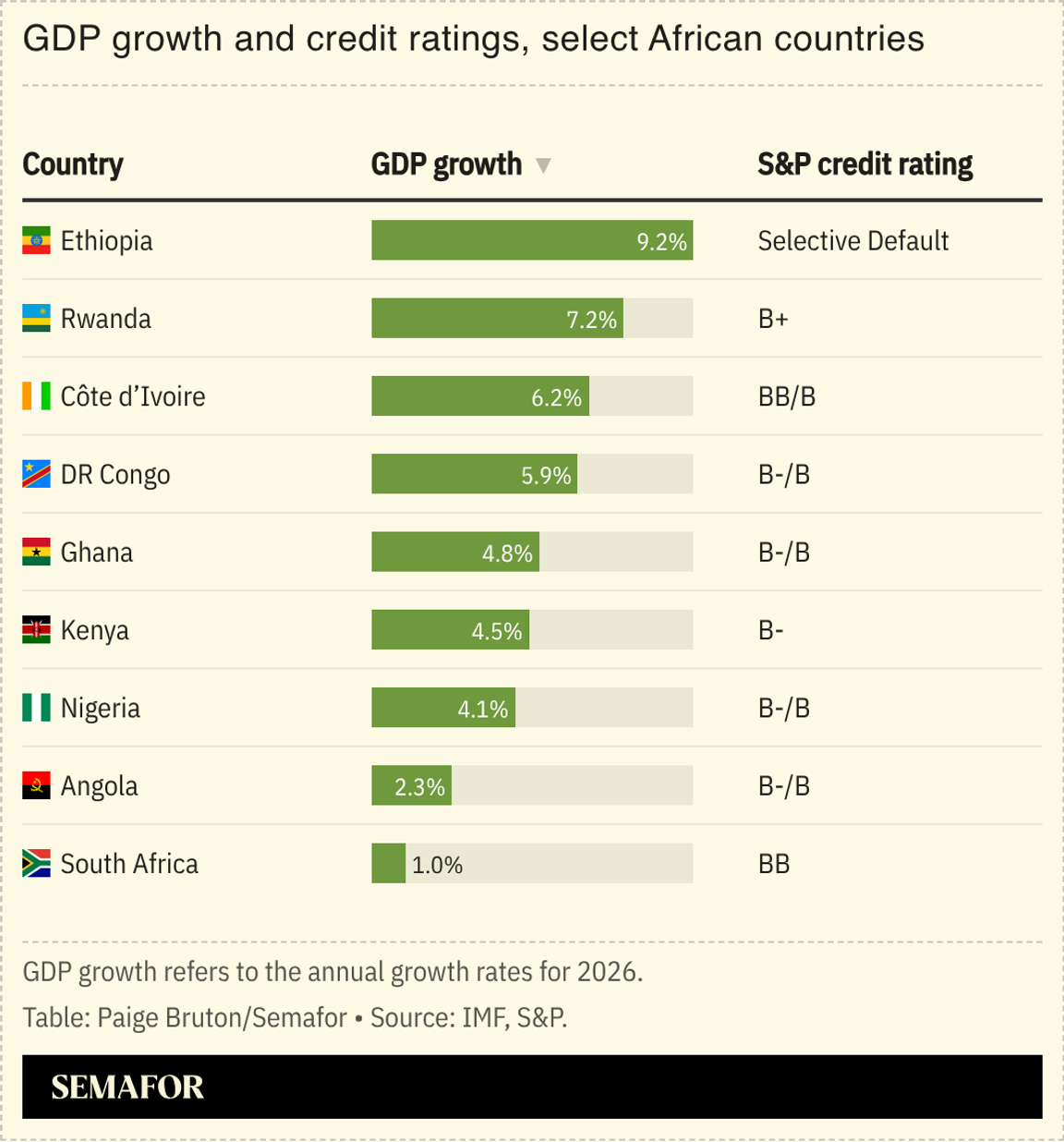 Policymakers gathering at the Africa Forward Summit will focus on ways to rethink how to price risk on the continent and unlock investment, Kenya’s foreign minister told Reuters. African leaders have long argued that global credit rating agencies overstate the continent’s risk, pushing up borrowing costs and deterring investment. Musalia Mudavadi said the presence of global and regional lenders at the two-day event in Nairobi — including the European Bank for Reconstruction and Development and the African Development Bank — would support attempts to tackle the risk perception. “This dialogue should help produce better financing mechanisms to support Africa,” he said. Mudavadi also described the African Union’s aim to set up a continental credit ratings agency to provide a more accurate assessment of African risk as a “critical” effort. Global ratings agencies face growing criticism for relying on offshore models that some African policymakers say misread local realities. The debate was thrust into the spotlight this year when Afreximbank severed its ties with Fitch. |
|
South African firm scoops equity assets |
| |  | Alexander Onukwue |
| |
 Wikus de Wet/AFP via Getty Images Wikus de Wet/AFP via Getty ImagesSouth African investment manager Sango Capital acquired equity assets valued at $120 million, its cofounder Robert Okello told Semafor, adding that it was the first of several deals it was pursuing to capitalize on the growth of Africa’s nascent secondaries market. The market — where investors trade equity stakes held in investment funds from one another — currently consists of only a small pool of international buyers and local players. Okello said Sango will take over the exiting investor’s stakes in four funds that had made about 30 investments in companies that are operating in 14 African countries. Sango did not disclose the name of the selling firm. Okello said the other secondaries deals being pursued this year involve assets with a net value of at least $200 million. Secondaries deal activity in Africa has been constrained by the dominance of development finance institutions — who have been historically unwilling to sell their stakes — in the capital base of African funds. But that trend has shown signs of potential change after a series of fund equity stake sales by the UK’s British International Investment in February 2024, the New York-based Global Private Capital Association trade group said in a report. |
|
Opposition split sparks poll scramble |
| | | Alexander Onukwue |
| |
 Lucy North/PA Images via Getty Images, Patrick Meinhardt/AFP via Getty Images, and Pius Utomi Ekpei/AFP via Getty Images. Lucy North/PA Images via Getty Images, Patrick Meinhardt/AFP via Getty Images, and Pius Utomi Ekpei/AFP via Getty Images.The exit of two leading Nigerian opposition figures from a coalition preparing to challenge President Bola Tinubu in January’s elections has dealt a potentially deadly blow to hopes of a united front to take on an increasingly powerful incumbent. Peter Obi, who finished third in the 2023 presidential poll, left the African Democratic Congress — a smaller party that several major opposition politicians co-opted as a united platform to challenge Tinubu. Rabiu Musa Kwankwaso, a popular figure in the most populous northern state Kano, also left the coalition. The moves leave many analysts putting Tinubu down as the favorite for the elections. Tinubu has also reshaped Nigeria’s political institutions in his image in a way that could shepherd him through potential conflicts and safely into a second term: He appointed the current heads of the military and police, as well as Nigeria’s chief justice and the chair of the elections organizer. Many analysts expect a repeat of the three-way contest and the same result of four years ago, unless Atiku Abubakar — a former vice president who came second in 2023 and remains in the opposition coalition — steps down to back Obi. |
|
Angola leader seeks new party term |
 Angola’s President João Lourenço. Aurelien Morissard/Pool via Reuters. Angola’s President João Lourenço. Aurelien Morissard/Pool via Reuters.Angolan President João Lourenço said he intends to seek another term as party chief before his second presidential term ends in 2027. That would potentially allow him to retain political influence in the oil-rich nation if the ruling People’s Movement for the Liberation of Angola (MPLA) remains in power. Lourenço is barred from running for president again under the country’s constitution after serving two consecutive terms since 2017. Angola’s former President José Eduardo dos Santos retained leadership of the MPLA after leaving office for a brief period before relinquishing control of the party under pressure from his successor Lourenço, Bloomberg noted. |
|
Clinical trial bias impacts Africa |
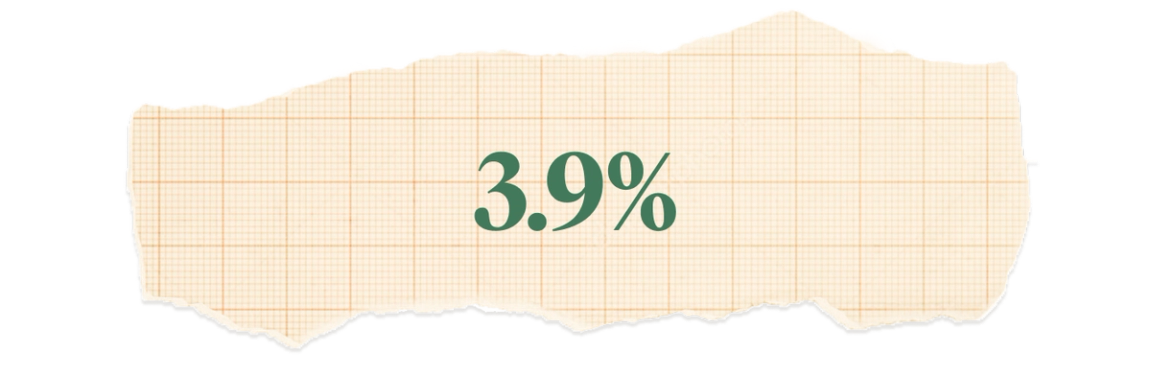 The percentage of clinical trials conducted exclusively in Africa, according to a study of five major medical journals published between 2019 and 2024. “This is a crisis of scientific accuracy,” wrote researchers in The Conversation, highlighting the bias in medical research despite Africa accounting for roughly 25% of the global disease burden and around 20% of the global population. The lack of African representation in clinical trials means the eventual treatments that emerge may not work as well on the continent. “Genetics, environment and diet can radically alter how a body responds to a drug,” they wrote, pointing to evidence showing that some treatments have different safety profiles in Black patients. “It therefore makes no medical sense that an entire continent is left out of the trial net.” |
|
View: The trouble with super apps |
  Romy Arroyo Fernandez/NurPhoto via Getty Images Romy Arroyo Fernandez/NurPhoto via Getty ImagesThe latest announcement of an African “super app” exposes deeper tensions in the continent’s startup ecosystem, a tech leader argued in a column for Semafor. Last week, Aubrey Niederhoffer, a 19-year-old Thiel Fellow from Connecticut, announced a $7.3 million seed round to build Swoop, which he calls “Africa’s first super app,” starting with food delivery in Lagos. The financing was raised almost entirely from North American investors, with no Nigerian VC firms participating. Nigeria’s tech ecosystem erupted, wrote Emeka Ajene, co-founder of Gozem, a mobility-led super app operating in Francophone West and Central Africa. Some questioned the premise and others the founder, who they said had limited experience of the market he was entering. “Many pointed to a deeper frustration: the asymmetry of belief. Foreign founders successfully fundraise on potential; local founders must show proof,” Ajene wrote. He shared three lessons from building his own tech platform: No one starts as a super app; the product that scales is rarely the one envisioned; and African markets are heavy-lift environments. “The founders who build lasting institutions… are the ones who treat each humbling experience as data rather than defeat,” Ajene said. The Thiel Fellowship was founded by tech billionaire Peter Thiel in 2011 and offers young people a $250,000 grant to skip or stop out of college to “build new things.” |
|
 - May 11-12: The Africa Forward Summit kicks off in Nairobi, with both French President Emmanuel Macron and Kenyan President William Ruto due to attend.
- May 12: Ugandan President Yoweri Museveni is due to be sworn in for a seventh term.
- May 12-13: Tech executives are due to gather for the Africa Tech Week conference in Cape Town.
- May 14: Angola and Uganda are due to announce their interest rate decisions.
- May 14-15: The Africa CEO Forum, a major pan-African business conference, is held in Kigali.
- May 15: Botswana, Eswatini, and Nigeria publish their inflation data for April.
- May 17: Cabo Verde is due to hold its parliamentary elections.
|
|
|


