| | In today’s edition: Aramco announces massive profits, PepsiCo ramps up Gulf production, and Kuwait c͏ ͏ ͏ ͏ ͏ ͏ |
| |  | Gulf |  |
| |
|
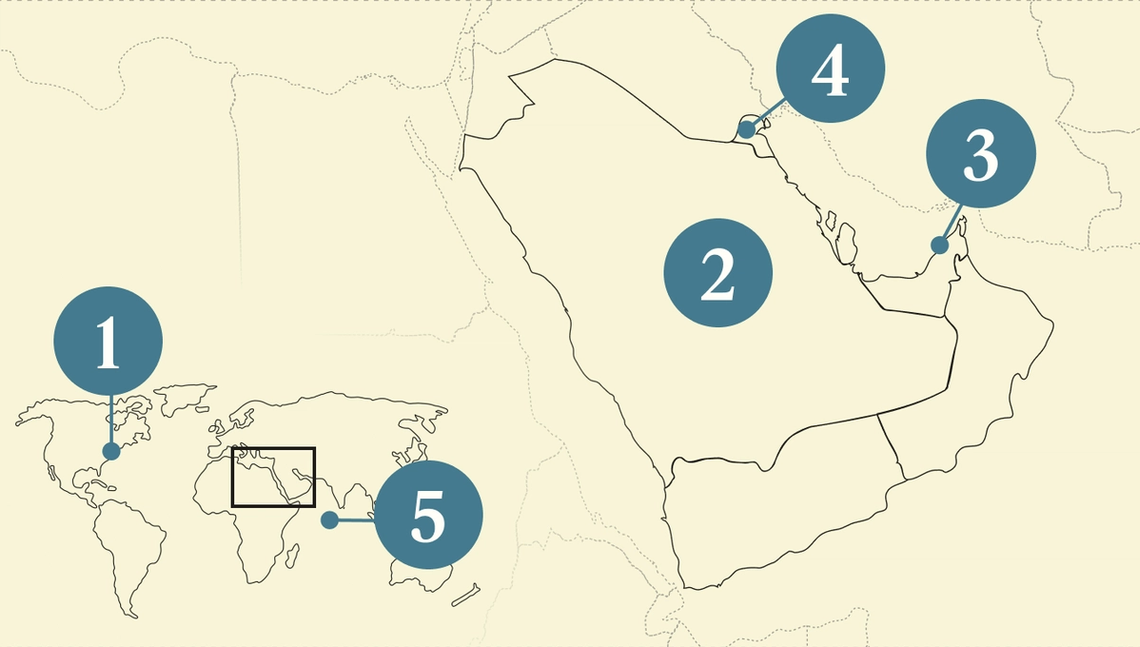 - US-Iran ceasefire frays
- Aramco earnings boost
- Abu Dhabi Pepsi plant
- Dirty money crackdown
- Murky Maldives deal
 Saudi Arabia’s — and Trump’s — favorite tenor. |
|
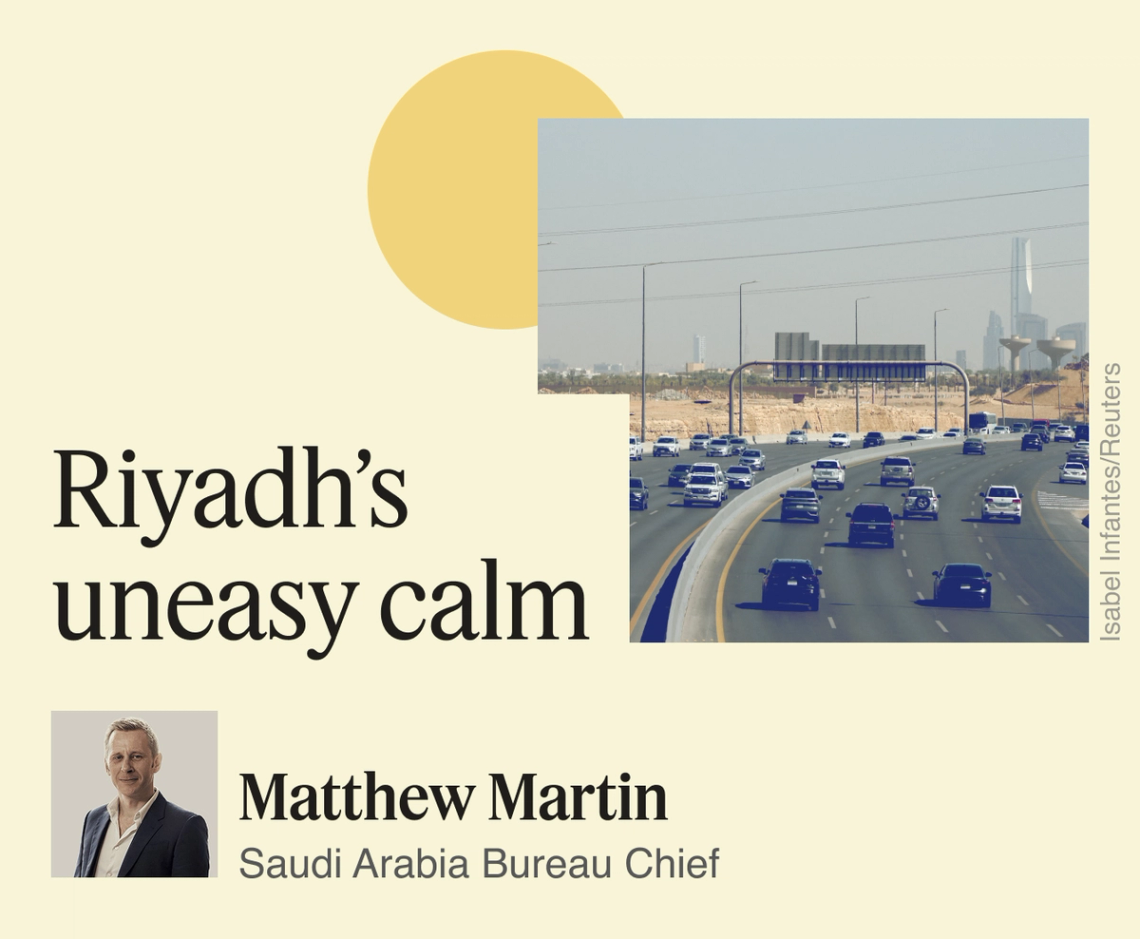 Since the Iran war ceasefire, Riyadh has settled into an uneasy, new normal. While the Saudi capital escaped the full scale of the Iranian attacks that some other Gulf countries faced, it suffered enough to shake confidence. Iran hit the US embassy in Riyadh, among other targets, and the threat of more Iranian strikes prompted the evacuation of the capital’s main business hub as a precaution. Working from home and remote learning returned for some for the first time since the pandemic. While most people brushed off the concerns, many expats began considering alternatives to staying in the kingdom. The April 8 détente between the US and Iran restored something close to normal life. Traffic is back to its usual misery, restaurants are packed, and malls are busy again. Some Saudis lived through the 1991 Gulf War when Iraq fired Scud missiles on Riyadh. This latest conflict — for Saudis — has been nothing in comparison, they tell me. Yet there’s an undercurrent of concern. The fragility of the truce, a government pullback on some major infrastructure projects, and growing hostility toward foreign workers on social media are combining to dampen the mood. Unlike other Gulf cities, Riyadh has a large citizen population, meaning there’s always a local labor force to fall back on. Still, the government has made attracting foreign talent a key part of its plan for Riyadh to become a hub for finance, trade, and tourism. The kingdom is pouring money into efforts to make the city more entertaining, easier to get around, and nicer to look at. Restrictions on alcohol and homeownership rules have been loosened. Until the Iran war, those measures had been succeeding, narrowing the salary premium expatriates demanded to live in the city over neighboring options like Abu Dhabi, Doha, and Dubai. But this uneasy calm won’t be enough to get that momentum back on track; for that, a permanent resolution on Hormuz and Iran will be necessary. |
|
Deadlock as truce falters |
 The damaged stern of a bulk carrier operated by South Korean shipper HMM. South Korean Foreign Ministry/Handout via Reuters. The damaged stern of a bulk carrier operated by South Korean shipper HMM. South Korean Foreign Ministry/Handout via Reuters.The US-Iran ceasefire entered its second month with diplomacy deadlocked, but Washington insisted the truce remained in force despite a flare-up of Tehran’s attacks on Gulf countries. To break the impasse, the US is still pushing to establish a safe shipping corridor through the waterway, but vessels aren’t willing to risk coming under Iranian fire. Both sides are maintaining maximalist demands: Iran’s response to a US proposal to spur talks was described by the President Donald Trump as “TOTALLY UNACCEPTABLE!” Kuwait, Qatar, and the UAE reported intercepting Iranian drones and missiles over the weekend, underscoring the fragility of the situation. Abu Dhabi has formed a national body to document Iran’s attacks on the country in preparation for possible legal action to seek compensation for “human, material, and economic damages.” Pakistan, which is mediating talks between Tehran and Washington, was able to extract a concession that will help it address its own energy crisis: It secured the passage for a Qatari vessel carrying LNG through Hormuz destined for its power plants — the first such shipment to make it out during the war. Meanwhile, Britain and France are positioning themselves to help protect the waterway, hosting virtual talks today with 40 nations to discuss a possible future mission and earning a warning from Tehran to not get involved. |
|
Aramco profit jumps on Hormuz crisis |
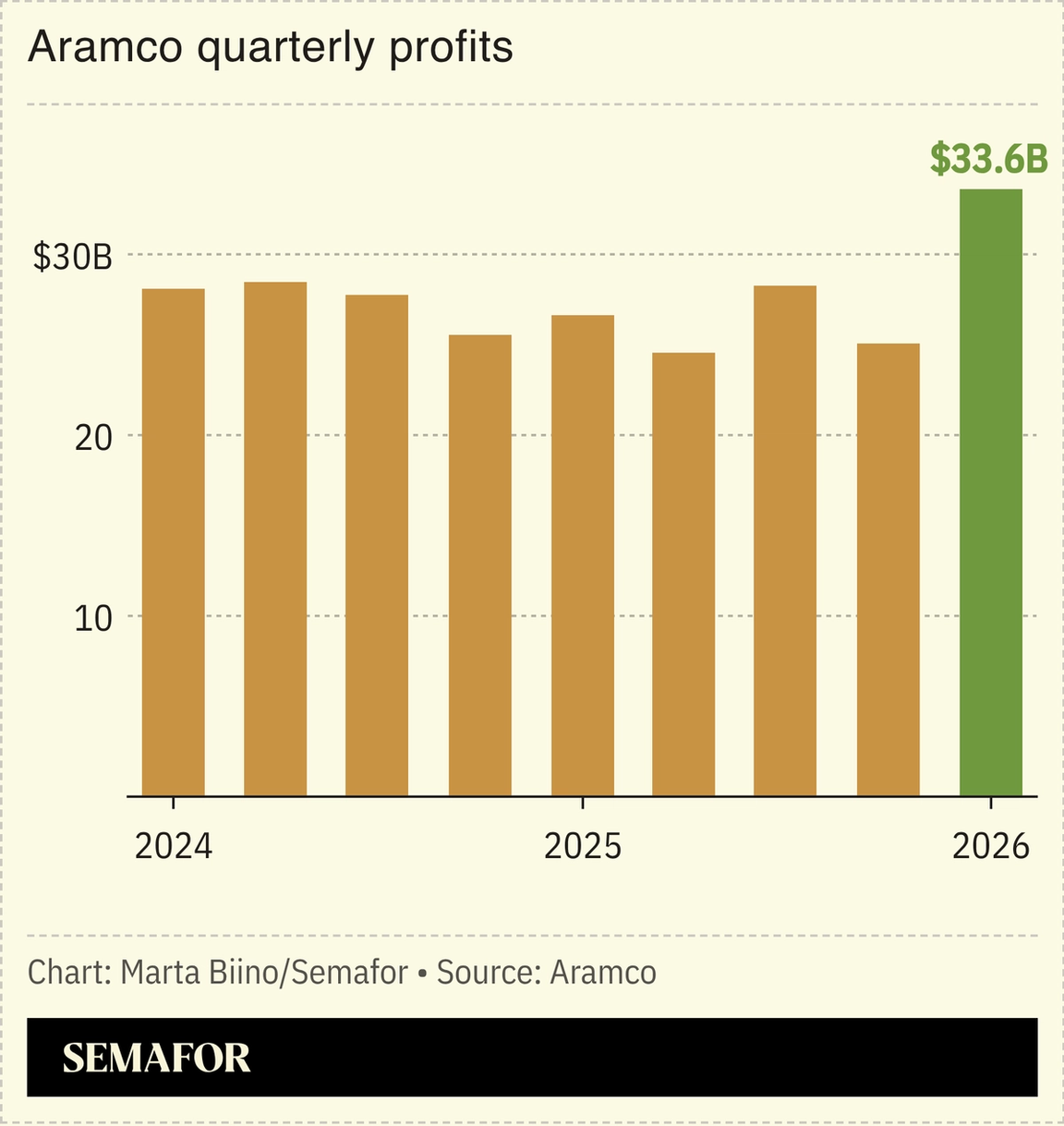 Aramco’s profits jumped in the first three months of the year after surging oil prices helped offset lower exports from the closure of the Strait of Hormuz, justifying the kingdom’s decades-old investment in a pipeline that bypasses the chokepoint. Aramco’s East-West pipeline to the Red Sea coast “has proven itself to be a critical supply artery, helping to mitigate the impact of a global energy shock,” Chief Executive Amin Nasser said. Profits hit $33.6 billion in the first quarter, far outstripping the figures posted by international energy majors such as Shell and TotalEnergies. Aramco, which provides over half of government revenues, also bumped up its quarterly dividend payment by $742 million. Most of that cash goes to the ministry of finance and the Public Investment Fund. Despite that, the Saudi government said last week that its oil revenues fell in the first quarter. Along with much higher spending, that pushed the kingdom’s finances into the biggest quarterly deficit in years. |
|
PepsiCo eyes more local production |
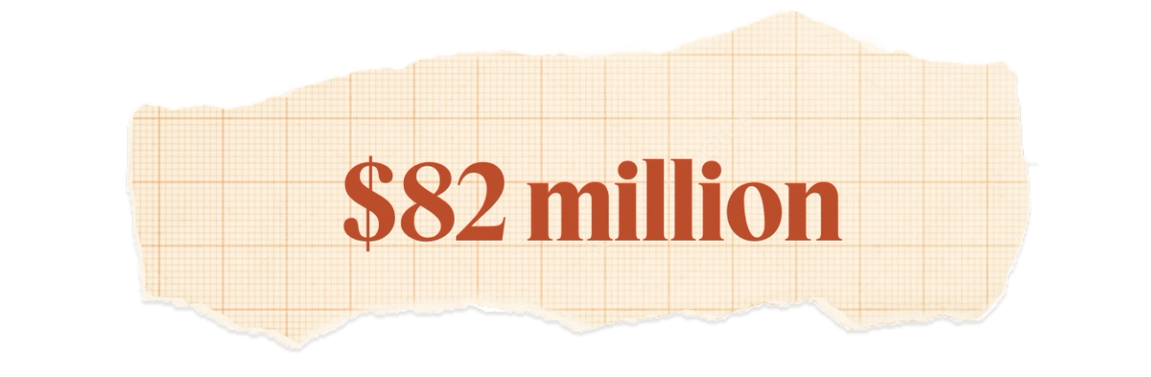 The amount PepsiCo franchisee Abu Dhabi Refreshment Company is spending on a new production facility in the UAE capital, as supply chain issues stemming from the Iran war accelerate efforts to produce more locally. The US food and beverage giant — maker of Aquafina, Gatorade, Lay’s, and Quaker Oats — has been working with the UAE government to keep grocery shelves stocked without interruption or price increases, Wael Ismail, PepsiCo’s VP of corporate affairs, told Semafor. So far, the company has managed it, including through middle-of-the-night calls to officials to release shipments stuck at ports outside its usual routes. “There are things we will still continue to count on to be imported to the region,” Ismail said, but PepsiCo aims to localize “whatever we can.” Still, industry experts have warned that consumers in the region are eventually going to start feeling the pinch even as authorities crack down on price hikes on essential goods. — Kelsey Warner |
|
Kuwait targets gold and property fraud |
 The Gold Souk in Dubai. Amr Alfiky/Reuters. The Gold Souk in Dubai. Amr Alfiky/Reuters.In trying to clamp down on money laundering and terrorism financing, Kuwait is honing in on precious metals and property. Out of 930 violations recorded last year, 544 were by jewelry companies and the rest by real estate brokers — most just attracted warnings, but some fines and compliance orders were also handed out. The issue has become even more important after international money laundering watchdog the Financial Action Task Force put Kuwait on its “grey list” in February, alongside the likes of Lebanon, Monaco, and Yemen. That status makes it harder to attract investment at a time when Kuwait is keen to diversify its economy, and it seems to have focused minds in the country. Prime Minister Sheikh Ahmad Abdullah Al-Ahmad Al-Sabah has been holding monthly meetings to review efforts to address the issues raised by FATF. Kuwait’s action plan includes greater scrutiny of real estate agents and precious metal and gemstone dealers, as well as tightening up reporting on beneficial ownership information. |
|
The Maldives deal that went quiet |
 An aerial view of Malé, the capital of the Maldives. Michel Renaudeau/Only World/Abacapress.com. An aerial view of Malé, the capital of the Maldives. Michel Renaudeau/Only World/Abacapress.com.A year ago, the Maldives announced it had found a solution to its debt crisis: The creation of an $8.8 billion financial hub backed by a Dubai-based firm called MBS Global Investments, which is run by a Qatari royal most people had never heard of. The Maldives’ president was there. No one has said anything since. Sheikh Nayef Bin Eid Al Thani’s UAE firm — which has no connection to Saudi Crown Prince Mohammed bin Salman, who is often referred to as MBS — promised a tax-free zone for blockchain and digital assets in the capital Malé, to be built over five years. Semafor contacted the Maldives presidency, the ministry of finance, and MBS Global Investments. None responded. It is not the first time a story like this has gone quiet in the Gulf. As Semafor’s Mohammed Sergie wrote at the time, you never quite know whether the person behind a deal like this is a billionaire royal or someone running a very convincing long con. A year on, the Maldives still has a debt crisis, and the financial hub exists only as a website. — Manal Albarakati |
|
 Automotive- South Korean electric vehicle technology company EL B&T has signed up to develop an EV and battery plant in Duqm, Oman. The $250 million project will be able to produce 60,000 vehicles a year when complete.
Drilling- Abu Dhabi-based drilling joint venture SLDC has secured its first major contract with SLB, the world’s largest oilfield services company, to deploy two rigs in Kuwait’s Mutriba oilfield under a three-year deal starting in November.
Finance- Abu Dhabi recruited a large player in its aim to become a hub for cryptocurrencies: BNY will offer custodial services for Ethereum and Bitcoin in the UAE capital through a partnership with Finstreet and ADI Foundation, both of which have links to Sheikh Tahnoon bin Zayed’s International Holding Company.
Technology- The first batch of advanced Nvidia chips have been delivered to the UAE, Abu Dhabi’s Ambassador to the US Yousef Al Otaiba told a gathering in Washington.
- Sharjah-based Dana Gas is developing a graphene production plant with British advanced materials company Levidian. The ultra-thin, ultra-strong material is used in electronics, energy storage, and other industrial applications. — The National
Property- Brookfield Asset Management and Alshaya Group — the Kuwaiti family-owned business that operates Foot Locker, Muji, Raising Cane’s, Starbucks, and other brands across the Middle East — are to develop a 480,000-square-foot site in Dubai Hills featuring offices, shops, and residential units. Alshaya will also make it the base for its UAE operations.
|
|
 Andrea Bocelli meets President Donald Trump in October 2025. whitehouse.gov. Andrea Bocelli meets President Donald Trump in October 2025. whitehouse.gov.Trump’s favorite tenor secured another Saudi-backed gig, this time in Rome. Andrea Bocelli, who serenaded the president in the Oval Office last October and performed a private White House concert in December, appeared alongside the Saudi National Orchestra and Choir last Friday at the Temple of Venus and Roma in the Italian capital, in a concert hosted by the Saudi Ministry of Culture. The evening brought together 32 Saudi musicians and 30 members of a local youth orchestra, and included a commission called “Al-Hijr and Rome,” exploring centuries of cultural exchange between Saudi Arabia and Italy. Bocelli has performed in the kingdom on numerous occasions, including several times in AlUla’s Maraya concert hall. |
|
|


