Happy Friday, and a very happy birthday to Sir David Attenborough — beloved British broadcaster, influential conservationist, the only person to have been knighted twice, and now the namesake of a new species of wasp — who is celebrating 100 years of life on Planet Earth. Today we’re exploring:
|
- Language model: Duolingo’s relationship with AI is getting more complicated.
- Chip climb: South Korea is now the world’s seventh-largest stock market amid the AI boom.
-
Thanks a bunch: Americans are searching for last-minute flowers ahead of Mother’s Day.
|
Duolingo’s business was supposed to soar with AI — now it’s getting its wings clipped |
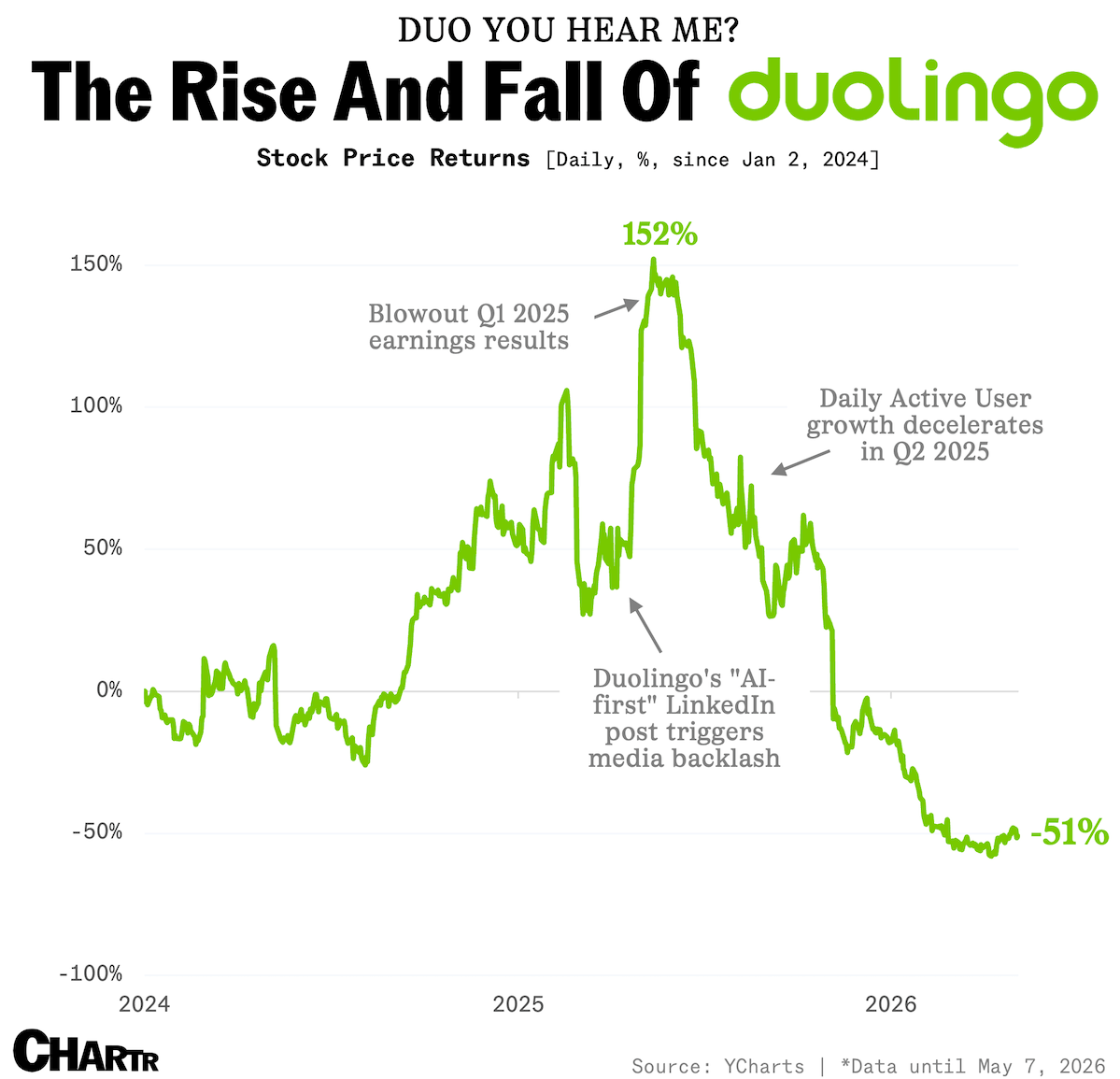
Duolingo has been a battleground stock for some time. Some investors had previously seen it as an artificial intelligence winner, predicting that AI would boost its content output, optimize learning, and open up new languages. But, looking at Duolingo’s share price over the last year or so tells you all you need to know about how that perception has soured, as the company flaps to keep up in a world of chatbot translators where people can build their own personalized language-learning tools.
This week, it seems, the bears won the battle. Even though the app, with its threatening owl mascot and maddening notifications, beat expectations on all fronts in its Q1 earnings — and even boosted its full-year profit guidance — the stock sank once again, taking its loss over the last year to some 77%.
|
In a May 2025 note, JPMorgan analysts said that Duolingo’s AI-assisted effort to double its language library and boost its educational content would “support user & paid subscriber growth.” The company's CEO even defended its “AI-first” strategy, despite backlash to comments made about AI being a better teacher than humans.
While it may have initially ruffled feathers with its early adoption of AI, Duolingo has ended up in a similar place to many other software companies: staring down the barrel of advancing competition from OpenAI, Anthropic, and Google, which continue to launch new AI tools and functions. Those have given users the ability to create language-learning aids based on short prompts, threatening to clip Duo’s wings for good.
|
South Korea surges past Canada to become the seventh-largest stock market in the world |
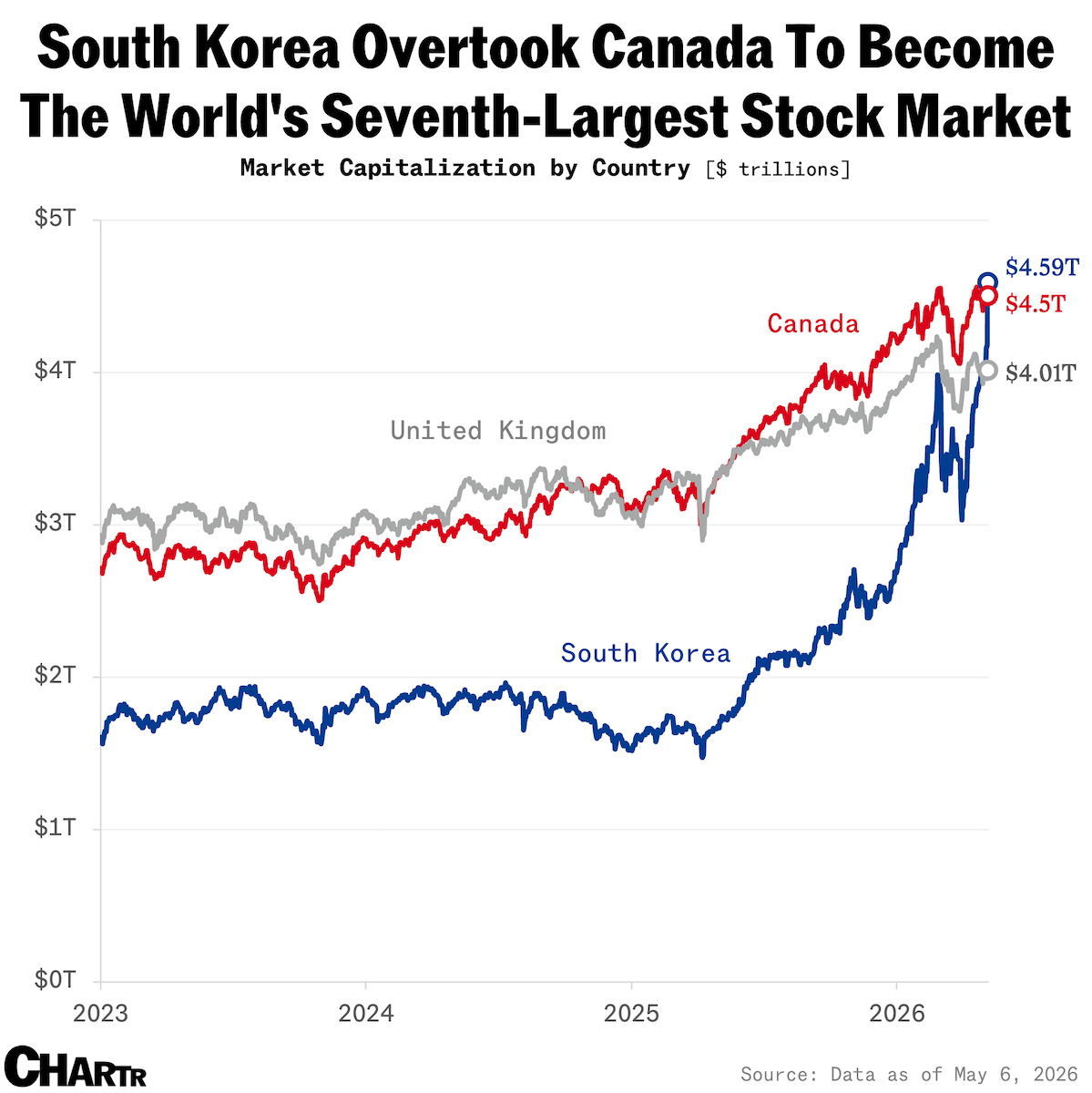
South Korea’s stock market has muscled its way into the world’s top seven, powered by an AI-chip rally that has propelled it past two major markets in just a matter of weeks.
According to Bloomberg data, the country’s listed companies now have a combined market capitalization of $4.59 trillion — edging past Canada’s $4.5 trillion to become the world’s seventh-largest equity market, about 10 days after overtaking the UK. |
With a remarkable 71% surge in value this year, the country now only sits behind the US, China, Japan, Hong Kong, India, and Taiwan, which remains slightly ahead with a market value of around $4.66 trillion. |
South Korea’s rapid rise has been led by Samsung Electronics, which crossed the $1 trillion valuation mark this week following its record first-quarter earnings, as well as reports that Apple is exploring Samsung as a potential US chipmaking partner.
SK Hynix, Korea’s second-largest company and the world’s leading high-bandwidth memory (HBM) supplier, also saw its shares rally more than 10% earlier this week after US tech giants, including Alphabet, Microsoft, Meta, and Amazon, raised their AI data-center spending forecasts. While Nvidia may have been the original face of the AI boom, much of the memory that powers its chips comes from South Korea. Samsung and SK Hynix together control roughly 80% of global HBM supply, producing much of the memory chips that Big Tech is racing to pack into new data centers.
That scramble has sent memory prices soaring, more than doubling the shares of both Samsung and SK Hynix this year alone, and helping propel the tech-heavy KOSPI above 7,000 for the first time. The two companies now account for nearly half of the benchmark’s total weighting.
|
|
|
|
Invest in the stability of America’s corporate giants |
DIA offers cost-efficient, liquid exposure to 30 US blue-chip stocks. It is the only ETF tracking the Dow, the oldest and most widely quoted indicator of US stock market activity. The mega-caps that comprise the Dow offer revenue exposure to 177 countries and 152 different industries.1
DIA has been helping investors reach their goals by providing broad exposure to a global market and 30 of the world’s most recognizable companies.
Find out how DIA can help you achieve yours. |
|
|
|
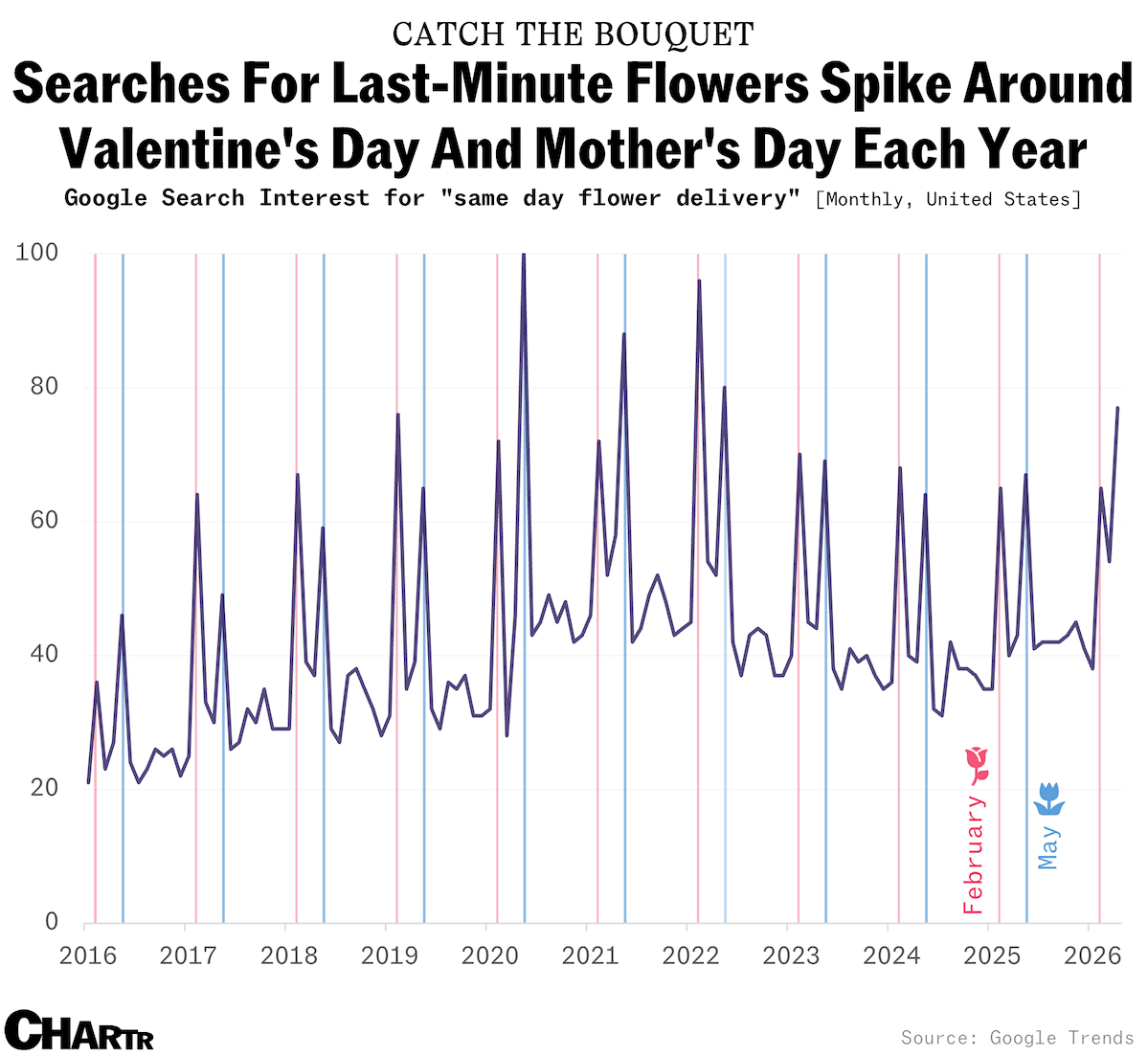
Google searches for “same day flower delivery” have ticked up a little earlier this year |
If you’ve already made plans for a Mother’s Day gift in advance of this Sunday, congratulations.
But, if alarm bells are suddenly ringing, consider this a gentle reminder that, like a sizable share of the US population this time of year often do, you can still scrape together some last-minute flowers for the woman who carried you for 9 months.
Data from Google Trends reveals that searches for “same day flower delivery” spike in the US in May every year, when Mother’s Day takes place. As we noted last February, the same query also gains traction around Valentine’s Day. |
This year, however, it appears that searches for last-minute flowers have remained elevated in the last two months after the usual peak in February — with the search interest this April actually exceeding that seen around Cupid’s Day. |
Honestly, we’re not sure why searches are spiking a little early. One explanation might be that Passover and Easter have overlapped at the start of April, and Americans wanted to celebrate with some flowers. Maybe it’s a host of Claude-bots that are now running errands for AI-obsessed execs, or perhaps Americans are just impulse-buying some seasonal blooms after an unusually warm March, without a particular occasion.
|
|
|
|
-
Claude nine: Anthropic CEO Dario Amodei said the AI company may grow up to 80x this year amid surging demand, far above its own 10x planning target.
-
Tesla’s sales of China-made EVs — which are distributed across China, Europe, and other international markets — rose 36% year over year in April, extending a six-month growth streak.
-
New research from a team of fishery scientists found recreational fishers in the US keep as much as 670,000 metric tons of fish each year, which is up to 48x greater than prior estimates.
-
The national average price for regular gas rose to $4.55 a gallon on Thursday, up $1.40 from a year ago and the highest level recorded since 2022.
-
Collect(ible) garbage: Drama has unfolded in the online trading card community, 404 Media wrote this week, after a man found ~$1 million worth of rare Yu-Gi-Oh cards in a Texas dumpster.
|
|
|
|
Liquidity Leader: Ranked among the top 20 most liquid US-listed ETFs,2 DIA gives investors the ability to get in and out of the market easily in any market condition. Learn more.
|
|
|
|
- As extensive as a library, The Pudding analyzes 200,000 similes from popular fiction.
- Test time: How AI is turning every job interview into a coding interview.
|
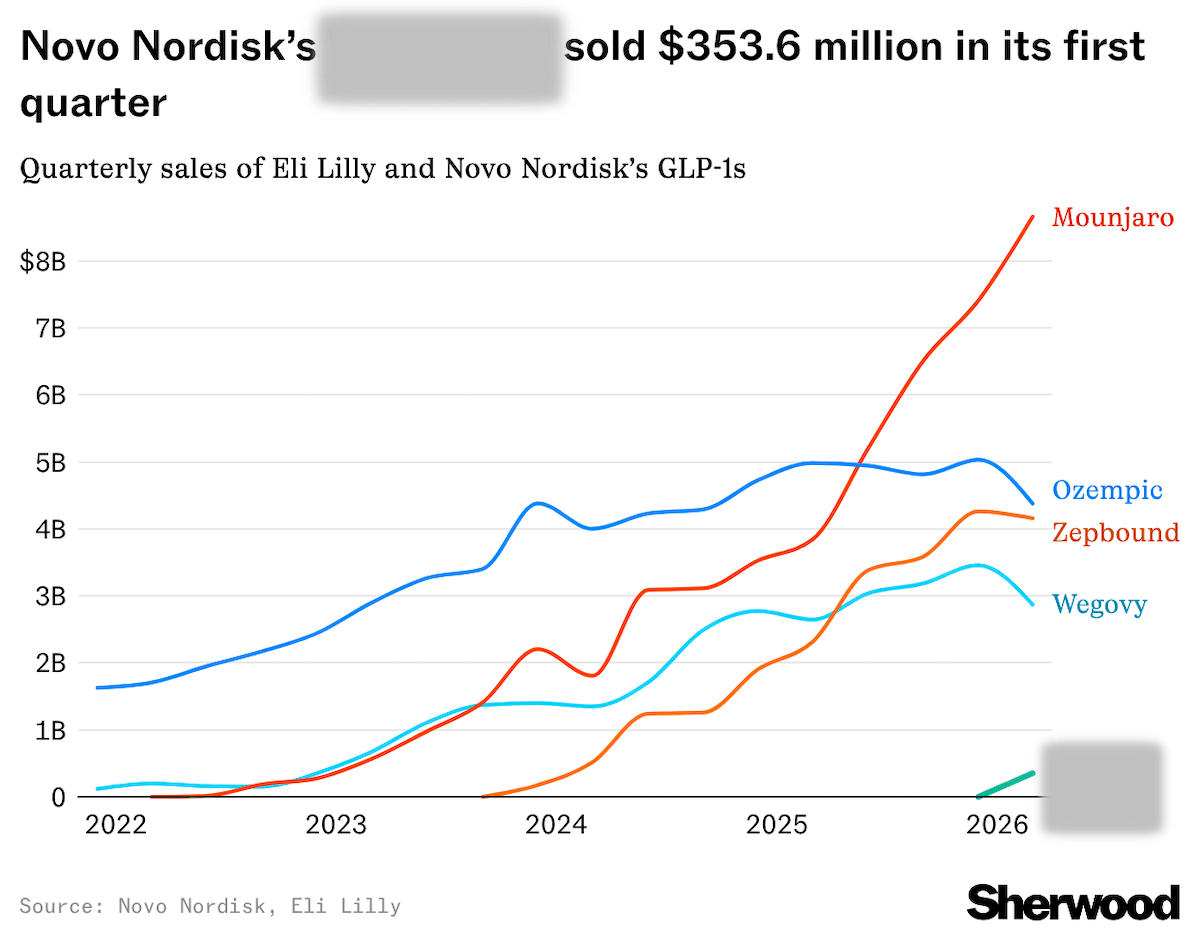
Off the charts: Which new Novo Nordisk weight-loss treatment just had the strongest-ever GLP-1 volume launch in the US, helping the company raise its full-year guidance this week? [Answer below]. |
Not a subscriber? Sign up for free below. |
State Street Investment Management Disclosure: |
|
|
|
|