|
|
|
|
|
|
|
|
|
The Home of the Week is a circa-1881 dwelling with a family connection in the Annapolis Valley. Travis Z Baker Media
|
|
|
|
|
This week: Why homeowners in one city are missing their mortgage payments the most, and a high-rise without a garbage chute raises a big stink. Plus, how some developers are using NDAs to keep buyers quiet and one property worth a look. |
|
|
|
|
|
|
|
|
|
|
The city leading Canada’s surge of mortgage delinquencies |
|
|
|
|
|
|
|
|
|
|
|
|
|
More homeowners in Brampton have not paid their mortgages for at least 90 days than in any other major Canadian city. Cole Burston/The Globe and Mail
|
|
|
|
|
More Canadians are missing their mortgage payments, but there’s a much quicker road to delinquency if you live in one Ontario city in particular. In fast-growing Brampton,
one in every 20 homes with a “for sale” sign is now a forced sale. Since 2019, the number of homeowners in the city who have missed at least 90 days of payments has risen ten-fold, and now sits at 0.6 per cent, more than double the national average of 0.26 per cent, according to new data from Equifax. |
|
|
|
|
While the overall delinquency rates are still low, four other major cities – Toronto, Markham, Oshawa and Vancouver – are also helping drive Canada’s surge. But, as Rachelle Younglai reports, it’s no coincidence that Brampton homeowners are struggling the most. Higher borrowing rates, mounting job losses in the manufacturing sector thanks to tariffs, and a steep drop in home prices are all squeezing households at the same time, mortgage broker Rakhi Madan told Rachelle. |
|
|
|
|
Prices in Brampton have been on a rollercoaster since 2019, and those who bought at the peak are now hurting the most from the whiplash. The typical home price has fallen by nearly $400,000 since early 2022, trapping buyers in massive mortgages they can’t refinance or withdraw equity from. Their only choice is to renew at a much higher interest rate, which the Bank of Canada has warned could climb further later this year. Read the full story here. |
|
|
|
|
|
|
|
|
|
|
A high-rise without garbage chutes has buyer raising a stink |
|
|
|
|
|
|
|
|
|
The 33-storey Bauhaus condo building doesn't have a garbage chute, as some developers do away with the amenity. Fred Lum/The Globe and Mail
|
|
|
|
|
No chute? Big problem. Mary Rizvi says trash was “the last thing on her mind” when she bought an 18th-floor pre-construction condo at Bauhaus in downtown Toronto. But now that the 33-storey building by Lamb Development Corp. is almost complete, she’s looking for a way out because it’s clear there won’t be a garbage chute like she assumed. “You’re paying the kind of money they’re asking for – like a million-dollar apartment – and you don’t have a garbage chute?” she told Shane Dingman. |
|
|
|
|
As Shane was surprised to learn, garbage chutes aren’t actually required in any size of building,
and some developers are tossing the amenity out with the trash to save costs, maximize living space and avoid maintenance issues. “They are so ubiquitous I imagined they must be part of building code, but they are not and I am told this is not the only new building in the city without them,” said Shane. “But I had a number of people in the industry tell me they were surprised a 30-plus-storey building would turn all the owners into trash-haulers.” |
|
|
|
|
It’s an amenity many think should be a necessity, including some Bauhaus buyers who spoke to real-estate lawyer David Feld about backing out of the sale. And if you also wouldn’t like to tote your trash down from high-above, join the club. Realtors tasked with finding tenants told Shane the lack of a chute is also making Bauhaus a hard sell to renters. Read the full story here. |
|
|
|
|
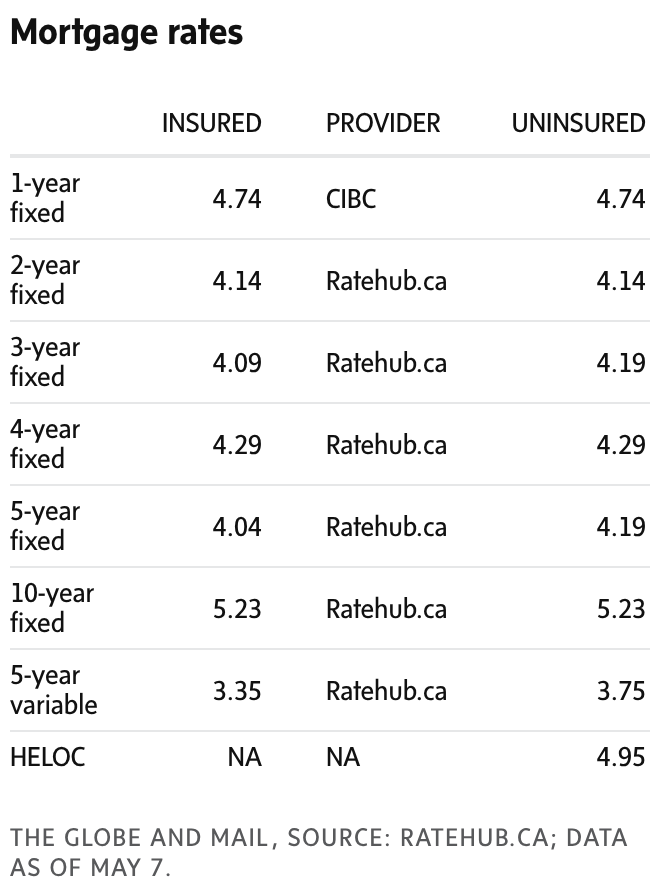
This week’s lowest fixed and variable mortgage rates in Canada |
|
|
|
|
|
|
Rates shown are the lowest available for each term/type and category (insured vs. uninsured) as of market close on Thursday, May 7. |
|
|
|
|
|
|
|
|
|
|
Some developers are using NDAs to keep unhappy buyers quiet |
|
|
|
|
|
|
|
|
|
More companies, including some homebuilders, are using non-disclosure agreements to buy buyers' silence. Photo illustration by The Globe and Mail/iStockPhoto / Getty Images
|
|
|
|
|
If you’ve bought or are looking at a pre-construction home, you might also be paying with your silence. More and more companies across virtually all industries are using nondisclosure agreements to keep unhappy customers quiet, Erica Alini and Mariya Postelnyak report.
And some homebuilders are using NDAs to settle major disputes or pre-emptively silence buyers if major issues arise down the road. “The stakes in consumer disputes can be small – but in real estate they are often very high. People’s lives can be thrown off-course," Erica told me. |
|
|
|
|
Confidential settlements have been used to get homeowners to agree to surprise increases as steep as $100,000 or $200,000 more than the original purchase price during the pandemic-driven housing boom, consumer advocate Barbara Captijn told Erica. Or if developers didn’t build the promised homes, some buyers found pre-emptive NDA clauses in their purchase agreements said they could lose their deposits if they spoke out publicly or tried to warn other potential buyers. |
|
|
|
|
It’s hard to know how common NDAs are in home deals because the secrecy is baked in. None of the buyers Erica spoke to were comfortable sharing publicly, but they “described a tremendous stress ... and a crushing sense of injustice at not being able to find and band together with others facing the same situation,” Erica said. The main lesson? Always have a lawyer review any contract before you sign, and get legal advice if you’re faced with an unexpected price hike. Read the full investigation here. |
|
|
|
|
|
|
|
|
|
|
|
|
|
|
|
|