| | AI investment props up US economic growth, investors pick Big Tech winners and losers, and Russia’s ͏ ͏ ͏ ͏ ͏ ͏ |
| |  SANTA MARTA SANTA MARTA |  MOSCOW MOSCOW | DONGGUAN |
 | Flagship |  |
| |
|
The World Today | 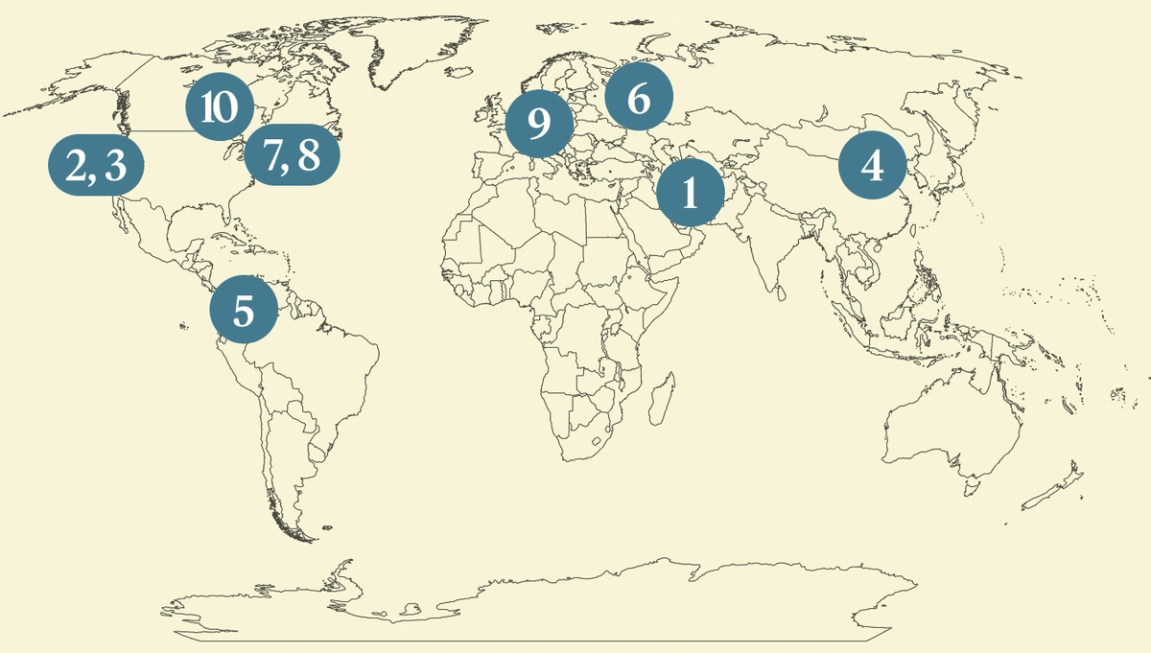 - Entrenched Iran stalemate
- AI props up US GDP
- Investors digest tech earnings
- China manufacturing strong
- Fossil fuel phaseout talks
- Russia web rules pushback
- Prediction market scrutiny
- World Cup tickets for sale
- Germany mulls sugar tax
- Absurd survey questions
 Remembering an icon of outlaw country. |
|
US, Iran bet on the clock |
 Majid Asgaripour/WANA via Reuters Majid Asgaripour/WANA via ReutersIran’s supreme leader on Thursday issued a defiant salvo in response to American pressure over the Strait of Hormuz, as US President Donald Trump weighed his options amid the stalemate. The statement from Ayatollah Mojtaba Khamenei, who has not been seen in public since the killing of his father at the war’s onset, reflected how both countries believe they have the upper hand, The Washington Post wrote, further straining the global economy. “A battle of blockades is a bet on the clock: we can hold out longer than they can,” a foreign policy analyst wrote. Trump is reportedly pursuing an international coalition to enable ships to transit the strait, and he is being briefed on military options, too. |
|
Tech spending props up US GDP |
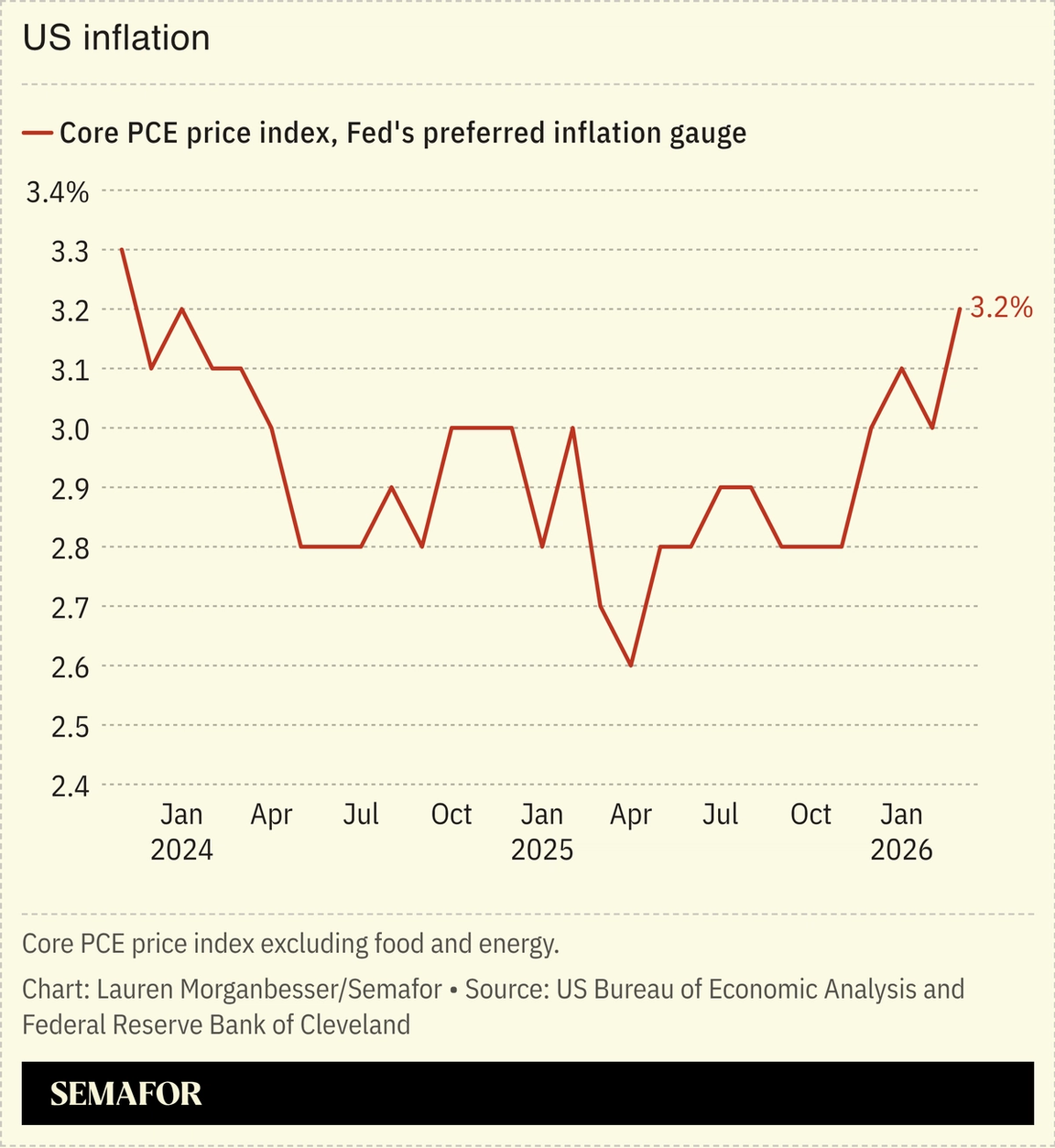 US GDP rose 2% in the first three months of 2026, new data showed Thursday, driven by AI investment. The expansion fell short of Wall Street’s expectations as consumers pulled back slightly on spending — a key inflation gauge rose to its highest point in nearly three years in March. The first-quarter GDP data doesn’t capture the effects of rising gas prices in April because of the Iran war, which is set to further weigh on Americans. But the AI boom could offset any drag: Private business investments contributed more to GDP growth than consumer spending, a trend that could continue as US hyperscalers pledge to ramp up their AI expenditures. |
|
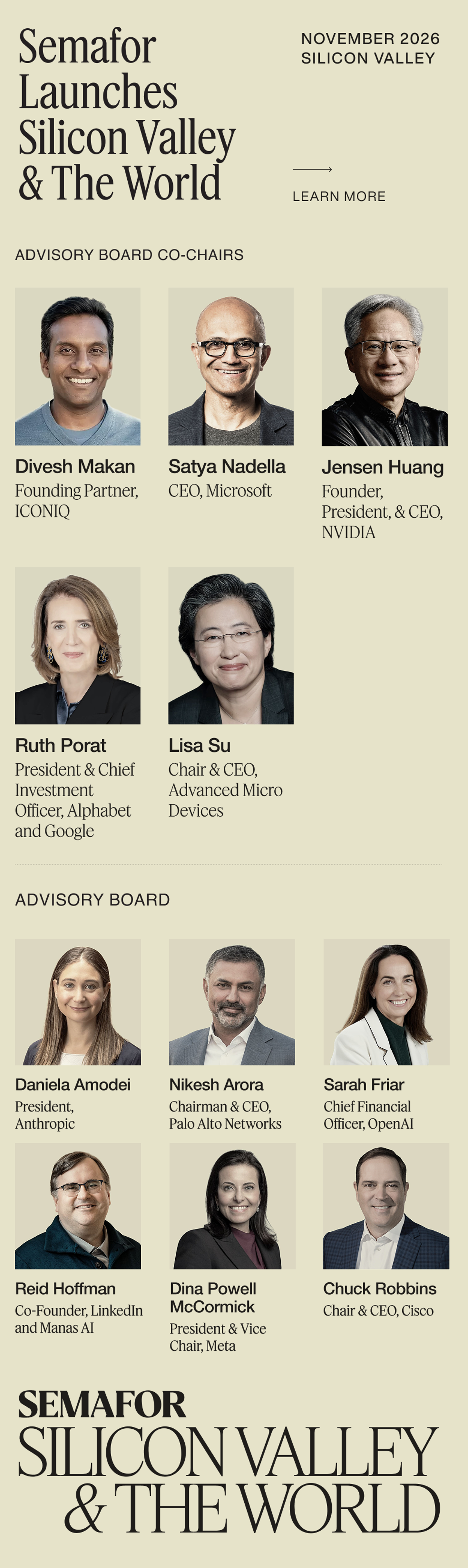 Semafor’s Silicon Valley & The World will bridge the widening gap between the leaders building breakthrough technologies and those shaping the strategies, policies, and institutions that govern their impact. Co-chaired by Divesh Makan, Satya Nadella, Jensen Huang, Ruth Porat, and Lisa Su, this new initiative will bring together top technology CEOs, senior government officials, and global financial leaders in Silicon Valley in November. Building on the success of the 2026 annual convening of Semafor World Economy, Semafor’s Silicon Valley & The World will be the definitive forum to connect builders of transformative technologies with the global institutional leaders governing their consequences. Through Semafor’s signature live journalism, the initiative will examine the forces now sitting at the center of global leadership: artificial intelligence, national competitiveness, energy demand, capital formation, security, labor markets, and the shifting relationship between technological power and public authority. |
|
Investors weigh mixed Big Tech results |
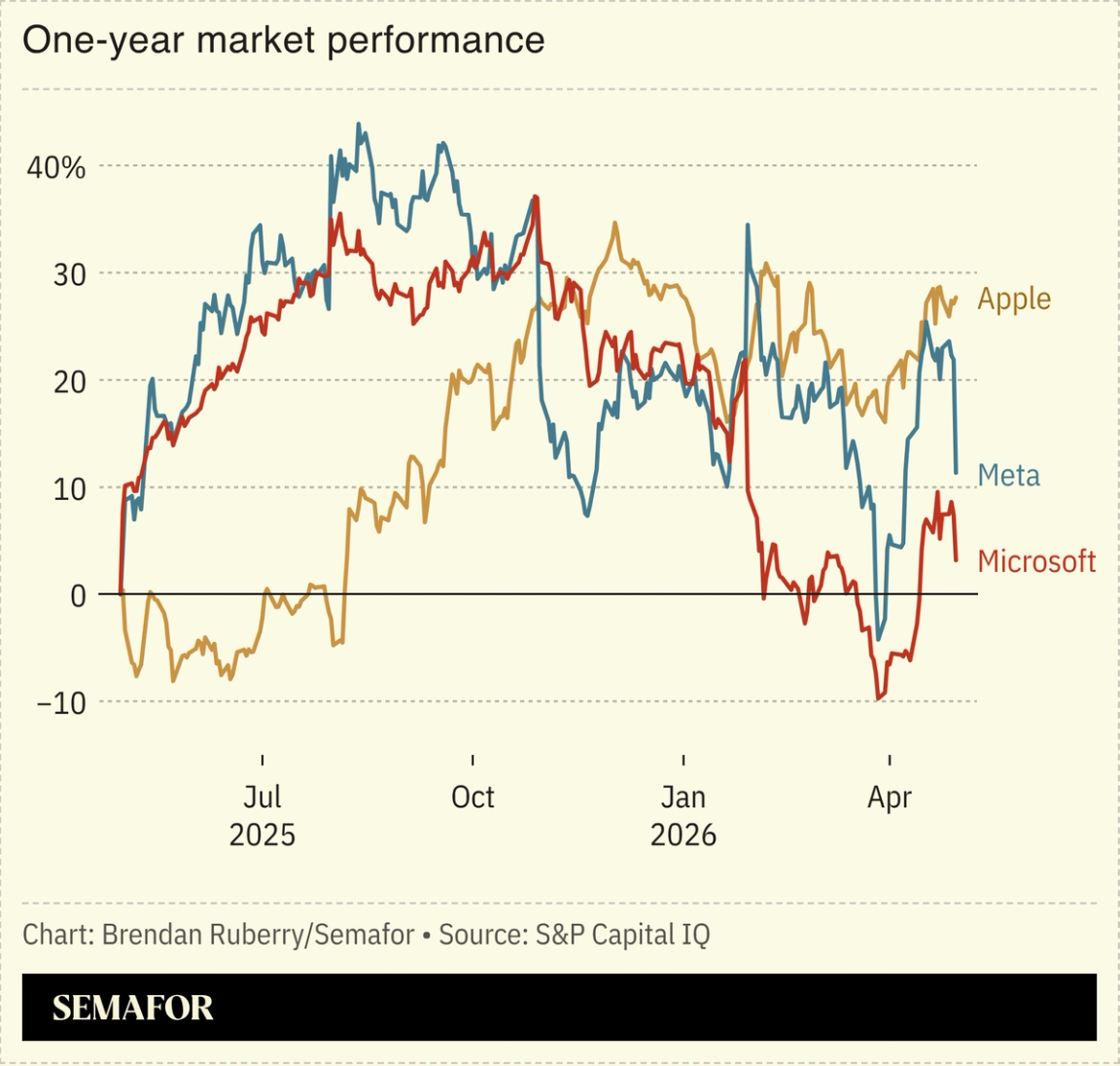 US stocks on Thursday wrapped up their best month since 2020, as investors shrugged off disruptions from the Iran war and picked winners and losers in Big Tech. A day after quarterly earnings reports pointed to a surge in AI investments among the world’s largest tech firms, Meta and Microsoft’s stocks sank on concerns over their high spending, while Alphabet and Apple surged. The diverging fortunes showed that pouring capital into AI isn’t enough to satisfy Wall Street. “We didn’t learn anything” from the earnings deluge, one analyst said, given that a central question remains unanswered: “Does this AI spend at some point turn into software-like margins?” |
|
China manufacturing holds up |
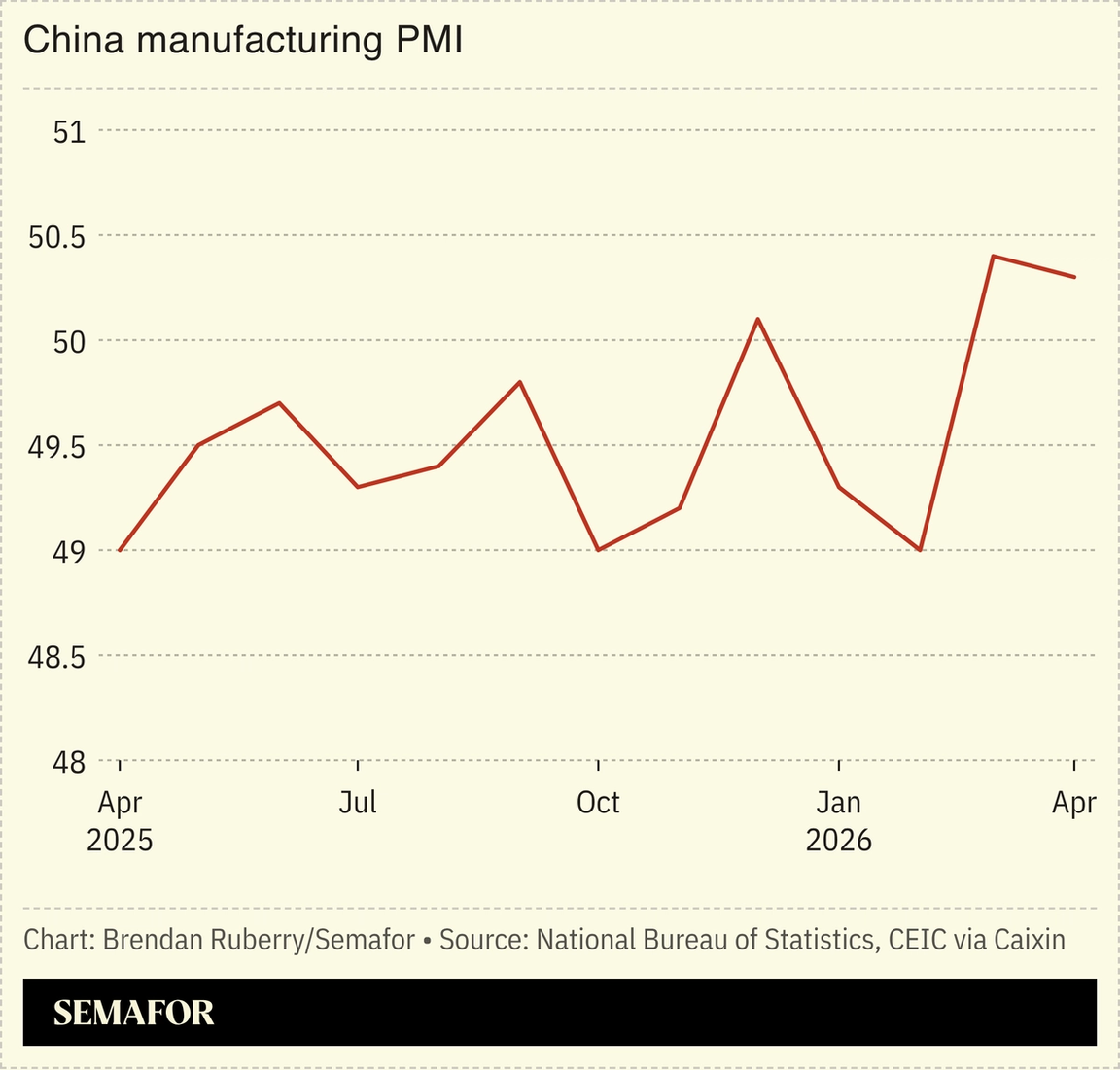 China’s manufacturing sector is holding up despite the Iran war, even as the country’s broader economy showed vulnerabilities. Factory activity expanded in April for a second straight month, driven by persistent demand for exports — a trend that suggests higher oil prices haven’t blunted industrial momentum. But cracks are emerging on the consumer side: Car sales — seen as an early bellwether — are falling, and households are growing more cautious. Those economic challenges threaten to complicate US President Donald Trump’s planned meeting with Chinese leader Xi Jinping next month, The New York Times wrote: Xi has called for the reopening of the Strait of Hormuz, and the economic ripple effects are now poised to be “the primary topic” of the summit. |
|
Nations agree to phase out fossil fuels |
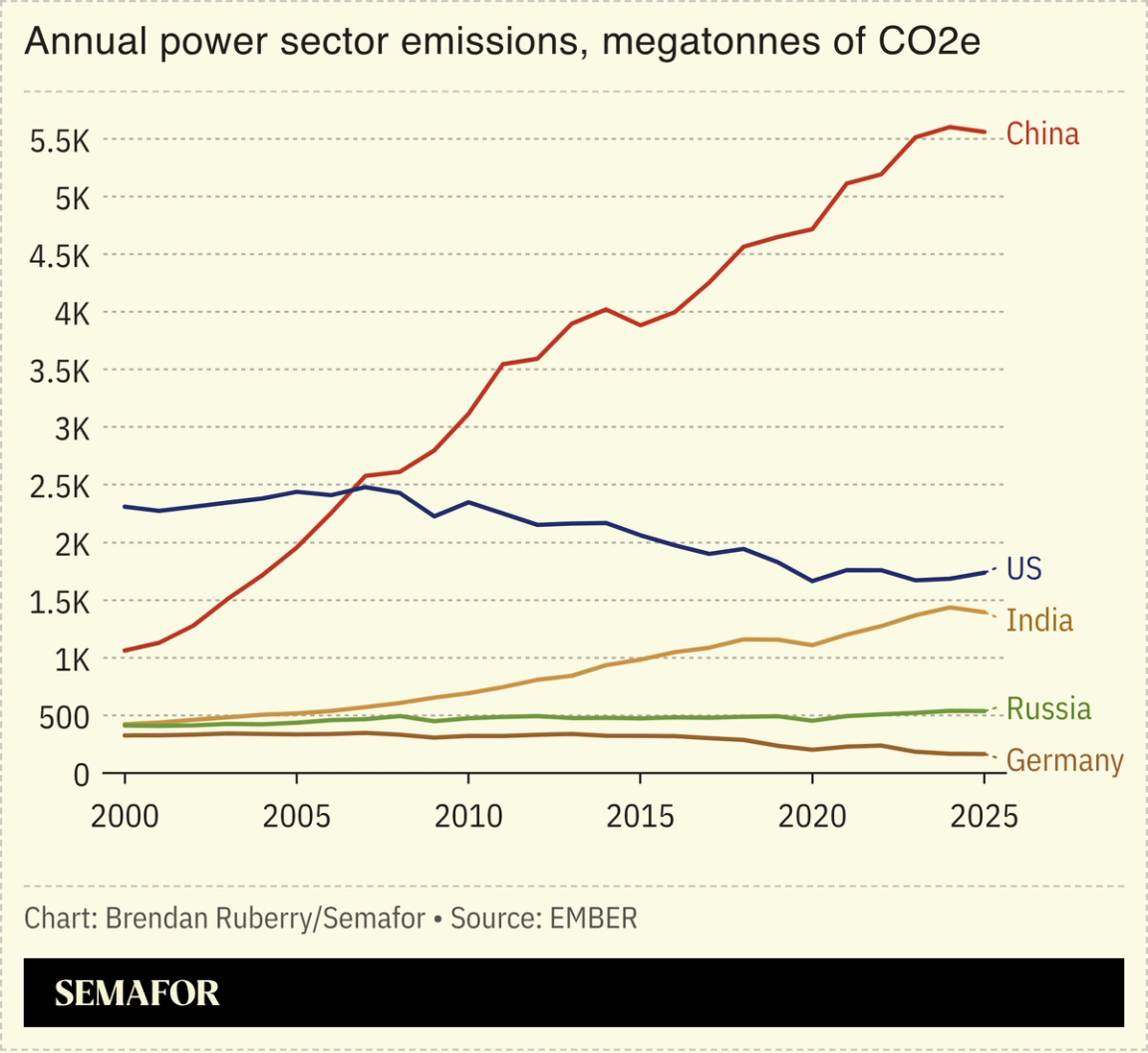 Nearly 60 nations this week moved toward phasing out oil, gas, and coal, in a climate summit that aimed to accelerate a global shift toward renewables. The countries agreed to set “roadmaps” for weaning off fossil fuels. “This may be the first multilateral meeting that I find not frustrating,” the Colombian environment minister said. The meeting happened amid a global energy crisis that has pushed up prices for fossil fuels and nudged some leaders and consumers toward renewable alternatives. But several of the world’s largest emitters, including the US and China — as well as major oil producers like Saudi Arabia and Russia — weren’t represented at the gathering in Colombia, where participating nations made up 30% of global GDP. |
|
Backlash swells to Russia web rules |
 Ramil Sitdikov/Reuters Ramil Sitdikov/ReutersPublic backlash is growing in Russia in response to Moscow’s efforts to tighten control over the internet. The government in recent months has imposed restrictions including blocking or throttling popular apps like Telegram, WhatsApp, and YouTube. More ordinary Russians are starting to speak out, in a rare chorus of dissent. VPN app downloads in the country increased 14-fold in March, a Russian business outlet reported. President Vladimir Putin has looked to do damage control in the last week, but has largely stayed out of the debate over the unpopular bans. The pushback is nearing an inflection point, a Carnegie expert wrote, but may only make Moscow’s security agencies more hardline; the Kremlin’s efforts to create “full-spectrum internet surveillance” will likely expand, Jamestown wrote. |
|
Senators barred from prediction markets |
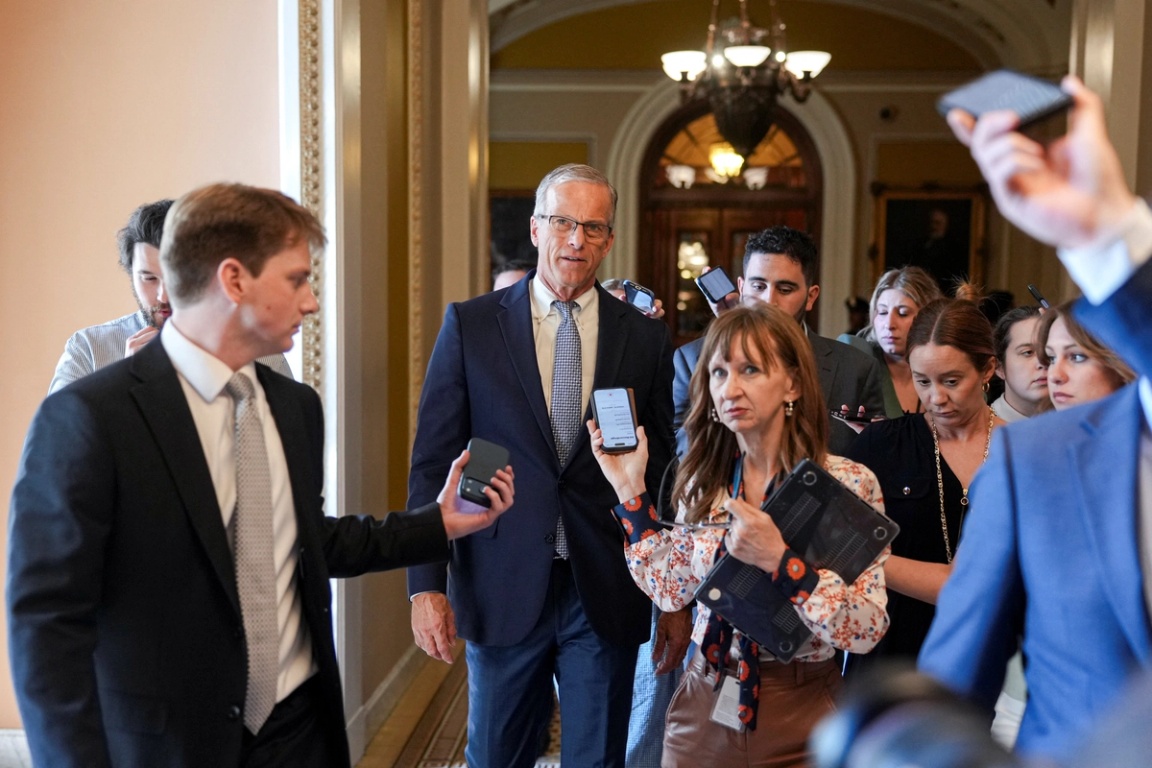 Ken Cedeno/Reuters Ken Cedeno/ReutersUS lawmakers are ramping up scrutiny of ultra-popular prediction markets as concerns balloon over the potential for insider trading. Senators on Thursday barred themselves from trading on the platforms; the move comes days after Kalshi said it banned three congressional candidates for betting on their own elections, and a US soldier was arrested for allegedly using classified information to trade on the ouster of Nicolás Maduro on Polymarket. Two senators also introduced a bill Thursday that would ban US administration officials from trading, Semafor reported. The CEO of Kalshi told Semafor earlier this month that he expects US authorities to prosecute cases of insider trading on prediction markets: “There’s always going to be bad actors,” he said. |
|
World Cup opener still has tickets for sale |
 Tasos Katopodis/Getty Images for Semafor Tasos Katopodis/Getty Images for SemaforWith six weeks to go before the men’s soccer World Cup, the opening game in the US has yet to sell out. Co-host nation US faces Paraguay in Los Angeles on June 12, with thousands of seats still unsold, The Wall Street Journal reported. High ticket prices — the cheapest available are over $1,000 — have hit demand, while the US’ crackdown on migration has reduced visitors: Inbound travel fell 5.5% last year despite a global tourism surge. Rising jet fuel prices have also raised air ticket prices. Some hotels have cut prices with demand failing to meet expectations. Major sporting events are usually seen as an economic boon, but research suggests that Olympic and World Cup hosts tend to lose money on their investment. |
|
The sugar police could come to Germany |
 Akhtar Soomro/Reuters Akhtar Soomro/ReutersGermany is considering introducing a sugar tax. If anything, it’s surprising that it hasn’t already: 117 countries and territories worldwide, including 17 in Europe, have duties on sugary drinks. There is solid evidence that companies respond by lowering the sugar in their products, but less that the taxes ultimately improve health. Only one empirical study has found any effect on obesity, and only in 10- and 11-year-old girls; results appearing only in one subgroup can suggest a statistical fluke. Consumers often substitute other sugary products for the newly expensive ones. There is a more direct benefit for countries, though: Germany expects to generate €450 million annually via the tax, important given its large budget gap and increased defense spending plans. |
|
|


