| | In this edition, Semafor launches a new live journalism event, and Kevin Warsh’s problem isn’t Jerom͏ ͏ ͏ ͏ ͏ ͏ |
| |  | Business |  |
| |
|
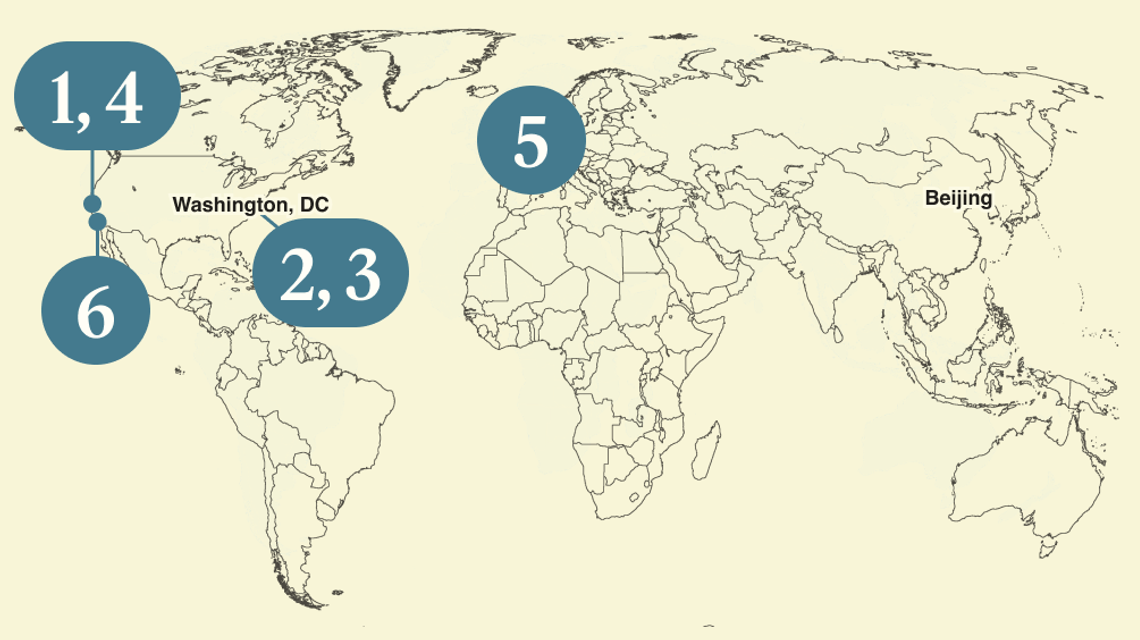 - Silicon Valley, meet the world
- Warsh’s bag of problems
- TrumpIRAs are coming
- Meta’s miss
- Millionaires on the march
- Disney’s strange defenders
 Emirati space dreams … |
|
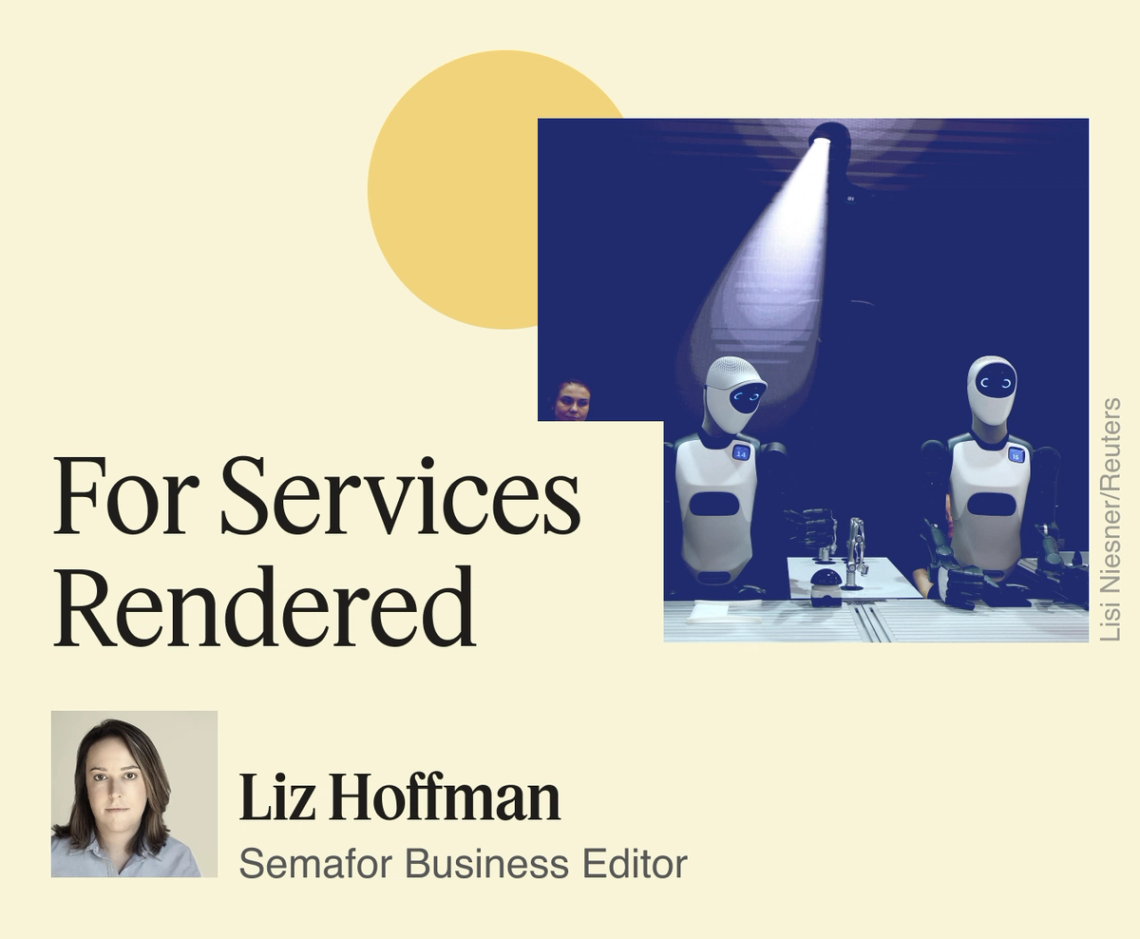 The pre-AI economy ran on inputs. Lawyers billed by the hour, software companies charged by the seat. Effort stood in for value because value was too hard to measure. That’s about to change. AI companies will want a direct piece of new business lines they unlock and the margins they fatten. These new pricing models will be a proxy for how the spoils of an AI-powered economy get divided. “The arc of technology history will bend towards outcomes-based pricing,” Jake Saper, a partner at venture firm Emergence Capital, told me this week. One of Emergence Capital’s bets is ProsperAI, a healthcare startup that verifies patient insurance before procedures. Most hospitals currently pay by the phone minute for humans to do this. Prosper does it with AI agents and is moving toward charging per successful authorization — outcomes, not inputs. “It’s teaching buyers how to buy,” Saper said. Investment-banking startup Rogo charges the likes of Goldman Sachs and JPMorgan per user today but says it’s exploring ways to take a cut of the M&A and IPO revenues it helps generate. As AI makes it profitable to chase smaller deals that were previously uneconomic, “it’s upside for them and it’s upside for us,” Rogo President Rahul Rekhi said. AI is even coming for the last great holdout of input-based pricing: Big Law’s billable hour. “Clients want value, they are willing to pay for value, and the way that value is measured is ripe for evolution,” said Rachel Proffitt, CEO of Cooley, the global law firm headquartered in Silicon Valley. The legal industry’s future may look a lot like its oldest-school heavyweight, Wachtell Lipton, which famously sends clients bills that simply say “For Services Rendered” next to a large number. You hire Wachtell for an outcome — a gold-plated M&A deal — and pay accordingly. Economic units matter because they set incentives. When Rolls-Royce’s “power by the hour” model, introduced in the 1960s, began charging airlines for engine operation time rather than parts upfront, it forced Rolls-Royce to internalize maintenance costs, and planes got more reliable. The media industry’s shift from charging for eyeballs to driving subscriptions changed the incentives from clickbait to quality journalism. AI companies sharing in the new revenue they create may siphon money away from powerful law firms and financial shops, or at least allow the giants of those fields to put smaller rivals out of business. It will almost certainly cost jobs. But aligning service providers’ incentives with their customers is the right move. Plus: A big new live-journalism launch for Semafor — details below! |
|
Semafor’s Silicon Valley & The World |
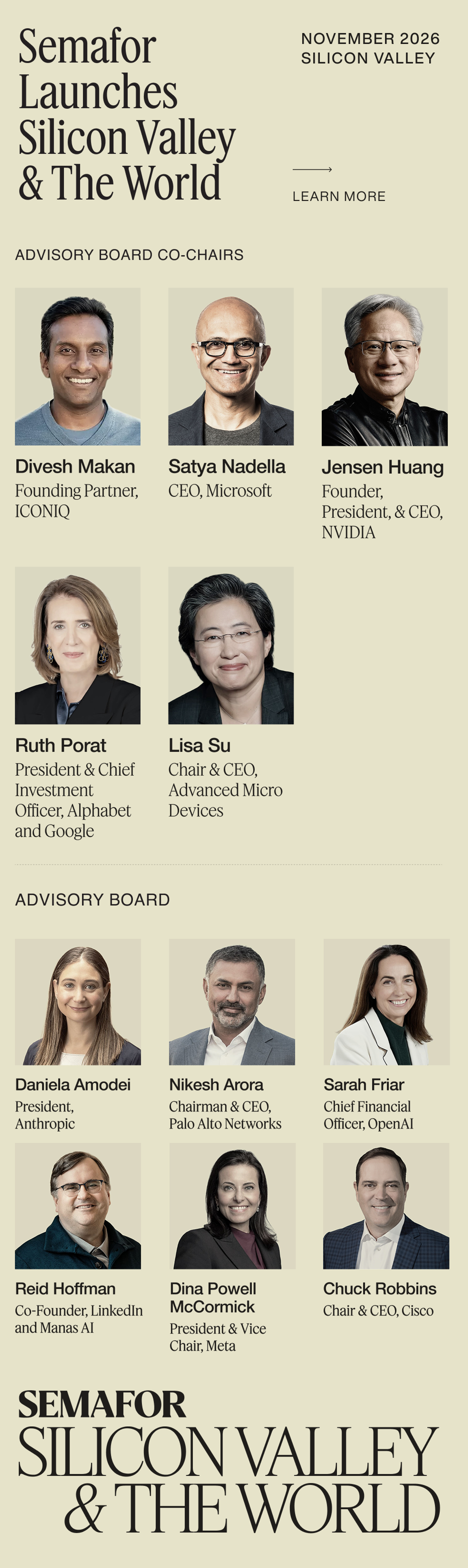 Silicon Valley is globally important but can be fairly parochial, a clubby California outpost where tech leaders and the products they churn out are setting the world economic agenda and influencing geopolitics. Semafor’s Silicon Valley & The World, a new live journalism gathering in November, will bridge that widening gap. Co-Chaired by Divesh Makan, Satya Nadella, Jensen Huang, Ruth Porat, and Lisa Su, the initiative will bring together top technology CEOs, senior government officials, and global financial leaders in Silicon Valley this fall. Our journalists will press tech leaders and their global regulators, investors, and customers on the forces now sitting at the center of global leadership: AI, national security, energy demand, jobs, and the shifting relationship between technological power and public authority. |
|
Kevin Warsh’s problem isn’t Powell |
 Elizabeth Frantz/Reuters Elizabeth Frantz/ReutersFederal Reserve Chair Jerome Powell said he’ll stay at the central bank as a governor when his term as chair ends next month but promised that he’ll “keep a low profile” after his successor-in-waiting, Kevin Warsh, is confirmed. Powell, whose term as governor ends in 2028, said he will stay until an investigation into the Fed’s ongoing renovations is “well and truly over,” warning that “these attacks are battering the institution.” Warsh thinks the Fed’s reputational chips are self-inflicted, by its ballooning balance sheet, its “fatal policy error” in responding slowly to inflation, and its “mission creep” into areas like climate change. But even with a low-profile Powell (helpfully and comically demonstrated live), Warsh will have his hands full, a message delivered by fractious dissent at the Fed’s rate meeting Wednesday. Gov. Stephen Miran, Trump’s super-dovish appointee, opposed the central bank’s decision to hold interest rates steady, arguing instead for a cut. Three regional presidents disagreed with language teeing up future rate cuts, serving notice that the lingering effect of tariffs and the Iran oil shock might require higher rates. Warsh told senators at his confirmation hearing that the Fed needed “a good family fight.” He’s certain to get it. |
|
 Evelyn Hockstein/Reuters Evelyn Hockstein/ReutersPresident Donald Trump will sign an executive order Thursday to launch retirement plans for workers whose employers don’t provide one, Semafor’s Eleanor Mueller scoops. TrumpIRA will join TrumpRx and Trump Accounts in the presidentially branded business aisle, as the White House continues to try and fill policy gaps — hoping it will succeed where previous administrations have failed. (Obama’s version of retirement accounts for gig workers, myRA, was a flop and folded after attracting just 30,000 signups.) Two things are different today. First, TrumpIRA aims to give users access to a wider range of investments than Obama’s plan, which was limited to Treasury bonds. Second, AI could massively increase unemployment and gig work by replacing jobs and by making it easier for companies to manage distributed, project-based workforces. That will expose a vulnerability in America’s already fragile retirement system — its reliance on employers to set up and administer the plans — and leave the government to fill in the gaps. |
|
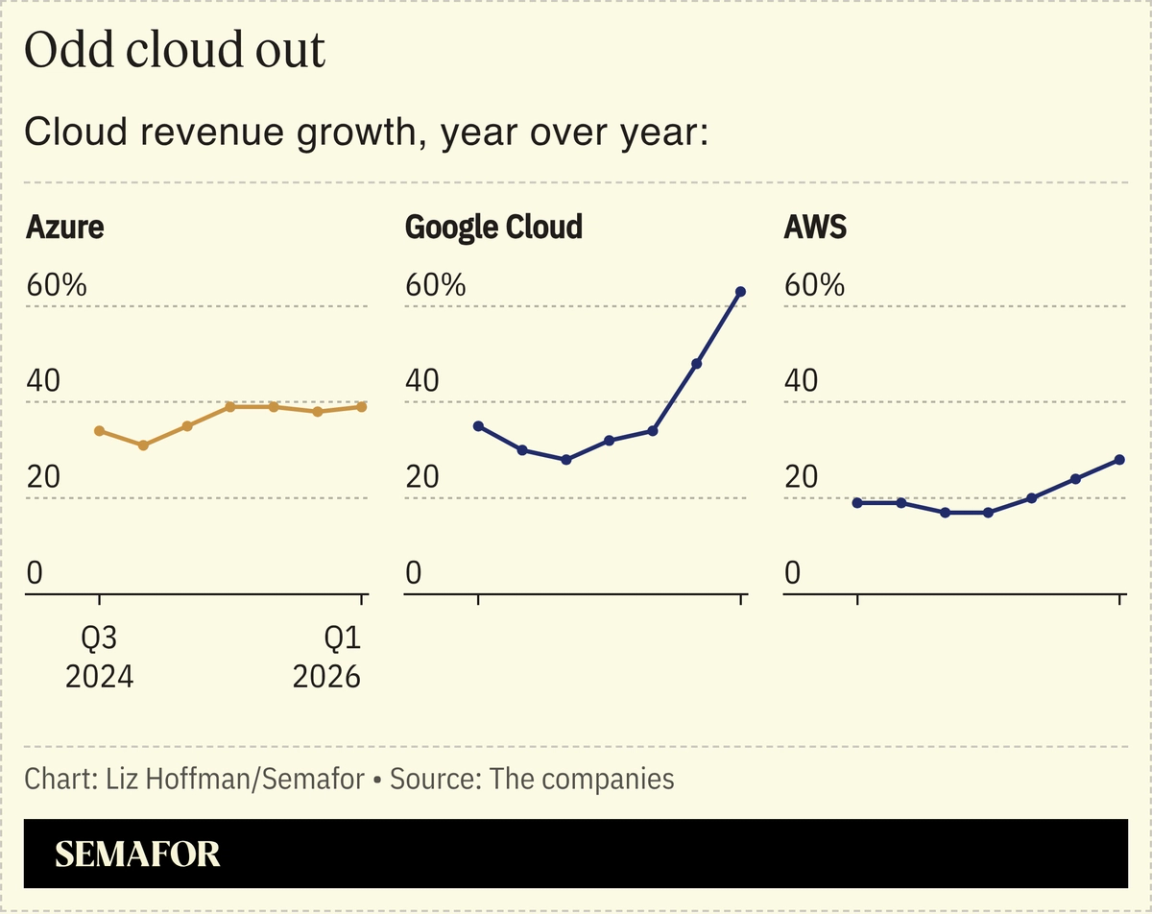 Investors handed Mark Zuckerberg a hunting license earlier this year. Now they’re wondering what he’s aiming at. Meta shares fell 10% after the company again boosted its AI spending without showing the tangible results its rivals are getting from their cloud offerings. (Meta doesn’t have one, and aside from making its own developers more productive, it has little to show in its consumer-facing business.) It was a different story for Alphabet, which was rewarded by Wall Street for its ever-increasing capex (it upped capex forecasts to as much as $190 billion) and a 63% jump in year-over-year cloud revenue. Wall Street wants to see those AI dollars ballooning, but investors are starting to expect results from them. |
|
Global millionaires on the move |
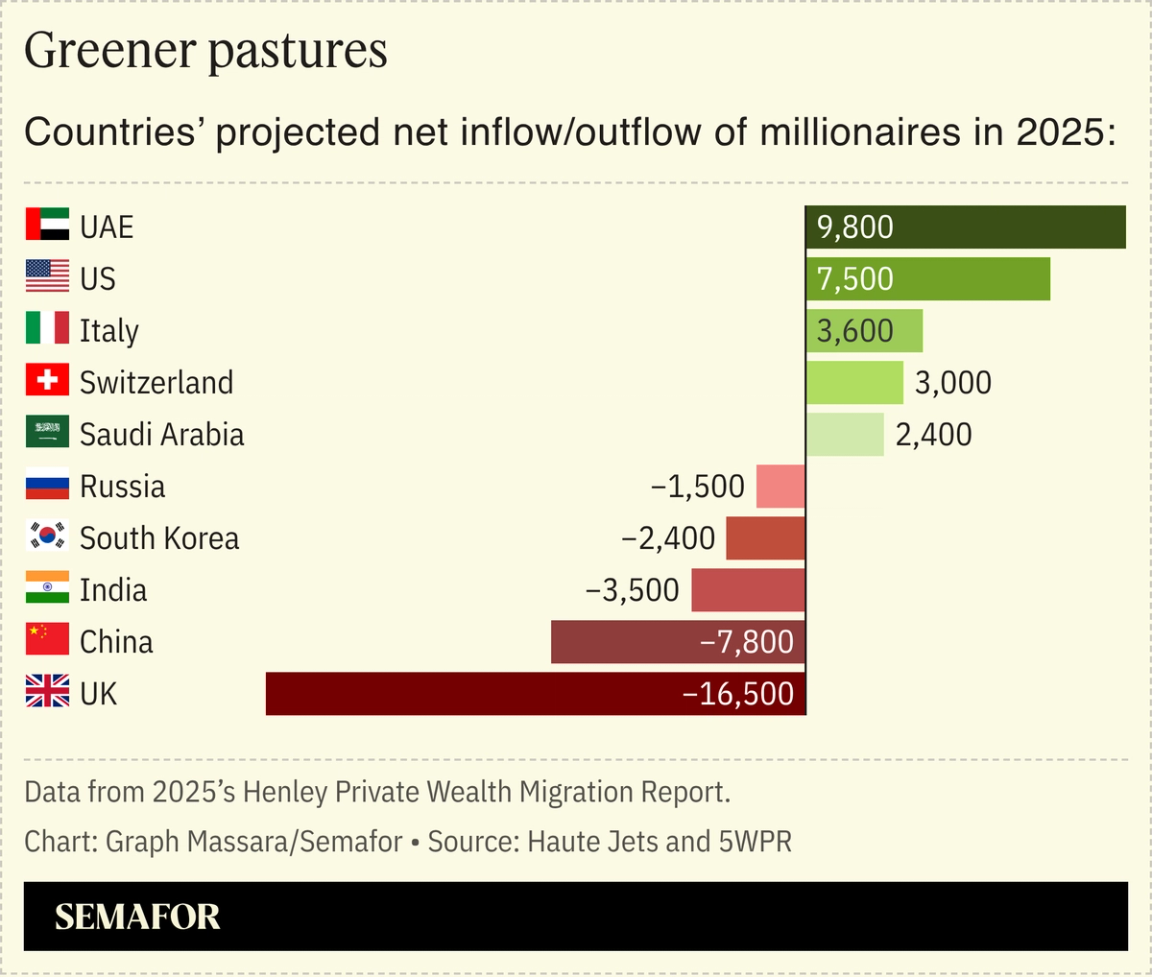 The millionaires may not be fleeing New York City (yet), but they’re on the move, with big implications for both government tax coffers and the global talent map. An accelerating migration of the 1%, charted out in a new report from Haute Jets and 5WPR, is a response to both perceived hostility from progressive governments and cushier lifestyles on offer. The big winners in 2025 were the US, the Middle East, and Italy — the latter surprise thanks to a new €200,000 flat tax that covers residents’ foreign income. The biggest loser is, more predictably, the UK, whose billionaires have been fleeing under the threat of higher taxes. This is a corporate phenomenon as much as an individual one, urban studies theorist Richard Florida wrote this week: “The new corporate geography looks like this. The owners increasingly opt for lifestyle tax havens. Young talent stays in the superstar cities. And the large middle of the corporate workforce now has real choice.” — Andrew Edgecliffe-Johnson |
|
FCC probe divides conservatives |
 Shannon Finney/Getty Images for Semafor Shannon Finney/Getty Images for SemaforThe FCC’s moves toward yanking Disney’s ABC broadcasting licenses are dividing conservatives. The agency’s review, scooped Tuesday by Semafor, is loosely tied to Disney’s corporate diversity efforts. But the timing — coming after Trump called, again, for Jimmy Kimmel to be fired over a monologue — is sparking accusations of nanny-state censorship from some Republicans, suggesting FCC Chairman Brendan Carr has misjudged the appetite inside his own party for a crackdown on speech. “I do not believe the FCC should operate as the speech police,” Sen. Ted Cruz, R-Texas, told Punchbowl. “I would hope that if my friend Brendan Carr is looking at something on ABC, it has more to do than with a few tasteless jokes,” Kentucky Rep. James Comer, a Trump ally, told NewsNation. “The government should stay completely out of this controversy,” conservative commentator Glenn Beck said on his show. — Rohan Goswami |
|
Peter Orszag is the CEO of Lazard, which announced a $575 million deal this morning to acquire Campbell Lutyens, a private-capital advisory firm that introduces companies that need money to investors who have it. 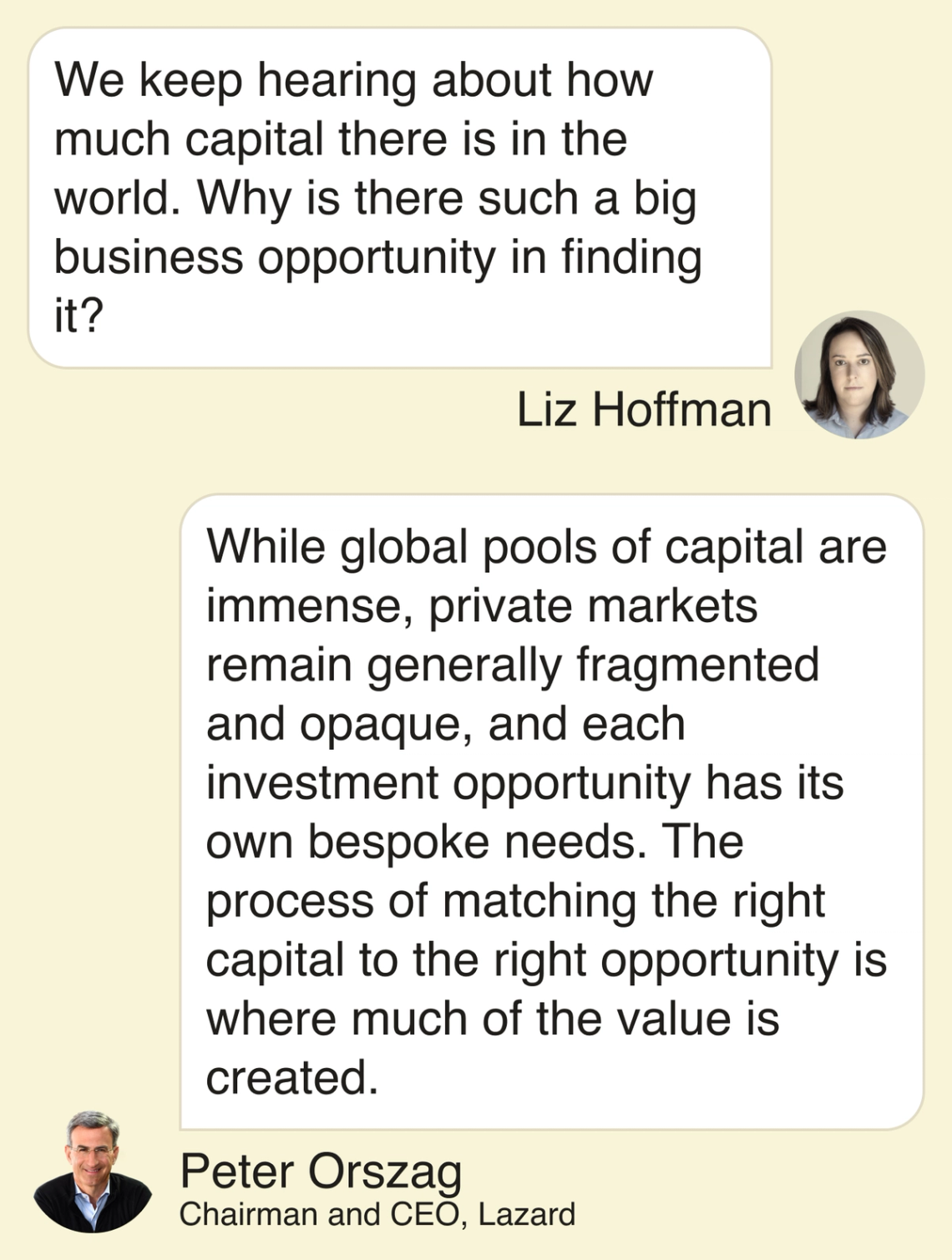 |
|
➚ BUY: Yorkshire. King Charles III amused and delighted on his Washington tour, curling the trademark stiff upper lip at a time of rising economic and geopolitical strain for the “special relationship.” ➘ SELL: Berkshire. Greg Abel, heading into his first Berkshire Hathaway annual meeting lovefest as CEO, faces a problem Warren Buffett rarely did: a sagging stock price. |
|
|