| | Brent oil surged above $126 per barrel, its highest level since the start of the Iran war.͏ ͏ ͏ ͏ ͏ ͏ |
| |  | Energy |  |
| |
|
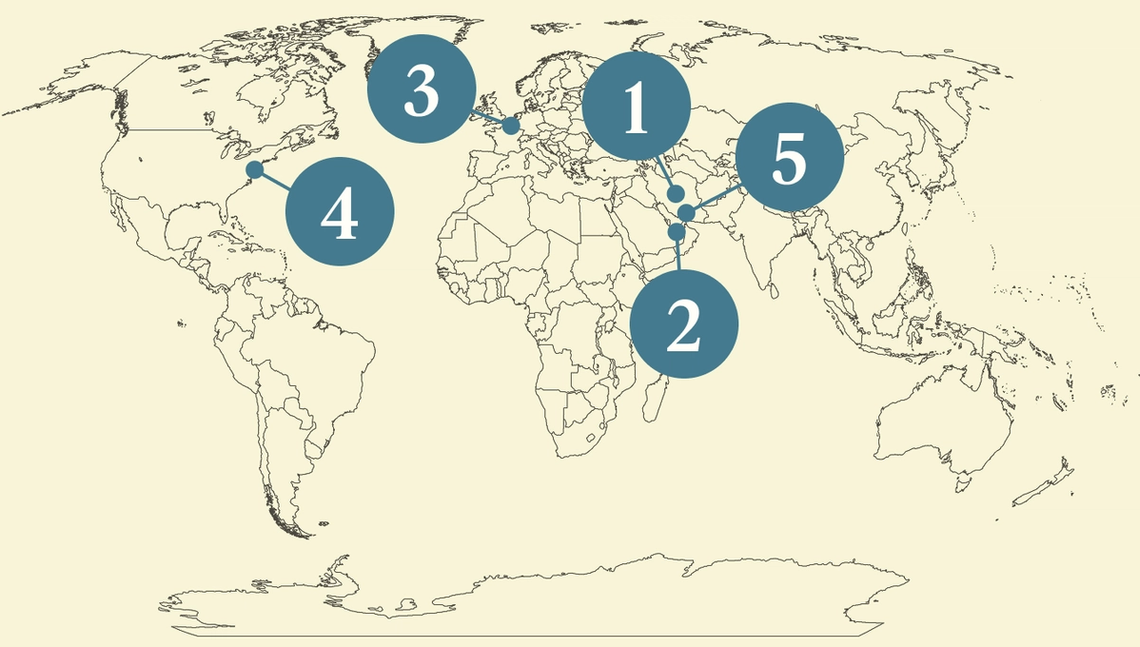 - Oil surges on Iran fears
- UAE deals blow to OPEC
- Green security risks
- Climate tech turns to AI
- Energy lessons from war
 The effects of the UAE’s OPEC withdrawal. |
|
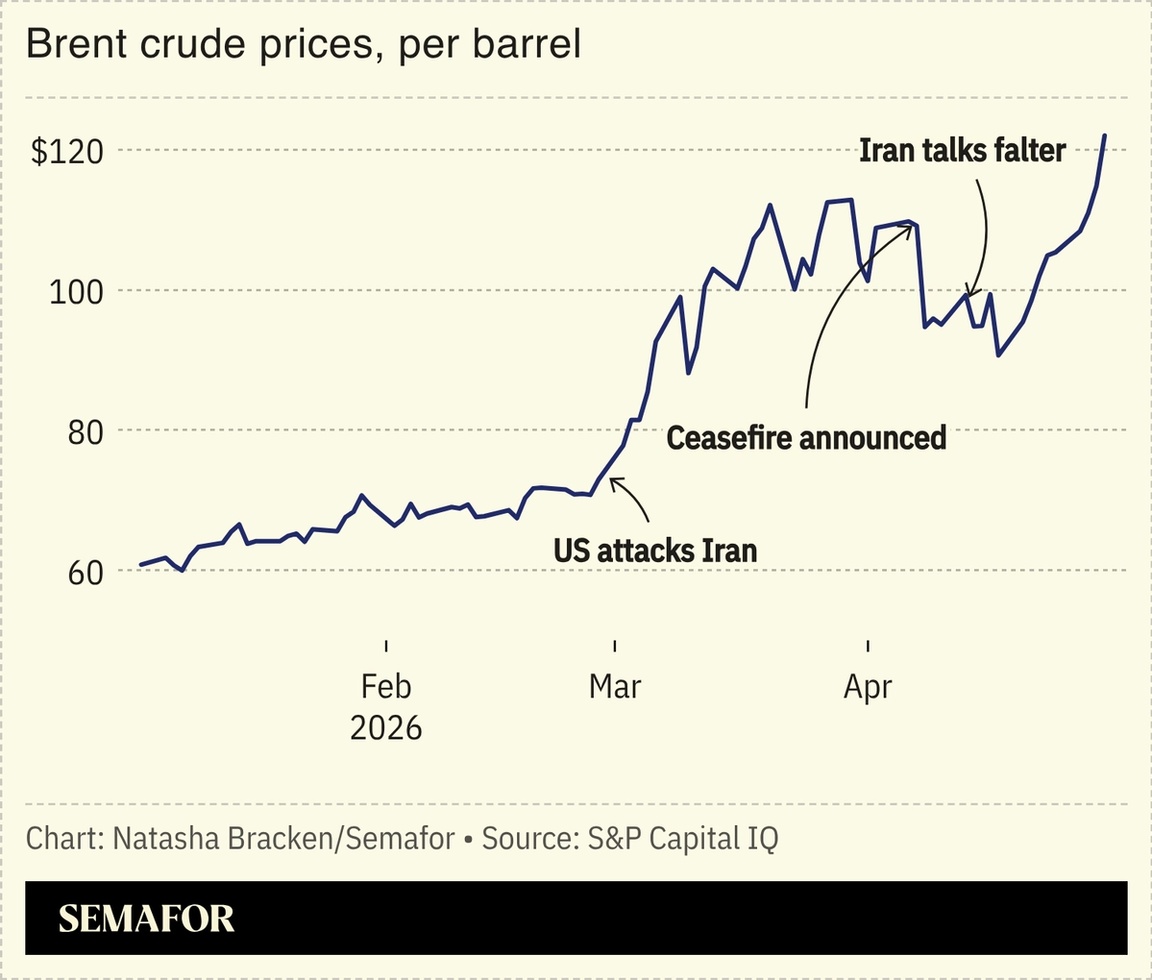 Brent oil surged above $126 per barrel, its highest level since the start of the Iran war, as President Donald Trump mulled renewed military action and warned the US blockade on Iranian ports could last for months. A top Iranian military adviser, meanwhile, warned that Tehran would “not tolerate” prolonged US restrictions, adding that “if the blockade continues, Iran will respond.” The Trump administration has been looking for ways to minimize the impact of its war with Iran on American consumers, who, just yesterday, saw prices at the pump rise to their highest levels since Russia’s invasion of Ukraine. One potential measure involves the creation of a new coalition intended to facilitate traffic through the strait. Approved on Wednesday by US Secretary of State Marco Rubio, the initiative was described as “a critical first step in the establishment of a post-conflict maritime security architecture for the Middle East,” Reuters reported. Rubio instructed US embassies worldwide to press for countries to join, while excluding Russia, China, Cuba, and “other US adversaries.” |
|
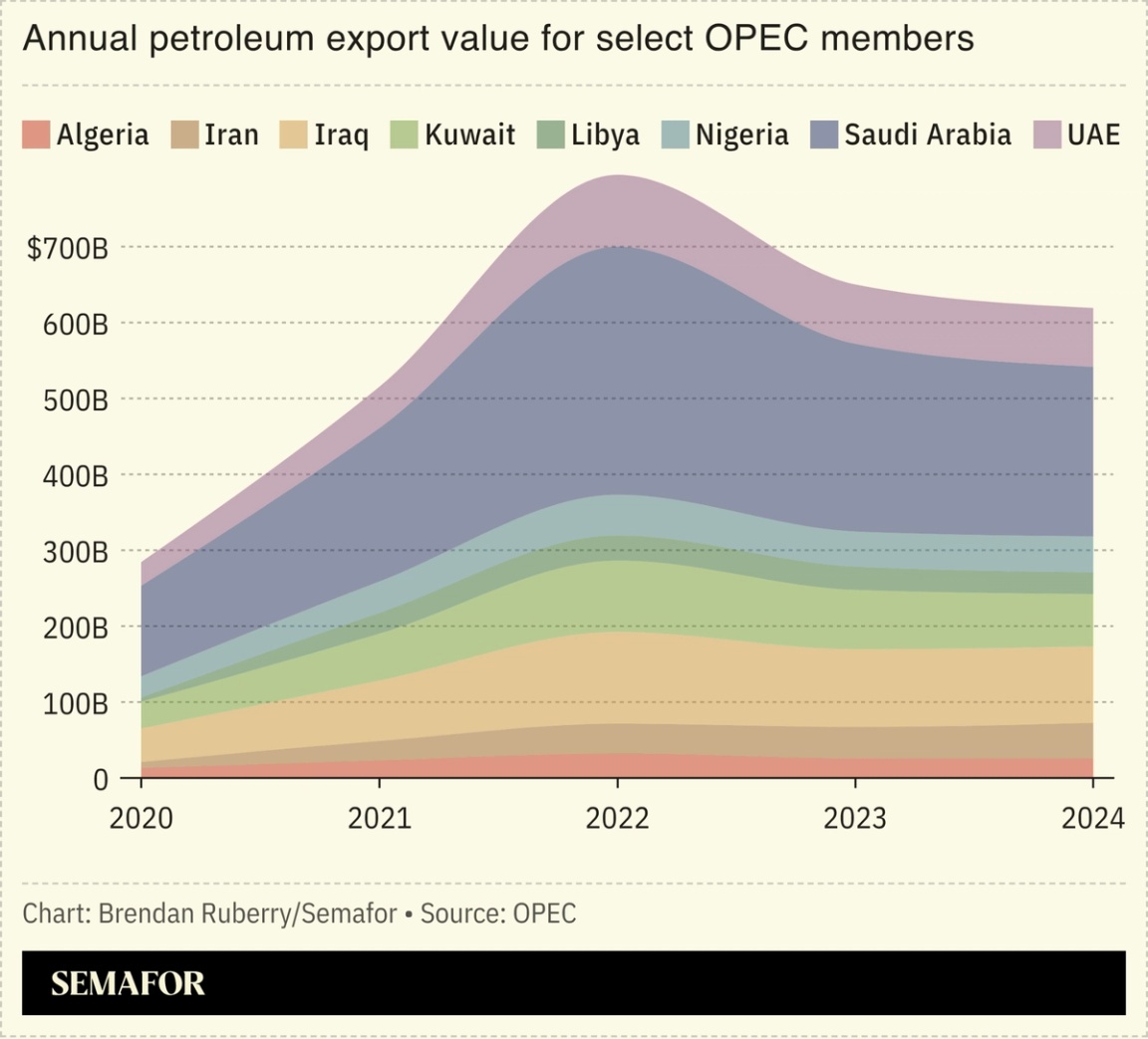 The UAE’s decision to quit OPEC did not have an immediate impact on oil prices, but dealt a major blow to the cartel. Abu Dhabi argued the move would allow it to act more independently in its “long-term strategic and economic vision.” After it officially exits on May 1, it will be free to set its own production limits and rid itself of Saudi Arabia’s de facto leadership of the group. “Countries leave OPEC when the cost of compliance — in forgone production, revenue, and investment — exceeds whatever benefit membership provides,” independent energy commentator Wael Mahdi wrote in a column for Semafor. “Countries with cheap extraction costs, massive reserves, and diversified economies,” like the UAE, “can increasingly afford to go it alone.” Though energy markets have largely downplayed the immediate impact, focusing instead on the closure of the Strait of Hormuz, analysts argued that a muted reaction could also point to OPEC’s diminishing relevance to global oil markets. In the longer term, the UAE’s capacity to produce more oil and release it onto the market could, meanwhile, bring down global oil prices, Russia’s finance minister said. |
|
Jim Krane is the co-director of Rice University’s Middle East Energy Roundtable. 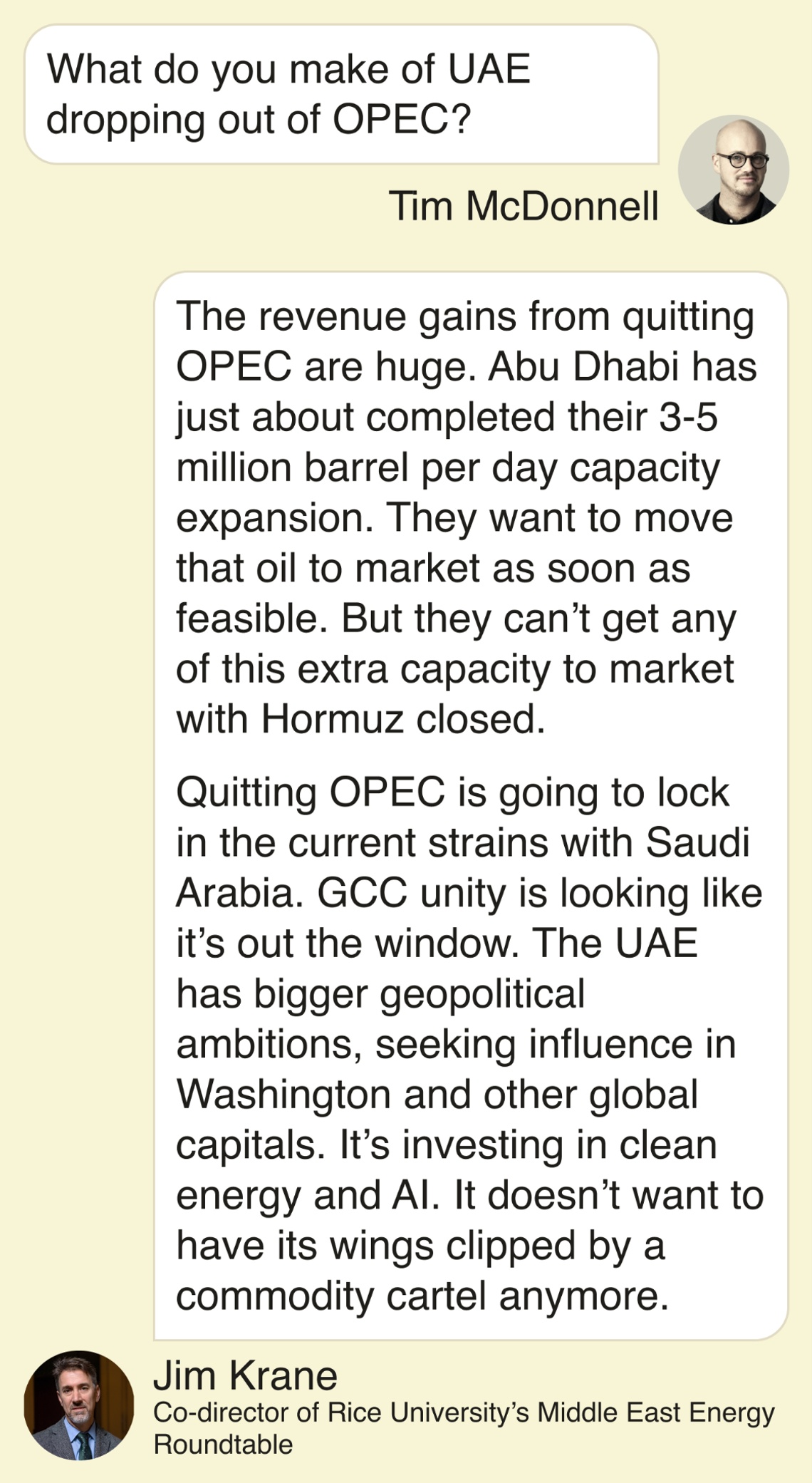 |
|
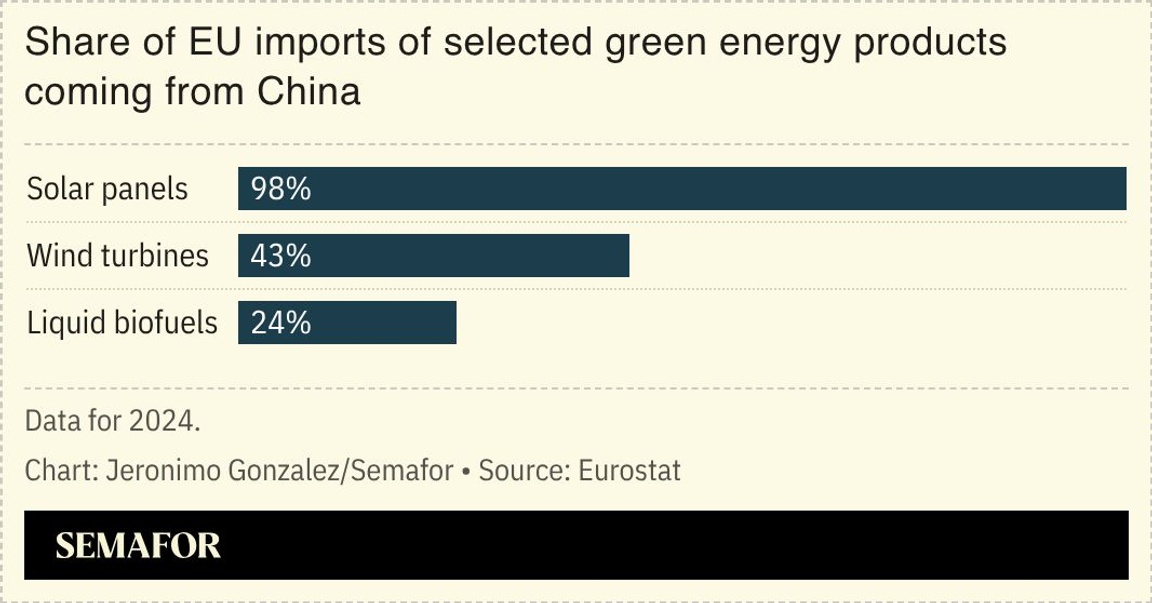 Europe’s reliance on Chinese green technology is a growing security risk, new research warned. Countries are racing to install renewables and other clean tech, particularly after the Iran war caused the second major global energy shock in five years, exposing fossil fuel supply vulnerability. But China produces around 90% of the world’s solar panels and 80% of its wind turbines and battery cells, and controls much of the supply of vital raw materials. The report for the UK government said European authorities were “sleepwalking into a scenario where you’re suddenly confronted with a big national security problem,” whether via Beijing restricting exports or by using disruptive attacks to disable already installed technology. |
|
 Kevin Lamarque/Reuters Kevin Lamarque/ReutersClimate tech startups are turning to AI as the solution for more problems facing the US clean power sector. In the latest example, Euclid Power, a New York startup that helps renewables developers tackle mountains of bureaucratic paperwork, will acquire the AI platform Thresh, Euclid CEO Jacob Sandry told Semafor. Sandry declined to disclose the value of the deal, but said it will allow solar project developers to complete in a few hours “the mindless work of digging through documents” that used to take days or weeks. AI is becoming harder to avoid across climate tech in general, and solar developers in particular face narrowing margins as trade barriers and disappearing tax credits raise the cost of projects. AI can make projects more efficient, Sandry said, but he’s not worried about it taking his job: “People really want a human layer of expertise.” |
|
 Verizon had spent years losing ground to its rivals. Dan Schulman came out of retirement last October to change that. On this week’s episode of The CEO Signal, presented by PwC, Penny Pritzker and Andrew Edgecliffe-Johnson ask him why he said yes to the CEO job after turning it down twice, and how he plans to lead Verizon back to growth. Leadership is about defining reality while inspiring hope, Schulman says, as he explains why he laid off thousands of employees but also felt a responsibility to invest in equipping them with AI skills. And he shares how he’s working to drive urgency and a competitive culture: “If somebody’s going to punch me, I’m going to punch back.” Listen to the latest episode of The CEO Signal now. |
|
View: Energy lessons from war |
 Daniel Cole/Reuters Daniel Cole/ReutersIn 2022, when Russia launched its full-scale invasion of Ukraine, energy was used as a weapon. Today, the energy transition is being used as a defense, former energy ministers from the US and Germany wrote in a column for Semafor. When the ripple effects of Russia’s invasion of Ukraine became clear, so did the lesson: “Energy dependence is not just an economic vulnerability; it is a moral and security liability. As a result, the world learned a partial lesson about the weaponization of energy chokepoints,” Jennifer Granholm and Robert Habeck wrote. “Today the globe faces a second alarm. The question this time is not whether we understand the risk. It is whether we have the courage to act on the lessons we have already paid for in blood and treasure.” |
|
 New Energy- Despite President Donald Trump’s numerous attempts at curtailing green energy, in March the US generated more of its electricity from renewable sources than it did via gas, the first time it’s happened for a full month.
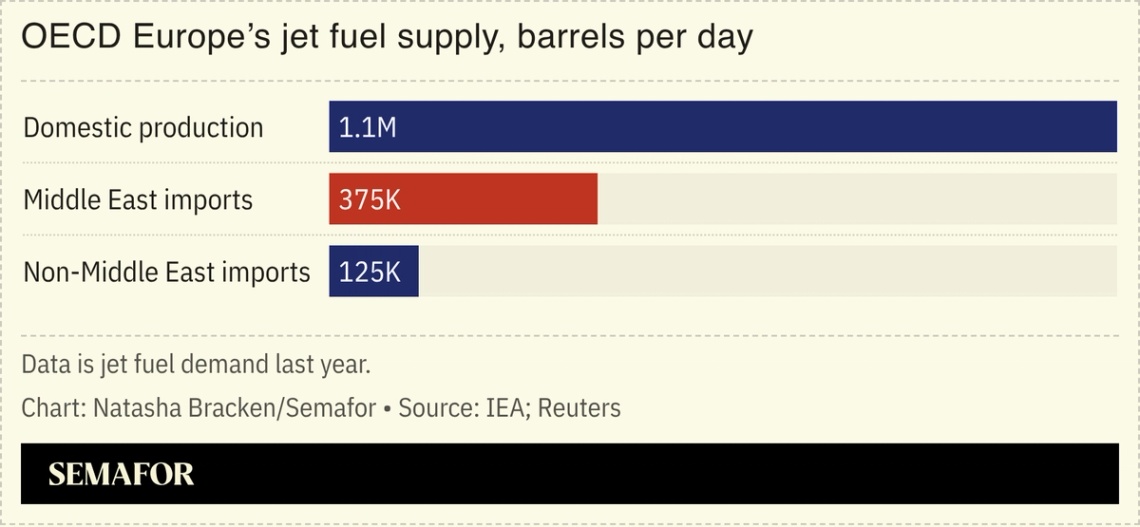
Fossil Fuels- Europe’s imports of jet fuel from the Middle East are about to dry up right before peak summer travel time.
 - Balkan countries signed major energy deals involving US firms in an effort to reduce the region’s reliance on Russian gas. Energy Secretary Chris Wright responded to the news by saying “this part of Europe is returning to common sense, the path to prosperity is more, not less energy.”
- BP signed a natural gas exploration agreement with Venezuela, the latest sign of surging investor appetite in the Latin American nation.
Tech- Chinese battery giant CATL signed its first deal to provide 60GWh of sodium-ion battery storage to a domestic manufacturer of power equipment.
- Britain’s energy grid boss urged developers to build data centers in Scotland, where a large number of wind farms provide abundant renewable energy, instead of building them in southeast England, where they would add stress to the energy system and push up costs.
Politics & PolicyMinerals & Mining- Chinese mining giant CMOC said it would invest $1.7 billion to develop a major gold mine in Ecuador, a deal that analysts said risks angering Washington.
EVs- Chinese EV giant BYD on Tuesday reported its lowest quarterly profit in three years as slumping demand at home weighed on sales.
|
|
|


