| | In this afternoon’s edition: The Pentagon mulls additional strikes on Iran as talks stall.͏ ͏ ͏ ͏ ͏ ͏ |
| |  | Washington, DC |  |
| |
|
 - Governor Powell
- More strikes on Iran?
- VRA decision fallout
- Sanders on AI
- Musk v. Altman
 Bill Ackman’s Pershing Square USA ▼ 16% on its first day of trading. |
|
Powell vows to stay at Fed as a governor |
 Kevin Lamarque/Reuters Kevin Lamarque/ReutersFederal Reserve Chair Jerome Powell plans to remain at the central bank as a governor when his term as chair ends May 15, and he promised Kevin Warsh he’ll “keep a low profile” once the nominee assumes the helm. Powell, whose term as governor ends in 2028, said he will stay until an investigation into the Fed’s ongoing renovations is “well and truly over,” warning that “these attacks are battering the institution.” When pressed on timing, Powell said: “I will leave when I think it’s appropriate to do so.” The Senate Banking Committee advanced Warsh’s nomination in its first-ever party-line vote on a Fed chair this morning, with all Democrats except Sen. Raphael Warnock, D-Ga., skipping the vote altogether. The Fed said this afternoon that it would leave interest rates unchanged, with three presidents dissenting on its bias toward future rate cuts. — Eleanor Mueller |
|
Pentagon considers ‘short and powerful’ strikes on Iran |
 Elizabeth Frantz/Reuters Elizabeth Frantz/ReutersThe White House strategy to get Iran back to the negotiating table could include a “short and powerful” wave of strikes, likely on infrastructure targets, Axios reports. At minimum, President Donald Trump is promising to continue the US military blockade of the Strait of Hormuz, which is crippling Iran’s economy. “The blockade is somewhat more effective than the bombing. They are choking like a stuffed pig,” Trump told Axios, likely referring to Iran’s unsold oil. Trump rejected Iran’s peace proposal today, which would have tabled nuclear discussions. Meanwhile, Defense Secretary Pete Hegseth appeared at a House hearing to sell a proposed $1.5 trillion defense budget. Tomorrow he’ll head to the Senate, where Republicans are getting antsy as the war approaches its 60th day — when the president’s unilateral authority expires, Semafor’s Burgess Everett, Nicholas Wu, and Eleanor Mueller report. |
|
Voting Rights Act decision fallout begins across South |
 Will Dunham/File Photo/Reuters Will Dunham/File Photo/ReutersThe Supreme Court’s conservative supermajority prevailed today in a 6-3 decision that limits Section 2 of the Voting Rights Act, shrinking the requirement for states to draw majority-minority congressional districts. Republicans across the South anticipated the decision, and changes are already in the works that could benefit the party in the midterms: In Louisiana, which brought the case, a district that was reformulated as a majority-Black seat in 2024 will be redrawn. In Florida, the GOP-controlled legislature approved a map today that nets four Republican seats, under guidance from Gov. Ron DeSantis’ office that the Fair Districts Amendment — passed by voters in 2010 to ban gerrymandering — would probably not hold up to legal scrutiny. In Mississippi, the Republican governor expected the decision and scheduled a special legislative session to redraw state Supreme Court lines. |
|
Sanders convenes US, Chinese scientists on AI |
 Annabelle Gordon/Reuters Annabelle Gordon/ReutersProgressive Sen. Bernie Sanders, I-Vt., is heading up a rare discussion with international scientists this evening to address the “existential threat” posed by artificial intelligence. And he’s shrugging off criticism from Treasury Secretary Scott Bessent and venture capitalist Marc Andreessen for including scientists from China. “If President Trump can sit down with [Chinese] President Xi [Jinping], I think leading scientists in America can sit down with leading scientists in China to discuss how in fact we can work together,” he told reporters, referencing Trump’s planned May trip to China. Sanders’ approach to the issue is notable when the rest of Washington is obsessed with US-China tech competition. But that competition “does not mean that there should not be international cooperation in trying to make sure that the end result of AI is one that is safe and not a threat to humanity,” he said. — Morgan Chalfant |
|
| |  | Reed Albergotti |
| |
 Carlos Barria/Gonzalo Fuentes/Reuters Carlos Barria/Gonzalo Fuentes/ReutersAn Oakland jury has begun the process of deciding who’s less popular: Elon Musk or Sam Altman. While Silicon Valley’s trial of the century is billed as being about nonprofit governance, this is about putting two of the world’s most controversial men on public trial and letting the lawyers have at it. Musk’s lawyers tell the story of a philanthropist whose charity was stolen and turned into a cash machine. OpenAI’s attorneys painted Altman as a humble startup founder who built OpenAI while Musk was absent. But there’s no important precedent to be decided: It’s not like there’s an epidemic of startups launching as nonprofits with secret plans to become trillion-dollar companies. And if the jury comes out against OpenAI, a judge is unlikely to shut down a company that has massive economic impact and is of strategic national interest. |
|
 Congress- Former Attorney General Pam Bondi has a new date to appear before the House Oversight Committee in its Jeffrey Epstein investigation — May 29. Democrats announced this morning they will try to hold her in contempt of Congress if she doesn’t appear.
Courts- Conservatives on the Supreme Court appeared sympathetic today to the Trump administration’s arguments that it can cancel temporary protections for Haitian and Syrian immigrants living legally in the United States.
Foreign Policy- President Trump said he discussed with Russia’s Vladimir Putin “a little bit of a ceasefire” in Ukraine.
- The US has indicted the governor of the Mexican state of Sinaloa, Rubén Rocha Moya, on charges of aiding cartels in smuggling drugs into the US. — NYT
- Germany is deepening its military ties with the US even as Chancellor Friedrich Merz and Trump feud. — Politico
Economy- The war in Iran has blunted a spring recovery in the housing market in most places. — NYT
- Brent crude oil crossed $120 a barrel today, after Axios reported President Trump plans to extend the blockade of the Strait of Hormuz until Iran agrees to a nuclear deal.
Media- Jimmy Kimmel mocked President Trump again in a monologue last night, despite the Federal Communications Commission initiating an early review of licenses held by parent company Disney, news first reported by Semafor.
Politics- The biggest Democratic-aligned super PAC is reserving $272 million in TV and digital ads, with 80% focused on Republican-held seats — a sign the committee is more optimistic than in 2025, when it spent half of its funds defending Democratic-held seats. — WSJ
- The company behind a 2,100-acre data center project in Virginia is abandoning it over local political opposition. — Bloomberg
WHCD- New surveillance footage from the night of the White House Correspondents’ Association dinner appears to show the exact moments an alleged gunman Cole Allen raised a shotgun at federal agents and a Secret Service agent fired on him. — WaPo
|
|
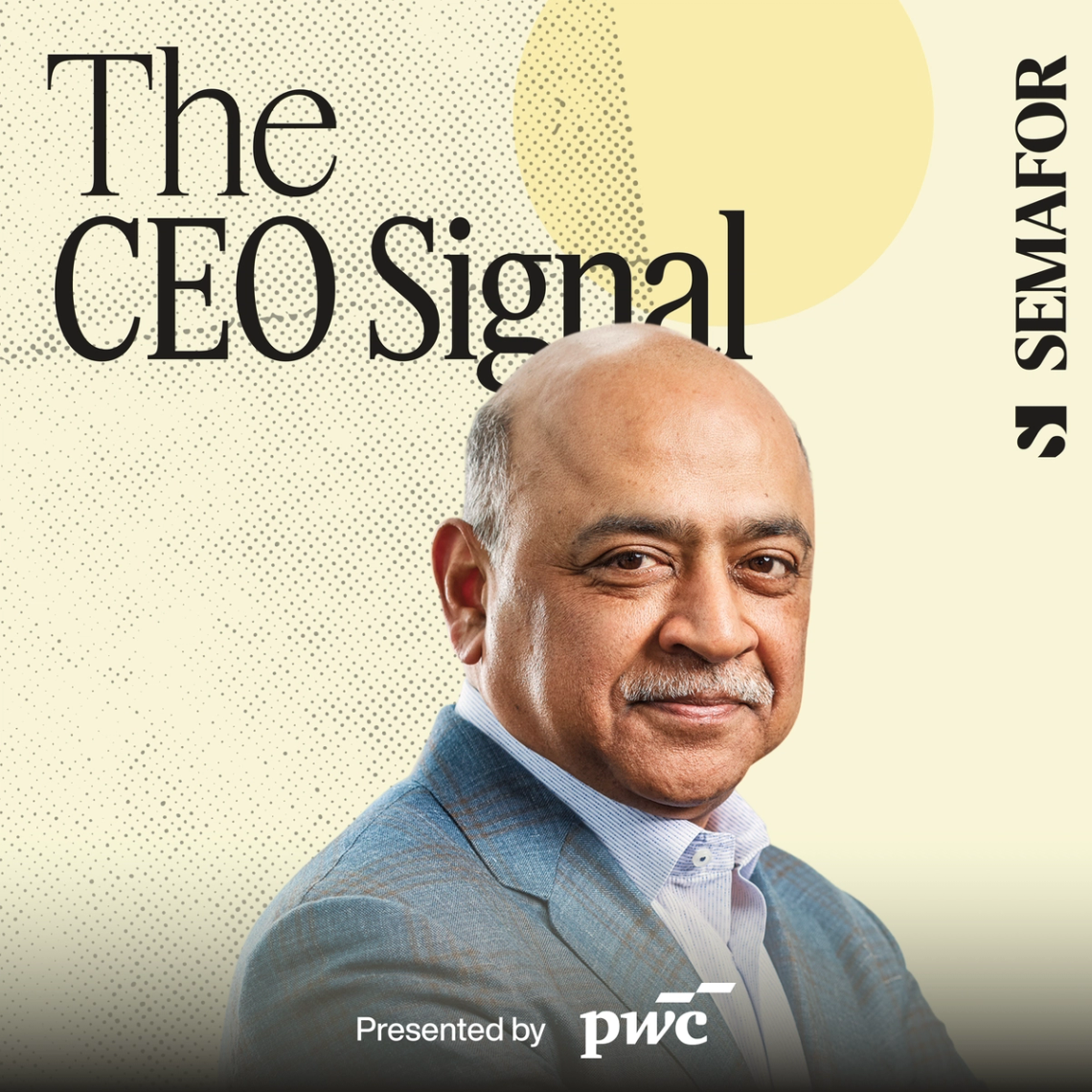 Most CEOs have not woken up to the fact that technology is as important as their balance sheet, IBM Chairman and CEO Arvind Krishna says in the latest episode of The CEO Signal. The first technologist to lead the company in its 115-year history unpacks how he approaches high-stakes decision-making in moments of rapid technological change — including the initially controversial acquisition of Red Hat that he thinks landed him his current role. Krishna makes the case for why CEOs need to place bold bets, even when the payoff won’t be quick. And he cautions his fellow CEOs not to wait to start working out what quantum computing will mean for their companies. “You’d better start thinking about it now,” he says. Listen to the latest episode of The CEO Signal now. |
|
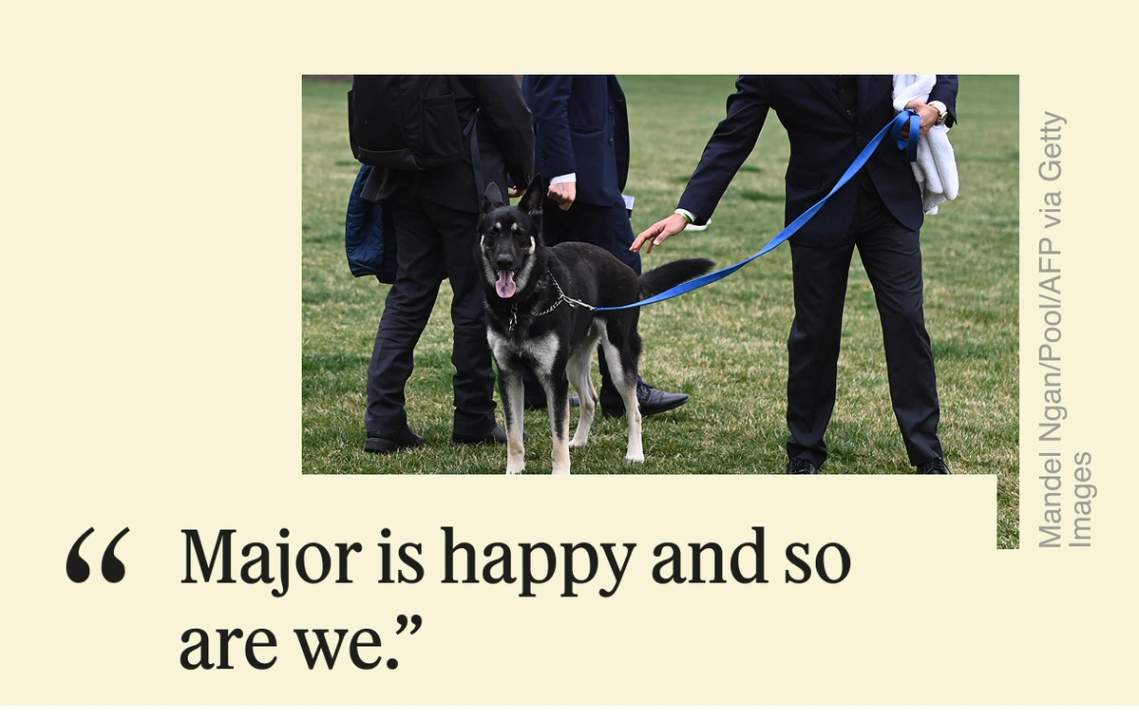 — Steve Patterson, a longtime friend of former President Joe Biden concludes in an essay on his experience taking the president’s “roguish” German shepherd, Major, to a hideaway hunting lodge in Panola County, Mississippi, far from a stressful life in the White House. |
|
|


