| | In this edition: Asahi-EABL deal in Kenya faces trouble, Ghana pulls out of a US aid deal, and South͏ ͏ ͏ ͏ ͏ ͏ |
| |  | Africa |  |
| |
|
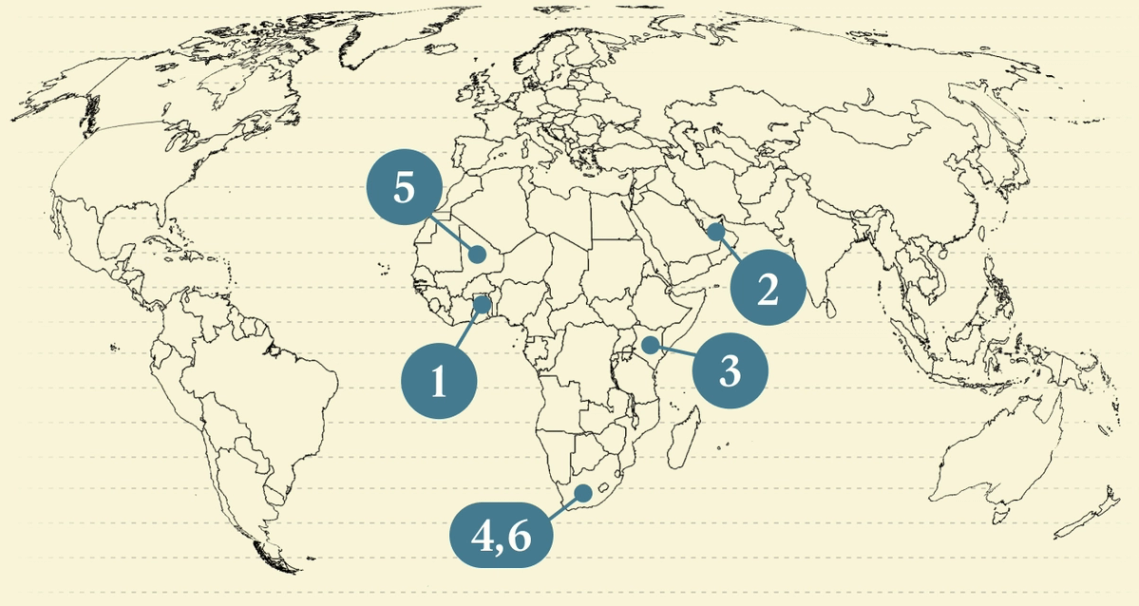 - Ghana leaves US aid deal
- Impact of UAE’s OPEC exit
- Asahi-EABL deal troubles
- Canal+ lists on JSE
- Mali leader’s address
- South Africa pulls AI policy
 A Sudanese cookbook is nominated for an award. |
|
 South Africa is heading into a high-stakes stretch where a series of interconnected, anti-corruption efforts will land almost on top of each other. For a country that insists it takes the law seriously, the coming weeks represent the closest thing to a live-fire test. For one, the Madlanga Commission — set up to investigate whether criminal syndicates and political actors have burrowed into the police, intelligence, and prosecutorial services — is due to submit its interim report at the end of May. The fallout from the public hearings has already produced institutional embarrassment: A police minister was suspended; a national force commissioner is facing criminal charges; procurement networks have been exposed as not just irregular, but organized-crime adjacent. The commission’s report goes to President Cyril Ramaphosa, who will have to decide if accountability still dies in the filing cabinet, as has been the case with past commissions. Then comes the Constitutional Court’s “Phala Phala” judgment, a ruling — expected within two weeks — that will clarify whether parliament acted lawfully when it declined to pursue an impeachment inquiry into Ramaphosa over the 2020 foreign currency theft at his farm. Though the court won’t decide guilt or innocence, its decision could cause a political earthquake that will destabilize the already fragile coalition government. Each process is significant on its own. Together, they amount to a full-scale credibility test of South Africa’s rule-of-law architecture. Ramaphosa had pledged to do away with the “state capture” that was rampant under his predecessor Jacob Zuma. But how much has really changed? Can the country’s institutions enforce rules even when the stakes are high and the names are powerful? The questions go to the heart of the frustration expressed by business leaders such as Sim Tshabalala, Standard Bank’s boss, who warned just this month at Semafor World Economy that South Africa’s anemic economic growth was down to the state’s basic inability to uphold the rule of law. South Africa says it wants to be a rules-based, reform-driven economy. The next few weeks will offer it a chance to make good on that promise — under pressure, and with investors the world over watching. |
|
Ghana ‘rejects’ US health deal |
 Baz Ratner/Reuters Baz Ratner/ReutersGhana reportedly rejected a health deal with the US over terms that would require sharing citizens’ personal data, the latest sign of mounting privacy concerns around the agreements being pursued by Washington. More than a dozen African countries — including Nigeria, Rwanda, and Uganda — have signed up to the Trump administration’s America First Global Health Strategy, which asks countries to share data about pathogens that could spark epidemics, as a condition of receiving the funding. But data-sharing concerns prompted Zimbabwe to abandon talks this year over a similar deal to Ghana’s, and led a Kenyan court to suspend implementation of an agreement between Washington and Nairobi. The head of the Africa Centres for Disease Control and Prevention has previously expressed “huge concerns” over data and pathogen-sharing between African countries and the US. Washington’s pursuit of deals comes after last year’s shuttering of the US Agency for International Development, which had disbursed $40 billion a year across 130 countries. USAID’s closure, along with aid budget cuts by other Western countries, has left some African governments struggling to cover health budget shortfalls. |
|
UAE’s OPEC exit could impact Africa |
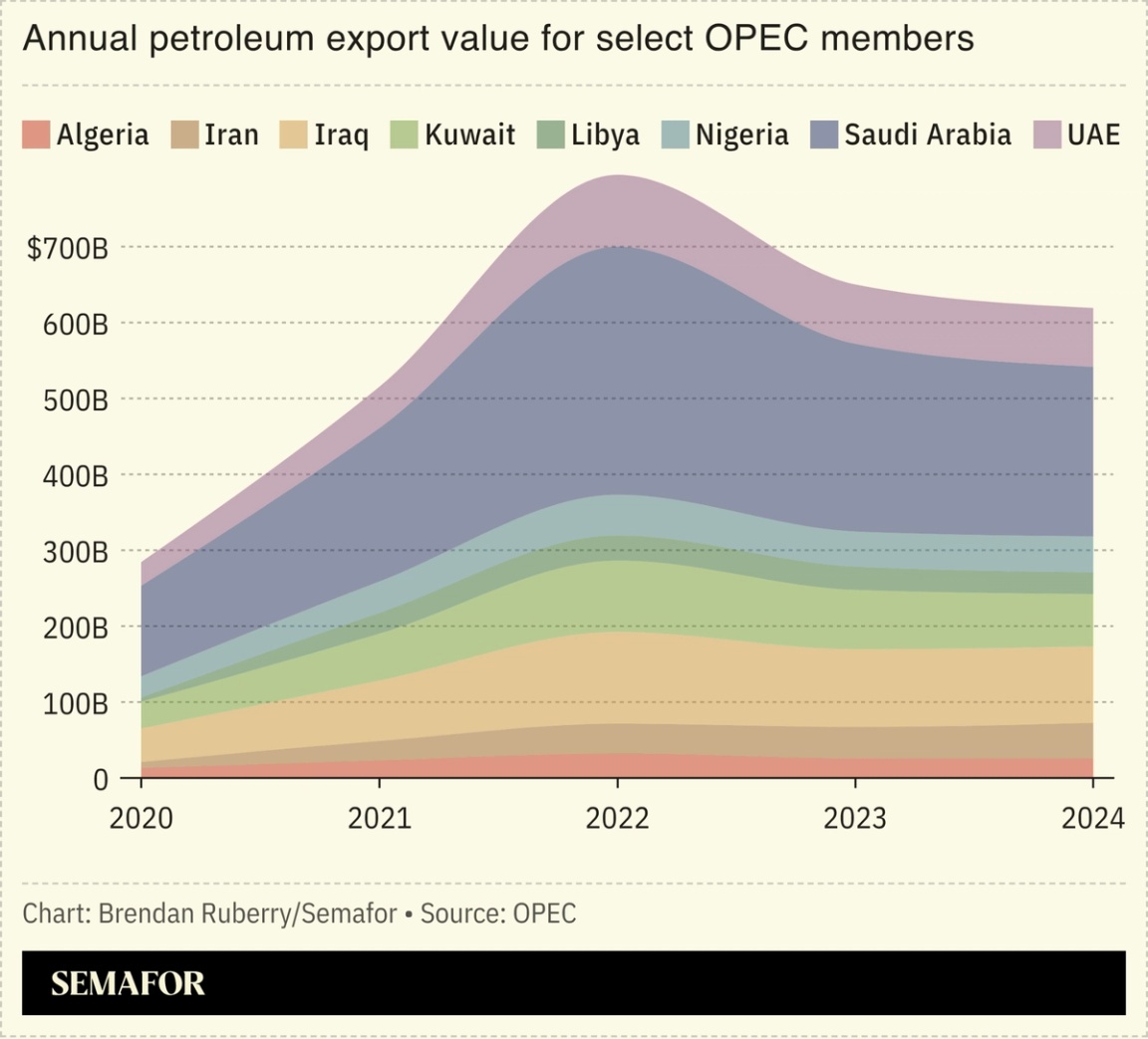 African oil producers face a more volatile future after the United Arab Emirates exits OPEC on May 1 — a move that could weaken a cartel many of them rely on to support prices. The immediate impact may be muted, but over time a looser OPEC — as well as a UAE that feels empowered to pump more crude — could erode the oil-price floor underpinning the economies of top African producers Nigeria and Angola. Smaller ones, such as Equatorial Guinea and South Sudan, are especially exposed, with limited buffers against sustained price declines. Algeria, which relies more on gas, and Libya, which is temporarily not subject to OPEC quotas, may prove more resilient, while Nigeria’s growing refining ambitions, with expansions at the Dangote Refinery, could offset some upstream losses. The exit of the UAE, the world’s third-largest oil producer, reflects a deep rift with Saudi Arabia over production limits. Once free of quota constraints, the Emirates can up its production by more than 40% to 5 million barrels per day, intensifying competition in markets where sub-Saharan Africa’s higher-cost producers are already vulnerable. — Yinka Adegoke |
|
Antitrust complaint threatens Asahi deal |
| |  | Martin K.N Siele |
| |
 A regulatory complaint filed by a Heineken subsidiary in recent weeks threatens to disrupt the $2.3 billion acquisition of Diageo’s East African Breweries Limited by Japan’s Asahi Group. Kenya Wine Agencies Limited accused EABL of abusing its dominant market position, and raised concerns that the acquisition could entrench alleged long-standing anti-competitive practices by the brewer, according to three people with direct knowledge of the complaint, including two working for KWAL. The people told Semafor that KWAL wants Kenya’s competition watchdog to review the deal’s potential effects on the market and conditions its approval on promoting fair competition for smaller players. The Asahi-Diageo deal is still pending regulatory approvals from regulators in Kenya as well as in Tanzania and Uganda. The transaction is expected to close in the second half of 2026. Neither KWAL nor EABL responded to requests for comment. |
|
Canal+ to list in South Africa |
 Abdul Saboor/Reuters Abdul Saboor/ReutersFrench entertainment group Canal+ plans to list on the Johannesburg Stock Exchange in June, a year after taking over Africa’s largest cable television company, MultiChoice. The Paris-based company, which acquired MultiChoice in a $1.9 billion deal, announced plans to shutter MultiChoice’s streaming video app Showmax last month in a bid to streamline content delivery across its over 30 sub-Saharan African markets. MultiChoice’s revenue fell 9% in the year ending in March 2025, and the company lost nearly 3 million subscribers over the financial years 2024 and 2025. But Canal+ said its public offer will “enhance the long-term liquidity” for the company. The JSE is Africa’s largest stock market, with a capitalization of more than $1 trillion. Canal+, which first went public on the London Stock Exchange, will join the nearly 200 non-financial private sector companies on the bourse, which is dominated by the mining and energy sectors. British American Tobacco, mining giant Glencore, and Nigerian oil company Oando are among 30 companies that count their presence on the JSE as a secondary listing. |
|
Mali leader speaks after attacks |
 Assimi Goita meets with Russian officials. Mali Presidency via Facebook/Handout via Reuters. Assimi Goita meets with Russian officials. Mali Presidency via Facebook/Handout via Reuters.The leader of Mali’s military government, Assimi Goita, made his first public appearance since a series of coordinated strikes by insurgents rocked the country over the weekend. An al-Qaida affiliate and an allied separatist group assassinated Mali’s defense minister and captured key territory in the country’s north during the attacks. Russia’s defense ministry said its paramilitary forces helped thwart a coup. During a televised address on Tuesday, Goita vowed to “neutralize” those responsible. The same day, an image circulated of him meeting Russia’s ambassador to Mali. The photo — which depicts him wearing a mask — “speaks louder than words” by highlighting the Malian regime’s reliance on Russian mercenaries, said an Al Jazeera correspondent. But the scale of the insurgent attack, one of the most successful against the regime since it rejected the support of French troops in favor of Russian help, also exposed cracks in Moscow’s power in Africa, noted The Guardian. |
|
South Africa withdraws AI policy |
 Lisi Niesner/Reuters Lisi Niesner/ReutersSouth Africa withdrew a draft artificial intelligence policy after discovering that several of its academic citations were apparently AI hallucinations, raising questions about the state’s ability to regulate the fast-growing technology. Communications Minister Solly Malatsi admitted that the department failed to spot the fabricated references before releasing the draft policy for public comment: “It’s a major embarrassment.” The withdrawn draft focused on setting up several new watchdogs to keep AI in check, including a dedicated commission and a special insurance fund to help people if the new technology caused harm. South Africa is not alone in being tripped up by AI-generated content slipping past human supervision. Other global institutions — from US courts to European universities — have been in similar situations. |
|
 Business & Macro |
|
|


