
|
 |
What’s Wrong With The SPLC Indictment
DOJ's indictment of the Southern Poverty Law Center is a critical moment in the administration's war on democracy
|
| |||||||||||||||


Civil rights organizations protect us when our rights are at risk. You, personally, may not need that today. But over the long stretch of time, it’s more than likely you, or someone you care about, will. It’s like the famous Martin Niemöller quote: “First they came for the socialists, and I did not speak out—because I was not a socialist. Then they came for the trade unionists, and I did not speak out—because I was not a trade unionist. Then they came for the Jews, and I did not speak out—because I was not a Jew.
The civil rights community stands up for the people “they come for.” That translates into real progress. People can live their lives, love who they want to, be paid fairly for their labor, have access to jobs, education, and travel, and vote. Civil rights groups are there when government isn’t. And that has never been more important than it is now.
That may explain why this administration has been so intent on disassembling civil society groups in America. They’ve come for government agencies, universities, and the law firms that pursued the same goals and, in many cases, worked in the trenches with civil rights groups. Now, having demonized DEI and turned the work of DOJ’s Civil Rights Division on its head—they’ve turned their focus to protecting Christians from discrimination and preventing eligible Americans from voting—the direct attack on the nation’s civil rights group is on, starting with the indictment filed this week against the Southern Poverty Law Center (SPLC) in Montgomery, Alabama.
Here’s the central thesis of the case: The Justice Department wants us to believe that one of the nation’s leading civil rights groups, the people who broke the Klan and continue to expose the white supremacist groups that crop up in its wake, is actually supporting racism and domestic terror, that they’re in fact responsible for whipping up the frenzy. This indictment tells a story, and the story is that SPLC engaged in material support for domestic terrorist groups.
The indictment rises or falls on one faulty premise: that you should look only at one piece of SPLC’s work to infiltrate these dangerous groups, not at their overall efforts to dismantle them. DOJ predicates its wire fraud charges, which we discussed here, on the assumption that people who donated to SPLC would be unhappy that their dollars were used to fund paid informants who obtained inside information about what white supremacists and other groups were up to.
DOJ uses tunnel vision to convince people—because that’s what this indictment is about, convincing the public before the case ever gets to trial—that the Southern Poverty Law Center is responsible for everything from the tragic violence at the Charlottesville “Unite The Right” Rally during Trump’s first term in office to, well, who knows what all. To hear acting AG Todd Blanche and FBI Director Kash Patel sell it in a very unusual press conference (that took place in Washington, D.C., without the U.S. Attorney who indicted the case in Montgomery, Alabama, present), SPLC is responsible for the rise of domestic violence in America today. It’s ironic coming from the administration of a man who solicited his followers to come to Washington, D.C., on January 6 to fight for him, which they did. It’s easy to see how problematic that approach will be when it comes to a jury, which must unanimously go along with this flawed argument in order to convict.
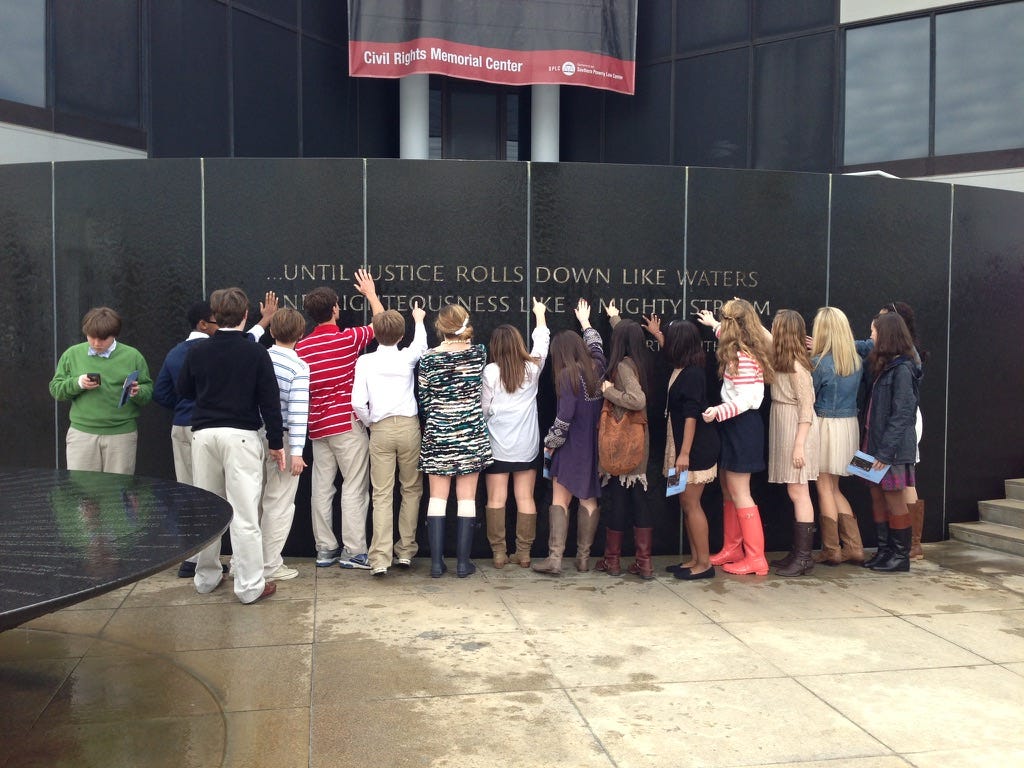
The information SPLC developed served its donors in more ways than might be immediately obvious. Dismantling hate groups is the organization’s explicit goal. It works toward it in multiple ways, including, very importantly, educating young people to “vaccinate” them against hate’s efforts to recruit them. Information is a form of sunlight, the best disinfectant, and SPLC uses it to great effect. DOJ will have to prove that donors were defrauded beyond a reasonable doubt.
 |
 |
Paragraph 9 in the indictment puts the internal contradiction in the indictment on full display:
“9. Between at least 2014 and 2023, the SPLC paid their Fs [the designation DOJ says is used for paid sources] in a clandestine manner. Doing so hid the fact that while the SPLC received donation money under the auspices that the funds would be used to ‘dismantle’ violent extremist groups, this donation money was, instead, being used, in part, by the SPLC to pay leaders and others within these same violent extremist groups. That money was then used for the benefit of the individuals as well as the violent extremist groups.”
If you want to learn about white supremacists, you have to go and talk to them. You can’t get the information you need from the outsiders. You need access to people who are not choirboys. SPLC obtained it. And then used it for precisely the purpose they told donors they were going to use it for.
So why bring an indictment like this at all? SPLC is not the only non-profit that uses informants, and some commentators have suggested that right-wing groups like Project Veritas could be accused of the same thing. Why single out SPLC? Why do it now? Why indict only the non-profit, not the individuals whose actions are discussed in the indictment in ways that suggest DOJ knows who they are?
That last point stands out, in light of a new directive at DOJ, issued just last month, directing prosecutors to hold individuals accountable, not just corporate entities, who, of course, cannot go to jail.