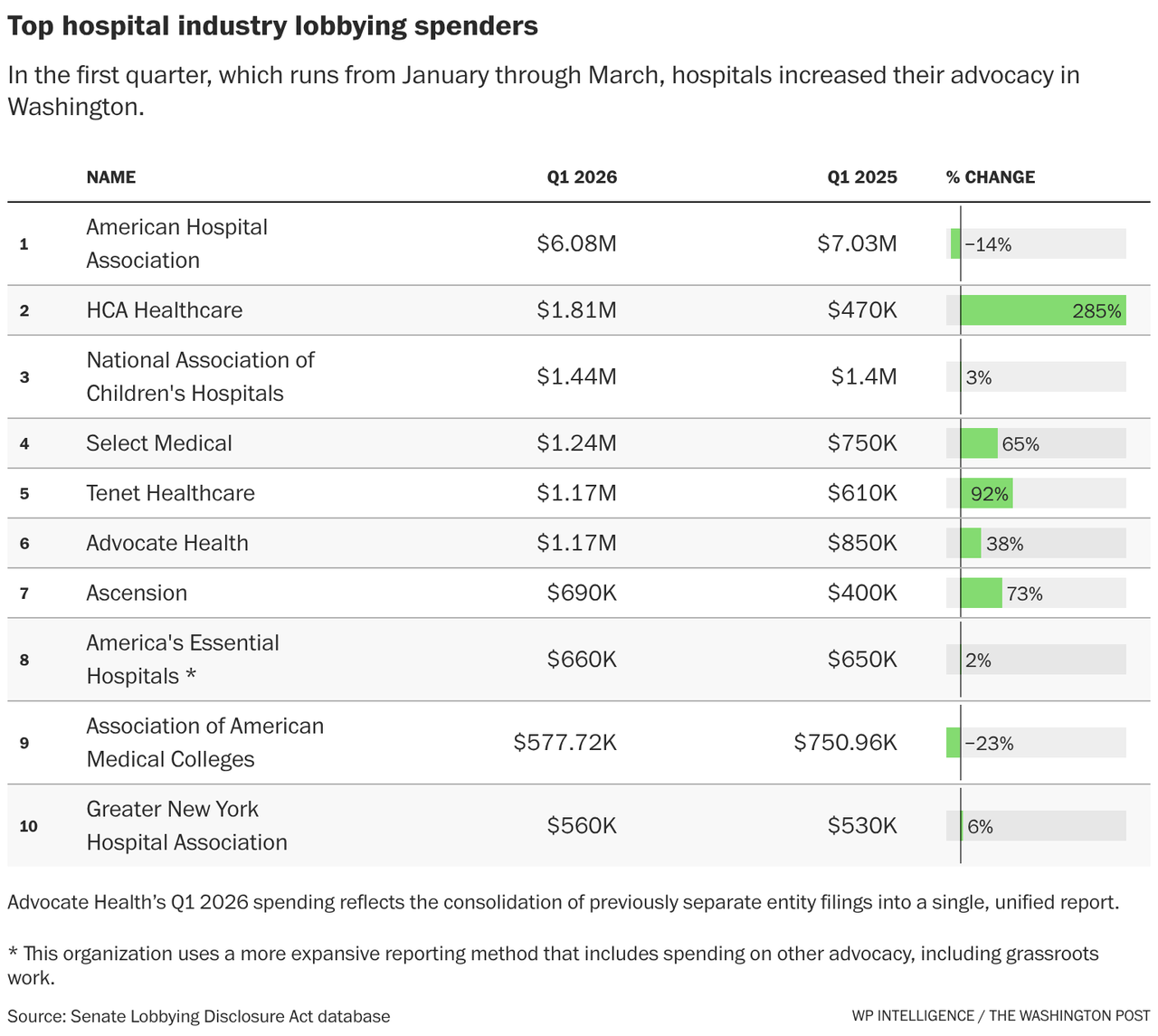
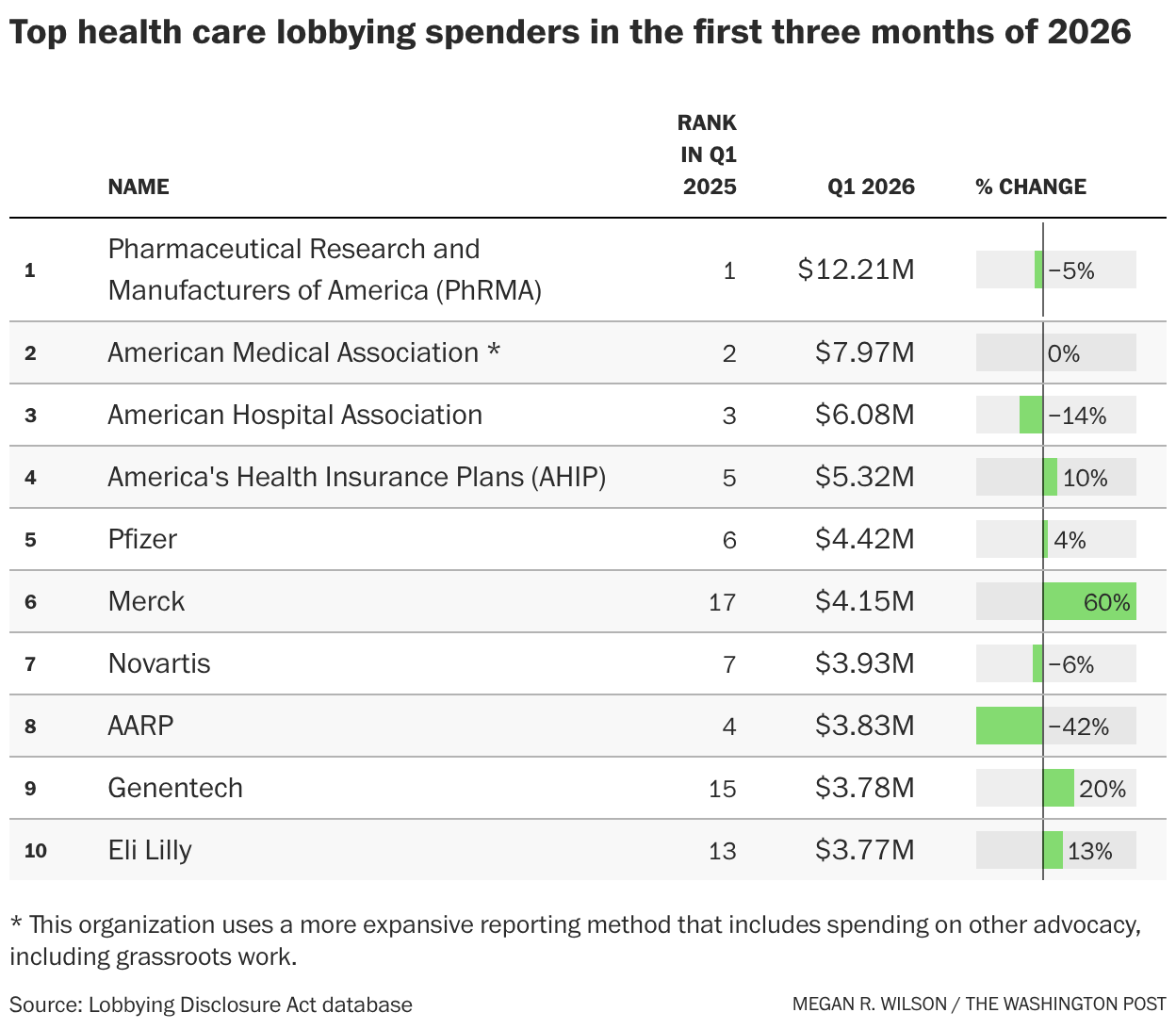
| |  | Health on the Hill | The House Ways and Means Committee is hauling health system CEOs to Capitol Hill next Tuesday to testify about the role hospitals play in the affordability equation. It was a major topic of discussion during the American Hospital Association’s annual meeting this week. The group is aiming to influence a debate that is increasingly adversarial — and comes with billions of dollars at stake. “We must step into a convening role to address affordability in a meaningful way,” Marc Boom, the president and chief executive of Houston Methodist and chair of AHA’s board, told a room of hospital executives at the Marriott Marquis in Washington, D.C. “Instead of pointing fingers, we all need to share accountability. We have to have honest, open collaboration,” he said. “I firmly believe that if hospitals and health systems do not lead this necessary conversation, no one will.” At the same time, Boom framed the current system as structurally broken — pointing to chronic government underpayment, high drug prices and insurer barriers. The American Hospital Association spent about $6 million on federal lobbying during the first three months of this year, a drop from the same period in 2025, according to disclosures. However, the figure is on par with what the group has historically spent during the first quarter in other years. Although the group declined to provide specifics on its spending, advocacy expenditures often increase during the first year of a new president’s term — the decline this year could represent a relative return to normal. For now. Other major hospitals – including What to watch: Next week’s congressional hearing will come after the Paragon Health Institute, an influential conservative think tank with ties to the Trump administration, released a report Wednesday that pushes back on hospital claims that they operate in financial uncertainty. Instead, Paragon’s John R. Graham argues that federal policies encourage overpayments to hospitals, reward inefficiency and shield facilities from competition in a way that results in higher prices for patients. Paragon is run by Brian Blase, who served as a White House official during President Donald Trump’s first term and played an impactful role in shaping the debate around the enhanced Obamacare tax credits in Congress. Drew Keyes, a senior health policy staffer for Speaker Mike Johnson (R-Louisiana) is a Paragon alum, as is Theo Merkel, who leads health policy at the White House’s Domestic Policy Council. The industry response: The American Hospital Association shot back, saying that the report “ignores or downplays fundamental truths.” This includes the rising cost of overhead for hospitals and the expense of treating a growing number of sicker patients, alongside challenges with payments involving both federal and commercial insurers. “The proposals it puts forth would only make it harder for hospitals and health systems, especially those in rural and underserved areas, to provide around-the-clock care and essential services to their patients and communities,” the spokesperson said. | 

_tstmp_1756933376-1920-1080.png)