| | In today’s edition: Wall Street elites flock to Abu Dhabi, and why Saudi Arabia has been able to wea͏ ͏ ͏ ͏ ͏ ͏ |
| |  Islamabad Islamabad |  Washington, DC Washington, DC | Riyadh |
 | Gulf |  |
| |
|
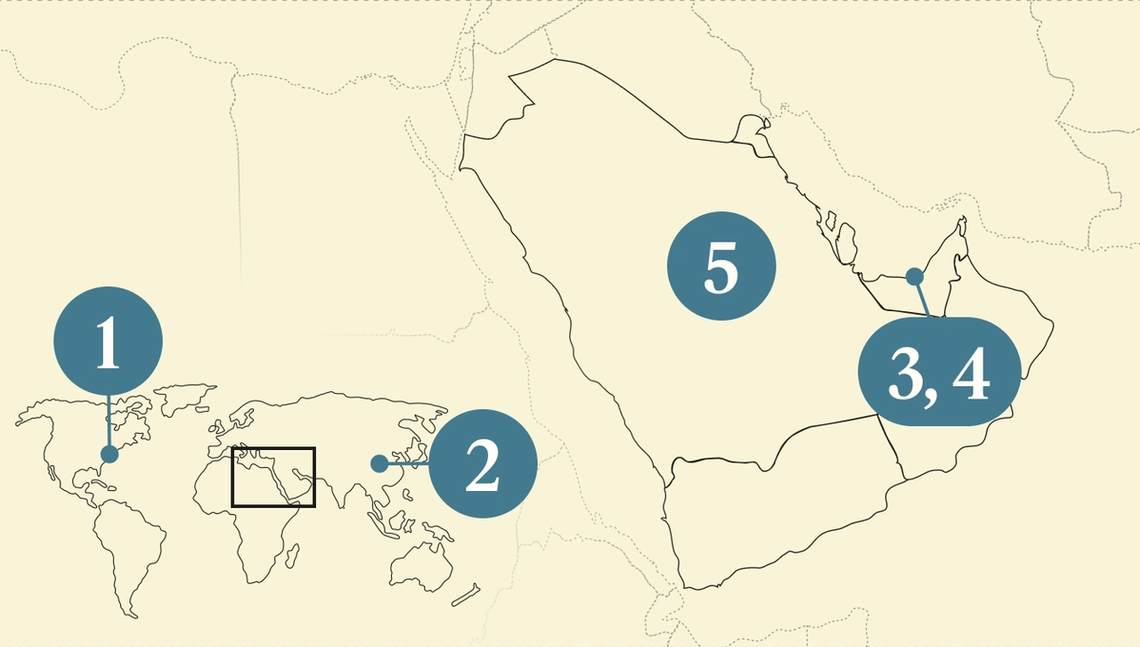 - Trump buys time on Iran
- Hormuz hits importers
- Abu Dhabi climate deals
- Finance elite in Abu Dhabi
- Saudi weathers the storm
 Researchers find a medical use for the mighty date. |
|
US and Iran enter a phoney war |
 Akhtar Soomro/Reuters Akhtar Soomro/ReutersIran and the US remain at war but, for now at least, are not fighting. US President Donald Trump unilaterally extended a truce that had been due to expire in the early hours of this morning, Tehran time. Iran has not publicly reciprocated, but neither side has yet launched fresh strikes, even as both prepare for further combat. Trump had earlier said he was “highly unlikely” to extend the ceasefire and was ready to resume military action, having dispatched a third aircraft carrier strike group to the region, but backed down after a request from mediator Pakistan. An adviser to the influential speaker of the Iranian parliament said the US extension was “a ploy to buy time for a surprise strike.” Iran’s Islamic Revolutionary Guard Corps said it is prepared to deliver its own “surprises.” While fighting remains on hold, so too does most traffic through the Strait of Hormuz. Trump has suggested economic pressure might force Tehran to cave. Iran’s economy is certainly hurting, with some 2 million layoffs because of the war, but there is no sign its political leaders are reconsidering their stance. |
|
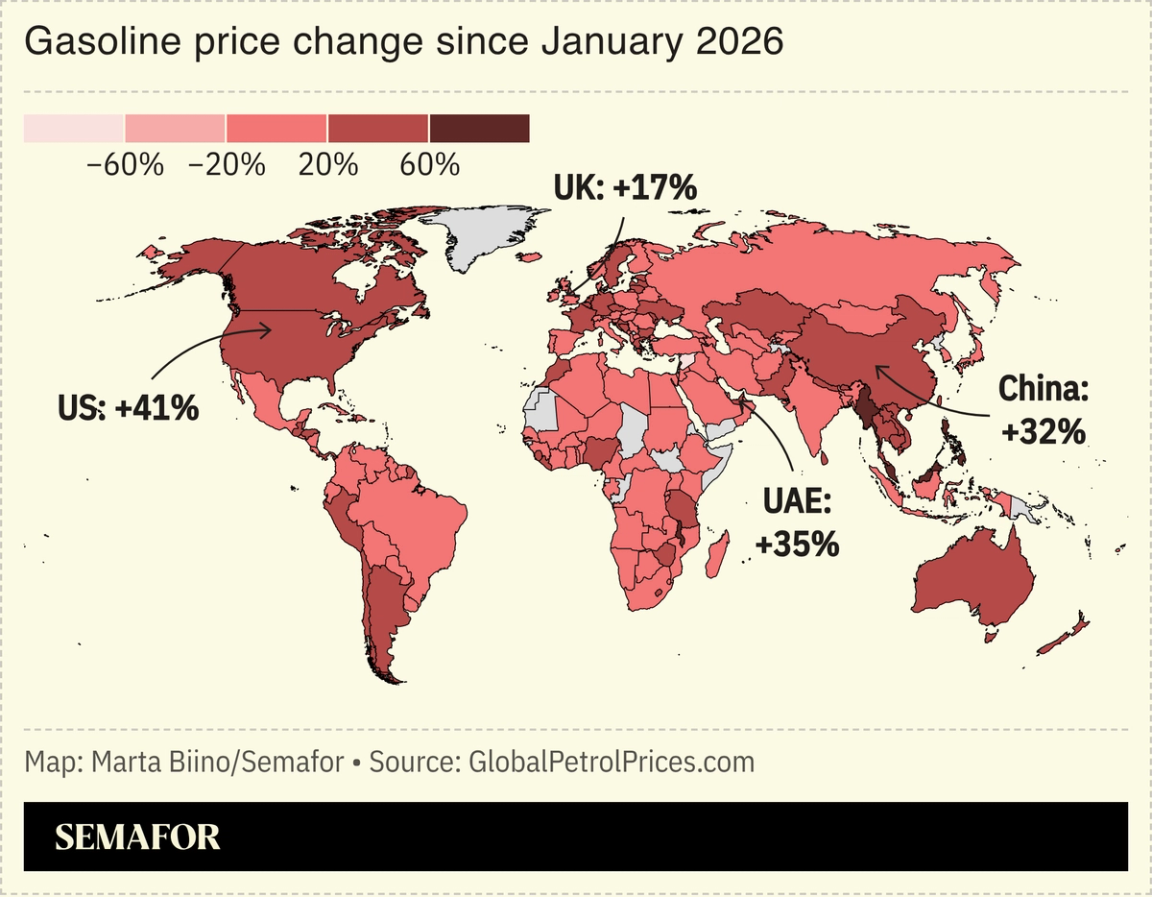 As the last ships carrying prewar Gulf oil and gas arrive at their destinations, the cushion that has shielded the world from a supply shock is disappearing. India and China have softened the blow through buying Russian crude already at sea, but their “luck is beginning to run out,” Bloomberg wrote. The amount of energy from Russia available for purchase is down from 20 million barrels in February to between three to five million barrels now, and US forces have tried to block Iranian oil exports, although some of its tankers are still getting through. Pakistan is among several countries across Asia feeling the squeeze. With Qatar halting LNG production, the country is facing power shortages and has begun shutting factories at night. Western economies are less exposed to disruption in the Strait of Hormuz, but they can’t escape tightening markets for long. The fuel shortages that have triggered widespread flight cancellations and fuel rationing in Asia are “a warning to Western markets that they are severely underpricing the risk” of disruption, Semafor’s energy editor argued. The International Energy Agency’s chief recently warned Europe could run out of jet fuel in “six weeks or so,” while Lufthansa said it would cancel 20,000 short-haul flights over the summer. |
|
ALTÉRRA, Masdar keep pace |
 Courtesy of Masdar Courtesy of MasdarAbu Dhabi made progress this week in its aim to be a central investor in the energy transition. Climate finance firm ALTÉRRA announced a partnership with KKR to meet growing demand around the world for clean power infrastructure. Separately, Masdar installed the first of 95 turbines at a $5.4 billion wind farm off the coast of Britain, developed with ScottishPower and Spain’s Iberdrola. The UK — which now produces so much renewable energy it is encouraging residents to use more electricity in order to balance the grid — is central to Masdar’s international expansion, anchoring both its offshore wind portfolio and a push into battery storage. — Kelsey Warner |
|
From Wall Street to Al Bateen |
 BlackRock’s Larry Fink with UAE President Sheikh Mohamed bin Zayed. Courtesy of Emirates News Agency. BlackRock’s Larry Fink with UAE President Sheikh Mohamed bin Zayed. Courtesy of Emirates News Agency.At Semafor World Economy in Washington, DC last week, some executives wondered aloud if it would be good to “show face” in Abu Dhabi, as one put it, to offer an explicit vote of confidence in the self-styled “capital of capital.” Orlando Bravo, founder of the investment firm Thoma Bravo, didn’t just wonder — he went. There, he met with Sheikh Tahnoon bin Zayed, who sits at the helm of much of the UAE capital’s $1.7 trillion in sovereign wealth, and discussed potential technology partnerships. BlackRock’s Larry Fink also took advantage of the ceasefire in the Iran war, and traveled to Abu Dhabi to meet with UAE President Sheikh Mohamed bin Zayed and Minister of Industry and Advanced Technology — and ADNOC CEO — Sultan Al Jaber. Brookfield and Goldman Sachs, too, have sent top brass since the war began (meetings that tend to be well covered by state media). As Semafor’s Matthew Martin wrote last month: “Gulf leaders and regulators have long memories. They remember who stands with them in times of trouble, and who ups sticks and leaves.” — Kelsey Warner |
|
View: Why Saudi is holding up |
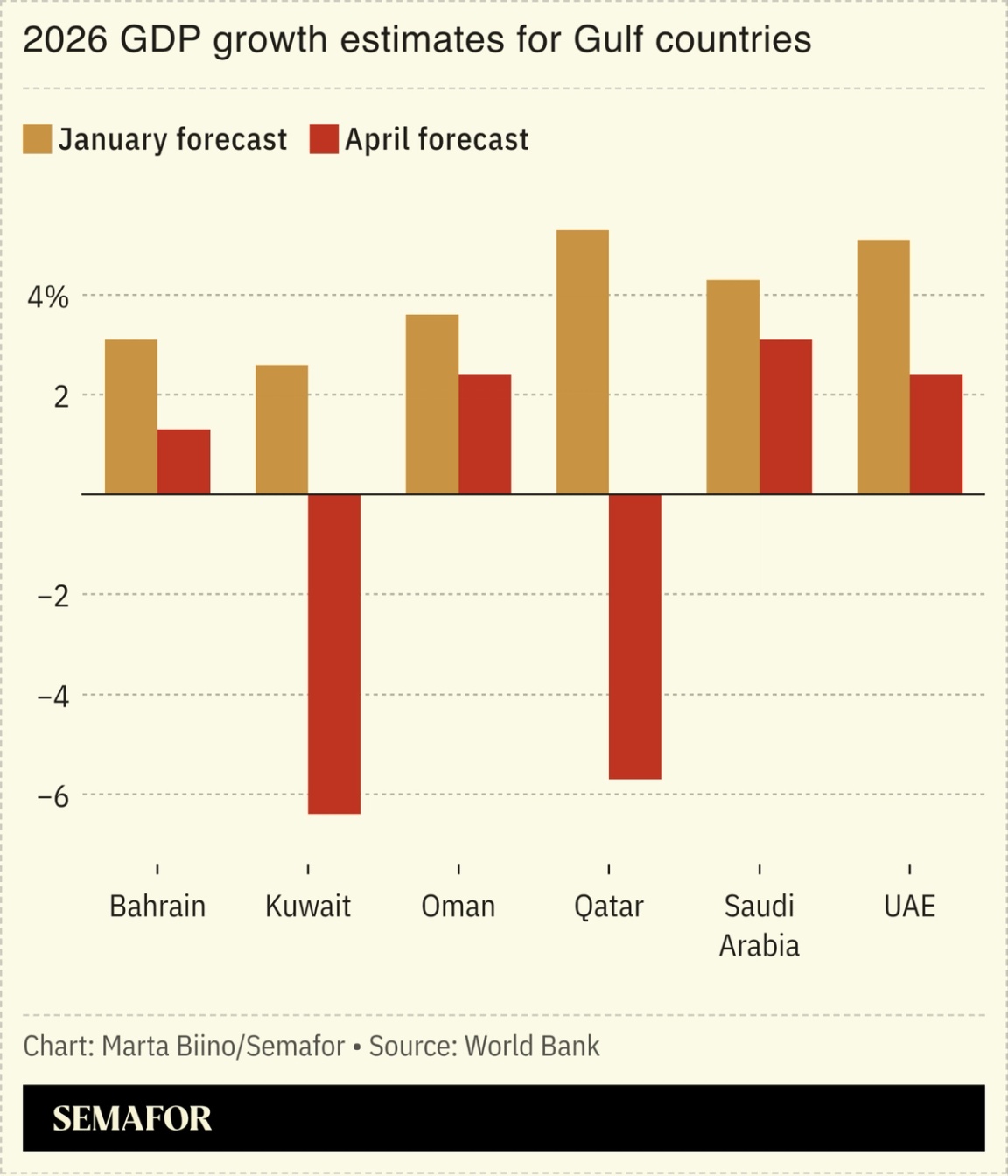 Riyadh does not feel like a capital in a crisis, thanks in part to a diversification strategy launched years before the war and Saudi Arabia’s ability to reroute crude through Red Sea ports, Alaa Shahine Salha, a senior executive at Saudi Research & Media Group, writes in a column for Semafor. Still, there are signs of strain that could deepen depending on the war’s intensity and duration. “An imminent resolution would leave Saudi Arabia well placed to recover faster than others, with the government having enough fiscal space to support non-oil activity if necessary,” Shahine Salha wrote. “The risk of escalation, however, hasn’t gone away. And neither have concerns that US President Donald Trump could end the war without breaking Iran’s hold on the Strait of Hormuz, or ensuring Tehran can no longer pose security threats to its neighbors.” |
|
 Art- The Iran war has shattered the idea of the Gulf as a low-tax, high-income paradise ripe for art world conquest, but the market is buoyant elsewhere. Art Dubai is postponed and Frieze Abu Dhabi is in doubt, but global auction sales just had their strongest first quarter since 2016. — The Art Newspaper
Finance- Saudi Arabia’s biggest banks reported rising profits in the first quarter on strong lending growth and interest income. Saudi National Bank, one of the kingdom’s largest lenders, also benefited from a significant reversal of impairment charges. — Arab News
- Saudi Arabia’s Public Investment Fund is an anchor investor in a new State Street vehicle which will target companies listed in the kingdom — part of PIF’s efforts to attract more international investment to the kingdom’s capital market.
Industry- The UAE’s Emirates Global Aluminium plans to acquire an 80% stake in Italian aluminum recycler Eco Green. No value for the deal has been announced. — AGBI
Real Estate- Bahrain-based Investcorp, one of the biggest independent asset managers in the Gulf, invested $200 million in a US real estate portfolio which includes multifamily and senior living communities across California, New Jersey, and New York. The deal is the latest targeting senior living by the Bahraini firm, as it looks to back demographic trends in the US.
|
|
 Ahmed Yosri/Reuters Ahmed Yosri/ReutersResearchers in Saudi Arabia have figured out how to turn date pits into artificial bones. Sali Al-Harbi, a young researcher from Al Qassim, the kingdom’s date heartland, discovered that the pits share enough in common with human bone — in terms of calcium, structure, and density — that they could plausibly be used in fracture repair and reconstruction. This is part of a broader push by the kingdom to build a homegrown biomedical research industry, with R&D spending jumping 30% to 25 billion riyals ($7.86 billion) in 2024. To test the date idea, Al-Harbi tried it on rabbits, and early results were encouraging. While the study didn’t disclose animal safety details, it’s safe to assume that some bunnies were hurt in the process. |
|
| |  | | | You’re receiving this email because you signed up for briefings from Semafor. |
|


