| |  | | | | |  | By Megan R. Wilson | Did someone forward this newsletter to you? Sign up here to get it in your inbox. In today’s issue: - Behind the tension between the Trump administration’s deregulatory push and the Make America Healthy Again movement
- A look at the Capitol Hill agenda as Congress returns from spring break
- Inside the latest WP Intelligence briefing on the Trump administration’s efforts to overhaul the Affordable Care Act
Happy Monday, and welcome back to the Health Brief newsletter. It’s not often that something not happening is a story (because, yawn) — but that’s been the case lately, as the Trump administration grapples with how to avert a schism with Make America Healthy Again movement advocates who believe it hasn’t gone far enough on its key policy priorities. Last week, WaPo’s Lena H. Sun filed a report about the Centers for Disease Control and Prevention delaying the release of data showing benefits of the covid-19 vaccine, which prompted concerns that there could be political reasons for holding the information. Now, some of my other colleagues in The Washington Post newsroom have fresh reporting about the rare exception to the Trump administration’s blitz on environmental regulations. Let’s get into it. And don’t forget to send your thoughts, in addition to any health scoops and tips, to megan.wilson@washpost.com. If you prefer to message me securely, I’m also on Signal at megan.434. This newsletter is published by WP Intelligence, The Washington Post’s subscription service for professionals that provides business, policy and thought leaders with actionable insights. WP Intelligence operates independently from The Washington Post newsroom. Learn more about WP Intelligence. | 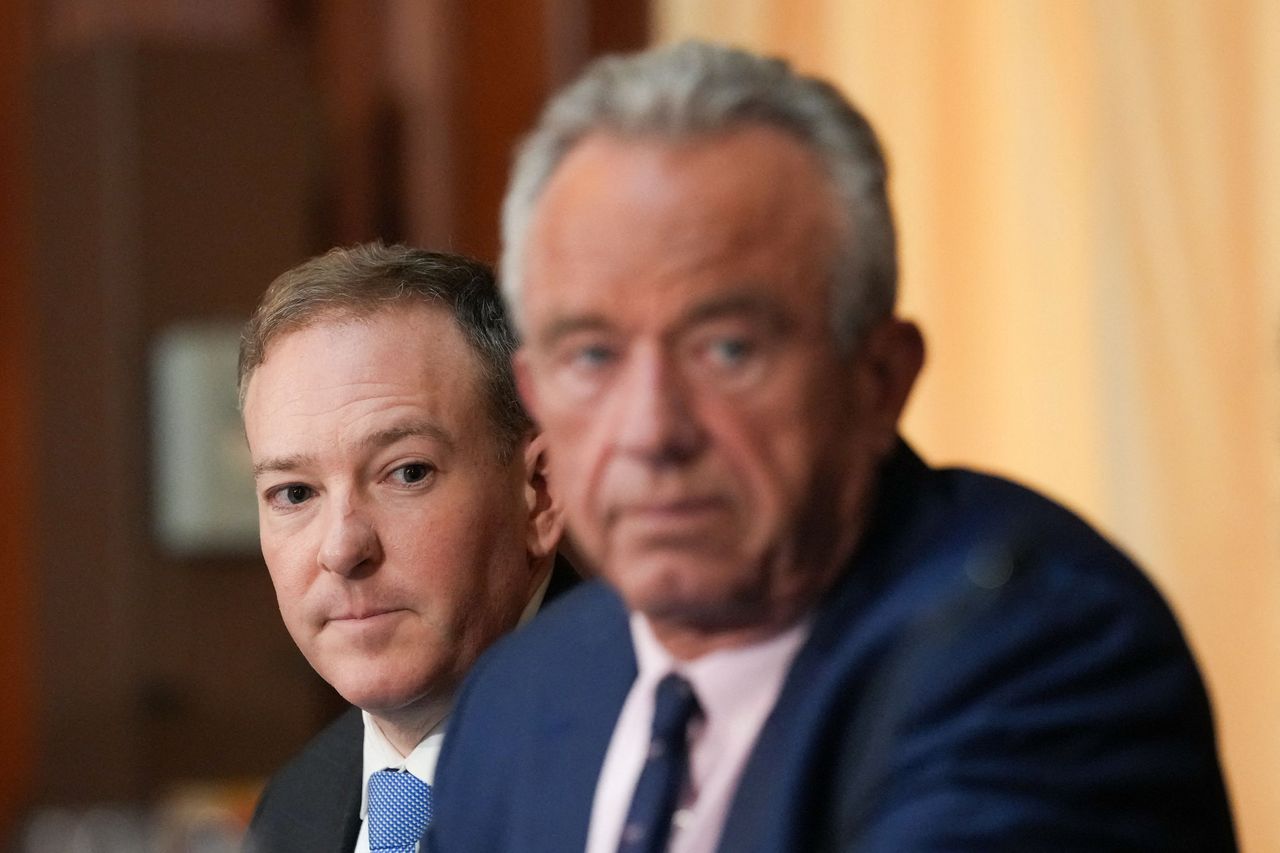 | | Environmental Protection Agency Administrator Lee Zeldin and Health Secretary Robert F. Kennedy Jr. at an event earlier this month. (Ken Cedeno/Reuters) | | | |  | The Lead Brief | Fearing backlash from the Make America Great Again movement, the Environmental Protection Agency is delaying action on so-called “forever chemicals,” including approvals of new PFAS chemicals and expanded uses of existing ones, according to my WaPo colleagues Jake Spring and Lauren Weber. PFAS, widely used in products such as nonstick pans and firefighting foam, are under intense scrutiny due to some studies that demonstrate their link to cancer, immune dysfunction and other health problems. The administration has faced pushback from the MAHA movement, championed by Health Secretary Robert F. Kennedy Jr., over some of its environmental initiatives. The most notable fallout came following a White House executive order calling glyphosate crucial to the country’s “national security and defense.” That’s the active ingredient in Roundup, a weedkiller that has faced lawsuits alleging the products cause cancer. In recent months, my colleagues report, EPA Administrator Lee Zeldin has sought to court Kennedy and the movement he helped establish. What’s happening with PFAS: - Zeldin, who has overseen what the EPA called the “the largest deregulatory action in U.S. history,” previously vowed to clear the backlog on PFAS approvals.
- Instead, the EPA is sitting on a slate of pending decisions concerning roughly a dozen new PFAS submissions and rules governing dozens more already on the market, with a backlog dating back to the Biden administration.
- Typically handled by career staff as routine matters, these decisions are now being elevated to Zeldin’s office, signaling heightened political sensitivity.
The EPA didn’t answer questions from my colleagues about the potential backlog and whether a consideration of MAHA activism played a role in delays — but agency spokesperson Mike Bastasch emphasized that its regulatory decisions “are guided by the best available science, the law, and President [Donald] Trump’s agenda.” “We take the feedback we receive seriously and want to ensure the fullest universe of science and data informs our decisions,” Bastasch told my colleagues in a statement. Why it matters: The backlog puts the administration in a bind: It is simultaneously pursuing broad environmental deregulation while also trying to stay aligned with MAHA activists focused on reducing chemical exposures. The chemical industry argues that the delays could have negative impacts, including slowing innovation and supply chain disruptions. But the Trump administration is trying to mend fences with what it views as an important voting bloc ahead of November’s midterm elections, inviting top MAHA advocates to a listening session last week — on topics including pesticides — that featured top White House policy advisers and a brief meeting with Trump. Read the full story: “Trump administration’s rush to roll back environmental rules hits a MAHA wall.” Zeldin and Kennedy have also teamed up to spearhead an effort to study how microplastics impact peoples’ health and potentially regulate the contaminants, another MAHA priority. But some environmental groups argue that the proposals don’t go far enough. | | | | | | Health on the Hill | Much of the activity happening on Capitol Hill over the next couple of weeks will revolve around Kennedy answering questions about his first year atop the Department of Health and Human Services and the Trump administration’s request to cut billions from federal health programs. → A potential talking point: The White House plans to send Congress a report Monday to make the case that the administration is executing a strategy to alleviate the high of health care and increase competition. The annual document, called the Economic Report of the President, doesn’t contain any new policy ideas, but my WaPo colleague Dan Diamond got a preview and outlines its significance. Essentially, it’s meant to serve as a rallying call for the administration’s initiatives before the pivotal midterms. Here’s what’s going on in Congress this week: | | | | | | WP Intel File | The Trump administration’s proposed changes to the insurance market for Americans who purchase their own health insurance could draw legal challenges once the final rule is released, according to Katie Keith, director of the Center for Health Policy and the Law at Georgetown Law. → On Friday, during the latest WP Intelligence briefing, Keith shared her insights regarding the administration’s proposed overhaul of the Affordable Care Act with WP Intelligence’s lead health care analyst, Rebecca Adams, and Brian Blase, the president of the Paragon Health Institute. Did you miss it? Catch up by watching the briefing here. And make sure to get read-in on all the details of the proposal, as outlined by Rebecca in a recent report. - State of play: The final rule landed at the White House’s Office of Management and Budget for review earlier this month. Although there is not a specific timeline to complete the review, experts are anticipating it to come any day now. There are major consequences for insurers, hospitals and consumers set to take effect as soon as 2027.
→ It’s framed as a way to help consumers find cheaper coverage options as enhanced federal subsidies that made Obamacare plans more affordable expired absent congressional action. - Under the radar: Some of the top-line parts of the proposal include expanding access to high-deductible catastrophic plans and so-called nonnetwork plans. But the administration also wants to let consumers purchase some plans for as long as a decade, something proponents including Blase said “properly aligns the incentives to focus on cost-effective preventive services as well as how to incentivize good health behaviors.”
“If an insurer only has an enrollee for a year, they have very little incentive to engage in cost-preventive health care,” he said. “I love the approach and creativity of thinking about a long-term health insurance contract.” But critics of the proposal, including Keith, worry that it could leave consumers stuck in plans with high out-of-pocket costs. - What’s next: If the proposals are finalized, there could be lawsuits. Keith said there are questions about whether the proposed changes to broaden eligibility for catastrophic health plans to most consumers, including the multiyear plan options, violate the Affordable Care Act.
“Brian’s word was ‘creative,’ I think the agency is being very creative about what it’s trying to do,” Keith said. “At the same time, you have the statute that’s been around for 16 years, and you can’t run roughshod over some of the restrictions. Catastrophic plans themselves were meant to be a fail-safe. There was very limited eligibility for a reason.” “And so there’s some real questions about if you can stretch the statute in that way,” she added. - What to watch: The Paragon Health Institute, a conservative health policy think tank, is about to update its blockbuster analysis that it said illustrated rampant fraud and fake enrollees. Although some, including Keith, have said that the report’s methodology is flawed, and overestimates the amount of fraud in the program, the report played a major role in the GOP argument not to extend the enhanced subsidies. Blase said Paragon would be putting out an updated version in the next month or two.
| | | | | | | | | | | | |


_tstmp_1756933376-1920-1080.png)

_tstmp_1776111104-1280-0.png)