Good morning.
Fortune reporter and editor Amanda Gerut here, filling in for Alyson. In Silicon Valley, friendships can be worth billions. The question is what happens when legal problems put that friendship under scrutiny.
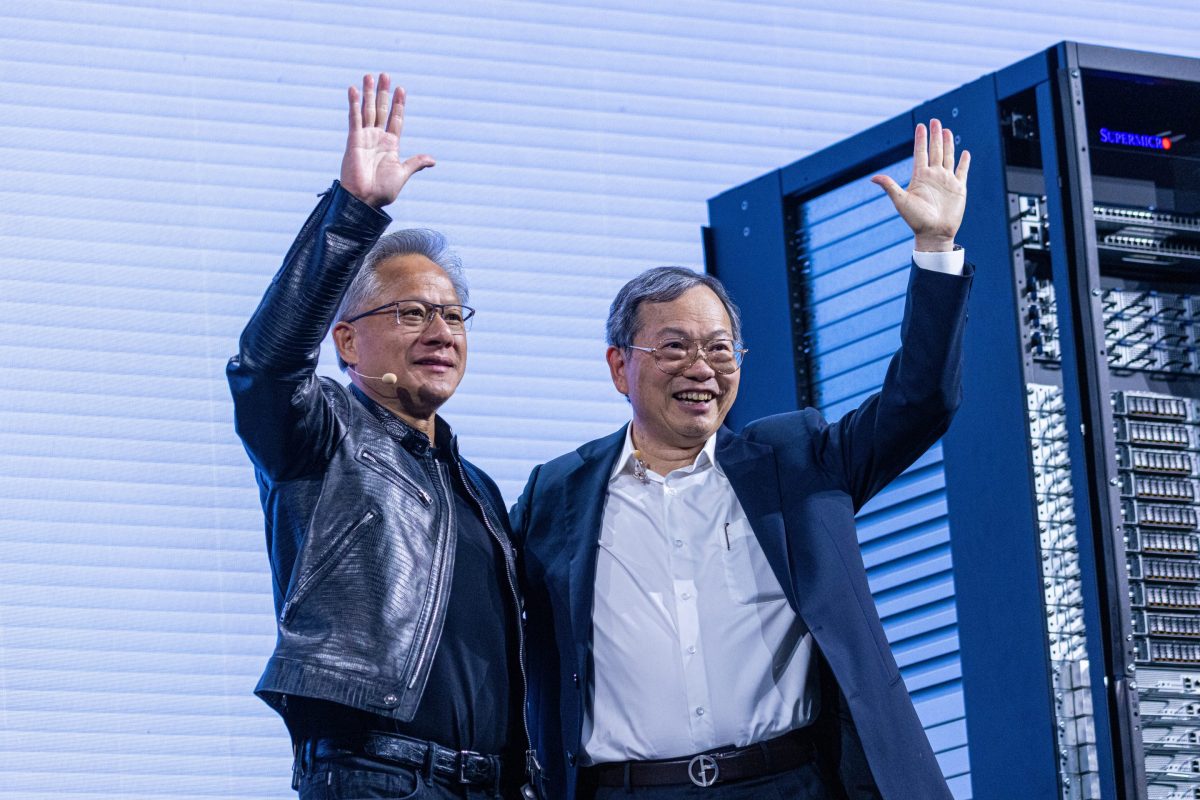
Jensen Huang, CEO of Nvidia (No. 31), and Charles Liang, CEO of Supermicro (No. 292), each founded their companies in 1993, they work at their respective headquarters about 15 minutes apart, and both are from Taiwan. They’ve co-headlined keynotes in Taipei as old friends, slipping in and out of English, Mandarin, and Taiwanese in their banter. As Nvidia rose to an extraordinary $4 trillion valuation, Supermicro was soaring as well, collecting customers’ purchase orders, building custom chassis for Nvidia equipment, and quickly pivoting whenever Nvidia updated its chipsets. Huang has called himself Liang’s “best sales guy,” and crowds in Taiwan have loved it.
On March 19, federal prosecutors charged Yih-Shyan “Wally” Liaw, cofounder of Supermicro, with allegedly smuggling $2.5 billion in servers packed with Nvidia chips to China through a Southeast Asian front company. Washington had explicitly banned the Nvidia GPUs from export, and Liaw has been accused of orchestrating the routing of thousands of servers in violation of the export controls. He has pleaded not guilty and is awaiting trial.
Liaw’s arrest has pushed the celebrated 30-year friendship between Huang and Liang into the spotlight—along with the partnership between Nvidia and Supermicro.
That spotlight could quickly become uncomfortable, because Supermicro has a dark side to its history, as Fortune’s reporting shows. In 2006, the company pleaded guilty to illegally shipping servers to Iran on six separate occasions, routing the hardware through a distributor in Dubai to obscure the real buyers. Supermicro was delisted from Nasdaq in 2018 after accounting irregularities, and relisted in 2020 after settling with the SEC for $17.5 million. It then watched its auditor—Ernst & Young—resign mid-engagement in 2024, saying it couldn’t rely on management. Supermicro’s board conducted an investigation in 2024 and found “no evidence of fraud or misconduct.” However, prosecutors now allege Liaw’s smuggling scheme was ongoing during that same window of time.
Through it all, Supermicro has been insulated from financial consequences because of its proximity to the most coveted chips in the world, but Liaw’s arrest means a new shakeup may be unavoidable. Fortune has been tracking the full arc of the relationships at stake. Read the coverage here.—Amanda Gerut, reporter and editor
Follow Alyson on X, LinkedIn, TikTok, Instagram, and the Titans and Disruptors vodcast.