|
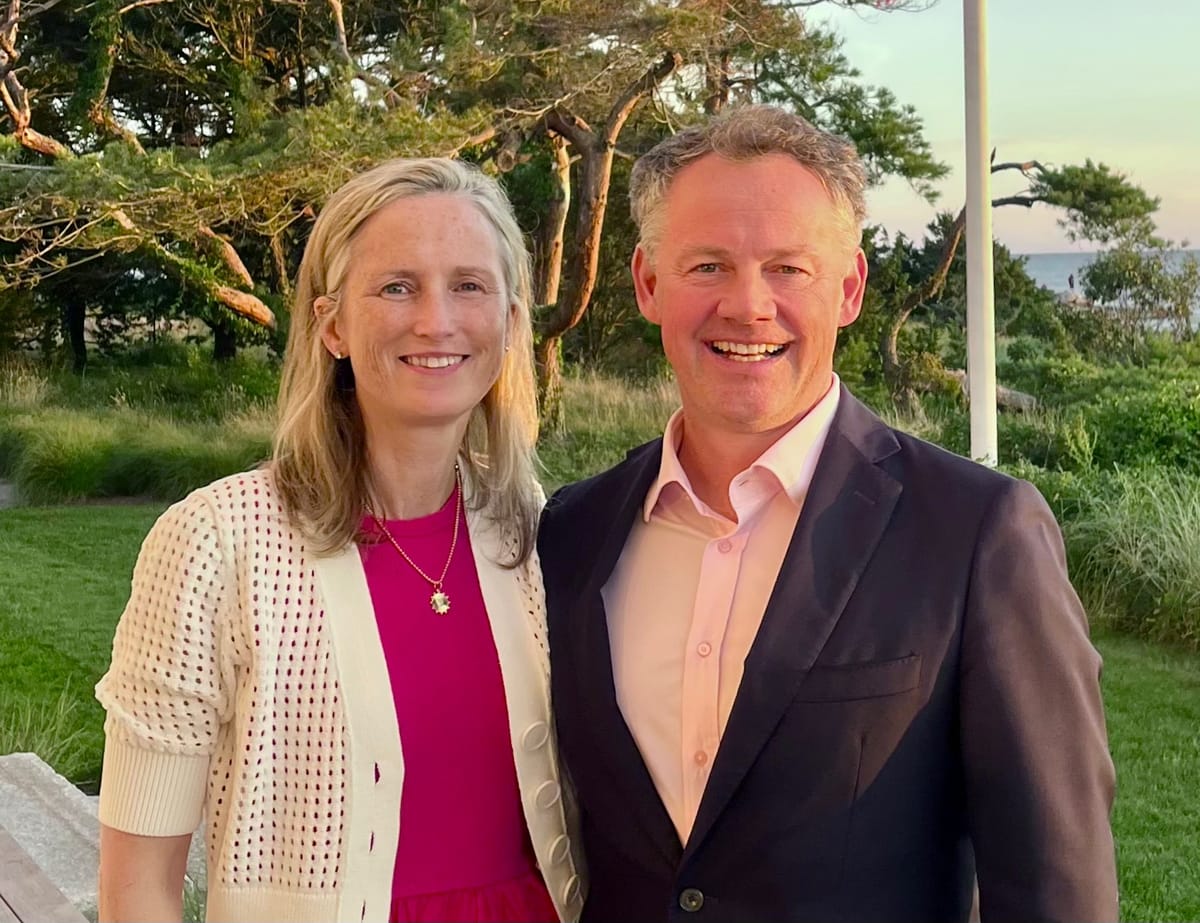
Brian Shortsleeve, a self-described “Massachusetts guy, born and bred,” is a business leader, Marine Corps veteran, and public servant. In 2015, the Massachusetts Bay Transportation Authority (MBTA) faced financial and operational collapse. Recruited by Governor Charlie Baker to step in, Shortsleeve recalls the severity of the situation plainly: “the patient was on the operating room table, bleeding out.” The agency was grappling with a $300 million deficit, leadership instability, and widespread system failures. Shortsleeve approached the challenge with a private-sector mindset, focusing on both cost control and revenue growth. “There are only two ways to close a deficit,” he said. “You've got to get costs under control, or you've got to drive revenue.” What followed was a methodical overhaul. He audited expenses line by line, uncovering inefficiencies that had gone unchecked for years. “We had a $3.2 million rise in wireless cell phone bills,” he said. The discovery led to a deeper investigation, revealing that “a third of those phones hadn't been used, seen, or heard from in over two years,” said Shortsleeve. He also targeted runaway overtime costs. “We had a $200,000 a day overtime bill,” he noted, adding that oversight was virtually nonexistent. Within weeks of implementing accountability measures, those costs were cut in half. By the end of his two-year tenure, the MBTA had achieved its first balanced budget in more than 15 years, reduced operating expenses, and restored key infrastructure projects. Shortsleeve grew up in Belmont, Massachusetts, in a tight-knit, hardworking household as the oldest of four children, with three younger sisters. He spent part of his childhood living near Northeastern University while his parents worked and attended school, before they settled in Belmont, where he remained through high school. “I had two extremely hard-working parents,” he said, describing a family where education and perseverance were paramount. His father pursued a demanding career in medicine, while his mother broke barriers as “one of the first women to graduate from BC Law School in the '70s.” Their example left a lasting impression. Raised Catholic, Shortsleeve describes a strong moral foundation shaped by both his parents and his extended family. “Family was really central to everything that we did,” he said. His grandfather, a World War II Navy veteran, played an especially pivotal role. “He used to take me to see the ship where he spent World War II on,” Shortsleeve said, recalling visits that sparked his early desire for service. “I always wanted to serve my country,” he added. He attended Harvard College on an ROTC scholarship, a decision that set him apart from many of his peers. “When I got out of college, a lot of my friends went off to work in consulting firms and investment banks, but I joined the Marine Corps,” he said. He served four years as an officer, including deployments in Bosnia and the Persian Gulf. “The most important lessons I learned about life and leadership, I learned as an officer in the Marine Corps," he said. Those lessons—discipline, accountability, and decisiveness—continue to shape his approach. “Marines are the first in, last out, get the job done, no excuses,” he said. After completing his military service, Shortsleeve attended Harvard Business School and entered the private sector, where he spent more than two decades building and investing in companies. His focus has often been on small and mid-sized businesses, which he describes as “the absolute backbone of American capitalism.” His experience at Bain & Company further shaped his approach to problem-solving. There, he developed a framework centered on efficiency and growth. “You gotta control expenses, and you’ve gotta grow revenue,” he said. Now, as he campaigns for governor, Shortsleeve is applying those same principles to what he sees as a state at a turning point. He argues that Massachusetts has lost its competitive edge in recent years, pointing to job losses, rising costs, and an outflow of residents and businesses. His campaign centers on restoring economic competitiveness and affordability. He has proposed cutting taxes, reducing energy costs, and conducting a comprehensive audit of state spending—an approach modeled after his work at the MBTA. “We need to compete for companies. We need to compete for people,” he said, emphasizing that policy decisions directly shape whether families and businesses choose to stay or leave. He has also outlined plans to increase housing supply by reducing regulatory barriers and to expand school choice while increasing accountability in education. Across these issues, Shortsleeve frames his campaign as a “mission” focused on practical outcomes rather than ideology. At the heart of Shortsleeve’s career is a strong sense of purpose. He describes himself as deeply committed to both public service and the principles of American capitalism. “I love America. It’s the greatest country on Earth,” he said. He sees leadership as a responsibility, particularly for those who have achieved success. “Those of us who have been successful have a duty to give back,” he said. Family remains a central anchor. He and his wife, Liz, whom he met on a blind date, have been married for nearly two decades. “We clicked from the very beginning,” he said. Together, they are raising three sons, whom he hopes will carry forward a commitment to service and family tradition. His children, he said, keep him grounded. Shortsleeve says his vision for Massachusetts is shaped by both optimism and urgency. He believes the state has tremendous assets—world-class schools, a strong workforce, and a history of innovation—but faces growing challenges. He points to economic pressures, rising costs, and population outflows as areas requiring immediate attention. Yet, his approach remains consistent: identify inefficiencies, take decisive action, and prioritize results. “I’m a mission-oriented guy,” he said.
|