War, peace and Hormuz

Get full access to Reuters.com for just $1/week. Subscribe now.


Power Up

Power Up


A Reuters Open Interest newsletter

By Ron Bousso, ROI Energy Columnist


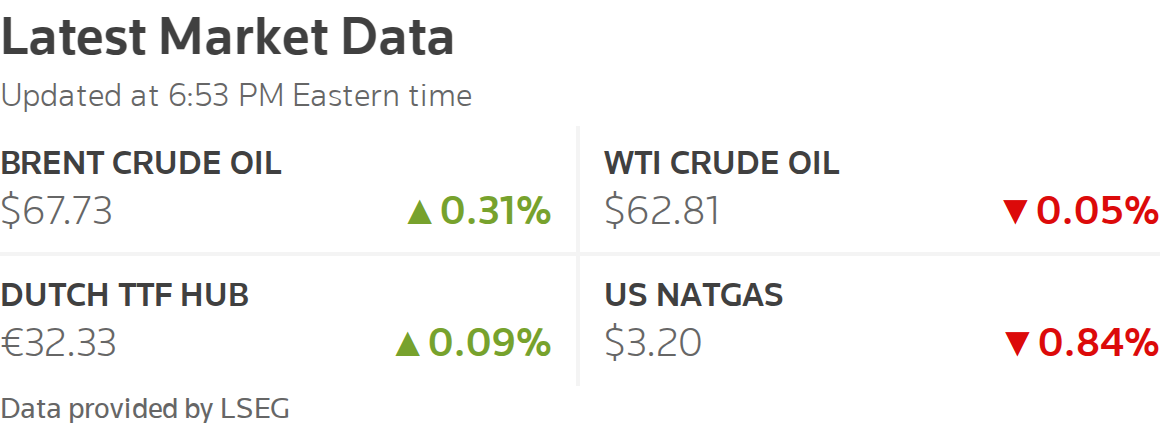
Data refreshes every time you open this email. For more energy news, click here. Please send any feedback to powerup@thomsonreuters.com.

Hello Power Up readers,

We have gotten used to very dramatic events in the energy space over the past few weeks, and this week may top it all. Hours after U.S. President Donald Trump threatened to wipe out a whole civilization and destroy Iran’s power infrastructure, both countries agreed on a two-week ceasefire subject to Tehran re-opening the Strait of Hormuz, the waterway through which a fifth of the world’s oil and gas transits. Both sides declared victory in the six-week war and also agreed to hold talks on a peace deal in Pakistan on Friday.

The deal was scant on details and riddled with problems from the start, not least the fact that both Iran and Israel continued attacks in the hours following the announcement. Markets nevertheless cheered the news, with stock markets rallying and crude oil futures posting staggering declines, with Brent plunging 13% to below $100 a barrel. The two-week ceasefire and the return of oil and gas exports from the Middle East would certainly deliver badly-needed relief to economies battered by the world's worst ever energy crisis.

One day into the nascent truce we’re seeing more signs of stress.  Trump vowed to retain military assets in the Middle East until a peace deal with Iran is reached, Iran threatened to renew fighting after Israel carried out heavy bombing in Lebanon on Wednesday and, crucially, there was scant sign that traffic through the Strait of Hormuz has resumed in any meaningful way, with Iran still asserting its control over the vital artery. Oil prices rose by over 3% on Thursday.

The Iran war may well shape the international legacy of Trump’s second term in office, and it is safe to say it has already reshaped the Middle East. The future of transit through the Strait will in many ways determine the success of the Iran war for both sides.

Tehran has demanded to act as toll booth keeper at the world's most critical oil chokepoint, which would leave energy markets vulnerable and hardwire higher prices for years to come. More on this below.

Here are a few more headlines:

  • Prices for refined fuels in Asia fell sharply in line with similar declines for crude oil in the wake of the tentative ceasefire, but remain at levels that point to a supply crunch, ROI Asia Commodities Columnist Clyde Russell wrote.
  • Japan is considering a new release of about 20 days' worth of oil reserves as early as May, Kyodo reported on Thursday, amid uncertainty over the reopening of the Strait of Hormuz despite a U.S.-Iran ceasefire.
  • Investors placed an approximately $950 million bet on oil prices falling just hours before the U.S. and Iran announced a ceasefire, the latest large wager on the direction of the world's most traded commodity ahead of a major policy announcement by President Donald Trump.

As always, don’t hesitate to contact me at ron.bousso@thomsonreuters.com or follow me on LinkedIn with any questions or thoughts.


Top energy headlines

  • Oil rises about 5% as Hormuz concerns keep supply risks elevated
  • Iran war doubles Russia's main oil revenue to $9 bln in April, Reuters calculations show
  • Chevron sees Iran war oil boost, warns hedging to weigh
  • Glencore, Taiwan refiner book tankers to load Middle East oil after ceasefire
  • Orsted CEO eyes boost to European offshore wind from energy crunch


Open Sesame

Tehran indicated on Tuesday that, under a permanent peace deal, it would seek to charge a fee for ships transiting the Strait of Hormuz, which is just 34 km (21 miles) wide at its narrowest point between Iran and Oman.

With full details of the ceasefire deal still unclear, some media reports indicate that Oman has strongly pushed back, making clear that no such toll regime is acceptable under existing agreements, while others suggest that such a tolling system may already be in place.

Trump said in an interview with ABC News on Wednesday that the U.S. was also thinking about setting up a joint venture to charge ship tolls for access through Hormuz.

How such a scheme would operate in practice remains far from clear. But Iran may hold the upper hand. The conflict has demonstrated Tehran’s ability to strike dozens of vessels using drones, missiles and sea mines - a capability that gives it powerful leverage even without a formal blockade.

An Iranian toll system would ⁠strike at one of the core principles of international law: freedom of navigation, under which ships may transit international waters without interference from coastal states. The United States has historically cast itself as the global guarantor of that principle, enforcing it through naval patrols and diplomatic pressure.

Read the full column
 

Sponsors are not involved in the creation of newsletters or other Reuters news content. Advertise in this newsletter or on Reuters' website

LiveIntent Logo
AdChoices Logo
 

Power Up is sent twice weekly. Think your friend or colleague should know about us? Forward this newsletter to them. They can also sign up here.

Want to stop receiving this email? Unsubscribe here. To manage which newsletters you're signed up for, click here.

This email includes limited tracking for Reuters to understand whether you’ve engaged with its contents. For more information on how we process your personal information and your rights, please see our Privacy Statement.

Terms & Conditions


© 2026 Thomson Reuters. All rights reserved.
3 Times Square, New York, NY 10036