Hello there,
Carmel is away, so this week’s newsletter is coming to you from Frankfurt, where I cover European economics and the European Central Bank.
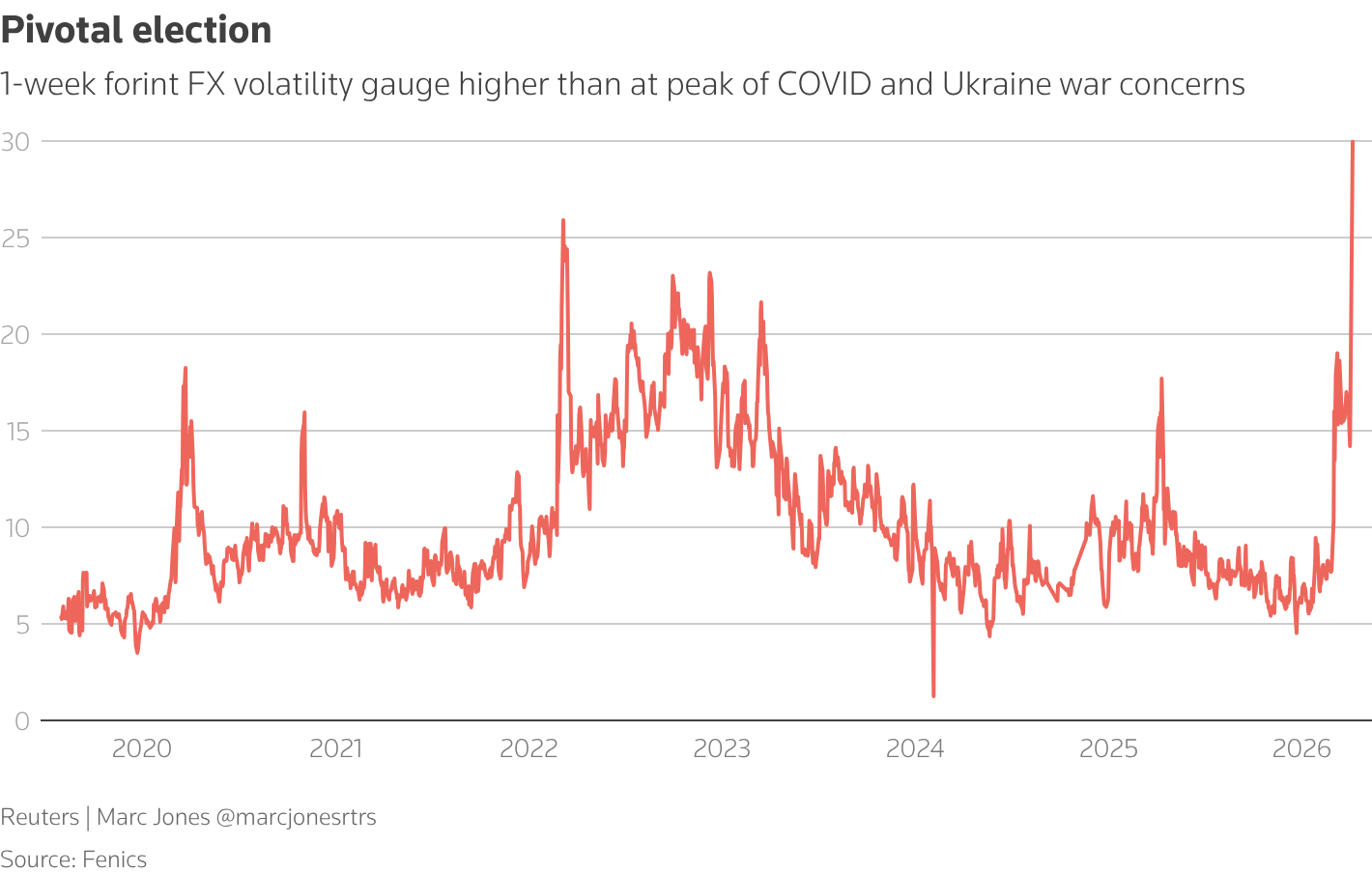
This week’s yarn is about Hungary, my native land, which is holding elections on Sunday in possibly the most consequential vote until the U.S. midterms in November.
The outcome is likely to shape Russia’s war in Ukraine, impact thorny relations between the U.S. and the European Union and influence Europe’s long-stalled internal reform process.
Viktor Orbán, the incumbent prime minister, has been a thorn in the EU’s side for 16 tumultuous years, but is now at risk of losing power.
Supporters say he is a Christian patriot, who fights against the EU’s liberal “wokeism” and takes a pragmatic foreign policy stance, keeping friendly ties with like-minded politicians such as U.S. President Donald Trump, Russian President Vladimir Putin and Israeli Prime Minister Benjamin Netanyahu.
Critics say he’s a corrupt, far-right nationalist, who has systematically dismantled democratic institutions and serves foreign interests from within the EU.
He seemed untouchable for years but allegations of corruption, which he denies, damaging leaks that laid bare the prevalence of Russian influence and lacklustre economic growth have now pushed Orbán to the brink of defeat.
Most polls show political newcomer Peter Magyar, who has built an opposition from scratch in just two years, well ahead, possibly on course for a two-thirds majority, and Polymarket puts his chances of victory at about 70%.
But Hungarian polls are notoriously inaccurate and Orbán has rewritten election laws to favour his party, redrawing electoral districts in the process. He controls a vast media empire, uses state funds to spread his message - and this week enlisted U.S. Vice President JD Vance for a campaign stop.
The $1 million question is just how policy would change under Magyar, a defector from Orbán’s establishment and a self-described conservative.
He promises to mend ties with the EU and resume cooperation, in part to gain access to billions of euros of frozen EU funds. This is potentially crucial as opposition by Hungary has held up funding to Ukraine and forced the bloc many times to water down sanctions. Magyar says he will curb Russian influence, reestablish many of the checks and balances dismantled by Orbán and root out corruption.
But like Orbán, he takes a hard line on immigration and has pledged to challenge the EU's budget allocation mechanism.
Still, even if Orbán is defeated, the EU’s headaches may not be over. Only a week later Bulgarians go to the polls and former president Rumen Radev, often described as Russia-friendly, is tipped to win. And Slovakian Prime Minister Robert Fico has said he is ready to “take the baton” from Hungary in pushing back on support for Ukraine.
With this much uncertainty around, investors are understandably on the hunt for safe havens - except traditional refuges seem to be letting them down. To understand why, tune in to our Econ World podcast to hear Morning Bid hosts Mike Dolan and Anna Szymanski unpack what “safe” really means in a world of inflation, energy shocks and geopolitical risk. Listen here.