Hello! I’m back and a lot has happened whilst I was away.
In fact, a two-week ceasefire between the United States and Iran was agreed upon by the time I got back, and the conflict in the Middle East has been a primary focus of the newsletter over the last few weeks.
Although I covered the topic of the effects of the war on cosmetics and food last week, I wanted to specifically hone in on fertilizer today, while the ‘Talking Points’ section tackles fuel shortage protests and the rise in renewables that the six-week-long war has sparked.
But before we get into the weeds of farming, I’ve also got some major tech-related social and governance stories on my radar, so take a look at the stories below, especially the one about China regulating ‘digital humans’: |
|
|
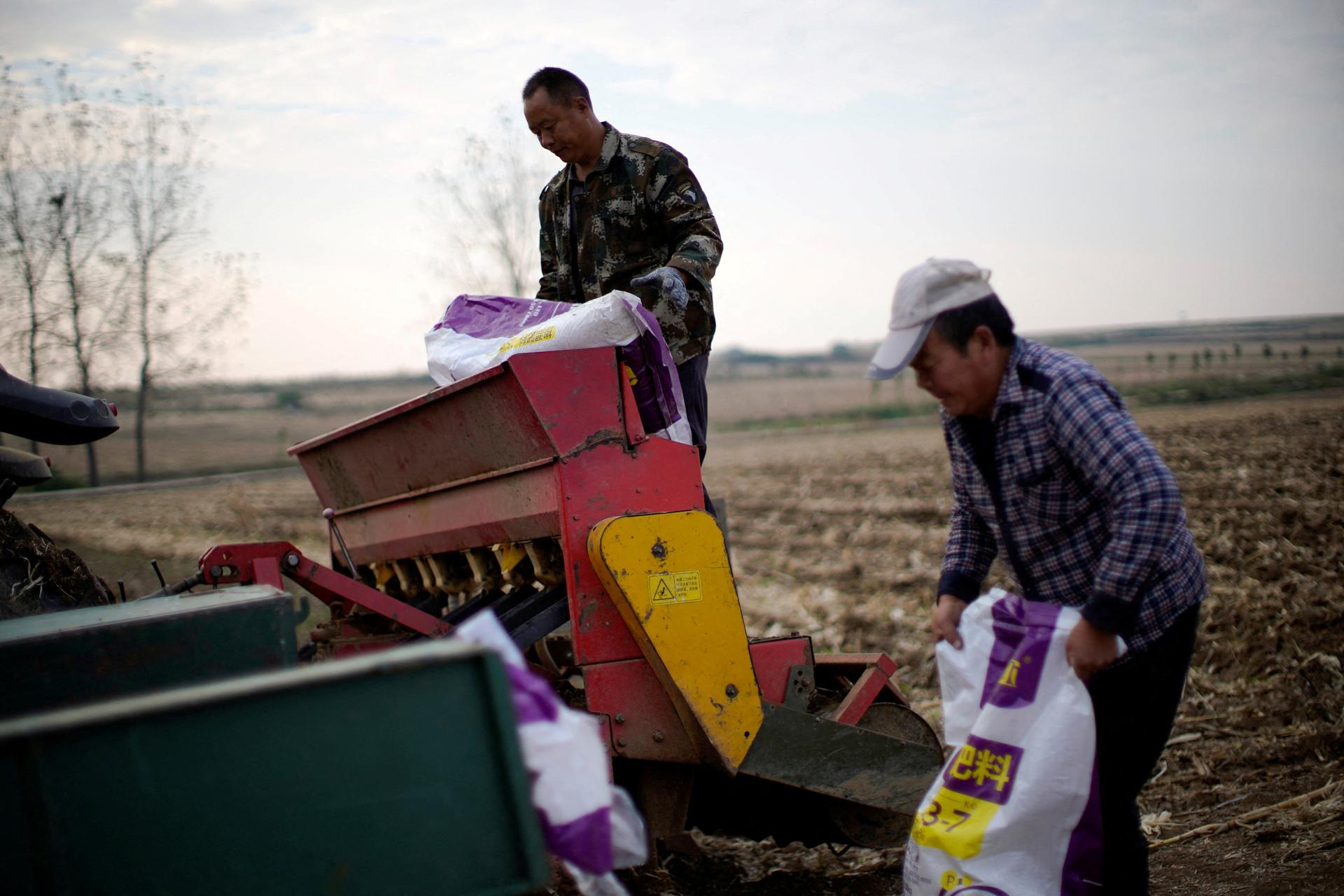
Farmers load sacks of fertiliser into a seeder on a wheat field in Nanyang, Henan province, China. REUTERS/Aly Song/File Photo |
Struggling with tight supplies |
How did the conflict in the Middle East impact fertilizer?
Fertilizer production is energy-intensive, relying heavily on natural gas as a feedstock, with energy making up as much as 70% of production costs.
As a result, much of the world's fertilizer is made in the Middle East, with one-third of global trade in it passing through the Strait of Hormuz, a narrow shipping route along Iran's coast that has largely been shut since the conflict began.
The most important fertilizers near term are nitrogen-based products like urea. Researchers say that urea fertilizers account for more than 50% of the world’s nitrogen fertilizer usage for crops like corn, wheat, rice, some fruit and vegetables. However, the United States is the primary exception, where urea faces significant competition from other nitrogen sources.
The global fertiliser market was already tight, with China restricting exports this year to ensure domestic availability, while producers in Europe have cut output due to the loss of cheap Russian gas supply, analysts said.
Urea prices had risen by around $80 per ton from around $470 per ton quoted before the start of the Iran war, they said. |
|
|
A sustainable fertilizer switch |
Now, farmers around the world are looking at switching to less nutrient-hungry crops as the Iran war hits the supply of fertilizers.
U.S. farmers plan to plant less corn this year than last year, and will plant more soybeans, the U.S. Department of Agriculture said last week.
Australian growers are also expected to favour barley over nitrogen-intensive wheat and canola in the upcoming season.
India is one of the few countries that has explored coal gasification as a strategic alternative feedstock for urea, but those projects are limited to a handful of early-stage initiatives. Plus, India raised its nutrient-based subsidy for summer-sown crops by 11.6% from a year earlier to shield farmers from rising global fertiliser prices
But China is sitting pretty with plenty of stock thanks to the country's rather unique reliance on coal to produce urea as opposed to natural gas.
However, some analysts say China may not allow exports of urea after spring planting as it normally does, as that could drive up local prices. Beijing typically waits to see if there is a surplus in May before assessing how much can be shipped abroad. |
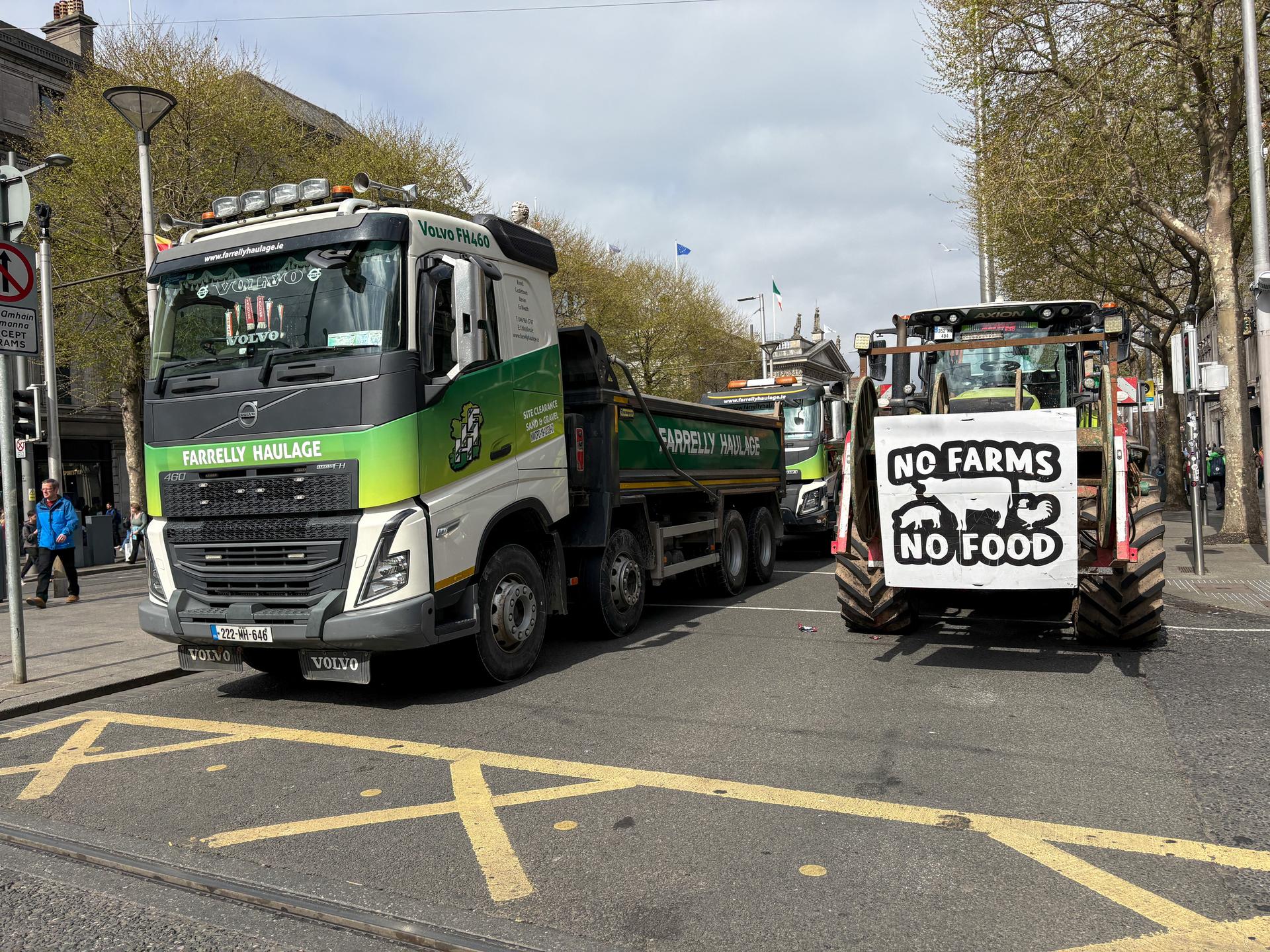
Vehicles block Dublin's O'Connell Street, as part of a protest over the high cost of fuel that clogged up busy thoroughfares and motorways. Dublin, Ireland. Conor Humphries/REUTERS |
-
Ireland protests: Convoys of lorries and tractors across Ireland clogged up busy streets and motorways as hauliers and farmers protested over a 250 million euro ($291 million) package to temporarily cut taxes on petrol and diesel that did not go far enough to cushion the knock-on cost of the Middle East conflict.
-
Pakistan’s sustainable switch: Two Pakistani electric motorbike outlets found themselves overwhelmed with enquiries after the Middle East crisis sent global fuel prices soaring. Industry officials and analysts expect the crisis to supercharge an EV rush in the country, which would stand out from a broader regional surge for the availability of cheap and plentiful solar power to charge e-bikes. Click here for the full story.
- India COP33 withdrawal: India has withdrawn its offer to host the United Nations annual climate Conference Of the Parties (COP33) in 2028, two government officials familiar with the matter told Reuters, but it was not immediately clear why the government had pulled out.
- Air disruption: Global aviation industry executives warned that jet fuel supplies will remain tight and costly for months, even if Iran reopens the Strait of Hormuz, after damage to refining capacity across the Middle East.
-
Cuba oil graphics story: Cuba is in a tougher spot than its neighbors Jamaica and the Dominican Republic, which have managed to offset their petroleum needs with coal, natural gas and renewables over the past several decades, while Cuba has not done so under the longstanding U.S. trade embargo. Click here to learn more on a really insightful Reuters graphics-led story.
|
|
|
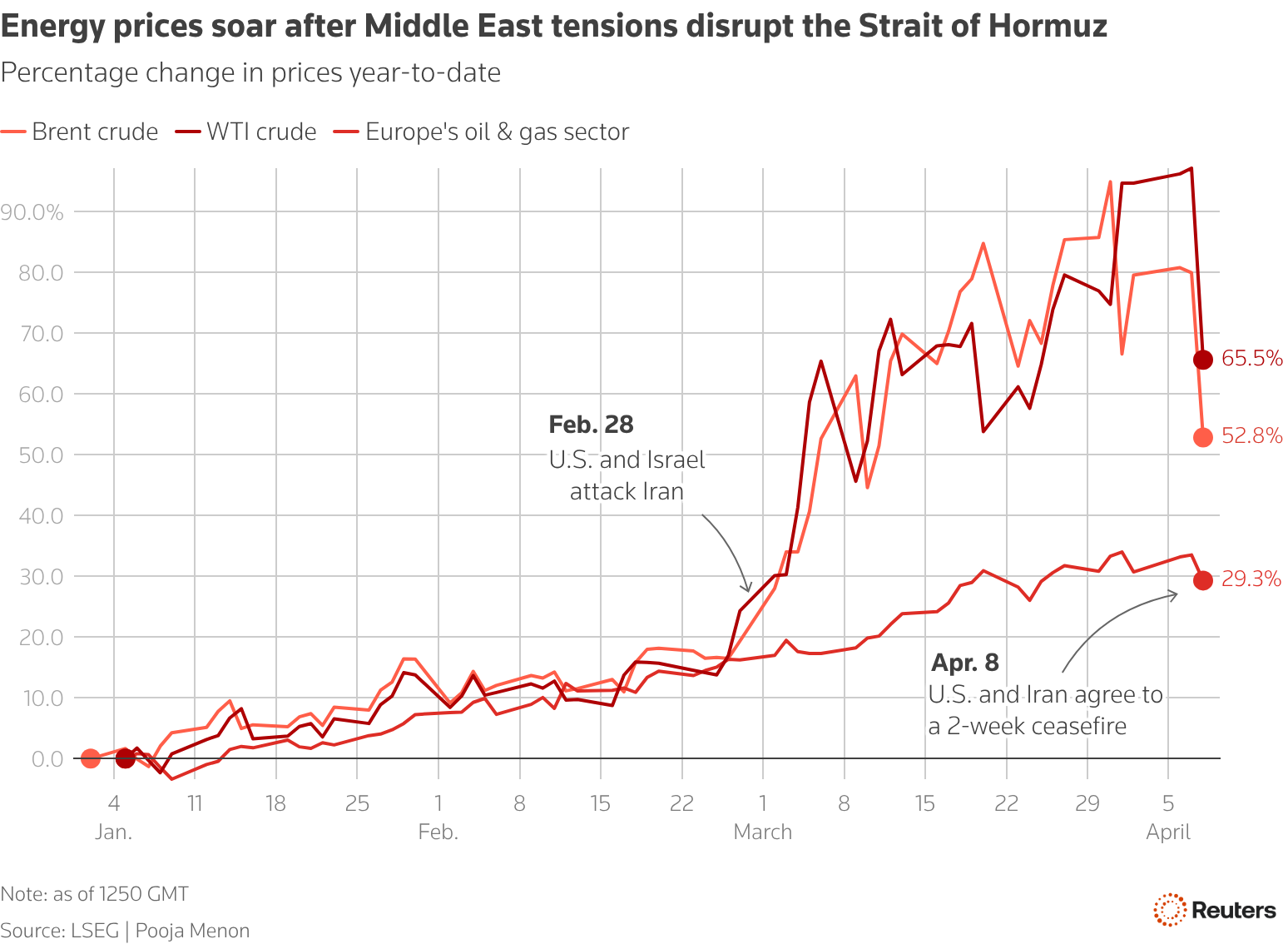
In keeping with the Middle East conflict focus, today’s ESG Lens highlights its impact on energy markets as shares of major oil companies like Exxon Mobil and Chevron fell more than 5% this week. Capital One Securities analysts said it's going to be a painful day for E&P (exploration and production) and most energy-related names. |
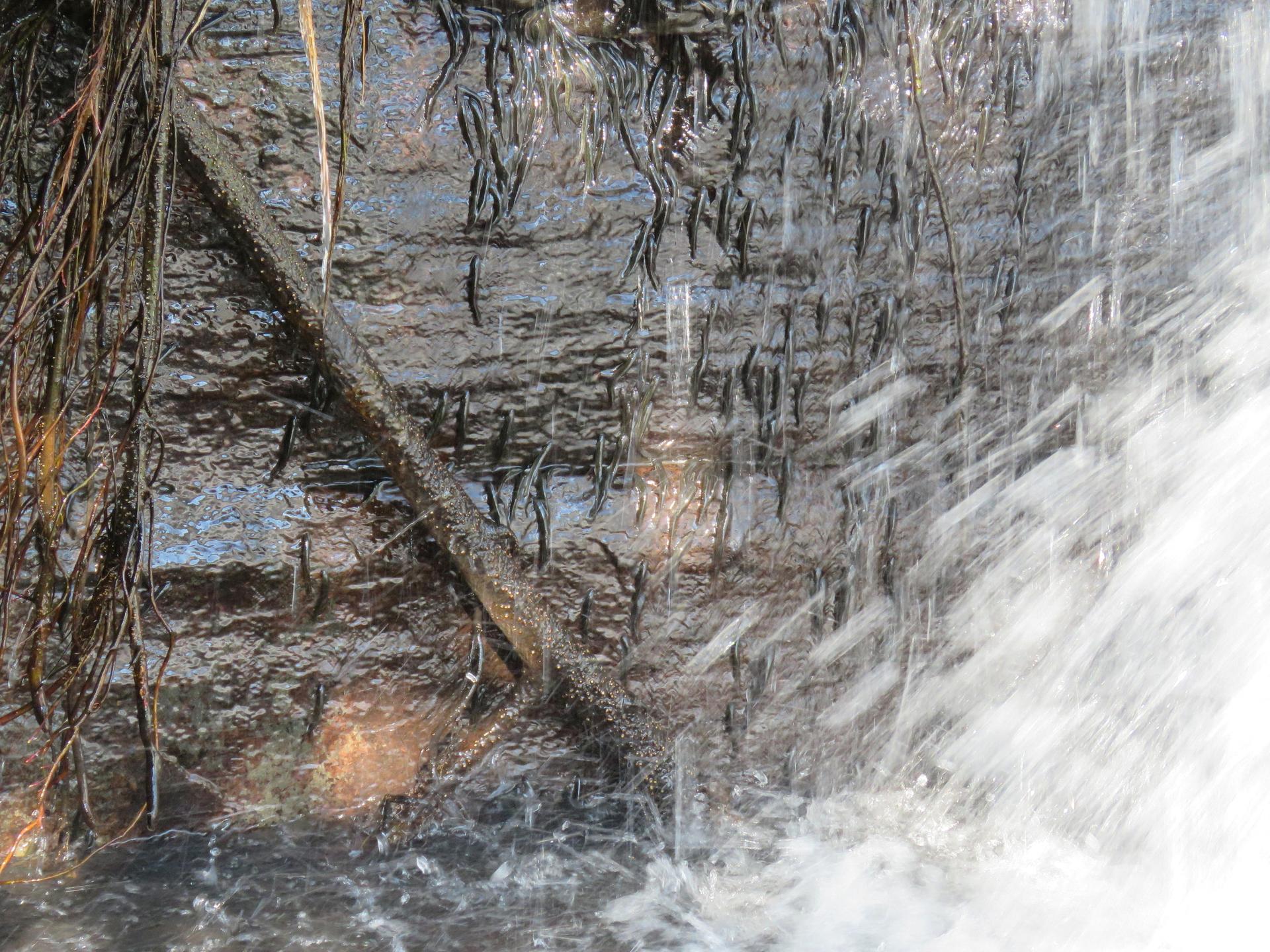
Members of a species of shellear fish crossing the second level of Luvilombo Falls, a waterfall in the Democratic Republic of Congo. Pacifique Kiwele/Handout via REUTERS |
Today’s spotlight illustrates the surprising and ingenious ways animals can adapt to extreme environments in the Democratic Republic of Congo.
A species of small fish known as shellear fish, have been observed by researchers climbing a vertical waterfall 15 metres (50 feet) tall at the Luvilombo Falls in the upper Congo Basin – a vast river system spanning Central Africa and home to the world's second-largest rainforest.
Researchers observed the fish ascending the vertical rock face during seasonal floods at the end of the rainy season, typically in April and May. |
|
|
Sustainable Switch was edited by Elaine Hardcastle. |
|
|
| |
Sponsors are not involved in the creation of newsletters or other Reuters news content. | | | | |
|
|
|