Brent and WTI crude climbed again on Thursday on the renewed uncertainty, with both benchmarks topping $98 a barrel before falling back slightly. Prices remain well below the levels seen earlier this week, however.
Still, that was enough for equities to hit pause after Wednesday's global rally, with Japan's Nikkei and South Korea's KOSPI both slipping on Thursday after multi-day gains. European shares opened down and U.S. futures were in the red before the bell, meanwhile.
In currencies, the dollar traded broadly sideways as traders looked for direction on whether the U.S.-Iran ceasefire would hold, while the yen gave back some of Wednesday’s gains to trade at around 159 per dollar.
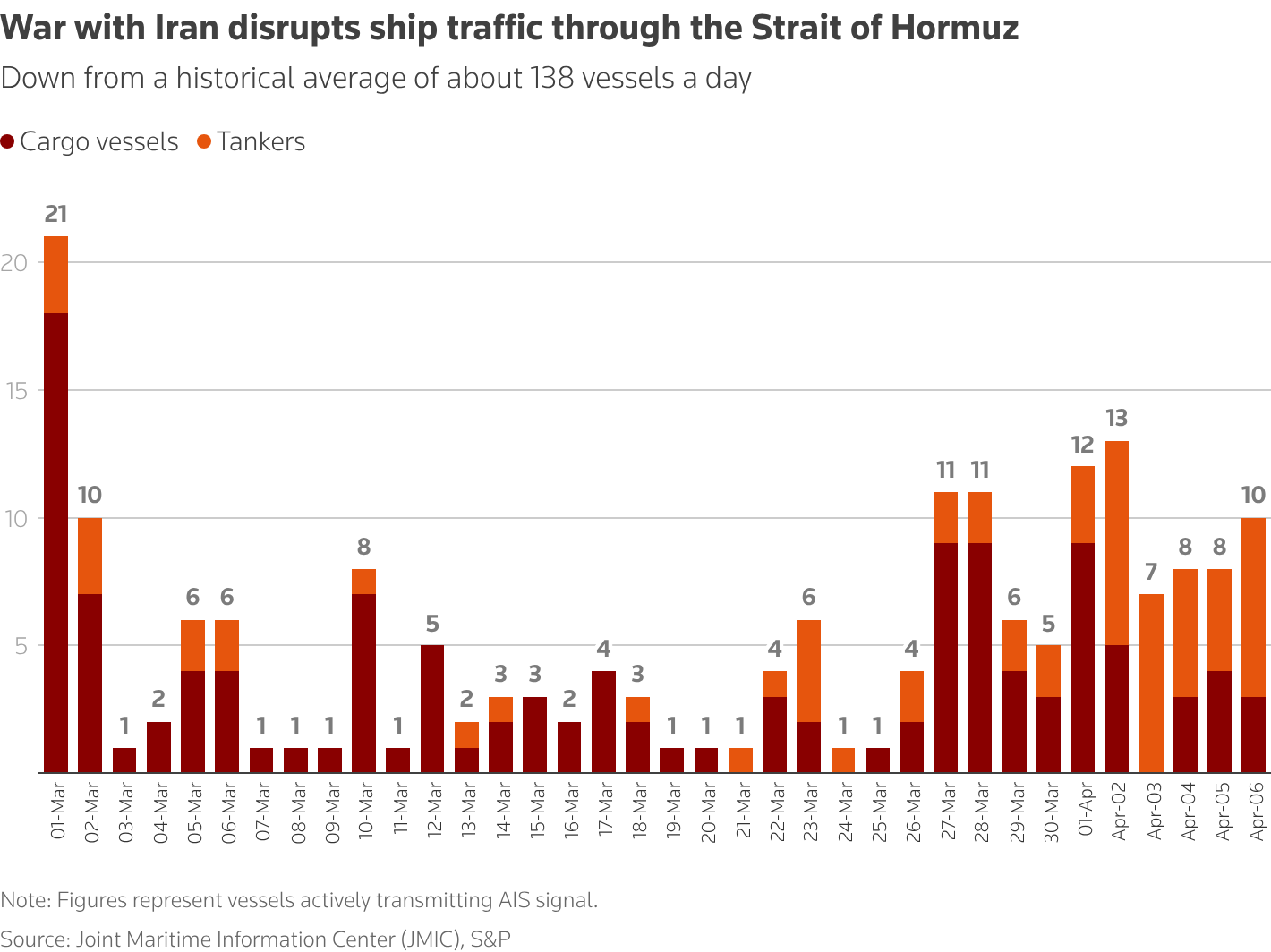
Doubts over the durability of the ceasefire have come to the fore as the Strait of Hormuz remains effectively closed. Iranian coastguards warned on Wednesday that vessels sailing without permission would be “targeted and destroyed”, and Tehran is still considering charging a toll for transiting the waterway.
What's more, Iran has claimed that continued Israeli strikes in Lebanon violate the terms of the ceasefire. Although peace talks are reportedly still set to start on Saturday, Iran's lead negotiator also suggested that proceeding would be “unreasonable”, while President Trump issued a fresh round of military threats.
None of that is likely to reassure markets that the ceasefire represents the breakthrough investors had hoped for - or that the energy shock facing the global economy is likely to abate any time soon. That keeps the spectre of an inflationary shock on the agenda and has helped slow Wednesday's rally in U.S. Treasuries.
On the inflation front, traders will be watching out on Thursday for February's personal consumption expenditures (PCE) report, which is expected to show U.S. prices rising by 0.4% for a second month - even before the latest jump in energy prices.
Meanwhile, minutes from the Fed’s most recent policy meeting, published on Wednesday, showed some policymakers were leaning toward a rate hike for its next move. Nevertheless, "many participants" at the meeting also continued to favor rate cuts, and "most" saw potential risks to economic growth from the war, which could warrant yet more cuts.