Sponsored by |  |
|
|
| This week’s world-famous news haiku competition™ is about how the average retail price for a pound of roast coffee has risen to $10. Send me your entry — to haiku at cheddar dot com — by noon ET Thursday, for consideration by your Cheddar peers. | And now, the news. | Matt Davis — Need2Know Chedditor | | News You Need2Know | | | What’s the stock market up to, eh?* | $SPX ( ▲ 0.44% ) $DJI ( ▲ 0.36% ) $NDX ( ▲ 0.54% ) | | Companies mentioned in today’s newsletter | $JPM ( ▲ 0.8% ) $DE ( ▼ 0.11% ) $UAL ( ▼ 1.35% ) $FRONT ( ▼ 0.69% ) $SAVEQ ( ▲ 0.43% ) $ALK ( ▲ 1.74% ) $JBLU ( ▲ 1.11% ) $HYMTF ( ▼ 7.44% ) | | Chase boss warns of private credit market risk | 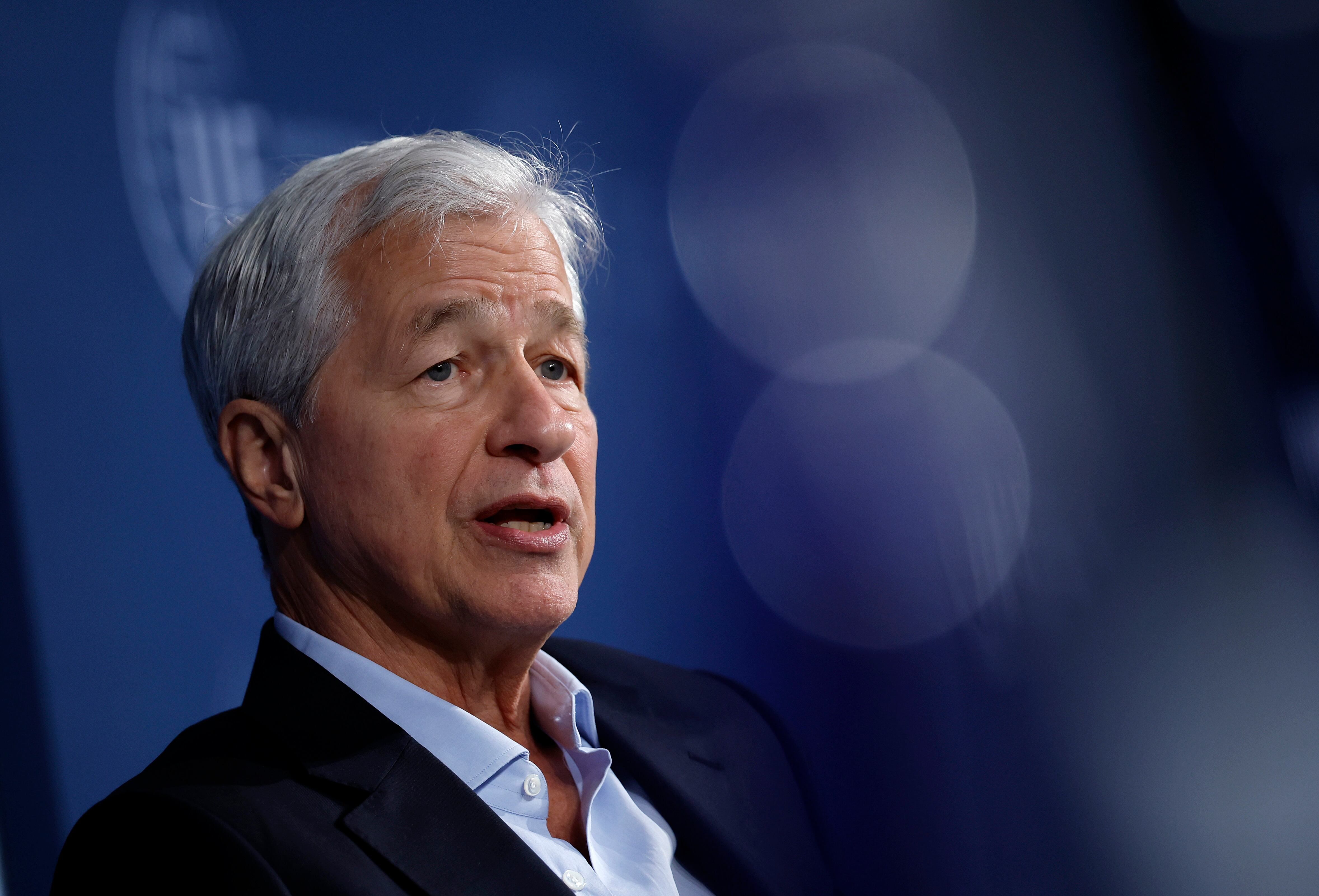 | (Getty Images) |
| JPMorgan Chase $JPM ( ▲ 0.8% ) CEO Jamie Dimon is warning investors to brace for bigger-than-expected losses in the booming private credit market when the next downturn arrives. | In his closely watched annual letter to shareholders, Dimon argued that years of loosening standards have set the stage for painful surprises. "I do believe that when we have a credit cycle, which will happen one day, losses on all leveraged lending in general will be higher than expected, relative to the environment," he wrote. | The culprit? "Credit standards have been modestly weakening pretty much across the board," Dimon explained, pointing to overly optimistic assumptions about borrowers, weakened loan covenants, and increased use of payment-in-kind arrangements that let companies delay repayments. | The $1.8-trillion private credit industry has exploded over the past decade as regulations pushed traditional banks like JPMorgan out of certain lending markets; however, Dimon (famous for coining the term "cockroaches" to describe problem loans) cautioned that complacency has set in. | The industry has "not had a credit recession in a long time, and it seems that some people assume it will never happen," he warned. | Assumptions only make an a** out of you and me, as my English teacher used to say. | | | The tech inside John Deere's combines will blow your mind | | You think you know John Deere $DE ( ▼ 0.11% ) ? Those big green machines? Maybe a cozy cab with a cup holder? Cute. You're living in the past, friend. We’re not even in the ninth inning of this agricultural “baseball game” — we’re still in the “second or third inning,” according to Julian Sanchez, Manager of Combine Engineering at John Deere. Get ready for the future because it involves your tractor having “eyes and ears.” | That's right: Your combine is now less farm equipment and more Terminator, constantly “watching for everything and listening for everything.” It’s got adaptive cruise control, but instead of checking for cars it's checking for crop density. It's making sure it operates at the “maximum ideal speed” because going too slow means you “leave productivity out there in the field.” | Forget planting seeds based on, you know, centuries of human knowledge. Now, we have “AI powered precision planting.” The truly mind-blowing part? They have “literally put a camera with a small laser. Literally in the dirt.” A camera. In the dirt. Just so a robot can check its perfect furrow. Julian admits, “I never thought we would actually be dragging a camera through the dirt, but that's literally what we're doing.” | Why are they doing this? Labor shortages! The farm life isn't just about sunsets and manual labor anymore; it’s about “less skilled operator[s]” being able to pilot these hyper-sensitive, high-tech behemoths. Soon, farmers will be “able to just literally talk to their data.” Just try not to talk back when your combine asks why you’re idling. | | | Song of the Day: Weezer, ‘Shine Again’ |  | Weezer - Shine Again (Official Lyric Video) |
|
| Written by Weezer drummer Patrick Wilson, this new song advises someone to get through a bad patch by concentrating on everyday tasks: “The dog walk, the dishes, the good-morning kisses.” It's a pep talk delivered at full blast. “You were always great / Remember how it feels.” Yeah! | | Meet the CEO whose skincare brand is saving lives |  | (Osier) |
| Finally, a skincare brand for those of us who have spent years "sleeping in our makeup for days on end and just reapplying it day after day," as Cheree Ashley so eloquently puts it. Cheree spent ten years in the recovery field running rehab centers and decided that her logical next step was launching a Korean-inspired skincare line. | As Cheree says, "Us in recovery, you know, we need that instant satisfaction." Move over, clinical therapy; we've got willow bark extract now. | Enter Colombian TV host Sandra Vergara, who claims the products give an "instant glow up" without the inflammation. It’s "Korean skincare, but elevated," which I assume means it costs more but makes you feel at least 10% better about your life choices, since 10% of the proceeds go to scholarships for rehabilitation treatment. | The mission is noble: Helping those without insurance get professional care. So, I’ll save the sarcasm for later (Will you ever, though, Matt? — Ed.) | | | United Airlines splits business class into budget tiers |  | (Getty Images) |
| United Airlines $UAL ( ▼ 1.35% ) is bringing the unbundling playbook to the front of the plane, introducing tiered pricing for its premium Polaris business class seats on long-haul flights. The airline will now offer three distinct levels of business class on international, transcontinental U.S., and select Hawaii routes: | Base: No seat selection, no flight changes, no refunds, and no lounge access Standard: Includes seat selection, flight changes, and lounge access — but still no refunds Flexible: The full package with all perks included
| It's the latest move by United to extract more revenue from existing inventory. Just last week, the carrier unveiled the "United Relax Row," which are three economy seats that transform into a lie-flat space, complete with mattress pad, plush blanket, extra pillows, and even a plush toy for families. Gasp. | United isn't alone. Alaska Airlines $ALK ( ▲ 1.74% ) announced lie-flat business seats with privacy doors, while JetBlue $JBLU ( ▲ 1.11% ) raised baggage fees. | |
|


