| | Iran rejects the US’ ceasefire proposal, Jamie Dimon warns investors about rising inflation, and a C͏ ͏ ͏ ͏ ͏ ͏ |
| |  TASHKENT TASHKENT | TAIPEI CITY | OSAKA |
 | Flagship |  |
| |
|
The World Today |  - Iran rejects US truce pitch
- Hormuz traffic ticks up
- Jamie Dimon’s warning
- Cuba embraces China tech
- Shipping turmoil hits Kenya
- Sam Altman trust questions
- AI’s economic impact
- Japan embraces robots
- $18M salary for AI scientist
- A new chess prodigy
 Profiling a complicated Irish muckraker. |
|
Iran rejects US ceasefire proposal |
 US Navy/Handout via Reuters US Navy/Handout via ReutersIran on Monday rejected the US’ ceasefire plan, as President Donald Trump renewed his threats against Tehran’s civilian infrastructure. Trump said the “entire country can be taken out in one night” if the Islamic Republic doesn’t agree to reopen the Strait of Hormuz by Tuesday evening. The chances of a breakthrough by then appear slim: Iran turned down the US-backed 45-day truce in exchange for unblocking the strait, and responded with its own proposals that Washington dismissed as “maximalist,” Axios wrote. The US and Israel have lined up a set of Iranian energy facilities they could strike next, The Wall Street Journal reported, taking aim at “the underpinnings of Iran’s economy.” |
|
Tehran lets more ships through Hormuz |
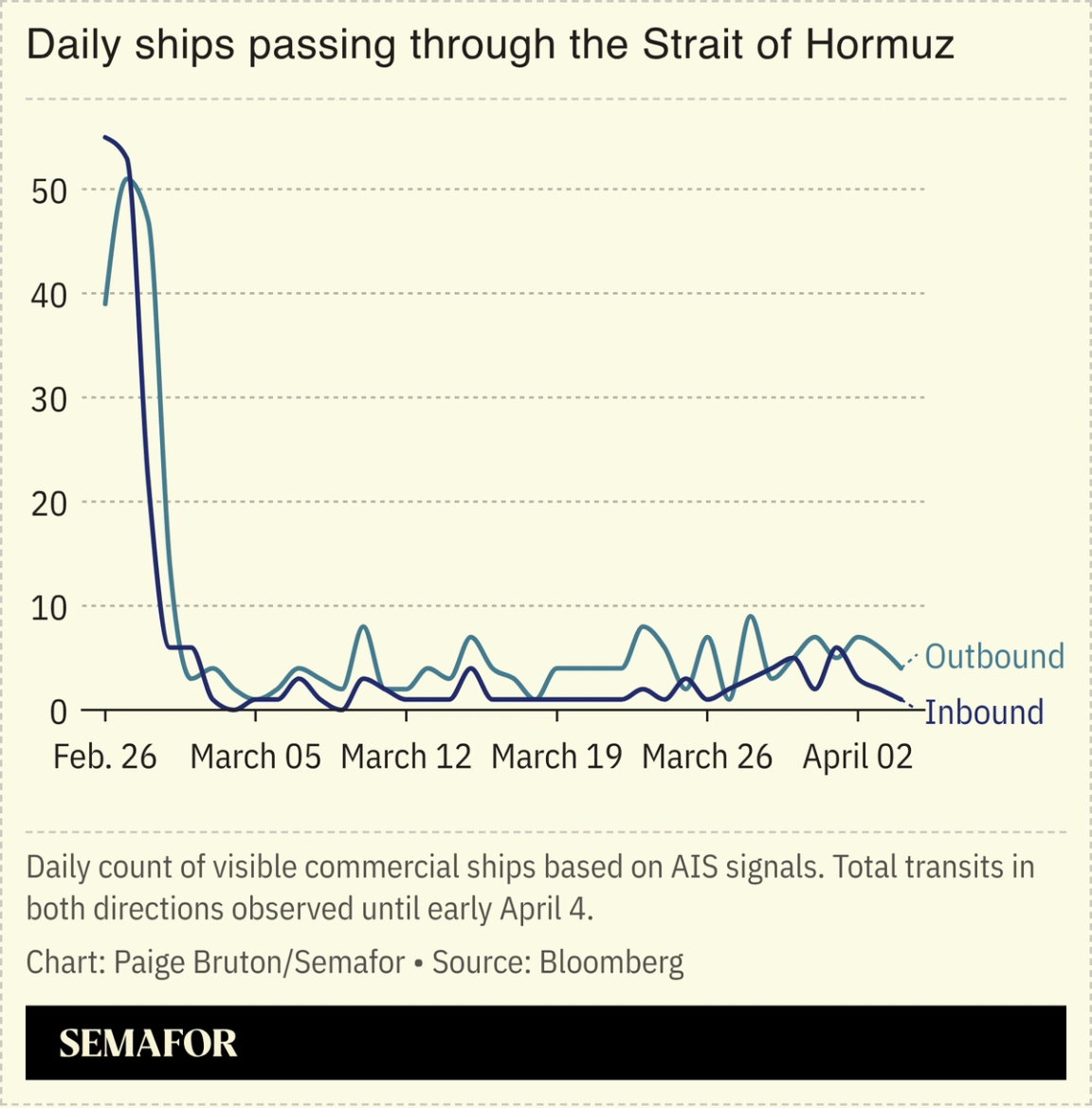 Traffic through the Strait of Hormuz rose to its highest level in weeks, as more countries negotiated with Iran for safe transit. “Passage is still at Iran’s mercy,” a Kpler analyst said, with nations striking opaque deals with the Islamic Republic to get through the strait; ships linked to India, Iraq, China, and Japan have passed, Bloomberg reported. Others, like South Korea, are looking to increase crude shipments through the Red Sea as an alternative. Observing activity in Hormuz has largely been dependent on satellite imagery and ship-signal tracking, but some on Wall Street are desperate for an edge: New York-based Citrini Research sent an analyst to the northern UAE to monitor the situation. |
|
Dimon warns on war inflation risks |
 Jonathan Alcorn/Reuters Jonathan Alcorn/ReutersThe Iran war risks pushing US inflation and interest rates up, JPMorgan Chase CEO Jamie Dimon warned Monday. In his closely watched annual letter to shareholders, the head of the country’s largest bank said the world could face “significant ongoing oil and commodity price shocks,” though the US economy continues to be resilient as consumers keep spending. Economists, factoring in rising US inflation as a result of the war, have broadly ruled out interest rate cuts this year. Dimon also touched on the crisis facing private credit, which is showing cracks following aggressive lending to software firms. He said most types of high-risk credit would take a larger hit than expected in a downturn. |
|
Chinese solar a lifeline for Cuba |
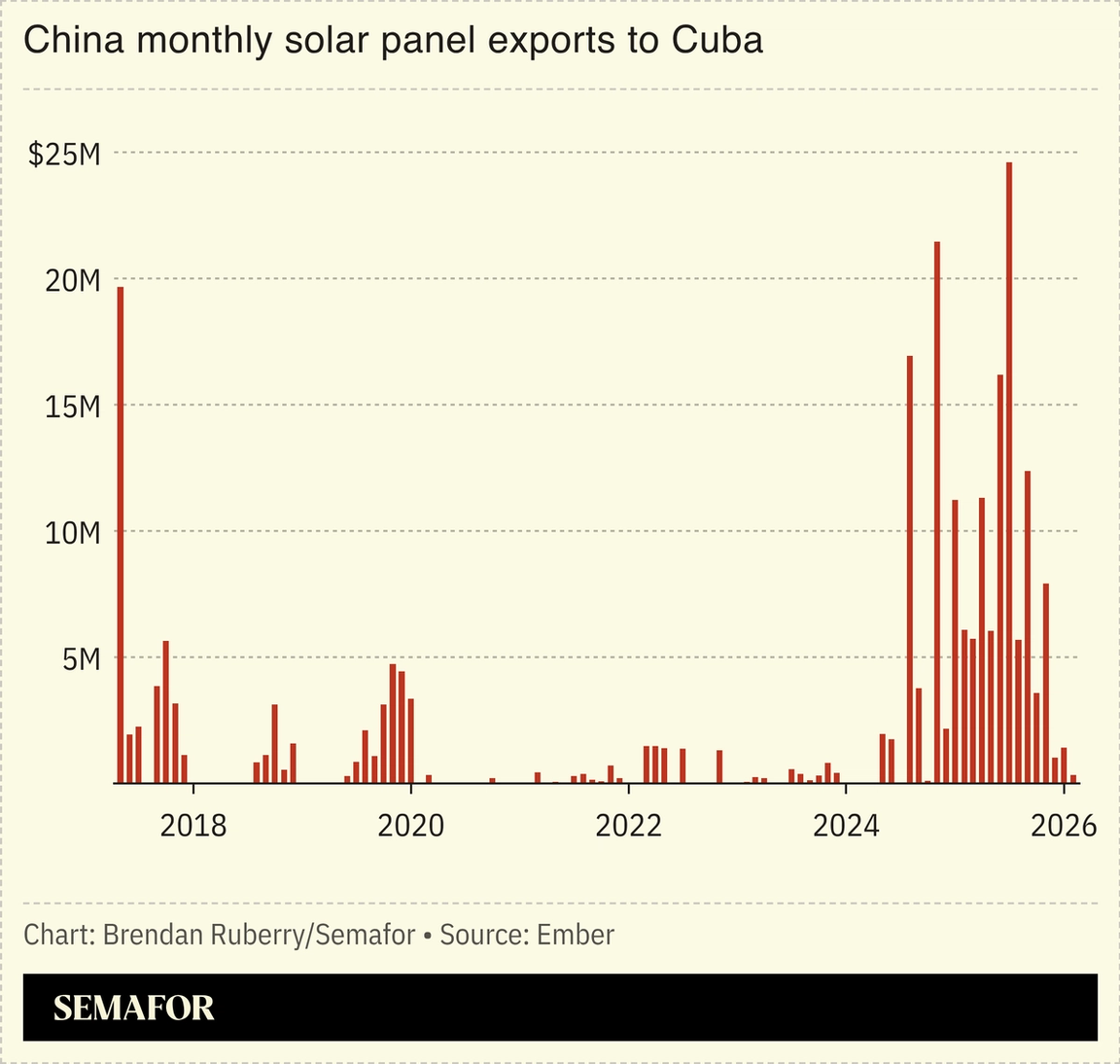 Cuba’s energy crisis is making the island more reliant on Chinese solar power. US President Donald Trump’s oil blockade on Cuba has led to widespread and frequent blackouts in the communist nation; the gigawatt of photovoltaic panels China provided last year has become a lifeline, the Financial Times reported. The Iran war has accelerated broader interest in renewable energy, given the rising cost of oil. The Philippines aims to build 100 gigawatts of solar power in the next two years, while Germany is planning to put billions toward expanding wind power and promoting EV sales. That shift is already benefitting China, The Washington Post noted, given its world-beating green-tech sector, which has suffered from overcapacity in recent years. |
|
Shipping disruptions alter African fortunes |
 Thomas Mukoya/Reuters Thomas Mukoya/ReutersThe disruptions to global shipping routes have taken a huge toll on Kenya’s economy, though other African nations stand to benefit from the upheaval. Millions of kilograms of Middle East-bound tea are stuck in warehouses in Mombasa’s port, threatening the incomes of Kenyan farmers and exporters alike; a regional trade body said the cost is roughly $8 million a week since March 1. But the blow to global shipping caused by the Iran war has had the opposite effect elsewhere in Africa. Maritime traffic to South Africa has jumped as shipping companies look for safer routes around the Cape of Good Hope — even if the journey is much longer and pricier — while Tanger Med, Africa’s largest container port, is bracing for a surge in demand. |
|
Doubts over Sam Altman’s leadership |
 Kylie Cooper/Reuters Kylie Cooper/ReutersPeople close to OpenAI CEO Sam Altman privately questioned whether he could be trusted not only with running the powerful AI company, but as a leader of the transformative technology, a New Yorker investigation revealed. Memos compiled by OpenAI staffers — including Ilya Sutskever and Dario Amodei, who later left to found their own AI enterprises — amount to “an accumulation of alleged deceptions and manipulations,” Ronan Farrow and Andrew Marantz wrote. Some OpenAI board members saw the documents as proof that “Altman’s role entrusted him with the future of humanity, but he could not be trusted.” OpenAI sits at the heart of the AI boom transforming the global economy and workforce; the company on Monday released policy proposals aimed at curbing job disruptions. |
|
Experts predict growth and job losses from AI |
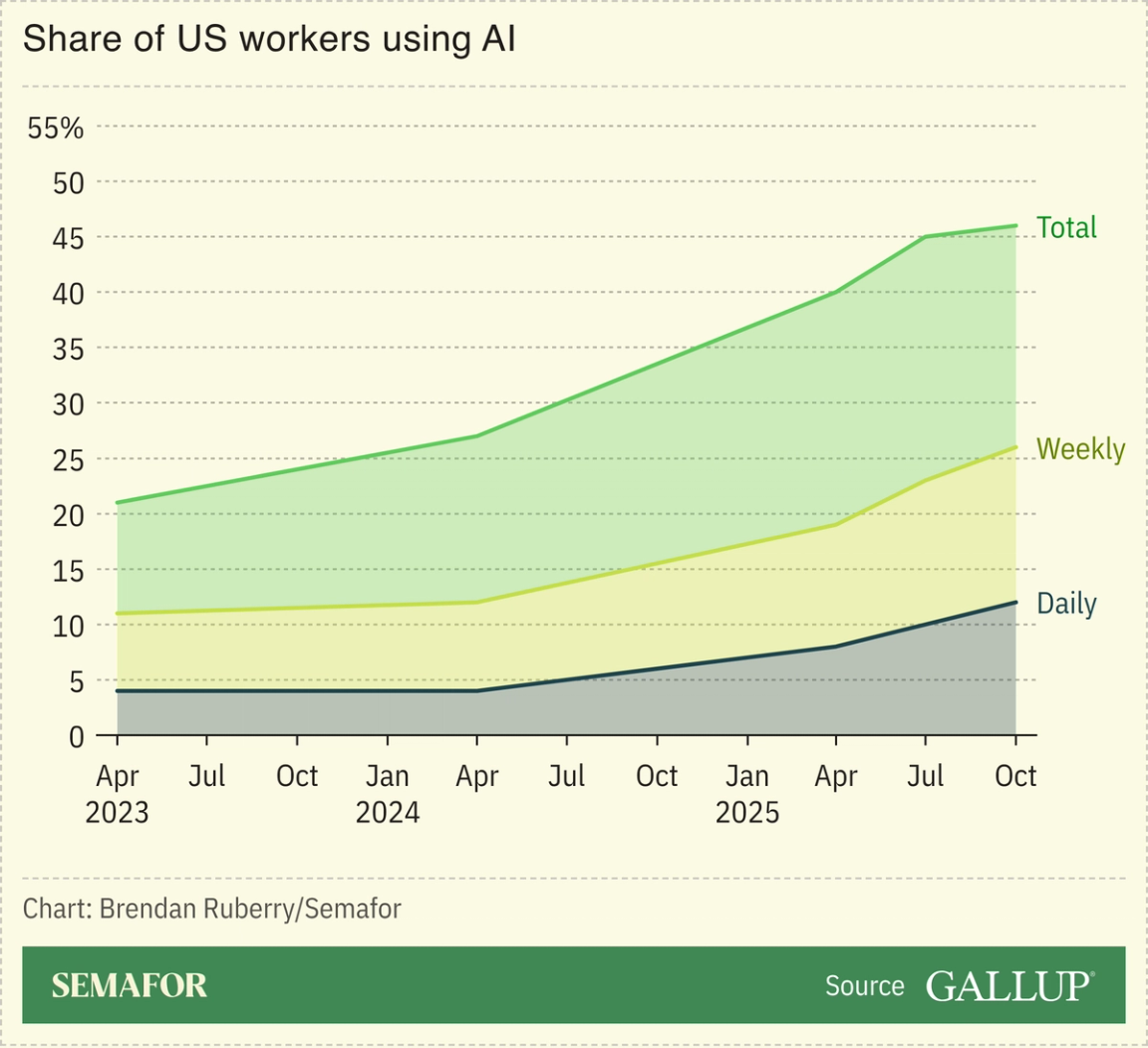 US economists predict substantial economic gains, but also significant job losses, as AI takes off. A survey found that experts — tech workers, economists, and professional forecasters — expect significant AI capability advances by 2030. Under the fastest scenarios, it could drive GDP growth up to levels not seen since World War II, and labor force participation down. Economists have largely been skeptical of AI’s employment impacts, The New York Times wrote: Many argue that rising graduate unemployment is downstream of high interest rates, rather than AI, and that companies’ claims that their layoffs were AI-driven were a smokescreen for mismanagement. But “they are starting to take seriously the possibility that it could [disrupt the market] someday soon,” the Times noted. |
|
 George Kurtz, Founder & CEO, CrowdStrike; Michelle Gass, President & CEO, Levi Strauss & Co.; Caryn Seidman-Becker, Founder & CEO, CLEAR; Tom Wilson, Chair, President, & CEO, Allstate; Kate Johnson, CEO, Lumen Technologies; and more will join the AI’s Next Chapter session at Semafor World Economy. This session will examine where AI innovation is accelerating, how breakthroughs will diffuse across economies and societies, and how the next chapter of global technological leadership will be defined. |
|
Japan’s urgent AI-powered robot push |
 Manami Yamada/Reuters Manami Yamada/ReutersJapan’s rapid adoption of AI-powered robots is a matter of necessity. The country makes 70% of the world’s industrial robots and Tokyo is spending billions to capture the “physical AI” space by 2040. The push is driven by “industrial survival” rather than economic efficiency, a tech CEO told TechCrunch: The country’s aging population and waning workforce has left factories, warehouses, and infrastructure starved of labor, and “physical AI is a matter of national urgency.” Japan is further down the same demographic path that much of the rest of the world is on, and perhaps it hints at physical AI’s economic effects. “In Japan, the robot isn’t coming for your job,” TechCrunch said. “It’s filling the one nobody wants.” |
|
China robot-maker offers $18M salary |
 Florence Lo/Reuters Florence Lo/ReutersA Chinese robot-maker is offering an $18 million salary for its new chief scientist. The job listing at UBTech is unusual for China’s tech firms, which generally haven’t looked to lure elite engineers with massive pay packages, unlike their American counterparts. But it reveals how companies are racing to capitalize on investor enthusiasm for China’s robotics and AI sector. UBTech’s search will be a global one, Chinese media reported, adding that AI talent has become the “main battlefield” in the country’s spring hiring season. The number of AI-related job postings in China have jumped twelvefold year-on-year, and now account for roughly a quarter of all listings. |
|
|


