| Welcome, Weekenders! In this newsletter: |
| • The Big Read: A familiar Silicon Valley foe is the mastermind behind those explosive chatbot lawsuits |
| • Tech Culture: San Francisco’s mecca for mad scientists eyes global expansion |
| • Plus, Recommendations—our weekly pop culture picks: “The Idiot,” “Dune Messiah” and “The AI Doc: Or How I Became an Apocaloptimist” |
| |
| Many, many, many people have had much to say in the last several days about OpenAI buying TBPN, the tech news livestream co-hosted by Jordi Hays and John Coogan. A good number of journalists took some shots at OpenAI’s purported vow to give the pair editorial independence, with some salvos aimed at the idea that as a pair of industry enthusiasts, Hays and Coogan seldom are critical enough to require editorial independence. |
| But journalists can get much meaner, so I’d say TBPN has won some begrudging respect. And from mostly everyone else, the tone was congratulatory. |
| The chatter’s quantity and tenor were predictable: Hays and Coogan excel at getting people to talk about them. They also make it real hard to dislike them. |
| I suppose I could give them credit for having what the very online crowd might term as an abundance of rizz. I noticed it when I wrote about TBPN last year, and so did the writers who did subsequent stories about the show for The New York Times, Vanity Fair and The New Yorker. (As I said, the two are very good at generating conversation about themselves.) |
| That skill served them well when TBPN was an underdog, with Hays and Coogan the dimpled practitioners of a type of nontraditional media that made traditional media look foolish: winning access to the most important people in tech, who would never speak as readily with a corporate journo. |
| Their charisma will seem less endearing deployed at OpenAI, a corporate behemoth, and they’ll need every tiniest ounce of it in their dual role: While they continue doing the show, they’re also becoming in-house marketing strategists, and OpenAI partly did the acquisition because Fidji Simo had grown so impressed with their publicity talents. They take up the position at a time when public sentiment is cold in general on AI and frosty specifically on OpenAI, which has turned into a focal point of fear and worry over the technology. |
| If anyone can convince people to learn to love OpenAI, it’s Hays and Coogan, though it’s a challenge that dwarfs the task of schmoozing about cloud seeding and semiconductors. Even so, if they can make printed-out tweets into a funny bit, I suppose they have a good chance of knowing how to coach Sam Altman before his next late-night appearance. |
| Still, I couldn’t help but think back on something Hays said to me last year when I asked him if he and Coogan ever planned to get investors. “We could go out, and within an hour, I guarantee you we could raise probably, like, $15 million,” he said. “And I believe that it would destroy us.” |
| I won’t try to hazard a guess on the exact odds of TBPN’s destruction at the hands of OpenAI. (They’re not, uh, zero.) I’ll just say it’d be a shame if it happened. Hays and Coogan are enjoyable to watch. |
| Am I compromising my journalistic integrity to express such a sentiment? I don’t think so. After all, we live in TBPN’s world now, a realm where the old rules around media, tech, and tech and media have clearly faded and blurred long ago. |
| What else from this week… |
- Craig Newmark, billionaire Craigslist founder, thinks his fellow billionaires should stop criticizing each other’s philanthropy efforts—and assuming that their plans, and theirs alone, are best. “Making money isn’t proof to me that I know something any better than someone else,” he writes in a New York Times op-ed. “Wealthy people who believe that they do aren’t as smart as they think.”
|
| |
- In the AI era, the humble chief financial officer has to be more than head bean counter, and over in Redmond, Wash., Amy Hood is “the single person at Microsoft who holds people most accountable.”
|
| |
- A lot of very fun Apple-turns-50 content: the archives Tim Cook didn’t even know existed; a ranking of Apple’s 50 most influential products; Ben Thompson’s Stratechery on Apple’s adept integration of hardware and software; and yeah, David Pogue’s “Apple: The First 50 Years,” the kind of book you’ll see carefully positioned in Silicon Valley live shots for years.
|
- Instagram’s new subscription includes a feature for anonymously creeping on—sorry, anonymously viewing—someone’s Stories.
|
| —Abram Brown (abe@theinformation.com) |
| |
|
| The Big Read |
 |
|
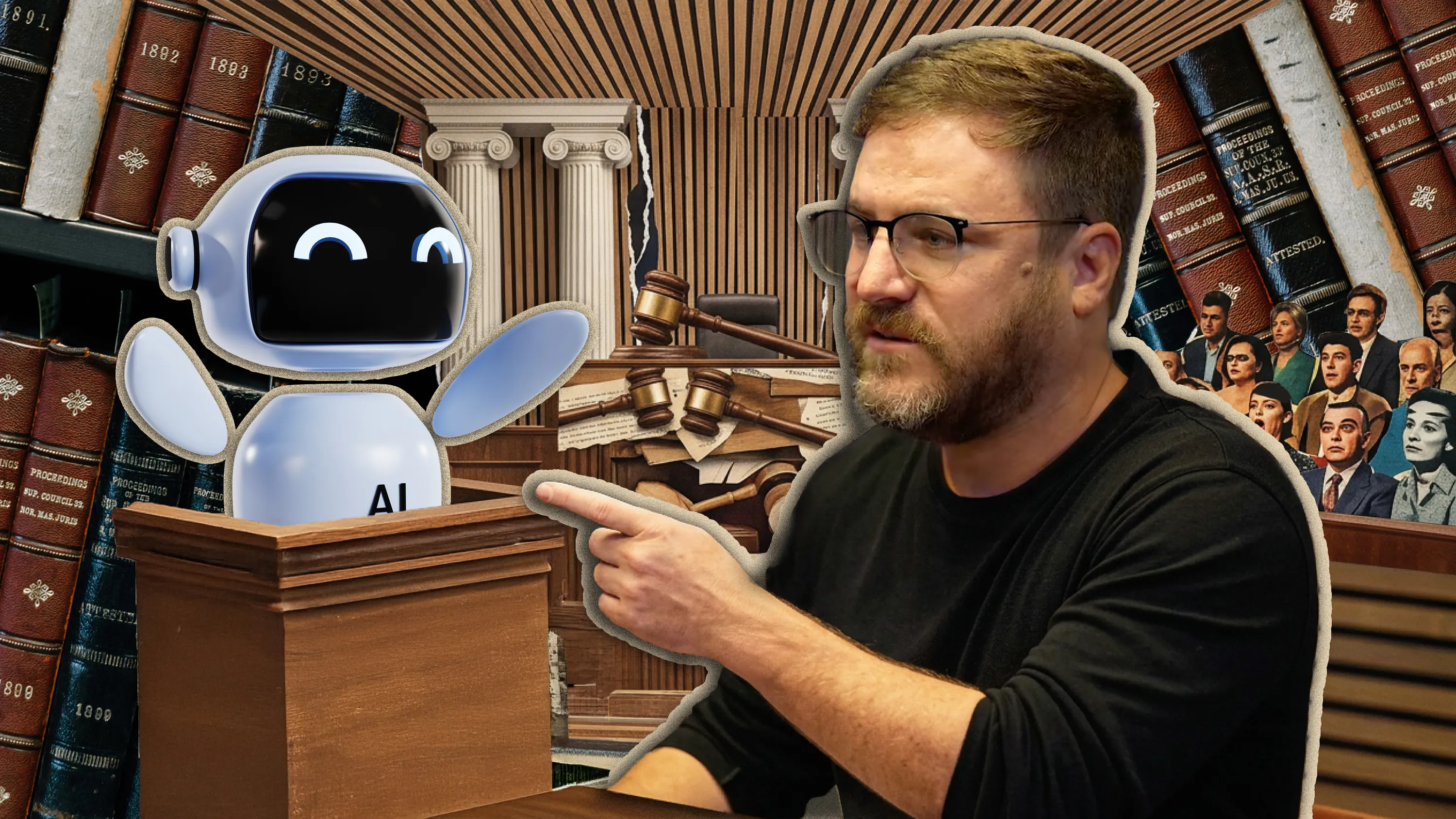
| At a time when tech has never seemed more vulnerable in court, a longtime industry foe is bringing a series of explosive chatbot lawsuits. |
| Tech Culture |
 |
|
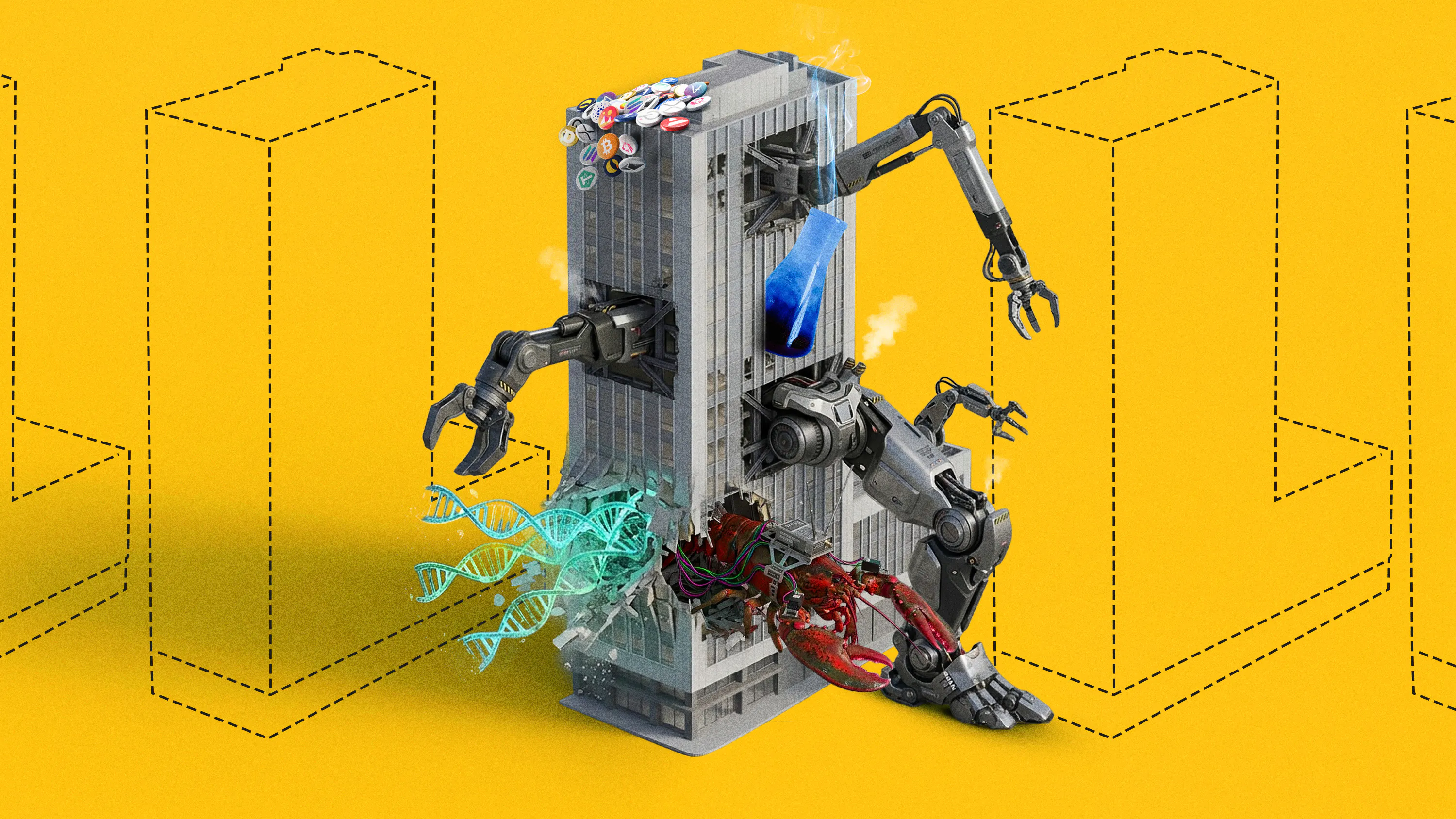
| In little more than a year, the 15-story building has become a haven for bleeding-edge techies and managed to go mainstream. Its owners think the model is easily replicable. |
| |
 |
| Listening: “The Idiot” |
| Everyone has an annoying cousin. (By my count, I have nearly half a dozen.) But few people’s cousins have pulled the same shenanigans as M. Gessen’s cousin, Allen. Gessen tells all about Alex in “The Idiot,” the latest series from Serial, the New York Times-owned outfit that has consistently produced the finest podcasts over the past decade. And when it comes to Allen, Gessen has much to possibly discuss: They belong to the same boisterous, loving, enveloping clan of Russian-Americans. And Allen, as Gessen puts it, is a serial kidnapper. Actually, Allen is serially felonious. I won’t spoil the full extent of his misdeeds: I have too much respect for Gessen's careful pacing.—Abram Brown |
| Reading: “Dune Messiah” by Frank Herbert |
| Ever since I initially saw Denis Villeneuve’s “Dune: Part One” in 2021, a thought has stuck in my mind, like some spice-induced hallucination: I have no earthly idea how anyone fully followed that movie—or “Dune: Part Two” from 2024—without having read Frank Herbert’s original “Dune” novel. It’s complicated. |
| I’d read “Dune” as a teenager, then again during the pandemic to refamiliarize myself with it before seeing Villeneuve’s movies, and I think it helped me appreciate his depth as a master adaptist. So it doesn’t take a mentat to figure out what I’ll say next: Before Villeneuve’s “Dune: Part Three” comes out later this year, it’s worth getting its source material, “Dune Messiah,” a 1969 sequel. It’s only about a fourth of the size of “Dune,” though just as galaxy-brained, dwelling much on the concepts of free will, religious fervor and dictatorial governments. In it, Paul Atreides sits uneasily upon the throne, his empire expanding through the force of an interstellar jihad carried out in his name. There’s a shape-shifter, a prescient fish man in a gas tank, the Bene Gesserit witches, a gruesome disfigurement and an array of interlocking schemes for power. That’s not to mention Paul’s constant struggle to discern the various futures glimpsed through his precognitive abilities, which are greatly amplified. He’d be a real terror on Polymarket.—A.B. |
| Watching: “The AI Doc: Or How I Became an Apocaloptimist” |
| Daniel Roher, the Oscar-winning director of the powerful documentary “Navalny” about doomed Russian opposition leader Alexei Navalny, turns his attention to our chances of surviving a future ruled by AI in his new film, which he co-directed with Charlie Tyrell. Roher clearly embraces his role as a modern Virgil, adroitly leading us through the AI circles of hell, where we unleash a technology that ultimately usurps us. I was taken aback when one of the technologists he interviewed talked about a future where AI treats people as we treat ants today: ignored until bothersome, then squashed without a moment’s hesitation—a particularly compelling demonstration of the apocalyptic part in the “apocaloptimist” subtitle Roher adopted from one of his interview subjects. After the unrelenting gloom, I was as relieved as Roher appeared to be when he finally pivoted to the optimists, who imagine AI as our best bet for solving intractable problems and paving a path to utopia. |
| Roher spends a lot of time talking about babies, and for good reason: One of the drivers of his journey is the news that his wife is pregnant with the couple’s first child. One could see the splicing of old family movies and tender words of advice from his own father as slightly manipulative, but I confess I found it incredibly moving that Roher’s wrestling with AI turned out to be part of a broader meditation on what it means to be a good parent. |
| The montage of adorable babies he included was almost enough to get me to put myself in the camp of the optimists and stay there until the end. But then Roher sat down for an interview with OpenAI’s Sam Altman, telling him that his deepest fears about the technology relate to impending parenthood. Altman responded by saying he is about to become a father too and is unbothered by the fact that his future child is unlikely to be smarter than the technology his company and others are building. |
| When Roher presses him on what will happen if something goes wrong and AI ultimately threatens our existence, Altman reassures Roher the company has a plan. Asked for more details, Altman confesses that the main plan is trusting governments to find a solution. That alone could be enough to leave many of us on the apocalyptic side of the equation.—Amy Dockser Marcus |