Niall Ferguson: How Great Powers Lose Wars They’re Winning Nearly 70 years after the Suez Crisis, the United States may have marched into a strikingly similar trap in the Strait of Hormuz.
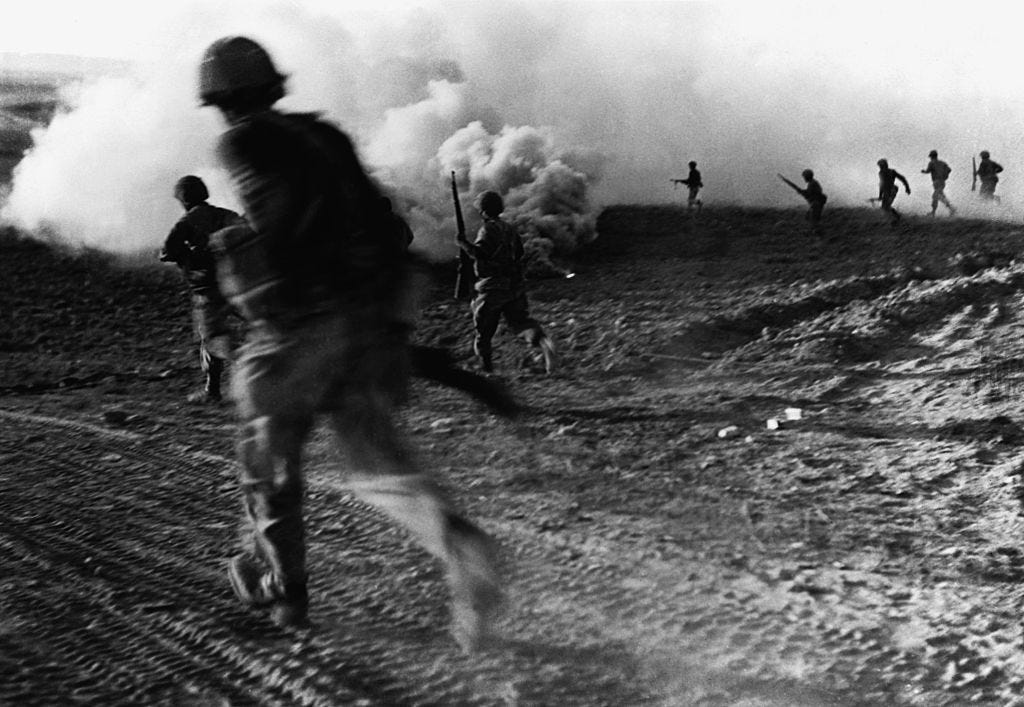
“Time is not on the side of an overstretched hegemon, because the economic costs of war pile up faster than the strategic benefits can be reaped,” writes Niall Ferguson. (Hulton-Deutsch Collection via Getty Images)
For nearly five weeks, President Donald Trump has bombarded Iran with missiles and bombs—and the American public with contradictory messaging about the aims and duration of this conflict. On Wednesday night he did it the old-fashioned way, with a 20-minute television address. The U.S. is “on track to complete all of America’s military objectives shortly,” he said, “very shortly. We are going to hit them extremely hard over the next two to three weeks.” He also disclaimed all responsibility for reopening the Strait of Hormuz, saying that “the countries of the world that do receive oil through the Hormuz Strait must take care of that passage.” Earlier that day, Trump extended this invitation not only to the European members of NATO, whom he blames for failing to provide support for his military action, but also to South Korea, Japan—and China. Not for the first time, he could offer no details on the talks he claims to be having with Iranian representatives. This article is featured in International. Sign up here to get an update every time a new piece is published. Only future historians will be able to work out if Trump has been procrastinating while talking. Could earlier action have been taken to secure the Strait? Could U.S. ground forces have been deployed sooner to reopen it? Does he still intend to deploy them? We cannot yet know. But history does provide a useful point of comparison here...
Become a paid subscriber Get access to our comments section, special columns like TGIF and Things Worth Remembering, tickets in advance to our live events, and more. UPGRADE TODAY |