| | Iran warns against a US invasion, Eli Lilly deepens its AI-powered drug development push, and the EU͏ ͏ ͏ ͏ ͏ ͏ |
| |  | Flagship |  |
| |
|
The World Today | 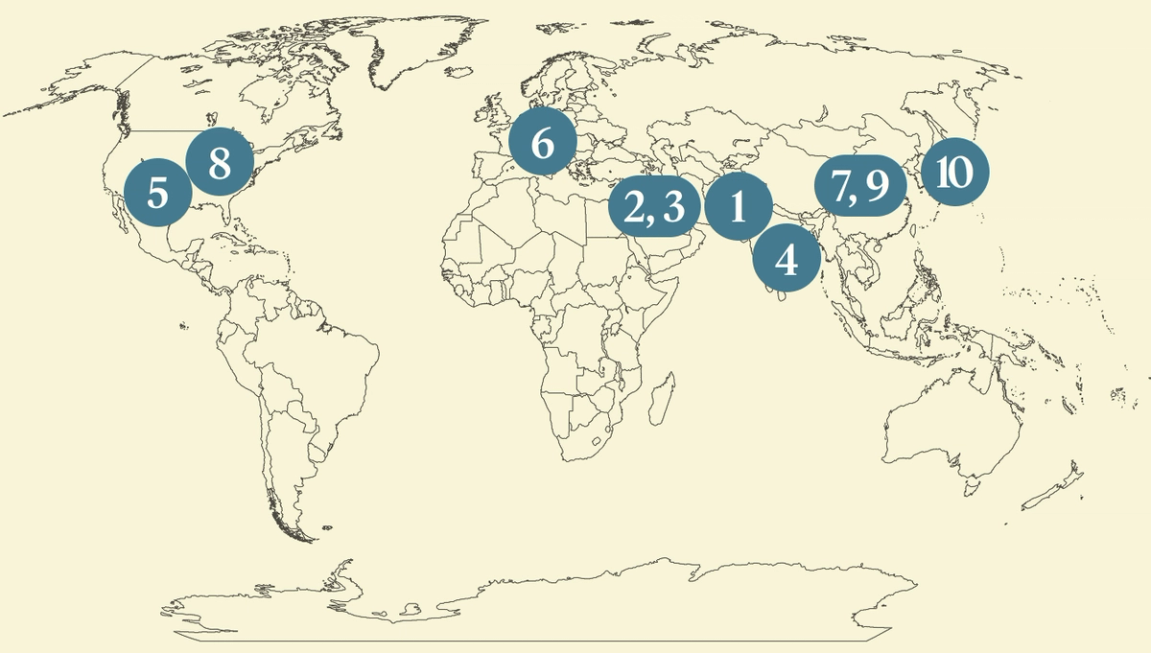 - Iran’s warning to US
- Aluminum production hit
- Different definitions of victory
- War’s less obvious impacts
- MAGA divisions over Iran
- Europe’s deportation plan
- China, US seek leverage
- AI drug development
- Wine glut in China
- RIP, Japan’s iconic flip phones
 Who wins wars, and why? |
|
Iran warns against a US invasion |
 U.S. Air Force/Handout via Reuters U.S. Air Force/Handout via ReutersIran on Sunday warned against a US invasion after a Marine unit arrived in the Middle East, raising the specter of a fraught new phase of the war. The Pentagon is preparing for possible ground operations that could last weeks, The Washington Post reported, a campaign that would involve raids but stop short of a full-scale invasion. The conflict also widened over the weekend as the Iran-backed Houthi militia in Yemen joined the war, firing missiles at Israel. Middle East officials met in Pakistan on Sunday to discuss finding an end to hostilities, but “as the conflict expands to involve new actors with their own interests, a ceasefire will be increasingly difficult to impose and sustain,” an expert wrote in Foreign Affairs. |
|
Tehran targets Gulf aluminum facilities |
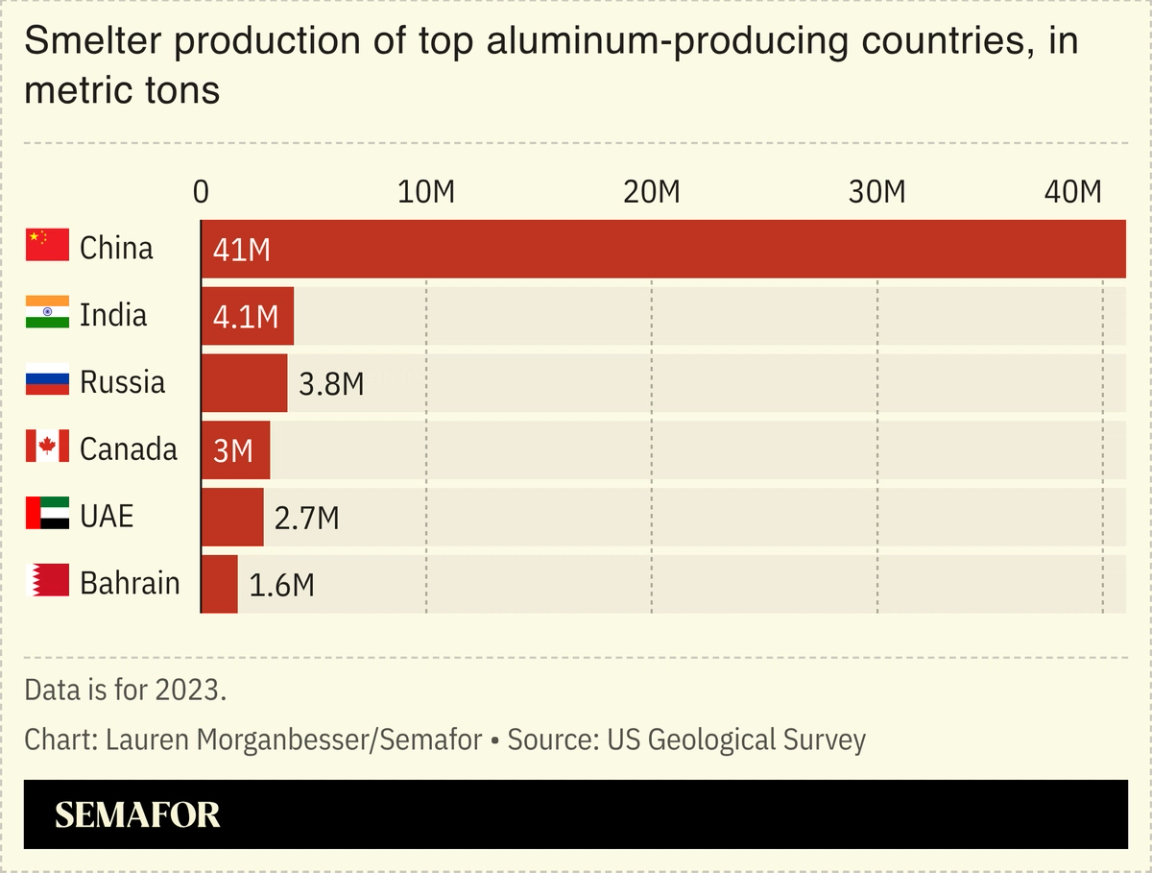 Tehran stepped up its attacks on Gulf nations, hitting aluminum plants in Bahrain and the UAE this weekend. The strikes add to the pressures facing global commodities markets amid disruptions to both production and shipping. The Middle East accounts for 9% of the world’s production of aluminum, an abundant metal that is essential to the functioning of the global economy given its importance to a wide range of industries, including packaging, aerospace, and transportation. Aluminum prices had surged in the weeks before the war given tight supply, and the price shock from the conflict has pushed the metal to a four-year high. That could make construction projects less financially viable, a US builders group warned: “Even more projects will not move forward.” |
|
US, Iran define victory differently |
 Majid Asgaripour/WANA via Reuters Majid Asgaripour/WANA via ReutersThe US and Iran envisage victory in the war differently, and that could undermine future peace, a former Australian general argued. The US goal — insofar as it has been concretely expressed — is a military one, Mick Ryan said: destroying Iran’s weapons stockpile and nuclear program. Iran’s goal is survival and causing enough economic disruption to force the US to back down. Both sides could declare victory, but a surviving, even if weakened, Iranian regime would stand as a rebuke to US claims. To win the peace, Washington would likely have to “mow the grass” — return repeatedly to prevent Iran from rebuilding, a costly commitment of already stretched resources — while Iran’s victory claim would also be Pyrrhic, as it has alienated its neighbors. |
|
The war’s less obvious impacts |
 Louai Beshara/AFP via Getty Images Louai Beshara/AFP via Getty ImagesThe release of a major Bollywood movie was delayed because the Iran war would affect its Gulf release. Toxic: A Fairy Tale for Grown-ups was due in March, but the Middle East has a huge South Asian diaspora population and is thus a major market for Indian movies. This will be the first Eid holiday without a major Indian movie release since 2020. It’s just one of several less obvious impacts of the conflict, Bloomberg reported. Italian farmers are seeing profits fall as diesel and fertilizer costs rise; Pakistani cricket fans are being told to stay home to watch matches on TV to save on fuel costs; and British hoteliers have warned that a prolonged crisis could lead to higher prices. |
|
Iran conflict divides Republicans |
 Callaghan O’Hare/Reuters Callaghan O’Hare/ReutersA gathering of prominent American conservatives last week exposed deep divisions within the Republican Party over the Iran war. Some longtime Donald Trump loyalists questioned the escalation — one warned that “a ground invasion of Iran will make our country poorer and less safe” — while others praised the president’s strikes. The split at the Conservative Political Action Conference reflected generational divides within the party over involvement abroad and support for Israel, The New York Times reported. The debate is also testing Trump’s legacy and succession, as he privately asks advisers: “JD or Marco?” — contrasting Vice President JD Vance, who has opposed past US entanglements in foreign wars, with the more hawkish Secretary of State Marco Rubio, according to Reuters. |
|
EU advances deportation plan |
 A group of migrants in Crete. Stefanos Rapanis/Reuters A group of migrants in Crete. Stefanos Rapanis/ReutersEuropean Union lawmakers advanced a plan to deport migrants to “return hubs” outside the bloc, as the continent adopts a more Donald Trump-like posture on immigration. Rejected asylum-seekers could be detained for up to two years or sent to “third countries” under the plan, which was backed by an alliance of center-right and far-right lawmakers. Critics warned of “human rights black holes” at offshore sites. The EU is spending millions to deter migrants, but the new proposal is more in line with Italy’s firmer policy, which involves two detention centers in Albania. Conservatives in Europe have praised Trump’s immigration crackdown: “There is a new consensus in Europe,” one politician said. “The era of deportations has begun.” |
|
China, US escalate standoff ahead of visit |
 China Daily/Reuters China Daily/ReutersChina launched two probes into US trade practices on Friday, mirroring Washington’s moves in an escalating trade standoff ahead of US President Donald Trump’s May visit to Beijing. Beijing said the investigations were reciprocal after the US opened trade inquiries into China and other countries this year. Both sides are aiming to build leverage before Trump’s summit with Chinese leader Xi Jinping. US-China trade has sunk to a two-decade low and continues to decline. The probes are the latest sign that deep disagreements remain even after the superpowers agreed to a trade war truce in October. But “the Taiwan question is China’s priority item” for the summit, a Shanghai-based professor wrote for the Brookings Institution, as Beijing looks to constrain Washington’s support for the island. |
|
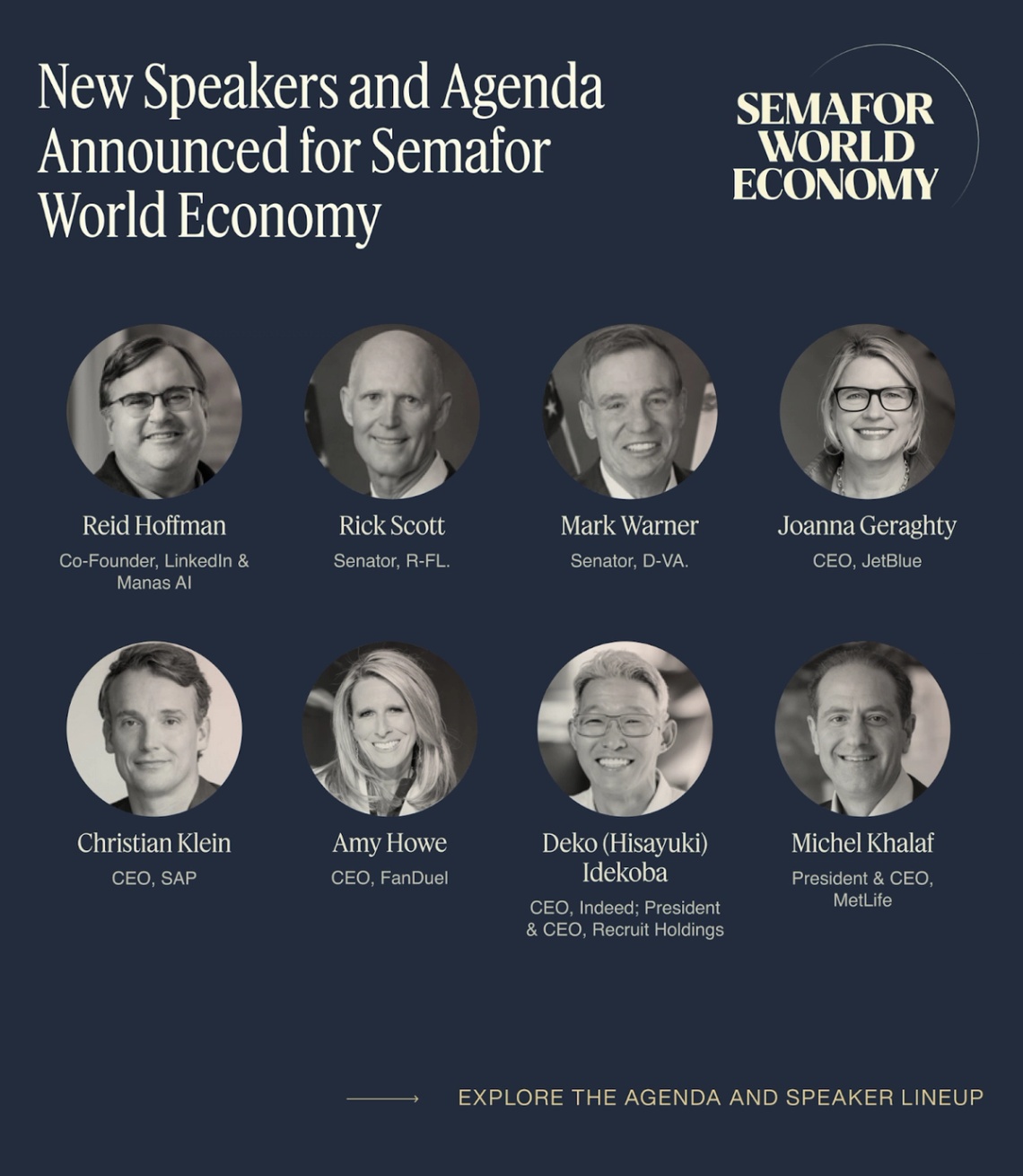 This April, top global CEOs, government officials, and industry leaders will join Semafor World Economy — the largest convening of top global CEOs and government officials in the United States — to sit down with Semafor editors for conversations on the forces shaping global markets, emerging technologies, and geopolitics. See the full lineup of speakers, including Global Advisory Board members, Fortune 500 CEOs, and top elected officials from the US and across the G20. |
|
Eli Lilly leans into AI drug discovery |
 Antranik Tavitian/Reuters Antranik Tavitian/ReutersUS pharmaceutical giant Eli Lilly inked a $2.75 billion deal with a Hong Kong-listed biotech firm to create new medicines using AI. Insilico Medicine, which develops drugs in China and went public in December, says it has produced at least 28 medicines using generative AI tools, with nearly half at the clinical trial phase. The agreement points to China’s growing role in the global pharma sector: Lilly plans to invest $3 billion in the country over the next decade, and a record number of non-Chinese companies licensed treatments made by Chinese firms in 2025. The industry is increasingly turning to AI to accelerate research. One recent study found AI can deliver “unprecedented speed and accuracy” in early cancer drug discovery. |
|
China’s wine market nose-dives |
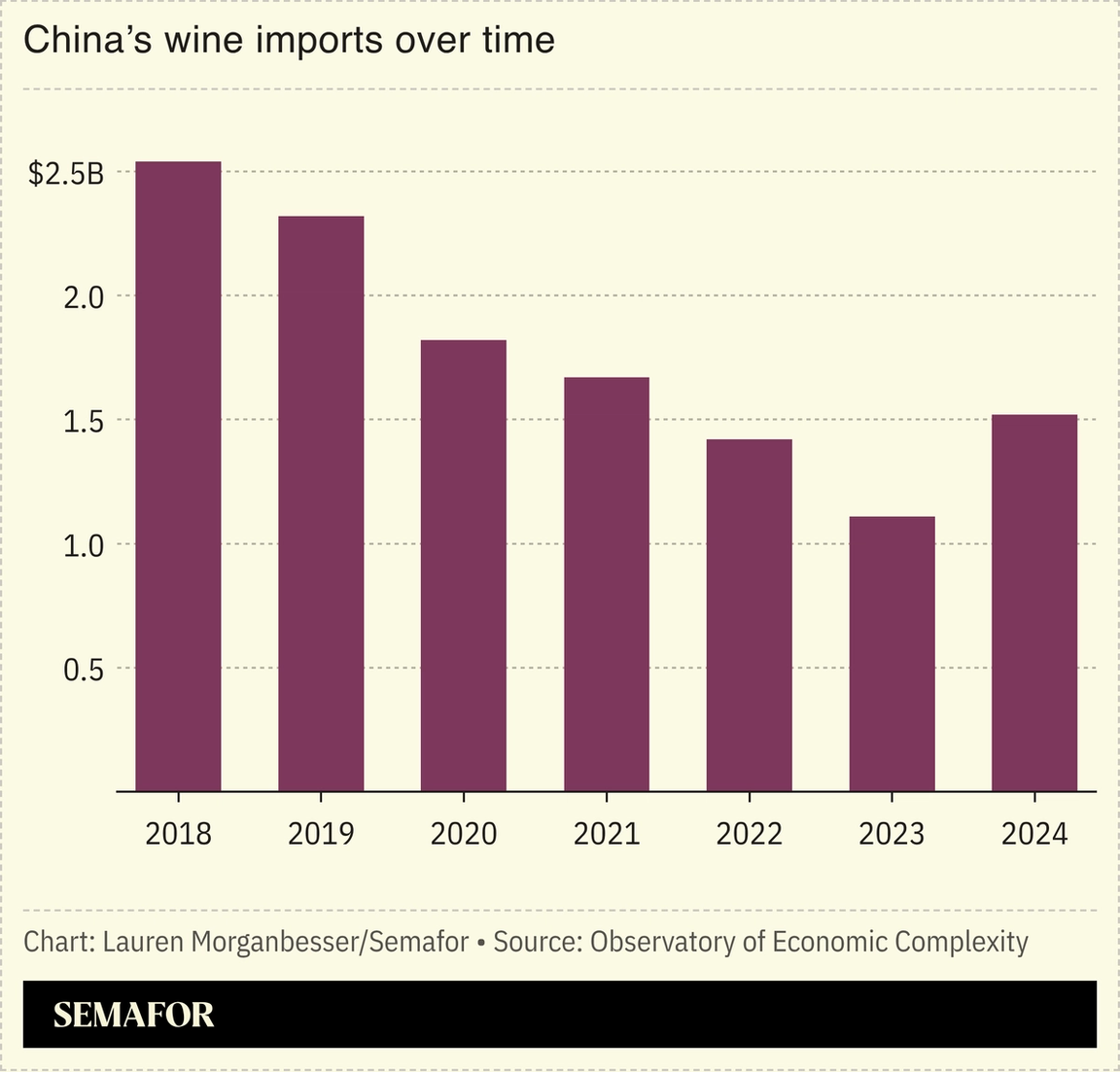 China’s falling wine intake has led to a global glut. Leader Xi Jinping has stigmatized lavish gifting and banqueting by government officials, a core driver of premium wine imports, and banned alcohol at official events. Meanwhile, a slowing economy and collapsing property market have left many feeling poorer and unwilling to splash out on high-end wine, The Wall Street Journal reported. The country represented 8% of global wine imports in 2017, and the industry restructured around it; a quarter of Bordeaux’s exports went there. But imports are now half their peak. One Australian producer holds $150 million in excess Chinese inventory. The future looks worse, as young Chinese associate red wine with stuffy business banquets rather than cool. |
|
|


