| | In this edition, Miami attracts a Wall Street crowd still eager to do business with the Gulf, and Je͏ ͏ ͏ ͏ ͏ ͏ |
| |  | Business |  |
| |
|
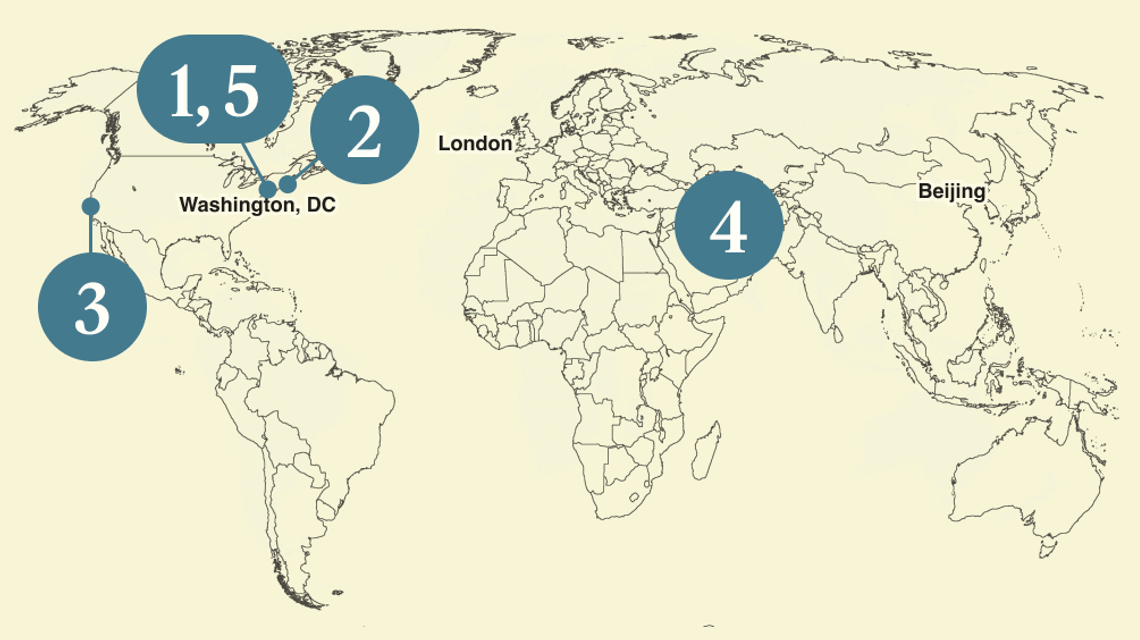 - Private credit fine print
- JetBlue games out merger
- Tech bill divides Silicon Valley
- Limits of ‘drill, baby, drill’
- Snap’s Lynton on TikTok
|
|
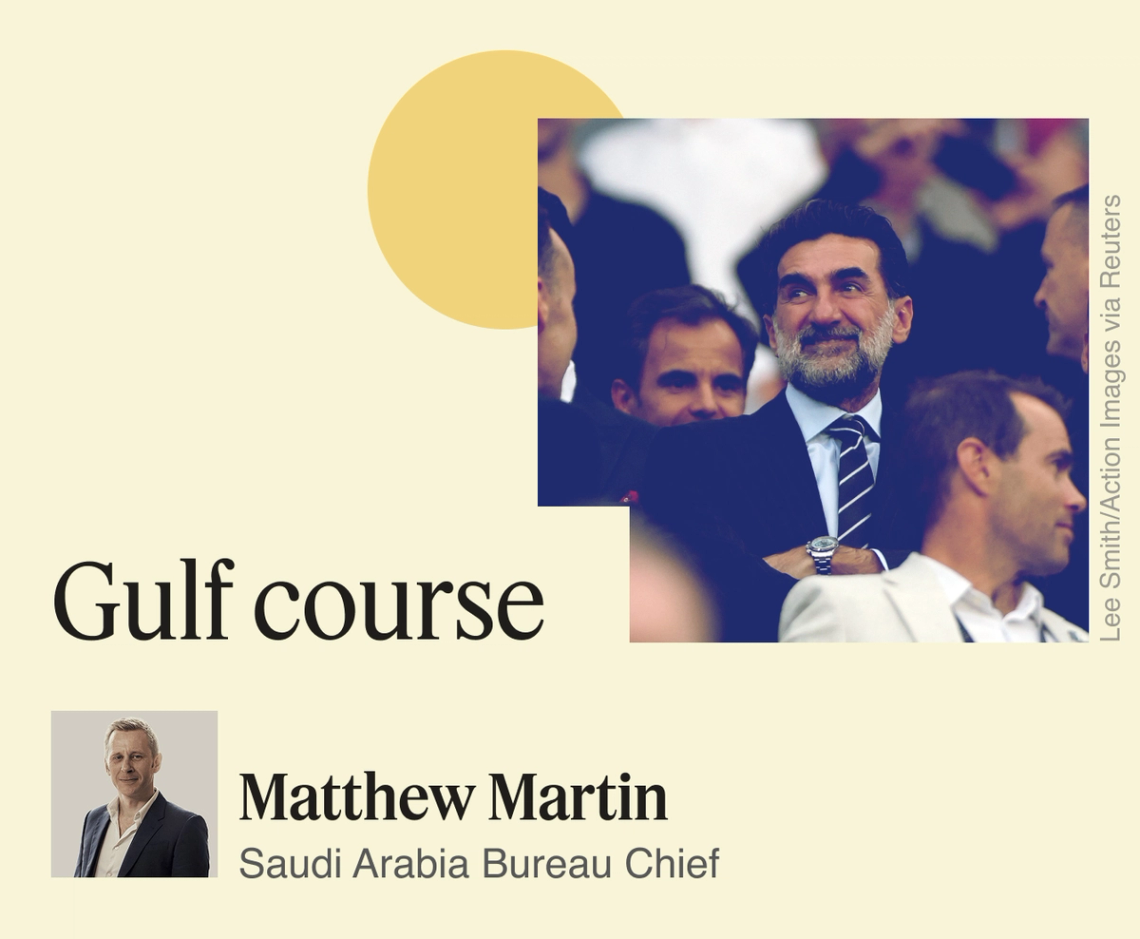 The Iran war has threatened Wall Street’s generational bet: That the Middle East could be what China promised and never delivered — a true growth market. Deep-pocketed sovereign wealth funds and a rising class of new leadership — ambitious, tech savvy and able to speak the language of global finance — beckoned Western firms to the Gulf. Wage premiums for expat bankers narrowed as glamourous lifestyles, tax-free salaries, and decent education made the region seem less like a hardship posting and more like a career-boosting financial playground. But whether that continues depends on how long the conflict drags on, and how much death and destruction it leaves in its wake. Trump officials are getting anxious that Gulf governments may withdraw tens of billions of dollars of investments in the US. “When these guys do that, it is going to be immensely destabilizing and contradictory to the president’s investment goals,” a person familiar with internal conversations told Politico. Investment conferences in the region, which seemed to be happening every week, are getting cancelled or delayed. Gulf fund managers are already finding Western bankers less willing to travel to meet them. And it’s harder to convince junior bankers to move to the Gulf when the CEO won’t travel there. Yet what is already clear here in Miami at this week’s Saudi investment confab, FII, where President Donald Trump is scheduled to appear in the Magic City tomorrow for the second year running, is that deals have not ground to a halt. Diversifying from oil and investing to shore up their alliances may be even more important for Gulf officials who are looking beyond the current conflict. Wall Street’s moneymen still want to sit at the intersection of Middle East petrodollars and western capitalism. For now, though, they’d just rather do it from Miami. One more thing: Liz, Rohan, and Semafor’s Eleanor Mueller will be in Washington, DC this afternoon interviewing the Trump administration’s top antitrust officials, including DOJ’s Omeed Assefi, FTC’s Andrew Ferguson, and FCC’s Brendan Carr, plus the UK’s competition chief. Livestream here. |
|
The fine print holds in private credit panic |
 Kylie Cooper/File Photo/Reuters Kylie Cooper/File Photo/ReutersThe least satisfying, but most accurate, thing to be said about private credit right now is that it’s working exactly as it’s supposed to. Funds are limiting customer withdrawals just as they said they would and if it all sounds a bit paternalistic — protecting unsophisticated investors from the consequences of their own panic — well, that’s the point. BlackRock CEO Larry Fink, whose firm has gated investors who wanted out of its $26 billion HPS Corporate Lending Fund, told the BBC he would be violating his fiduciary duties by waiving the redemption cap, which would force the fund to sell assets at steep haircuts. “Those are the rules — live with it,” he told the British broadcaster this week. “It’s not like it’s on page 92 of a prospectus. It’s on page one.” When Blackstone dipped into its own pockets, as well as its employees’, earlier this month to meet more than the 5% of customer redemptions it was required to, fund managers worried that the generosity would spread. But others have stuck to the minimum. Munificence, for the moment, is not contagious. — Liz |
|
 Kylie Cooper/Reuters Kylie Cooper/ReutersJetBlue has tapped advisers to assess the viability of selling itself to a rival airline, Semafor scooped Wednesday. It has specifically gamed out a merger with United — seen as the likeliest candidate, with a CEO in Scott Kirby who has long been intrigued by the idea — as well as Delta and Southwest. Any deal would be a test of what’s possible in Trump’s Washington: Airline mergers have always faced tough antitrust and political scrutiny, but regulators appear open to corporate consolidation, especially after a leadership change atop the Justice Department last month. It would also be a sign of how the coming AI wave might spur consolidation across all kinds of industries — what Goldman Sachs President John Waldron called “endgame consolidation” in an interview with Semafor last fall. “If you’re going to create a generative-AI rewiring of your business and take a lot of cost out, you’d rather do it on a broader canvas,” he said. “So if there is a deal that you want to do, go do that and then put the AI on top.” |
|
A ‘Little Tech’ bill divides Silicon Valley |
 Semafor/YouTube Semafor/YouTubeWe’ve long debated whether AI is inflationary or deflationary. The next big question: is it pro-competitive or anti-competitive? Silicon Valley giants are battling startups like OpenAI and Anthropic, and AI promises to lower the barriers to entry in dozens of industries. But Meta, Google, and other tech giants are digging a moat that may be too deep and expensive for anyone else to cross. Semafor’s Reed Albergotti talked to California state Sen. Scott Wiener, whose new cheekily named BASED Act aims to stop tech monopolies from strangling startups in the crib. It applies narrowly to giants — companies with market caps above $1 trillion and at least 100 million monthly US users — and would prevent them from, among other things, favoring their own products in algorithmic results or AI training. Some tech players, like Y Combinator’s Garry Tan, are on board; big companies are likely to fight. “This is pro ‘little tech,’” Weiner told Reed. Watch or listen here. |
|
The limits of ‘drill, baby, drill’ |
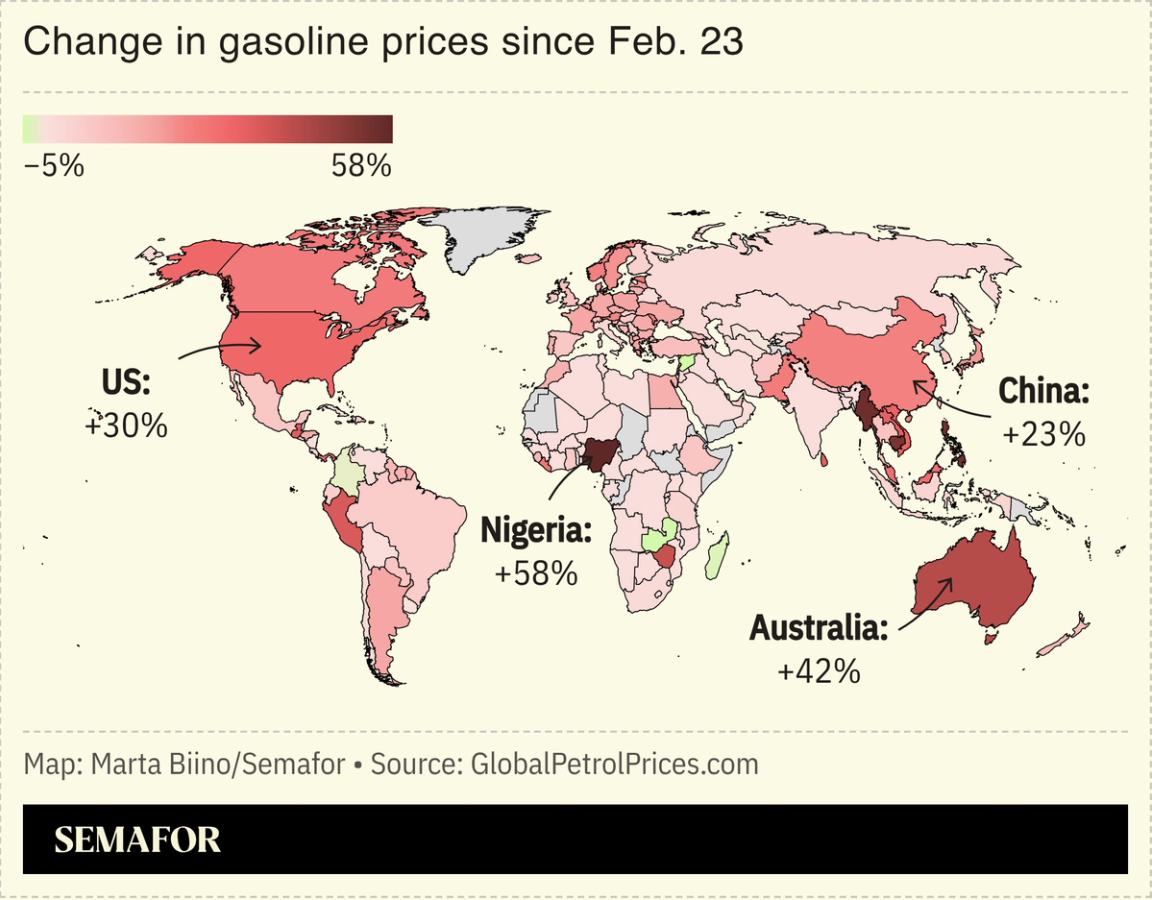 Signals are piling up that the Trump administration’s “energy dominance” paradigm is reaching its limits. Energy Secretary Chris Wright’s onstage messaging at the oil industry’s annual CERAWeek conference was that the Iran war is “a short-term disruption.” Privately, though, he was urging energy executives to increase production, Semafor’s Tim McDonnell reports. But oil companies got burned chasing short-term price signals during the 2010s shale boom, and more pushback could be coming soon. “Adding and subtracting rigs is absolutely value-destructive,” Clay Gaspar, CEO of independent driller Devon Energy, said. |
|
Snap still salty over TikTok’s survival |
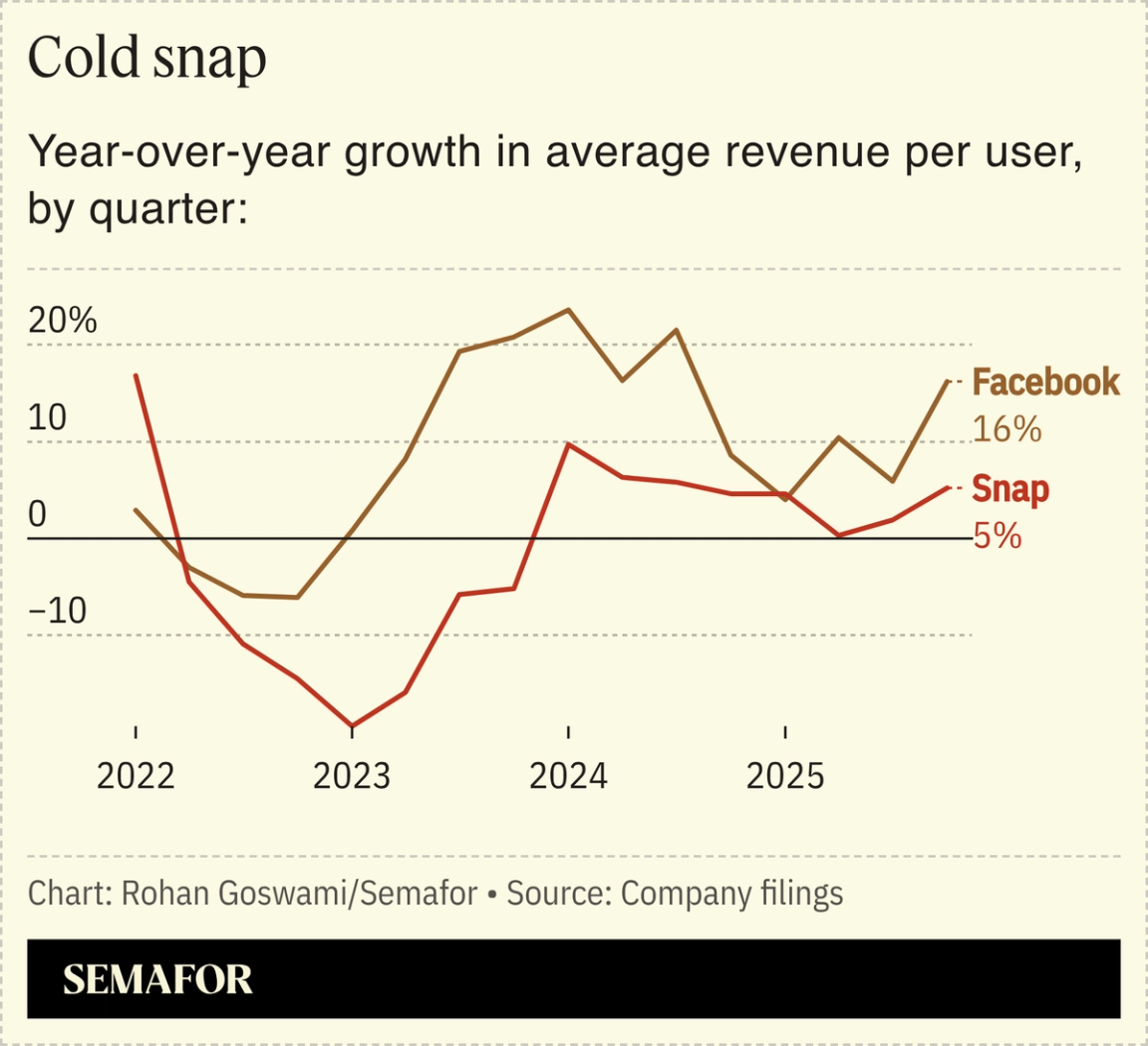 Snap is the social-media space’s laggard, worth about a third of its $24 billion valuation when it went public in 2017. It is losing valuable American users to TikTok, for which Snap’s longtime chairman, Michael Lynton, has some choice words on an upcoming episode of Semafor’s Mixed Signals. “If we didn’t have the current administration in place, we wouldn’t have TikTok,” he told Semafor’s Ben Smith and Max Tani. “Congress passed a law” requiring TikTok’s Chinese owner, ByteDance, to hand over control of the app’s algorithm to a US owner. “The president ratified it. The NSA said it’s important to happen, and then for some reason we still have TikTok hanging around.” (The US version of TikTok was sold to a consortium of mostly US investors). |
|
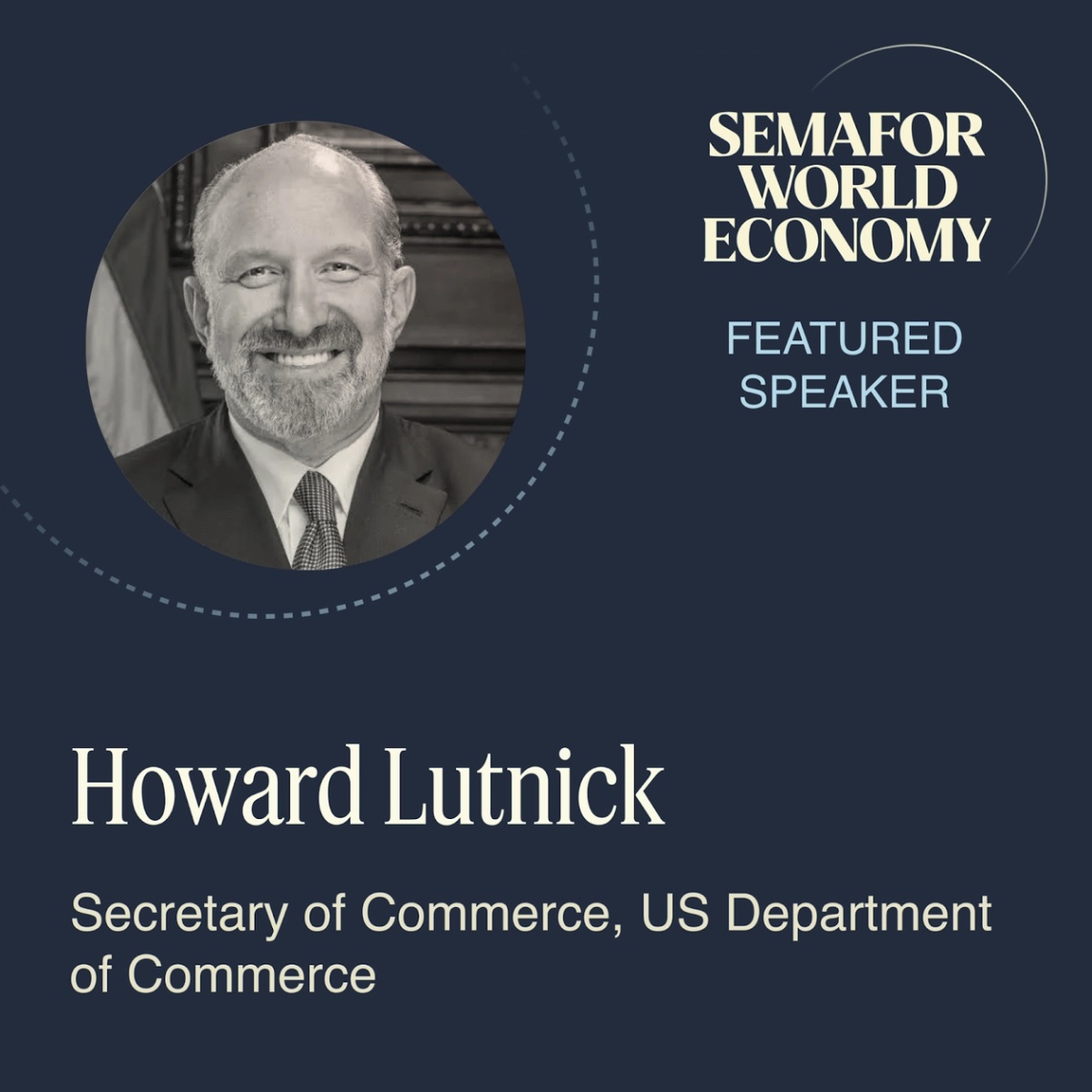 This April, Howard Lutnick, US Secretary of Commerce, will join global leaders at Semafor World Economy — the largest gathering of top CEOs and officials in the United States — to sit down with Semafor editors for conversations on the forces shaping world markets, emerging technologies, and geopolitics. See the full lineup of speakers, including Global Advisory Board members, Fortune 500 CEOs, and officials from the US and across the G20. |
|
➚ BUY: Hardware. Prices of consumer electronics are skyrocketing because they compete for components used in the AI buildout. “Politicians and technologists alike might want to start worrying about AI’s impact on the price of your smartphone, your PlayStation, and your car,” Semafor’s Reed Albergotti writes. ➘ SELL: Software. Forget about the SaaSpocalypse; New York City’s taxi commission’s Slack subscription was on the list of Mayor Zohran Mamdani’s budget cuts. (So was a $9 million McKinsey contract that gave us this museum piece.) |
|
 Companies & Deals- Back on the horse: Merck agreed to buy cancer-drug maker Terns for $6.7 billion, its third $5 billion-plus acquisition in the past eight months, since getting outbid by Pfizer for Seagen in 2023.
- Bonus bump: Wall Street bonuses jumped 6% to a record $49 billion, a tax windfall for Mamdani as he tries to close a $7 billion budget gap.
- Small is sexy: Meta on Wednesday launched a new initiative, Meta Small Business, aiming to entice entrepreneurs to build their startups on Meta’s AI platforms.
Watchdogs- Caracas fracas: Senate Democrats are asking regulators for data on trades in Venezuelan bonds in the days surrounding the capture of Nicolás Maduro, looking for insiders, Semafor’s Eleanor Mueller scoops.
- War games: A verdict could come today in Anthropic’s lawsuit against the Pentagon.
- Pre-checkmate: Some US airports may have to close as the partial government shutdown continues. (Rohan breezed through LaGuardia this morning; Liz will report back from Reagan tonight.)
- Big Tech’s tobacco moment: A jury found Meta and YouTube negligent in a landmark social media addiction trial. The companies were accused of harming kids with platforms as addictive as cigarettes. “This has potentially large impacts on other areas in tech, AI and beyond that,” a lawyer told WSJ. “The floodgates are already open.” Meta and Google will appeal.
Markets- Double down: Legalized sports betting roughly doubles credit delinquency rates among gamblers, a New York Fed report finds.
|
|
|


