| | In today’s edition: UAE makes a case for Hormuz, markets price in a quick end to the war, and Saudi ͏ ͏ ͏ ͏ ͏ ͏ |
| |  Kuwait City Kuwait City |  Miami Miami |  Washington DC Washington DC |
 | Gulf |  |
| |
|
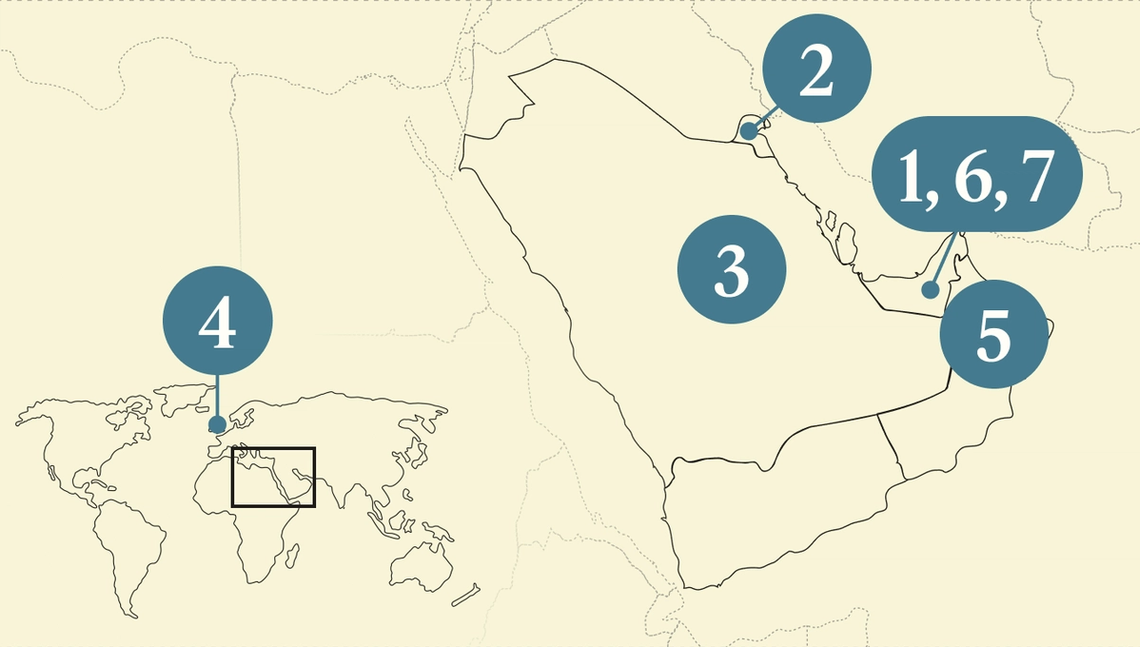 - UAE makes Hormuz case
- Gulf targets Iran proxies
- Saudi pitches up in Miami
- Markets price in war’s end
- Wild swings in Oman crude
- Blackstone’s Abu Dhabi bet
- Port operators’ cushion
 Still on the calendar: Dubai’s ski slope run. |
|
‘We want Iran as a normal neighbor’ |
 Sultan Al Jaber and JD Vance. @ADNOCGroup/X. Sultan Al Jaber and JD Vance. @ADNOCGroup/X.The UAE is making its case to the Trump administration that the war with Iran shouldn’t end without securing the Strait of Hormuz — and that a ceasefire, along with limits on Iran’s nuclear and missile programs, aren’t enough to avert the next conflict. That message is being delivered by top officials: Sultan Ahmed Al Jaber, ADNOC’s Group CEO, met US Vice President JD Vance on Wednesday, while UAE ambassador to the US Yousef Al Otaiba wrote in The Wall Street Journal: “We can’t let Iran hold the US, the United Arab Emirates and the global economy hostage. A simple ceasefire isn’t enough.” The endgame the UAE is calling for, while not regime change, is close to it. “We want Iran as a normal neighbor. It can be reclusive and even unwelcoming, but it can’t attack its neighbors, blockade international waters, or export extremism,” Al Otaiba wrote, adding that the UAE is prepared to join an international effort to unblock Hormuz and keep it open. Gulf countries have absorbed more than 3,000 Iranian missile and drone strikes since Feb. 28, with around 30 people killed. The attacks have caused physical damage that governments have only partially disclosed, and US facilities have also been hit: The New York Times reported that American troops are working from hotels and offices in the Gulf after their bases were repeatedly attacked, with Kuwaiti outposts the worst affected. — Mohammed Sergie |
|
Gulf states bust Iran-backed cells |
 @Moi_kuw/X @Moi_kuw/XKuwait’s Ministry of Interior said it had dismantled a Hezbollah-linked network that had been plotting to assassinate the country’s leaders. The 20-person cell allegedly received training and weapons from abroad. It is the latest in a wave of announcements of terrorism busts across the Gulf in recent weeks. The UAE said it had broken up a network funded and directed by Hezbollah and Iran, which had been involved in money laundering, financing terrorism, and threatening national security. Early in the war, Qatar said it had arrested two groups that had been operating in the country on behalf of Iran; Bahrain has detained at least nine people on similar charges. The US has previously said that Iran has provided weapons, training, and other support to Shia militants in Bahrain, including the al-Ashtar Brigades and Saraya al-Mukhtar, both US-designated terrorist groups. — Manal Albarakati |
|
Saudi, US investors meet in Miami |
 Richard Attias at FII in 2025. Courtesy of FII Institute. Richard Attias at FII in 2025. Courtesy of FII Institute.Saudi Arabia’s finance minister, sovereign wealth fund governor, and other top officials are in Miami for the annual US edition of the Future Investment Initiative conference. The situation at home is dire, but this makes it even more important to meet, said Richard Attias, CEO of the FII Institute. “We are a platform that can never stop,” he said, noting that around 1,900 delegates were registered, nearly 60% of them from the US. Those attending will hear US President Donald Trump’s closing remarks on Friday night, close to his self-imposed deadline on Iran talks. Attias — former executive producer of the World Economic Forum’s annual meeting in Davos — has presided over FII summits since his eponymous firm helped launch the event a decade ago. With many events in the Gulf postponed this spring, he told Semafor that he expects the biggest challenge after the war will be finding space for exhibitions and conferences. Attias is also pushing ahead with IPO plans for his firm, holding investor meetings and watching for a window to launch the share sale. — Matthew Martin and Mohammed Sergie |
|
Markets shrug off oil shock |
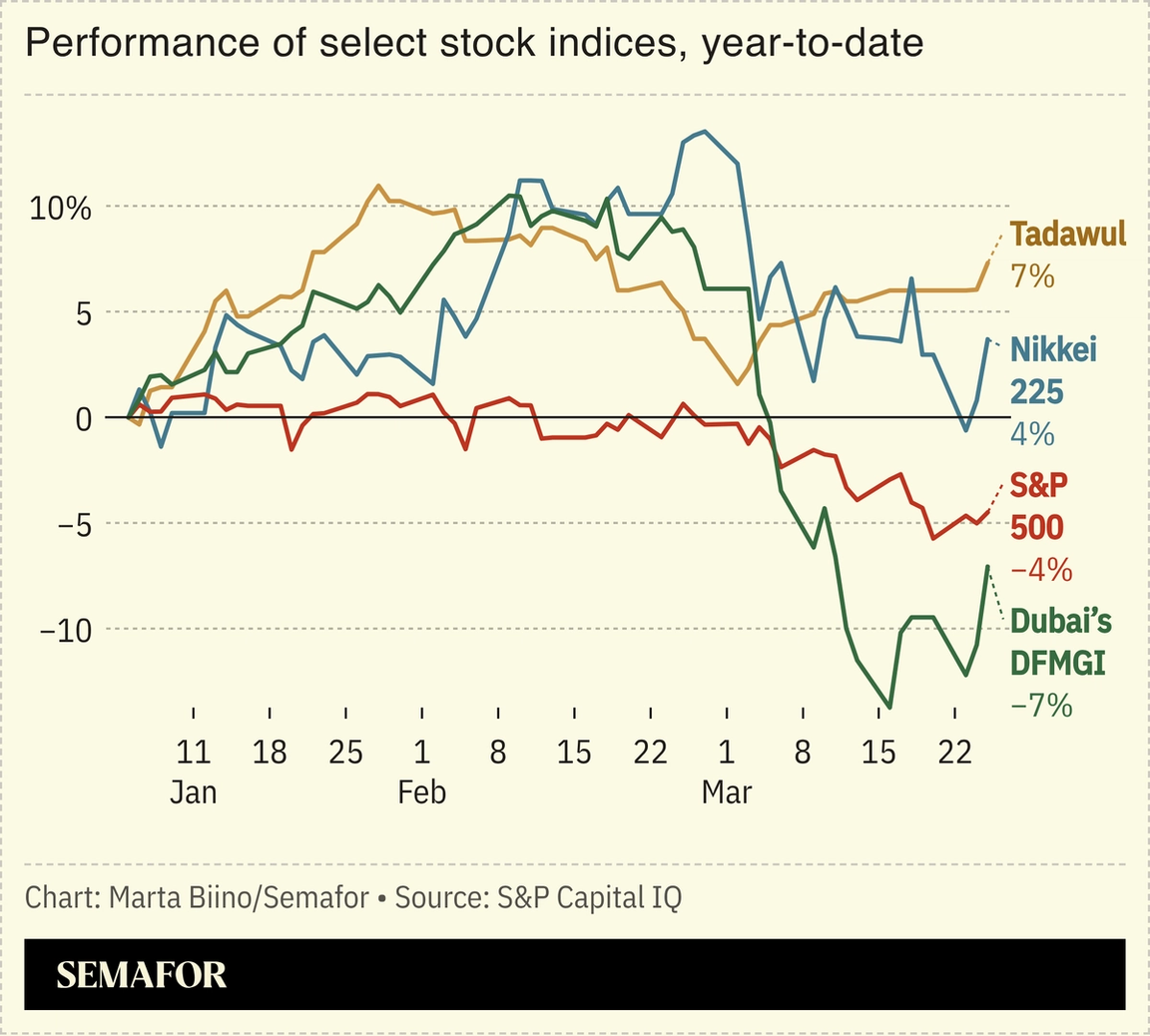 The Strait of Hormuz has been all but closed for nearly four weeks, sending oil prices soaring, but global equities have largely absorbed the blow. David Schwimmer, CEO of London Stock Exchange Group, told Semafor’s Andrew Edgecliffe-Johnson the moment is a “real test” of market resilience. Years of abundant liquidity, expectations of government intervention, and a ‘buy-the-dip’ mindset have conditioned investors to look past shocks, he said. That resilience, however, may be masking risk: Schwimmer questioned whether the confidence has been “tipping over to complacency,” and if investors are pricing in a relatively quick resolution to the war that may need to be revised if peace efforts stall. |
|
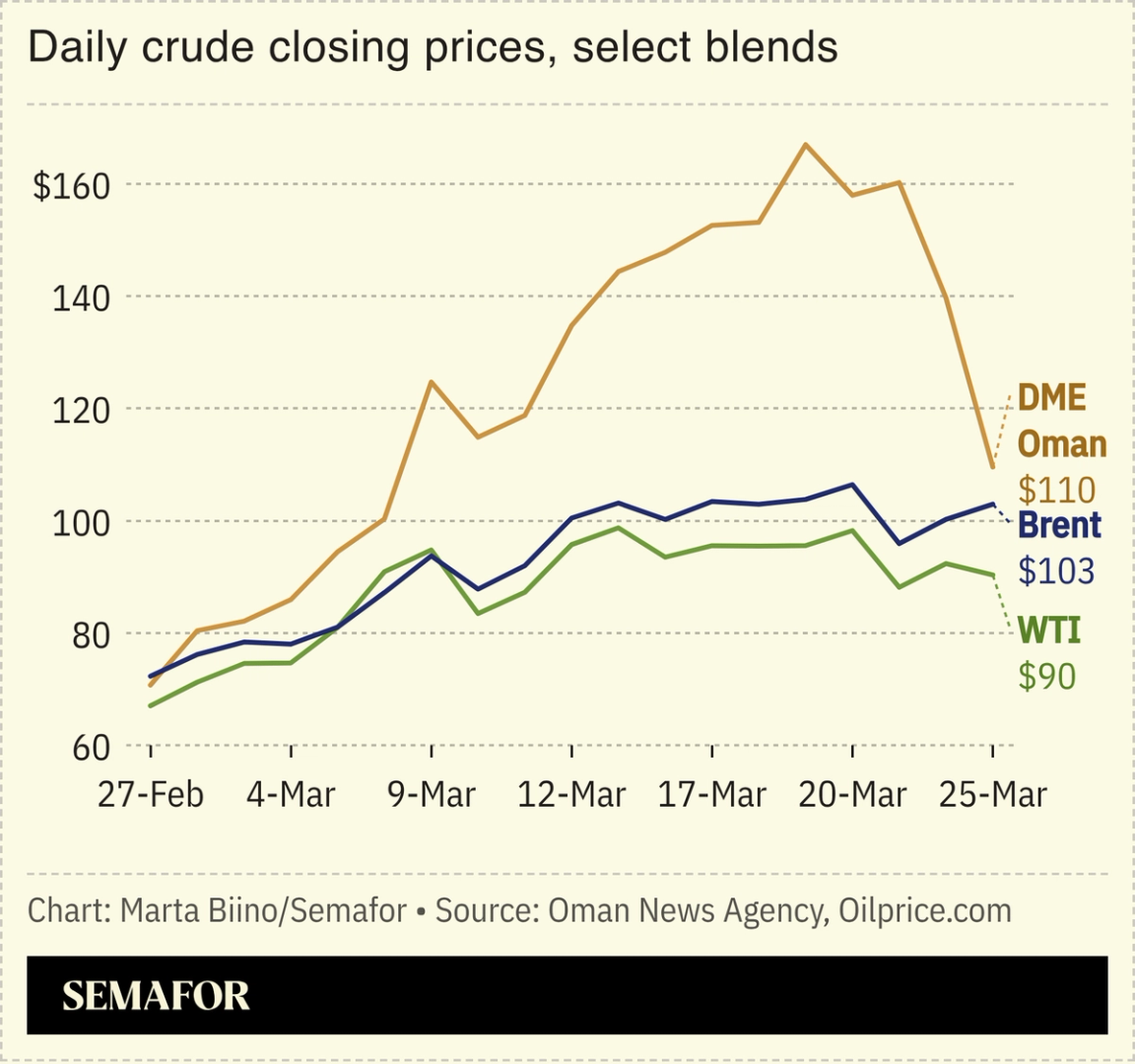 Amid all the oil market volatility, one grade of crude stands out: DME Oman. Before the war it was close in price to the two main international benchmarks — Brent, and West Texas Intermediate — but since the conflict erupted, it has risen and fallen far more rapidly. That highlights a notable feature of this war: The closure of the Strait of Hormuz has led to oil prices diverging around the world, as buyers of physical cargoes react differently to traders playing the markets. Asia gets most of its oil from the Middle East, and Oman, whose crude is similar to other Gulf blends, is still able to get its oil to customers. That makes it an easy substitute for Asian refiners, but the price is also particularly sensitive to geopolitical signals around peace talks or escalation. Oman’s government relies on oil and gas for two-thirds of its income, and the windfall should offset some of the wider economic disruption caused by the war. If the conflict continues, analysts say Brent and WTI may catch up with the higher price of Middle East crudes. — Dominic Dudley |
|
Blackstone’s $250M UAE bet |
 Mike Segar/File Photo/Reuters Mike Segar/File Photo/ReutersBlackstone has invested $250 million in a new UAE payments and data intelligence platform aimed at the gambling market, offering a vote of confidence in the country’s future as it navigates conflict with Iran. Advanced Digital Gaming Technology brings together an eclectic group of backers and developers including Abu Dhabi investment firm Raya Holding, Canada’s NRT Technology, which processes payments for North American casinos, and fintech firm Sightline Payments, which is active in the sports betting market. In another positive sign for the UAE, Vault22, a personal finance platform backed by Standard Chartered Ventures and Franklin Templeton, has moved its headquarters to Dubai’s DIFC as it rolls out new Islamic finance tools, eyeing a $6 trillion market that is largely centered in the Gulf. The firm has paused its fundraising efforts during the conflict, and is focused on growing its number of users, co-founder Benito Mable told Semafor. — Kelsey Warner |
|
UAE port operators resilient despite war |
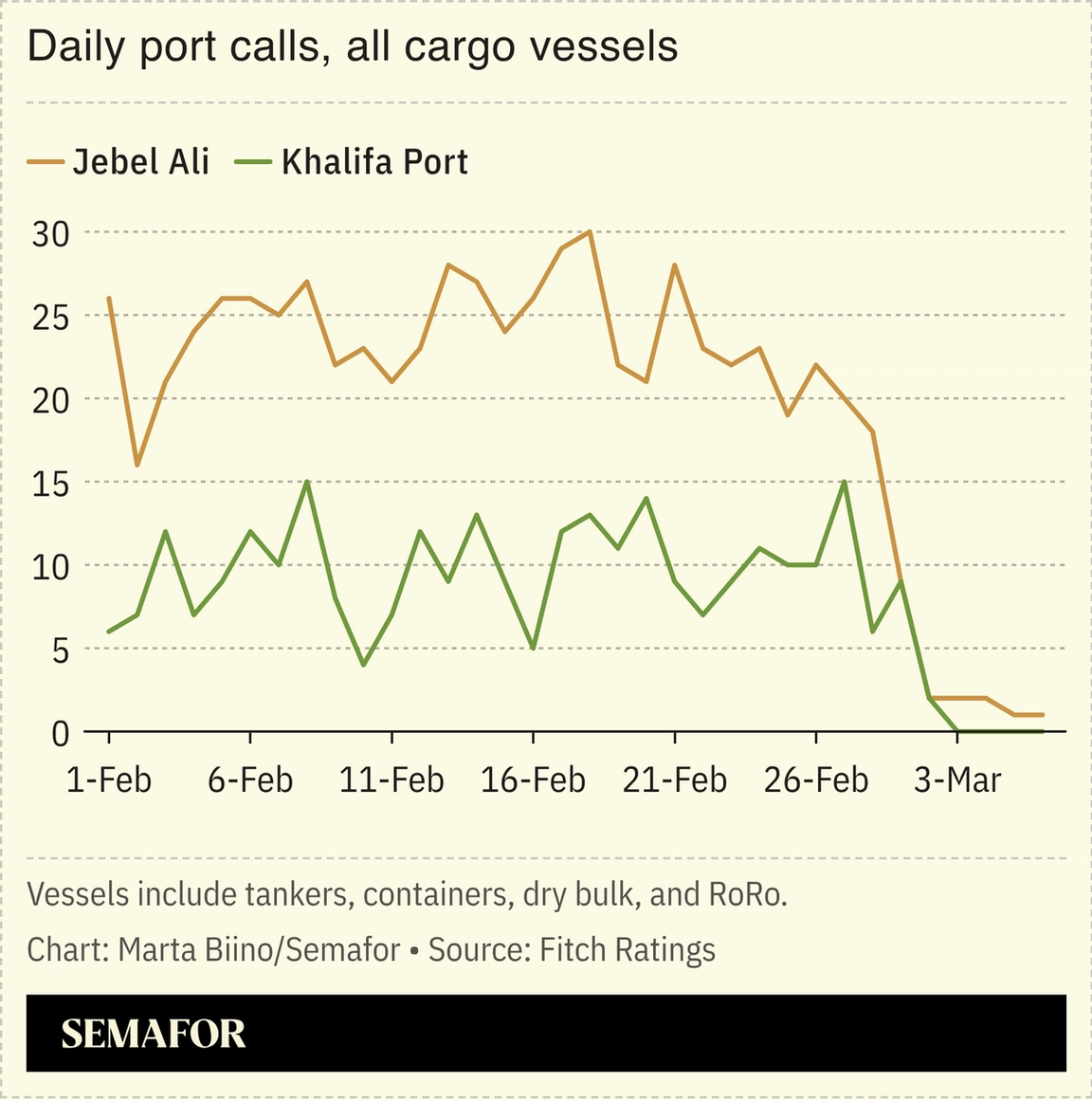 The UAE’s two big port operators — DP World and Abu Dhabi Ports — have been badly affected by the Iran war, with the number of ships calling in falling precipitously soon after hostilities began. Even so, they should be able to cope with even a three-month closure of the Strait of Hormuz thanks to their international reach, according to Fitch Ratings. DP World’s home port of Jebel Ali in Dubai accounts for about 27% of its cargo flows in normal times; they have now largely stopped, but it has about $4.4 billion in cash to help tide it over, said Fitch. It is also gaining from the higher traffic at other regional ports; it recently added three more cranes at Saudi Arabia’s Jeddah Islamic Port to handle the growing number of ships calling in there. ADP doesn’t have the same financial strength, with some $750 million in cash. However, fixed concession fees at its Khalifa Port base, along with government support, offer protection. Some vessels are also being redirected from Khalifa Port to Fujairah, which lies outside the Strait of Hormuz and where ADP runs terminals. |
|
 This April, top global CEOs, government officials, and industry leaders will join Semafor World Economy — the largest gathering of global CEOs and officials in the United States — to sit down with Semafor editors for conversations on the forces shaping global markets, emerging technologies, and geopolitics. See the full lineup of speakers, including Global Advisory Board members, Fortune 500 CEOs, and elected officials from the US and across the G20. |
|
 - The Atlantic: Iran is trying to win the war for US public opinion, writes Karim Sadjadpour, a senior fellow at the Carnegie Endowment for International Peace, leveraging disruption to the Strait of Hormuz, higher energy prices, and political division to erode public support for the conflict.
- Bloomberg: The Iran war is creating a fault line in the AI boom, with Gulf capital underpinning up to $2 trillion in investment now at risk, while rising energy costs also threaten data center economics, leaving hyperscalers exposed.
- The National: A ceasefire with Iran is not enough on its own, writes Ebtesam Al Ketbi, president of Emirates Policy Centre, arguing that what is needed is not a narrow agreement to stop the fighting, but a broader reset of the rules of regional engagement.
- The New York Times: Reopening the Strait of Hormuz is far harder than shutting it. Iran’s geography, dispersed missile systems, and use of mines mean eve
|
|
|


